This comprehensive investment property guide examines the process from initial inspection and strategic selection to final transfer and registration. The process requires thorough screening, technical and legal due diligence, and structured dialogue with financial partners to ensure stable returns and minimise risks in the Danish property market.
Introduction to buying investment property in Denmark
Investing in bricks and mortar has historically been one of the most stable paths to wealth preservation and growth in Denmark. Whether looking towards the densely populated growth areas of Copenhagen and Aarhus, or seeking higher direct yields in regional centres such as Odense, Aalborg, or the Triangle Region, a successful investment requires a methodical approach. In September 2026, the market is characterised by increased documentation requirements, sustainability certifications, and tighter credit assessments, making knowledge of the process more important than ever.
This article serves as an in-depth investment property guide, highlighting the critical phases an investor must navigate. We move from the moment a potential case is identified until ownership formally changes hands. The purpose is to provide both new and experienced investors with a foundation for making decisions based on facts and structured analysis.
Phase 1: Defining strategy and market screening
Before the first viewing even takes place, the foundation must be laid. A flawed strategy can lead to the purchase of properties that do not fit one's portfolio or risk profile. Investors should consider the following parameters:
Geographical focus and local knowledge
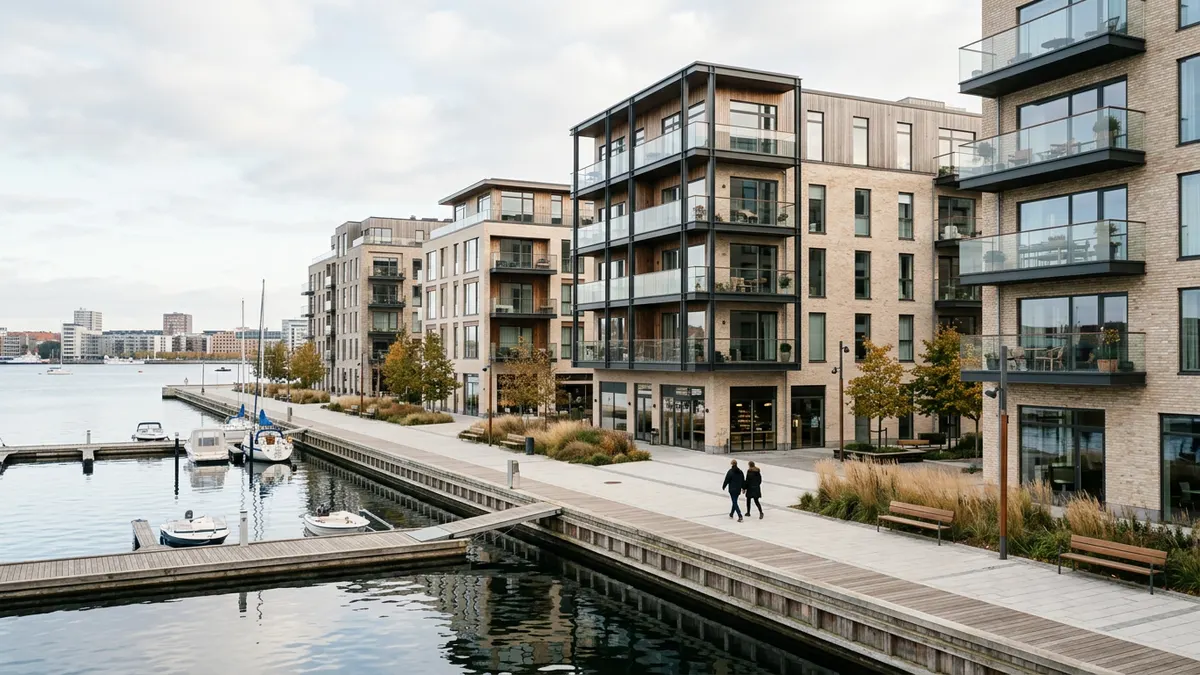
Denmark is not one single coherent market when it comes to property investment. There are significant differences in pricing (yield requirements) in Copenhagen K compared to, for example, commercial areas in Esbjerg or residential rentals in Randers.
- The Capital Region: Typically lower yields, but higher security and greater potential for capital appreciation.
- Growth Cities (Aarhus, Odense, Aalborg): A balance between ongoing operations and moderate risk.
- Provincial Towns: Often higher direct yields, but with an increased risk of vacancies and longer re-letting periods.
Property types
The choice of asset class is decisive for operating costs and daily administration. Residential rental properties are subject to the Danish Rent Act, which is complex and often protects the tenant. Commercial properties (office, warehouse, logistics) often provide more freedom in contract design but are more sensitive to economic fluctuations.
Phase 2: The viewing – The first physical meeting
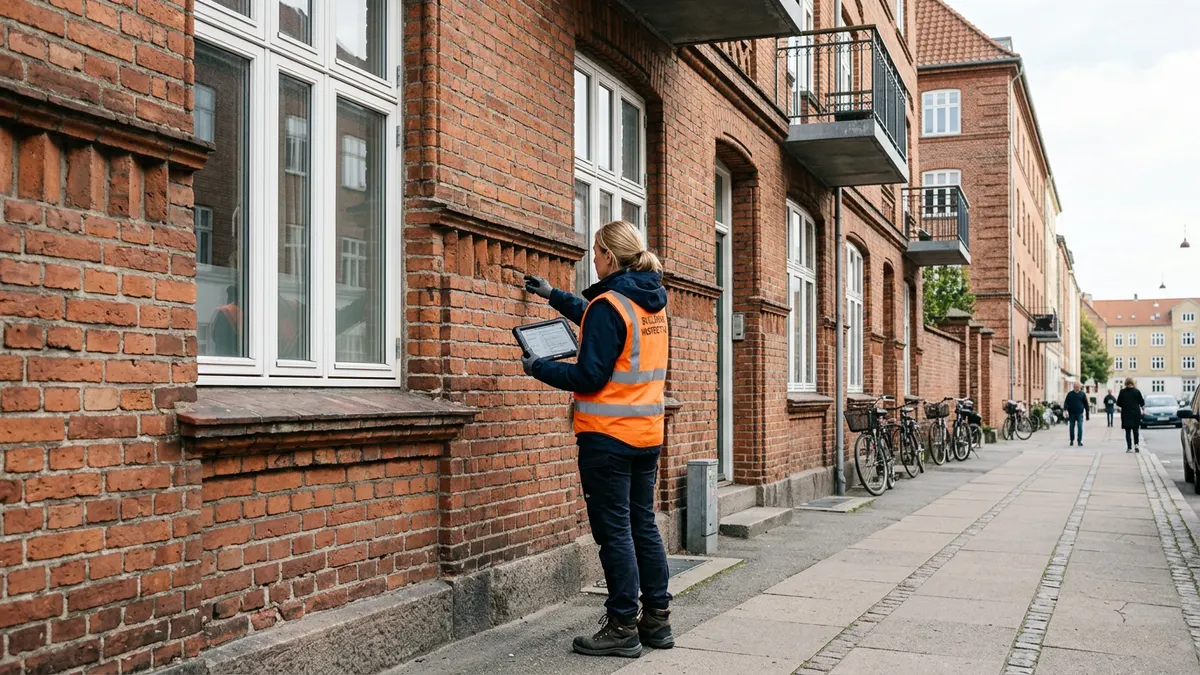
Once an interesting property is identified via a prospectus or off-market sourcing, the viewing is the first critical checkpoint. Here, the investor must look beyond cosmetic details.
Exterior inspection
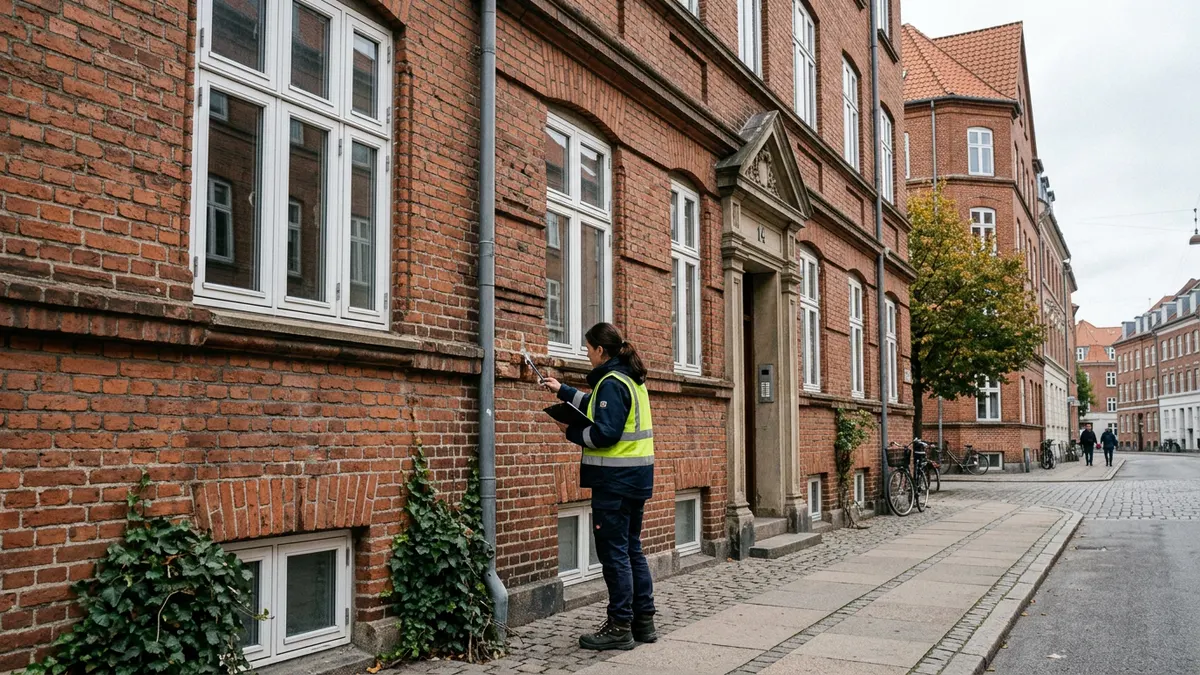
It is all about the building envelope. The condition of the roof, the age of the windows, and the state of the facade are the most expensive items to repair. In an era focused on energy optimisation, this is also where one assesses the potential for future energy improvements that can increase the property's value and tenant satisfaction.
Interior inspection and apartment checks
For residential properties, it is essential to see a representative selection of the units. Are the kitchens and bathrooms of a standard that justifies the current rent? For commercial properties, one must assess the flexibility of the floor plan – can the unit easily be divided or converted to other purposes if the current tenant vacates?
Phase 3: Economic analysis and valuation
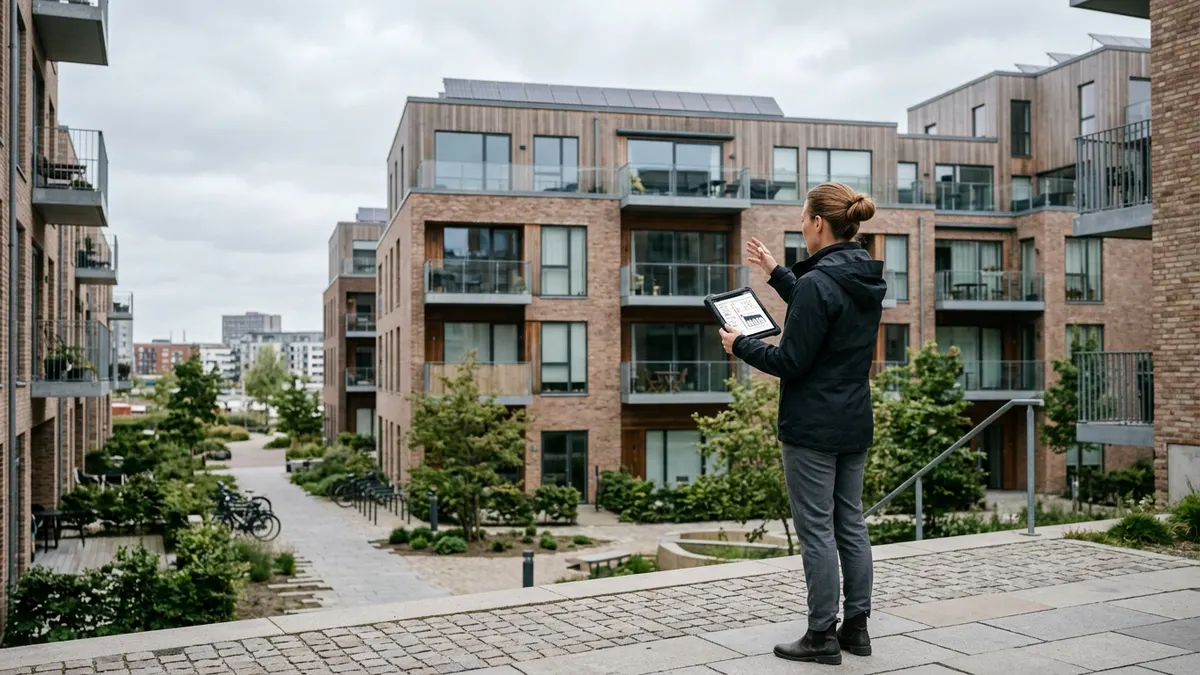
Following the inspection comes the quantitative analysis. In this part of our investment property guide, we focus on the numbers behind the bricks. A property's value is largely determined by its ability to generate cash flow.
The operating budget
One should always prepare their own operating budget rather than blindly trusting the seller’s figures. The following must be taken into account:
- Gross rental income: Is the rent at market level? (Check the framework of the Rent Act for residential).
- Operating costs: Taxes, fees, insurance, cleaning, and administration.
- Maintenance: Allocation for both ongoing and planned maintenance.
- Vacancy reserve: A realistic provision for periods without rental income.
Yield calculation
Investors often operate with the term 'Initial Yield'. This is calculated as the first year's net profit divided by the total acquisition cost (purchase price plus costs for advisors and the deed).
| Item | Description | Estimation |
|---|---|---|
| Rental Income | Actual contractual rent | Market conformity |
| Operating Expenses | Taxes, insurance, caretaker | Historical data |
| Maintenance | Provision for future renovations | 10-15% of rent (typical) |
| Net Result | Profit before interest and tax (EBIT) | Basis for value |
Phase 4: Financing and dialogue with financial institutions
Financing is often the largest barrier to completing a deal. In Denmark, investment properties are typically financed through a combination of mortgage credit loans and bank financing, supplemented by equity.
- Mortgage Credit (Realkredit): For rental properties, one can typically obtain a loan-to-value of up to 60-80% depending on property type and location. The term is often up to 30 years, with or without repayments.
- Bank Financing: Often used to cover the next 10-15% of the financing requirement, albeit at a higher interest rate than the mortgage.
- Equity: The investor must usually provide 20-40% of the total investment themselves.
It is crucial to have a close dialogue with your bank early in the process. The bank will assess both the project's profitability and the investor's overall finances and experience.
Phase 5: The purchase agreement and conditional sale
When the parties agree on the price, a purchase agreement is drawn up. For professional investors, it is standard that the agreement is conditional on satisfactory due diligence (DD). This gives the buyer a period (typically 2-4 weeks) to review all aspects of the property before the deal becomes final.
Important conditions in the purchase agreement
- Financing Clause: The deal only goes through if the buyer can obtain satisfactory financing.
- Due Diligence Clause: The buyer can withdraw if investigations reveal significant faults or defects.
- Board Approval: If the buyer is a company, a reservation may be made for the management's final approval.
Phase 6: Due Diligence – The in-depth investigation
Due diligence is the heart of any property transaction. This is where you verify that what you think you are buying matches reality. The process is typically divided into three tracks:
Legal Due Diligence
Here, the property's legal status is investigated. Are there registered easements (tinglyste servitter) that restrict the property's use? Are the lease agreements legally sound? For residential properties, it is investigated whether there are pending cases in the Rent Committee (Huslejenævnet). One should also check if the property complies with local plans and building permits. We always recommend consulting a specialised property lawyer during this phase.
Technical Due Diligence
A building surveyor or engineer reviews the property's physical condition. A condition report (tilstandsrapport) is often prepared for commercial properties (not to be confused with the statutory one for single-family houses), which estimates the maintenance needs for the next 5-10 years. Focus is on the roof, facade, installations (plumbing/electrical), and potential contamination or hazardous substances such as asbestos or PCB.
Financial Due Diligence
An accountant or the investor themselves reviews the property's bookkeeping. Does the stated rental income match the amounts paid into the bank accounts? Are there arrears from tenants? Are all operating expenses included in the seller's statement?
Phase 7: Environment and ESG requirements in 2026
In September 2026, ESG (Environmental, Social, and Governance) has become an integrated part of the property market. Today, investors must relate to the property's energy label and its CO2 footprint.
- Energy Labelling: A property with a poor energy label (E, F, or G) can be harder to finance and more expensive to operate.
- EU Taxonomy: Larger investors and funds are subject to requirements to report on the sustainability of their investments. This also affects smaller investors, as it dictates which properties are attractive to large players for later resale.
It is therefore essential to investigate the potential for energy optimisation as part of the purchase process. Can you install heat pumps, improve insulation, or replace windows to increase the property's value?
Phase 8: Settlement and transfer
When all conditions are cleared and due diligence is completed with a satisfactory result, the deal is declared unconditional. Thereafter, the formal transfer begins.
Deed and registration
The lawyer prepares a digital deed (skøde), which is signed by both buyer and seller via MitID. The land registration (tinglysning) is the official registration of the change of ownership in the Land Register (Tingbogen). A land registration fee (tinglysningsafgift) must be paid to the state, consisting of a fixed fee plus a percentage of the purchase price (check current rates with the Land Registry Court or the Ministry of Justice).
The completion statement
The completion statement (refusionsopgørelse) is the final account between buyer and seller. As the transfer rarely falls exactly on a year-end or a payment date, expenses and income must be distributed proportionately.
Typical items on a completion statement:
- Property taxes and fees.
- Prepaid rent and deposits (for which the buyer takes over responsibility).
- Common expenses for the owners' association.
- Oil or water stock.
The handover day
On the actual handover day, the parties (or their representatives) often meet at the property. Here, keys are handed over, and meters for water, heat, and electricity are read. It is important to ensure that the property is in the agreed condition and that all fixtures included in the deal are present.
Legal and tax considerations
Buying investment property involves complex tax conditions. Should the property be purchased personally, via the Business Tax Scheme (virksomhedsskatteordningen - VSO), or in a private limited company (anpartsselskab - ApS)? The choice has a significant impact on the taxation of ongoing profits and any capital gains upon sale.
Rules for depreciation on commercial buildings are also an important element in the economic calculation. As tax legislation changes continuously, one should always seek advice from an accountant specialising in real estate to ensure the most optimal structure. PropertyInvestments does not provide legal or tax advice, but we emphasise the importance of having these experts as advisors.
Summary of the process
The path from the first search to final ownership of an investment property is a journey through analysis, negotiation, and control. By following a structured process, the risk of expensive surprises is reduced. Although the market in 2026 places higher demands on documentation and sustainability, the core elements of a good property deal remain the same: thoroughness, due diligence, and a strong understanding of both the physical and economic frameworks.
For the investor, it is about maintaining a cool overview even when an exciting opportunity arises. By using this investment property guide as a checklist, one is better equipped to navigate the Danish property market and build a portfolio that creates value in the long run.
Frequently asked questions
How much equity is typically required when buying investment property?
In the current market (2026), as a rule of thumb, you should expect to provide between 20% and 40% of the total acquisition sum in equity. However, this depends heavily on the property type, location, and your personal creditworthiness.
What is the difference between a gross yield and a net yield?
The gross yield is the annual rental income before expenses divided by the purchase price. The net yield (the most important figure) is the rental income minus all operating costs, maintenance, and administration, divided by the total investment sum.
Should I buy the property privately or in a company?
It depends on your other finances, your time horizon, and your desire for risk diversification. A company (e.g., ApS) can limit your personal liability, while a private purchase under VSO may have other tax advantages. Always seek advice from an accountant.
How long does the purchase process normally take?
From placing the first bid until the transfer takes place, it typically takes 2 to 4 months. The due diligence period itself often takes 14-30 days, while financing approval and registration of the deed take the remaining time.
How PropertyInvestments can help
PropertyInvestments has assisted investors since 1985 in finding, analysing, and acquiring investment properties throughout Denmark. We offer a professional approach to sourcing, screening the market for both on- and off-market opportunities that match your profile. Our experience ensures that the process from inspection to final sale proceeds in a structured and professionally correct manner. Whether you are a Danish investor or represent a foreign fund, we are ready to help prepare and execute your next property transaction.
Contact us for a non-binding dialogue about your investment goals at info@propertyinvestments.dk or telephone +45 31 16 31 00.