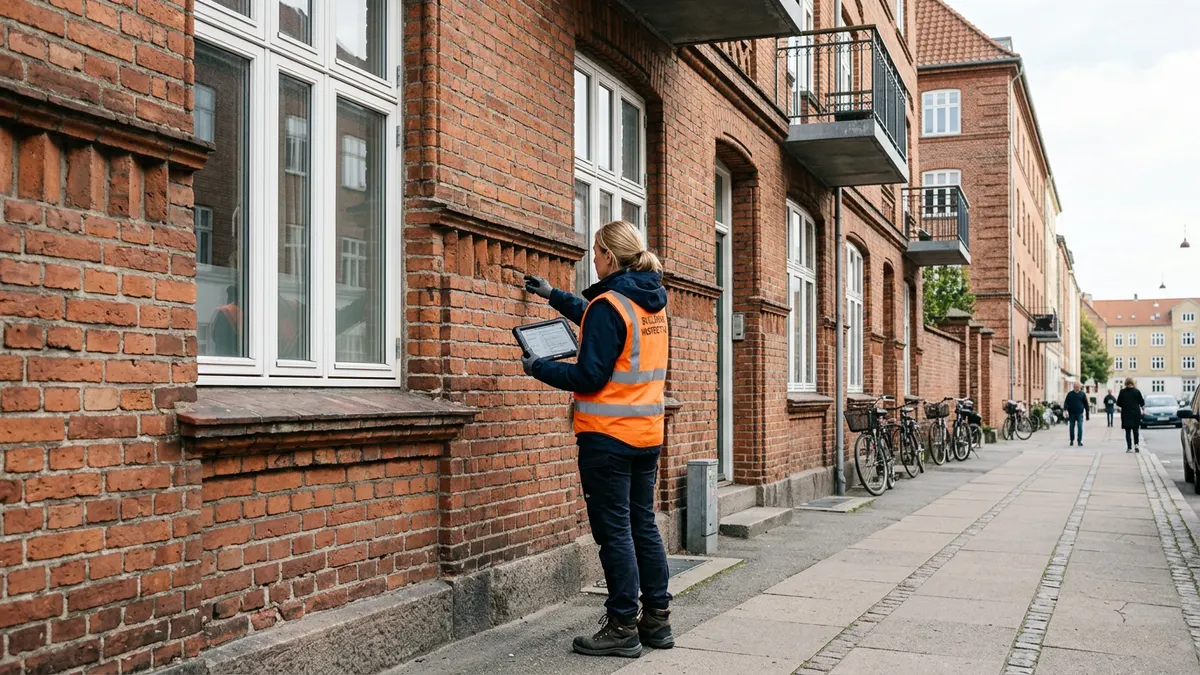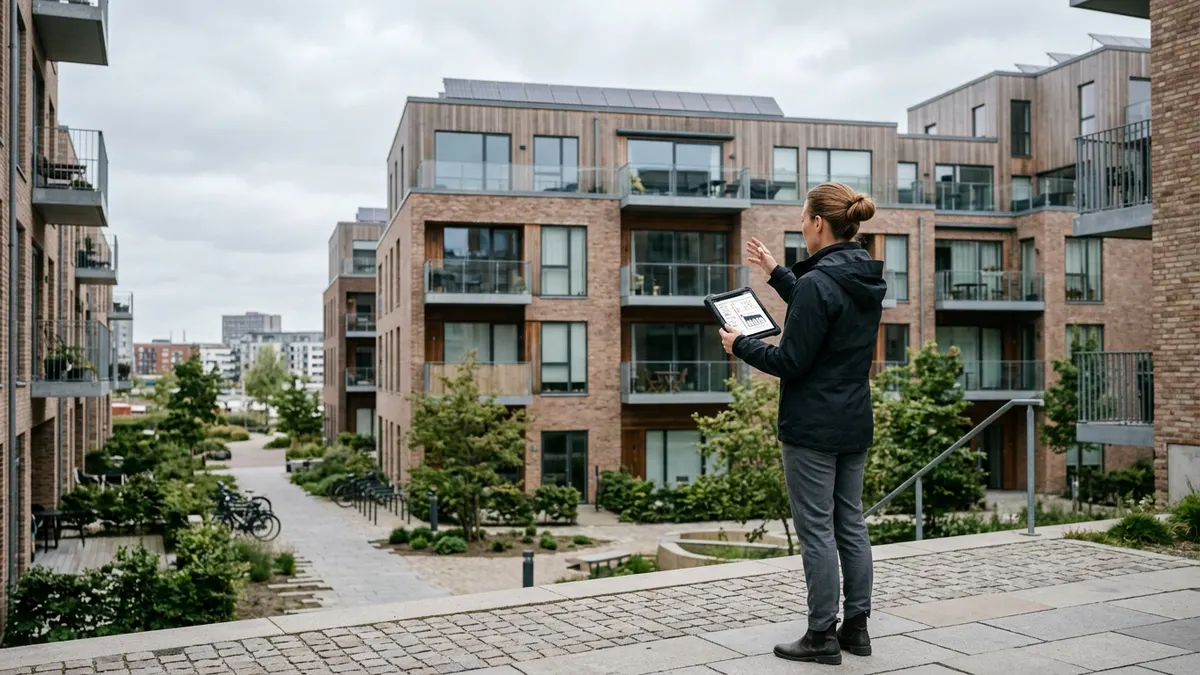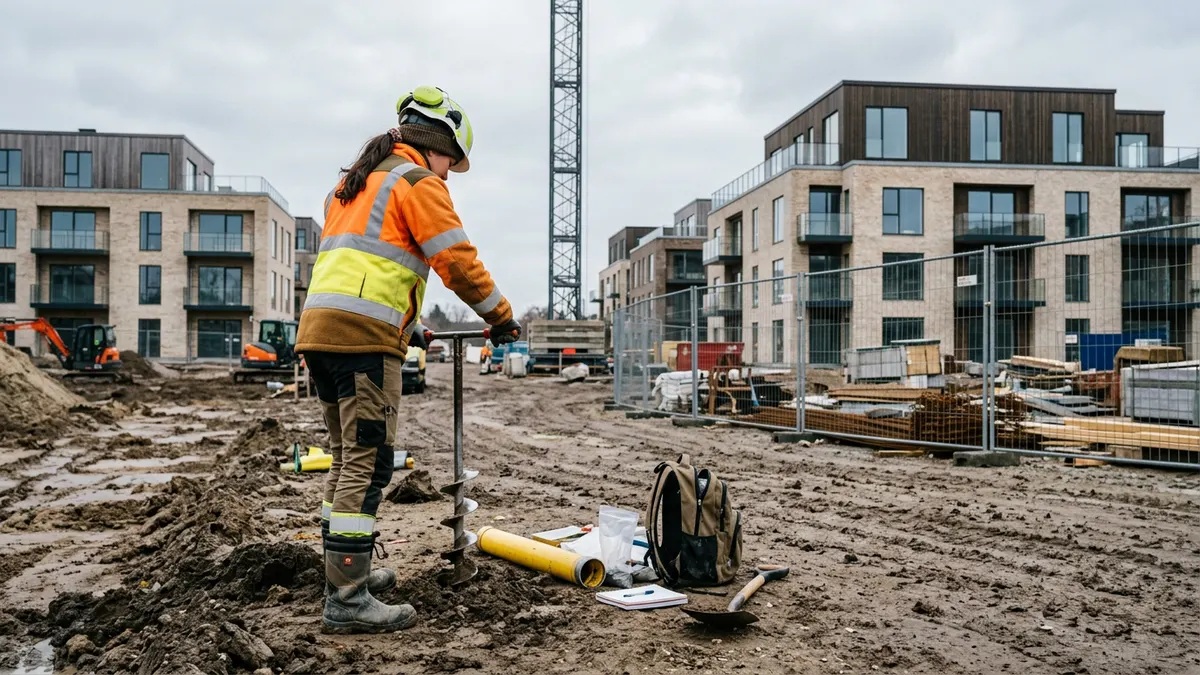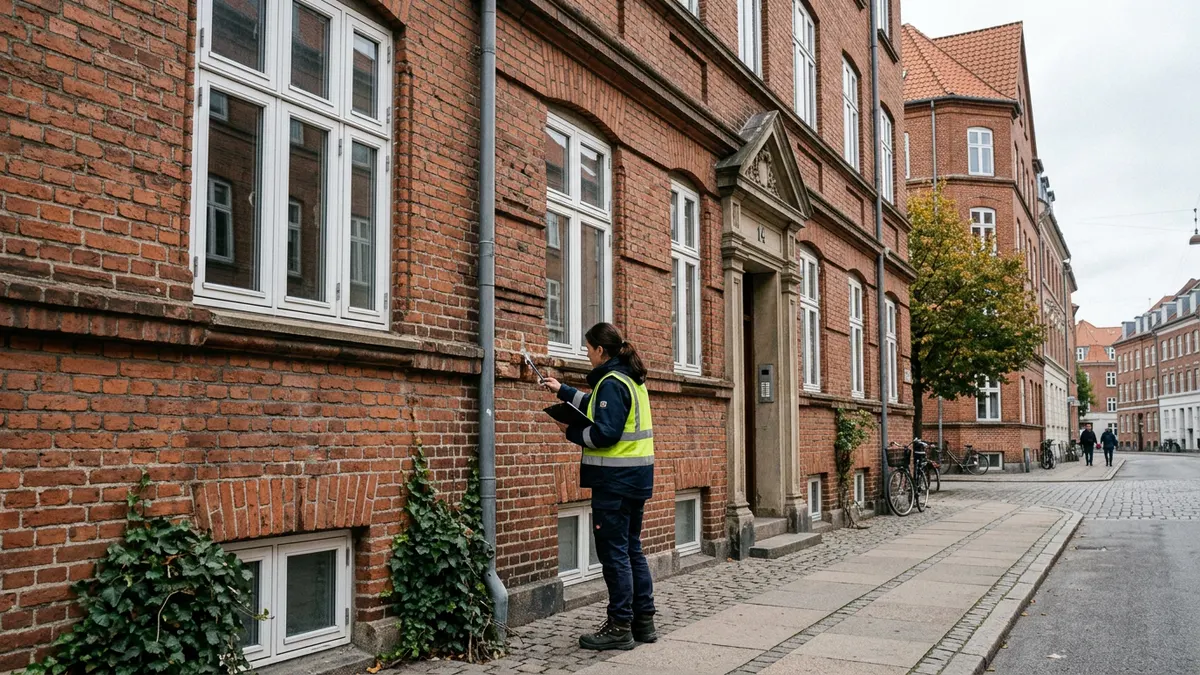
A tilstandsrapport (property condition report) for an investment property is a crucial technical decision-making tool that directly influences the property's cash purchase price and future yield requirements. By mapping the building's physical damage and maintenance backlog, the report functions as a risk assessment, allowing investors to estimate necessary restoration costs and adjust the purchase price accordingly relative to market value.
The role of the condition report in professional valuation
When discussing a tilstandsrapport (property condition report) for investment properties, one enters a field where technical insight meets economic rationality. Unlike the private residential market, where the huseftersynsordning (home inspection scheme) and ejerskifteforsikring (change-of-ownership insurance) are often the focal points, the condition report for a rental property in cities like Copenhagen, Odense, or Aarhus serves as a tool for technical due diligence. The investor does not just use the report to identify building defects, but to understand how these defects impact the property's Internal Rate of Return (IRR).
Pricing an investment property is typically based on a yield-based valuation. If a report reveals critical damage to the building envelope or foundation, the investment risk increases. This often leads to the buyer demanding a higher yield, which, all else being equal, pushes the price down. A thorough review ensures that no unforeseen expenses arise in the first five to ten years of ownership, which is vital for the project's liquidity.
It is important to emphasise that a report is not a guarantee against all faults. It is a snapshot taken by a bygningssagkyndig (building surveyor). In the professional market, this is often supplemented by a maintenance plan spanning 10-20 years. Without this technical insight, pricing would be based on guesswork, which is rarely sustainable in a market characterised by professional actors.
How K-ratings influence negotiations
Although the rating system (K0, K1, K2, K3, and UN) is well-known from private transactions, it is interpreted differently in an investment context. Here, the focus is on the economic consequences of the ratings rather than just the cosmetic significance. A K3 defect in an apartment block in Randers or Vejle might be a minor issue if it concerns a replaceable element, but it can be a dealbreaker if it involves load-bearing structures or extensive moisture problems in the basement.
The economic weighting of damage categories
- K3 (Critical damage): These require immediate action. Investors will typically deduct the full repair price plus a risk margin from the purchase price.
- K2 (Serious damage): Issues that may lead to consequential damage over time. These are incorporated into the ongoing maintenance budget.
- K1 (Less serious damage): Rarely has a direct influence on price but can be used as a negotiation point for larger portfolios.
- UN (To be investigated further): The most problematic category for an investor, as uncertainty makes it difficult to price the risk.
For an investor, it is about quantifying these letters into pounds and pence. If a tilstandsrapport (property condition report) shows a need for a new roof within two years, this must be capitalised. One cannot simply look at the current rental income; one must look at the 'net cash flow' remaining once necessary repairs are paid for.
Geographical differences and building techniques in Denmark
Pricing influenced by condition reports also varies by geography. In Copenhagen and Aarhus, where land values are extremely high, a property with significant defects may still trade at a low yield because the development potential (e.g., through attic conversions or modernisation under the lejelov (Rent Act) rules) outweighs the technical risks. In smaller towns in growth regions, technical faults can have a much larger relative negative effect on price, as the underlying price per square metre is lower.
Regional building traditions
In major cities, we often see older brick properties from the 'bridge quarters'. Here, the focus in the report is often on:
- Foundations and settlement damage: Especially relevant in areas with soft soil or dense construction.
- Roof structures: Slate or tile roofs approaching the end of their lifespan.
- Plumbing installations: Old rising mains that require total replacement to avoid water damage.
In the provinces, investment objects may often be newer commercial properties or terraced housing, where the report focuses more on moisture in the construction or wear on facade systems. Regardless of location, it is essential to have an expert who knows the local conditions and typical building styles in that specific region.
Table: Correlation between building components and price reduction
The table below illustrates how findings in a report typically affect an investor's approach to pricing (note: estimates, always requires specific assessment).
| Building Part | Typical Finding | Effect on Pricing | Strategic Consideration |
|---|---|---|---|
| Roof & Gutters | Worn-out under-roof | Direct deduction for replacement | Opportunity for attic apartments |
| Facade | Mortar restoration needed | Ongoing maintenance item | Can give the property a visual lift |
| Basement | Moisture/Mould | Strongly negative / Discount | May limit use to storage rooms |
| Windows | Blown panes/Rot | Partial discount | Improves EPC rating upon replacement |
| Foundation | Settlement cracks | Large discount / Buyer withdrawal | Requires geotechnical surveys |
Technical due diligence vs. the standard condition report
For professional investors, a standard tilstandsrapport (property condition report) is often only the beginning. For larger transactions, an extended Technical Due Diligence (TDD) is performed. The difference lies in the depth and the economic focus. While the report describes what is wrong, a TDD often describes why it is wrong, what it costs to fix, and how it affects the property's operating budget (OPEX) and capital expenditure (CAPEX).
When buying rental properties in, for example, Horsens, Kolding, or Roskilde, an investor will look at the energimærke (Energy Performance Certificate) in combination with the condition report. Poor insulation or leaky constructions lead to higher heating bills for tenants, which can make it harder to let or limit the ability to increase rent. Therefore, the technical condition is directly linked to the commercial potential.
Legal aspects and liability waivers
In professional transactions between two companies (B2B), the home inspection scheme is often waived. This means the buyer takes over the property "as is", but with a warranty list from the seller. Here, the condition report becomes a central appendix to the købsaftale (purchase agreement). If a fault is mentioned in the report, the buyer can never subsequently make a claim against the seller.
It is always recommended to seek legal and tax advice from specialists before signing a purchase agreement based on a report. Rules for liability for defects can vary depending on whether it is a purely commercial property or a property with residential tenancies. One should consult the Ministry of Justice guidelines or lawyers specialising in real estate to ensure that the distribution of liability is correctly described.
The maintenance plan as a value creator
A positive report without significant remarks is a good starting point, but for an investor, a property with a clear plan is often worth more than one where everything is unknown. If a seller can show a history of rectified K-ratings from previous reports, it builds trust and can justify a lower yield (higher price).
Investing in property in Denmark requires a long-term view of maintenance. By using the report actively, an investor can plan investments to fall in years with high liquidity or in connection with refinancing. Money spent on rectifying faults found in the report is rarely wasted, as it protects the property's substance and ensures its future value.
How to read between the lines
An experienced investor reads a tilstandsrapport (property condition report) with a critical eye for what is not written. If the report mentions "signs of moisture" in a property near the water in, for example, Svendborg or Sønderborg, the investor knows this could cover a much larger problem than just a cosmetic fault. It takes experience to know which faults are easy to fix and which are systemic problems for a certain type of building from a specific era.
It is also worth noting that reports for older properties will often have many remarks simply due to the building's age. The art here is to distinguish between normal wear and tear and an extraordinary maintenance backlog. A 100-year-old property in Esbjerg will never get a flawless report, and the market does not expect it to. The pricing here reflects an acceptance of a certain technical standard, as long as critical points are under control.
Yield and risk: The technical equation
Ultimately, the price of an investment property is the result of a risk assessment. The condition report is the most important document for assessing technical risk. If the risk is high, the yield must follow suit. An investor who ignores the details in the report risks buying into a downward spiral where unforeseen costs eat the entire operating profit.
In the current market in September 2026, where financing costs and material prices are factors to consider, the accuracy of the report is more important than ever. A misjudgement of a roof's remaining lifespan can mean the difference between a profitable investment and a loss-making project.
Frequently asked questions
Is a condition report mandatory when selling investment properties?
No, the home inspection scheme with a tilstandsrapport and elinstallationsrapport (electrical installation report) is voluntary and primarily aimed at private homes. In professional trades, however, one often chooses to have a report or technical due diligence prepared to ensure transparency and limit the seller's liability.
How long is a condition report valid?
A standard report under the home inspection scheme is normally valid for 6 months. In professional real estate transactions, the report is considered a snapshot, and investors will often demand a fresh review if the report is more than a few months old.
Can the report be used to get a price discount?
Yes, the report is one of the strongest tools in a price negotiation. If the report reveals faults that were not disclosed in the sales material or known during initial negotiations, it is standard procedure to demand a discount corresponding to the repair costs.
Who pays for the condition report?
It is normally the seller who orders and pays for the report as part of the sales preparation. For very large properties or complex industrial portfolios, the buyer may choose to order their own technical due diligence to ensure impartiality.
How PropertyInvestments can help
PropertyInvestments has assisted Danish and international investors in navigating the Danish real estate market since 1985. We help source the right properties and ensure that the technical decision-making basis, including condition reports, is thorough and accurate before a deal. Our experience enables us to spot both risks and opportunities in technical reports, ensuring pricing is correct from the start. Whether you wish to buy, sell, or prepare a property for sale, we are ready with professional advice. Contact us at info@propertyinvestments.dk or call +45 31 16 31 00 for a non-binding dialogue about your next investment.