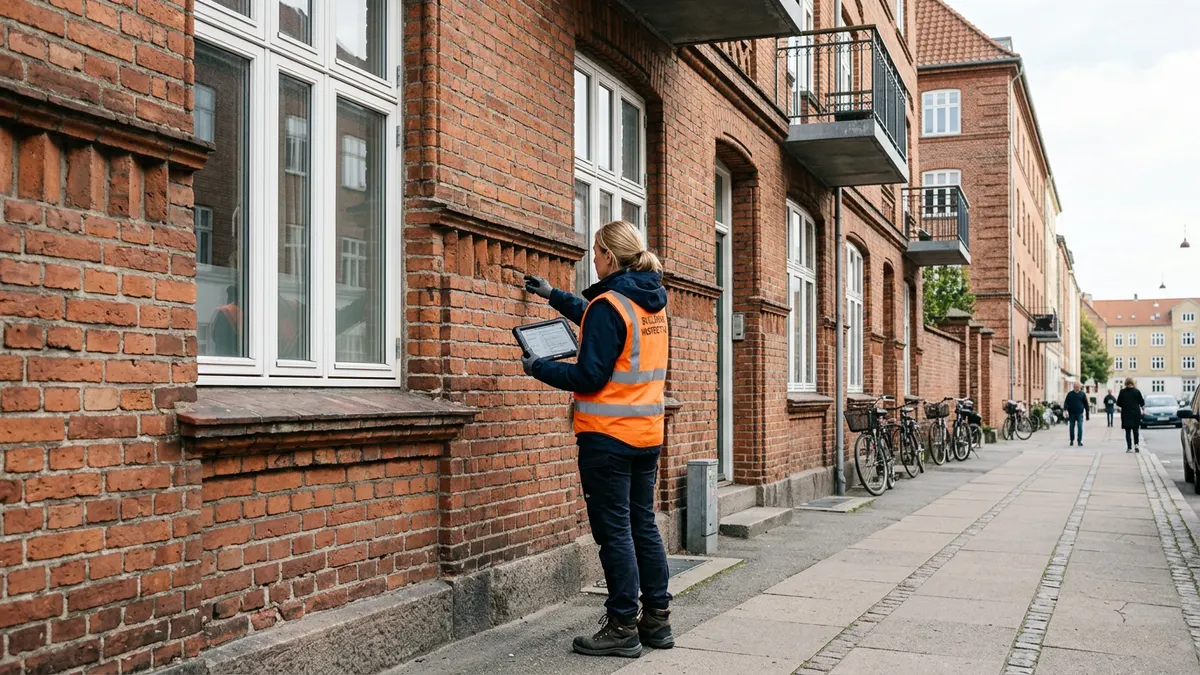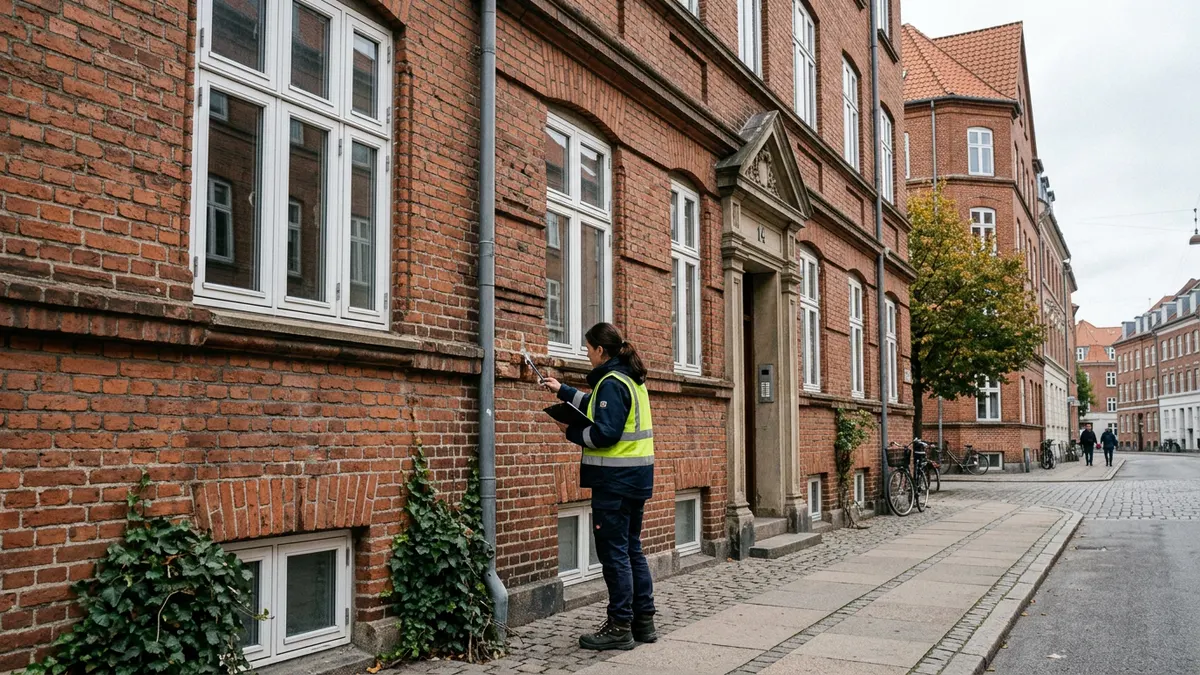
An environmental survey of a property (miljøundersøgelse af ejendom) is a technical review that clarifies whether soil or buildings are contaminated. In Denmark, this is crucial to avoid unforeseen remediation costs and legal liability. The survey maps historical use and current conditions, securing the investor's capital and ensuring compliance with environmental legislation before a final transfer.
Why is an environmental survey critical for the investor?
When investing in real estate in Denmark – whether it is a residential rental property in Copenhagen, a logistics centre in Fredericia, or an industrial property in Aarhus – the condition of the soil is one of the most significant risk factors. An environmental survey serves as the investor's safety net against the economic consequences that past pollution can entail.
Historically, Denmark had extensive industrial production, and before modern environmental legislation came into force, chemicals, oil, and heavy metals were often handled in ways that would be illegal today. If you buy a property where the soil is contaminated, you risk assuming responsibility for the cleanup, or you may be restricted in how the property may be used. For example, converting commercial areas into housing in growth cities like Odense or Aalborg requires very strict documentation regarding soil purity.
A thorough technical due diligence, including an environmental technical report, is therefore not just a recommendation but a necessity for the professional investor. It is about transforming uncertainty into known variables so that the property pricing reflects the actual conditions.
Mapping of contamination in Denmark: V1 and V2
In Denmark, information on soil contamination is managed by the regions (Region Hovedstaden, Region Sjælland, Region Syddanmark, Region Midtjylland, and Region Nordjylland). The system is divided into two primary categories that every investor should know:
V1 mapping (Vidensniveau 1 - Knowledge Level 1)
A property is V1-mapped if there is a justified suspicion that activities have occurred on the property that may have caused contamination. This could be a former petrol station, a dry cleaner, an auto repair shop, or a machine factory. A V1 mapping is based on historical archive studies and not necessarily on actual soil samples.
V2 mapping (Vidensniveau 2 - Knowledge Level 2)
A property is upgraded to V2 mapping if contamination has been established to an extent that could have harmful effects on groundwater, humans, or the environment. This typically requires a physical environmental survey of the property's soil or groundwater where samples have shown values above the permitted limit values.
It is important to note that a property can also be contaminated even if it is not mapped yet. Therefore, one should never rely solely on the Regions' databases but always commission an independent investigation if there is suspicion.
The process behind a professional environmental survey
An environmental investigation is typically carried out in several phases to keep costs down and focus efforts where the risk is greatest.
- Phase 0: Historical account. Here, an environmental consultant reviews historical aerial photos, BBR information (Bygnings- og Boligregistret / Building and Dwelling Register), environmental permits, and archive material from the municipality. The purpose is to identify "hotspots" – specific locations on the site where contamination is most likely (e.g., under an old oil tank).
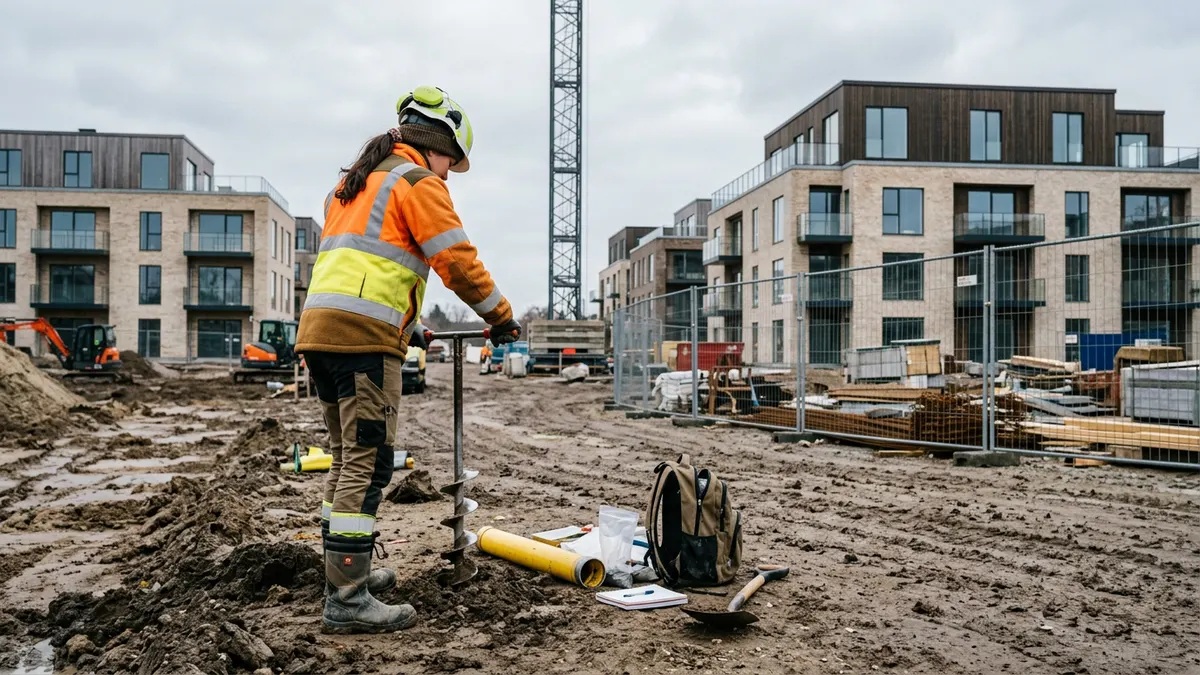
- Phase 1: Initial sampling. Boreholes are made in the soil to take samples. These are sent for laboratory analysis to screen for relevant substances such as hydrocarbons (oil/petrol), heavy metals (lead, cadmium, etc.), and chlorinated solvents.
- Phase 2: Delineating investigation. If Phase 1 shows contamination, more boreholes must be made to determine the extent of the pollution both horizontally and vertically. This is necessary to estimate the cost of any potential remediation.
| Type of Investigation | Purpose | Typical Application |
|---|---|---|
| Historical account | Identification of risk areas | All commercial purchases |
| Screening (Soil samples) | Confirmation/refutation of suspicion | When historical sources are found |
| Groundwater analysis | Protection of water resources | At risk of leaching |
| Pore air measurement | Measuring vapours under buildings | Upon conversion to residential |
Legal frameworks and liability
In Denmark, the Soil Contamination Act (Jordforureningsloven) primarily regulates the area. One of the most important factors for investors is the so-called "polluter pays principle." In practice, however, it can be difficult to place responsibility on a previous owner if the company has long since ceased to exist or if the pollution occurred many decades ago.
As a buyer, you risk assuming certain obligations, especially if you wish to change the use of the property. The Environmental Protection Agency (Miljøstyrelsen) and individual municipalities set the framework for when soil must be remediated. If you buy a plot in an urban zone that is area-classified (områdeklassificeret) as lightly contaminated, special rules apply to the movement of soil. Here, you must always report soil movement to the municipality, which can increase project costs for new construction.
We always recommend that investors seek legal advice from specialised real estate lawyers to have the correct reservations inserted into the purchase agreement (købsaftale) regarding the discovery of contamination.
Environmental surveys for conversion projects in growth cities
In cities like Roskilde, Kolding, and Vejle, we often see a trend of old industrial areas being converted into modern residential quarters. This is a complex process where an environmental survey plays a leading role.
When a site changes status from commercial to sensitive use (housing, kindergarten, or playground), the requirements for soil purity are significantly tightened. Here, it is not only the soil that must be investigated, but often also the indoor climate of existing buildings. Old industrial buildings may contain PCB, asbestos, or heavy metals in the paint, which require expensive remediation before they can be renovated or demolished.
Investors should be particularly aware of:
- Loss of value: A contaminated site is worth less as it limits future development opportunities.
- Financing: Many banks and mortgage credit institutions (realkreditinstitutter) are hesitant to finance properties with unresolved environmental conditions.
- Insurance: It can be difficult to take out title insurance (ejerskifteforsikring) or liability insurance that covers known or hidden contamination without reservations.
How to read an environmental report?
When the results of a property environmental survey are available, it is important to be able to interpret the conclusions. A report will typically divide findings in relation to the Environmental Protection Agency's quality criteria.
- Below the soil quality criterion: The soil is considered clean and can be used freely for all purposes.
- Between the soil quality criterion and the cut-off criterion: The soil is "lightly contaminated." This is common in urban zone areas. It normally does not require remediation for residential purposes, but the soil must be handled correctly when removed.
- Above the cut-off criterion: The soil is heavily contaminated. For residential use, the contamination must either be removed or a permanent, impenetrable covering must be established (e.g., asphalt or 50 cm of clean soil with a geotextile membrane underneath) so humans do not come into contact with the pollution.
For an investor, it is crucial to get the consultant to prepare an estimate of the economic consequences of these findings. What will it cost to remove 500 tonnes of contaminated soil in Odense compared to leaving it under a car park?
Geo-specific considerations in the Danish landscape
The risk profile varies depending on where in the country the property is located:
- Copenhagen and surroundings: Here, almost all land area is area-classified as lightly contaminated due to many years of urban activity and airborne pollution. The focus here is often on historical infills in the harbour areas.
- Jutland's industrial cities: In cities like Herning or Silkeborg, which have a strong textile and manufacturing history, one must be aware of chlorinated solvents that can migrate far into the groundwater.
- Agricultural properties: When purchasing farmland for commercial development, the focus is often on pesticides or buried oil tanks near machine sheds.
Regardless of geography, local knowledge of the subsoil (sand vs. clay) is important as it affects how contamination spreads. Environmental consultants with local knowledge in, for example, Region Nordjylland will have a better understanding of the specific soil conditions in the Limfjord area.
Summary of technical due diligence
An environmental survey is an investment in peace of mind. The cost of the survey typically constitutes a negligible part of the total transaction sum, but the insight can save the investor from million-kroner losses. In a market like Denmark in 2026, where ESG (Environmental, Social, and Governance) and sustainability are increasingly important to investors, documentation of a clean property is also an advantage during a subsequent resale.
It is always recommended to use certified environmental firms to perform the actual drilling work and analyses so that the report carries the necessary weight with authorities and financial partners.
Frequently asked questions
What does an environmental survey of a property cost?
The price depends on the size and history of the property. An initial screening (Phase 1) typically starts from 15,000-30,000 DKK, while extensive drilling and laboratory analyses can cost significantly more depending on the scope.
Can I build on a V2-mapped site?
Yes, it is often possible, but it requires a so-called Section 8 permit (§8-tilladelse) from the municipality. Here, requirements are set to ensure the construction is planned so that the contamination does not pose a risk to the users of the property.
Who is responsible for ordering the survey?
In a transaction situation, it is often the buyer who orders the survey as part of their due diligence to protect against miscalculations. However, a seller may choose to have the report prepared in advance to facilitate the sale and create transparency.
How long is an environmental report valid?
There is no fixed expiry date, but if many years have passed, or if new activities have occurred on the site (e.g., storage of materials or new tank installations), the report should be updated to be accurate.
How PropertyInvestments can help
PropertyInvestments has assisted Danish and international investors in navigating the Danish property market since 1985. We understand the importance of a thorough environmental survey and always involve the necessary technical experts in our sourcing and sales processes. Whether you seek advice on preparing a property for sale or need help assessing a potential investment opportunity, we are at your disposal with our experience and network. Contact us at info@propertyinvestments.dk for a non-binding dialogue about your next property transaction.