Technical due diligence (TDD) for property is a critical process where the physical and structural condition of an investment property is mapped out to identify potential risks, hidden defects, and future maintenance costs. This thorough review ensures that the purchase price reflects the property's true value and protects the investor against unforeseen expenses after completion in the Danish property market.
What does technical due diligence of a property involve?
When speaking of technical due diligence (TDD), one refers to the systematic examination of a property's physical asset. Unlike financial or legal due diligence, which focuses on accounts and contracts, the technical part dives into bricks, installations, roof structures, and foundations. The purpose is to create a realistic picture of the property's current condition and its expected lifespan.
In Denmark, we often see investors focusing on cities like Copenhagen, Aarhus, Odense, and Aalborg. Here, the building stock varies significantly from classic brick properties from the early 1900s to modern concrete structures in Ørestad or the Aarhus waterfront. Each building type carries its own specific risks, which technical due diligence must uncover.
A standard review will typically include:
- The building envelope: Roof, facades, windows, and doors.
- Load-bearing structures: Foundations, floor partitions, and load-bearing walls.
- Technical installations: Plumbing, electrical, ventilation, and heating systems (e.g., fjernvarmeunits (district heating units)).
- Environmental conditions: Presence of asbestos, PCB, lead, or mould.
- Fire safety: Compliance with current fire legislation and evacuation routes.
For an investor, this knowledge is crucial for calculating the precise Net Asset Value (NAV) and for negotiating the price with the seller if significant defects are found.
Why is technical due diligence essential for your investment?
Investing in real estate involves significant capital commitment. Without thorough technical due diligence, the investor risks buying a property with "hidden bombs". This can range from rising groundwater in a property in southern Zealand to extensive PCB remediation in a 1960s property in the Triangle Region.
One of the biggest pitfalls is underestimating the so-called CAPEX (Capital Expenditures) – the large, planned investments in the property. If an investor takes over a rental property and discovers two years later that the roof needs replacing for several million kroner, it can ruin the entire yield calculation. The TDD report serves here as a decision-making basis, showing when major expenses will fall.
Furthermore, there is the legal aspect. In commercial transactions, disclaimers are common. Sellers often wish to sell "as is" or with limited liability. In such cases, the buyer's undersøgelsespligt (duty of inspection) is heightened. If the buyer has failed to conduct a technical review, it can be very difficult to subsequently make claims against the seller for errors that could have been discovered during a standard technical inspection.
The process behind a technical review
The process for technical due diligence is often tightly managed, as it takes place during the exclusivity period of a purchase agreement. Typically, the process follows these steps:
1. Document Review (Desktop Review)
Before the physical visit, advisors review all available material in the digital data room. This includes drawings, previous tilstandsrapporter (condition reports), maintenance plans, energimærker (energy labels), and correspondence with municipal authorities. Here, one looks for discrepancies between the approved drawings and the actual conditions.
2. Site Inspection
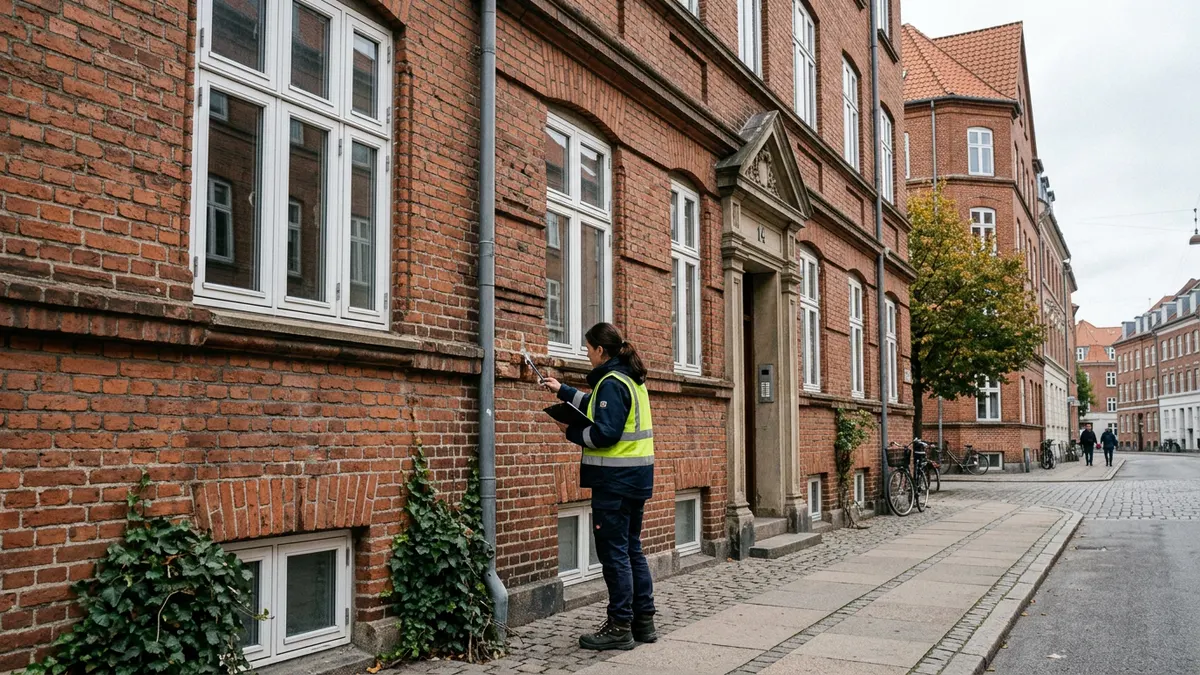
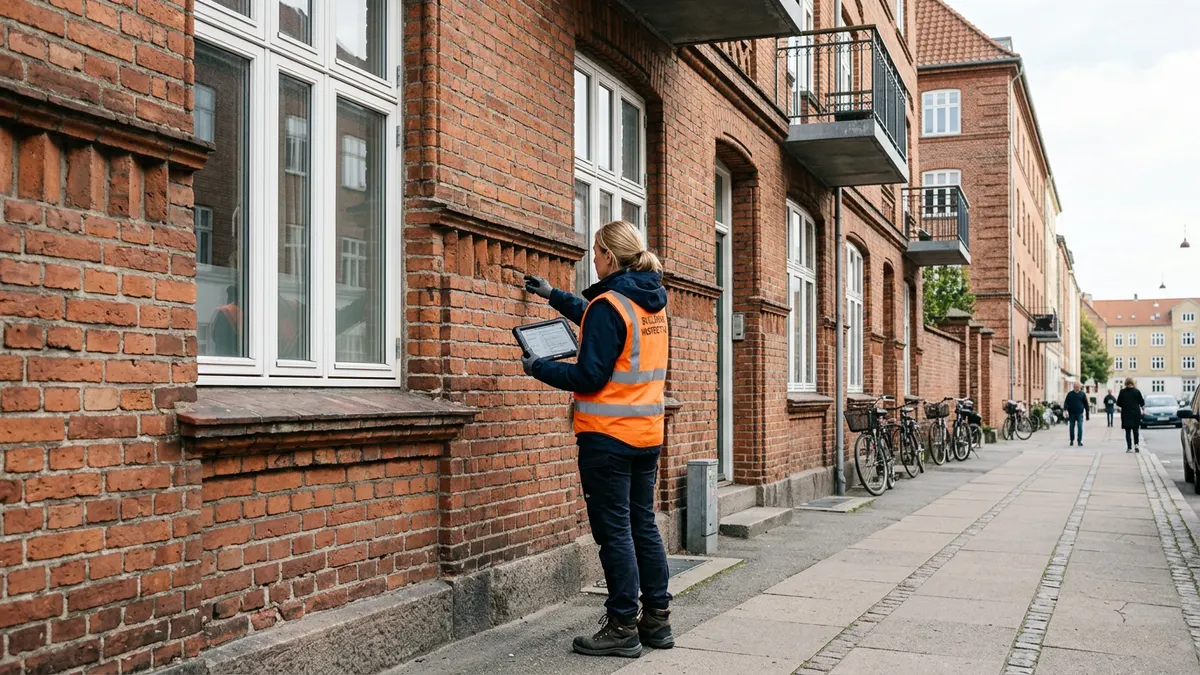
One or more structural experts visit the property. They examine everything from the cellar to the attic. Special equipment such as thermal cameras are often used to find cold bridges or moisture meters to check for damp in constructions. In larger property complexes, such as logistics centres in Høje Taastrup or business parks in Billund, the inspection can take several days.
3. Analysis and Pricing of Defects
Once observations are made, they must be valued. What does it cost to repair that crack in the facade? What will it cost to upgrade the ventilation system to modern standards? These estimates are worth their weight in gold in a negotiation situation.
4. The Final TDD Report
The report summarises all findings and typically categorises them by severity (e.g., red, yellow, green status). The report also contains a 5-10 year maintenance plan, which the investor can use directly in their operating budget.
Table: Typical risk factors for different building types
| Building Type | Typical Technical Risks | Geographical Relevance | TDD Focus Point |
|---|---|---|---|
| Classic block (1890-1920) | Rot in beam ends, leaking valleys, cellar damp | Cph Ø/V/N, Aarhus C | Foundation and roof structure |
| Modernist concrete (1960-1975) | PCB in joints, concrete decay, poor insulation | Albertslund, Aarhus V, Odense SØ | Hazardous substances and facades |
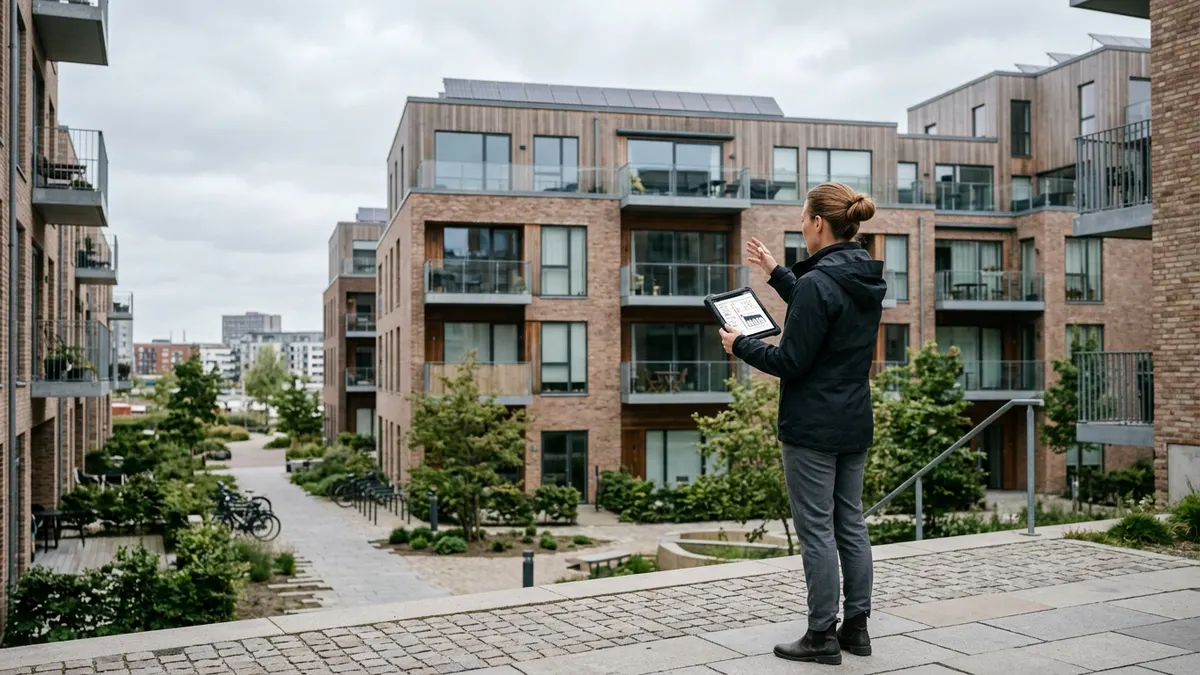
| New builds (2010+) | Moisture during construction, ventilation errors | Ørestad, Aarhus Harbour, Odense Harbour | Moisture strategy and warranties |
| Industrial properties | Soil contamination, roof load capacity, electrical capacity | Greve, Kolding, Fredericia | Environment and technical infra |
Legislation and technical requirements in Denmark
The Danish market is regulated by strict building codes (BR18 and previous versions). In a technical due diligence, it is crucial to assess whether the property meets the requirements that were in force at the time of construction, and whether any alterations have been lovliggjorte (legalised).
A particular focus area recently is energy labelling and sustainability requirements. EU directives and national legislation are pushing to optimise buildings' energy consumption. A property with a poor energy label (e.g., F or G) may require massive investments in insulation, window replacement, or heating source conversion to remain attractive to tenants and lenders. One should always consult the latest guidelines from Energistyrelsen (the Danish Energy Agency).
Furthermore, fire safety plays an increasingly important role. Following several high-profile fires, the authorities' focus on fire compartmentation and warning systems has intensified. A technical due diligence should always include an assessment from a fire consultant if dealing with complex buildings or changes of use.
Environmental Due Diligence: The invisible threats
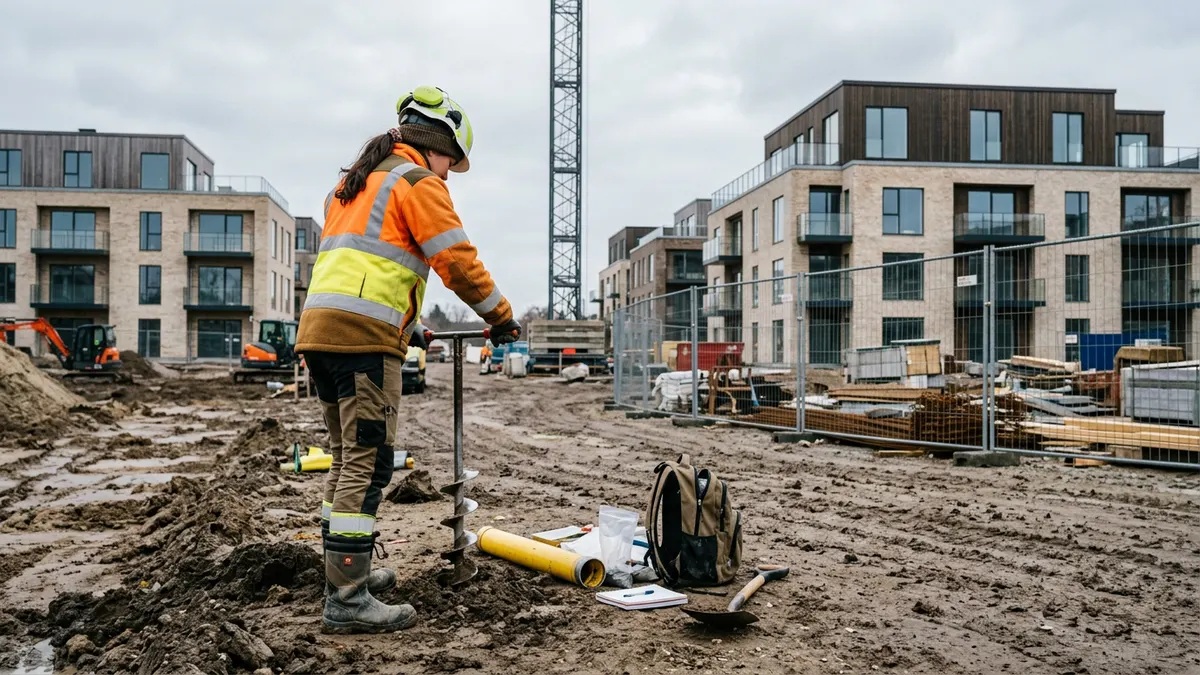
An often-overlooked part of the technical review is environmental conditions. Denmark has a long industrial history, and even in residential areas, soil contamination can hide from former dry cleaners or tank installations. The regions' mapping of contaminated sites (Vidensniveau 1 and 2 (Knowledge Level 1 and 2)) is an important starting point, but it is not always exhaustive.
The indoor environment is equally important. PCB was used extensively in joints and paint between 1950 and 1977. Asbestos is found in everything from roof sheets to pipe insulation in older properties. Remediation of these substances is costly and requires specialised firms. An investor buying a property in Esbjerg or Randers for extensive renovation must have a handle on these costs from the start, as they can significantly change the project's profitability.
The maintenance plan as a strategic tool
The result of a technical due diligence should always culminate in a detailed maintenance plan. This plan is not just a list of faults, but a strategic tool for the property's asset management.
By knowing the property's condition, repairs can be planned so they disturb tenants as little as possible and are carried out when project liquidity allows. For professional investors, this is also a requirement from realkreditinstitutter (mortgage credit institutions) and banks. Financial partners in Denmark today often require a high degree of transparency regarding the property's technical state before granting loans, especially for larger portfolios in growth cities like Roskilde, Silkeborg, or Vejle.
A good maintenance plan distinguishes between:
- Acute maintenance: Items that must be fixed immediately to avoid consequential damage (e.g., a leaking roof).
- Necessary maintenance: Tasks to be solved within 1-3 years (e.g., painting windows).
- Desirable improvements: Measures that increase the property's value or rental income (e.g., installing balconies or energy optimisation).
Pitfalls of skimping on technical advice
It can be tempting to save on the technical advisor's fee, especially if one feels they have a good eye for property. But even an experienced investor cannot see through concrete or assess the remaining lifespan of a hidden sewer pipe.
In Denmark, we see examples of investors who have bought properties with illegal residential units in cellars or attics. If the technical due diligence does not cross-reference physical conditions with BBR-meddelelser (Building and Dwelling Register records) and building permits, one risks owning a property where part of the rental income is illegal and thus worthless. It is important to emphasise that this article does not constitute legal advice; one should always seek assistance from lawyers and technical experts for specific transactions.
Furthermore, there is the risk of latent defects. These could be construction errors in newer builds where the contractor has gone bankrupt, rendering the warranty worthless. A thorough technical review will attempt to identify signs of such failures before the deal is signed.
Summary of the benefits of TDD
By prioritising technical due diligence, the investor achieves:
- Price certainty: You don't pay for more than you get.
- Risk minimisation: Hidden defects and deficiencies are brought to light.
- Better financing: Banks are more willing to finance projects with documented conditions.
- Operational overview: You have a ready plan for operations from day one.
- Negotiating strength: Concrete technical defects are the strongest argument for a price reduction.
Whether investing in a small rental property in Viborg or a large office headquarters in Herlev, the technical review is the foundation of a sound investment.
Frequently asked questions
How much does a technical due diligence typically cost?
The price depends on the property's size, complexity, and use. For a small residential rental property, the cost is limited, while large commercial portfolios require more extensive analysis. It should be seen as an insurance premium against much larger unforeseen expenses.
How long does the process take?
From inspection to a finished report typically takes 1 to 2 weeks, depending on how quickly technical documents can be obtained. It is important to build this time into the purchase agreement's schedule.
Can I use a standard condition report instead?
No. A standard tilstandsrapport is designed for private residential sales and does not cover the commercial and operational aspects an investor needs. Technical due diligence is much more comprehensive and focused on the investment case.
What if the report finds serious errors?
It doesn't necessarily mean the deal falls through. It gives the buyer the opportunity to demand repairs before completion, obtain a price reduction, or in the worst case, withdraw from the deal if the risks are too great.
How PropertyInvestments can help
At PropertyInvestments, we have helped Danish and international investors navigate the Danish property market since 1985. We source and structure investment properties and ensure that all relevant aspects – including technical review – are handled professionally.
We coordinate contact with the most skilled technical advisors and ensure that you, as an investor, receive a clear and concrete basis for decision-making. Our experience extends across all of Denmark, and we know what to look for in everything from Copenhagen blocks to Jutland logistics properties. Contact us at info@propertyinvestments.dk or +45 31 16 31 00 for a non-binding dialogue about your investment plans.