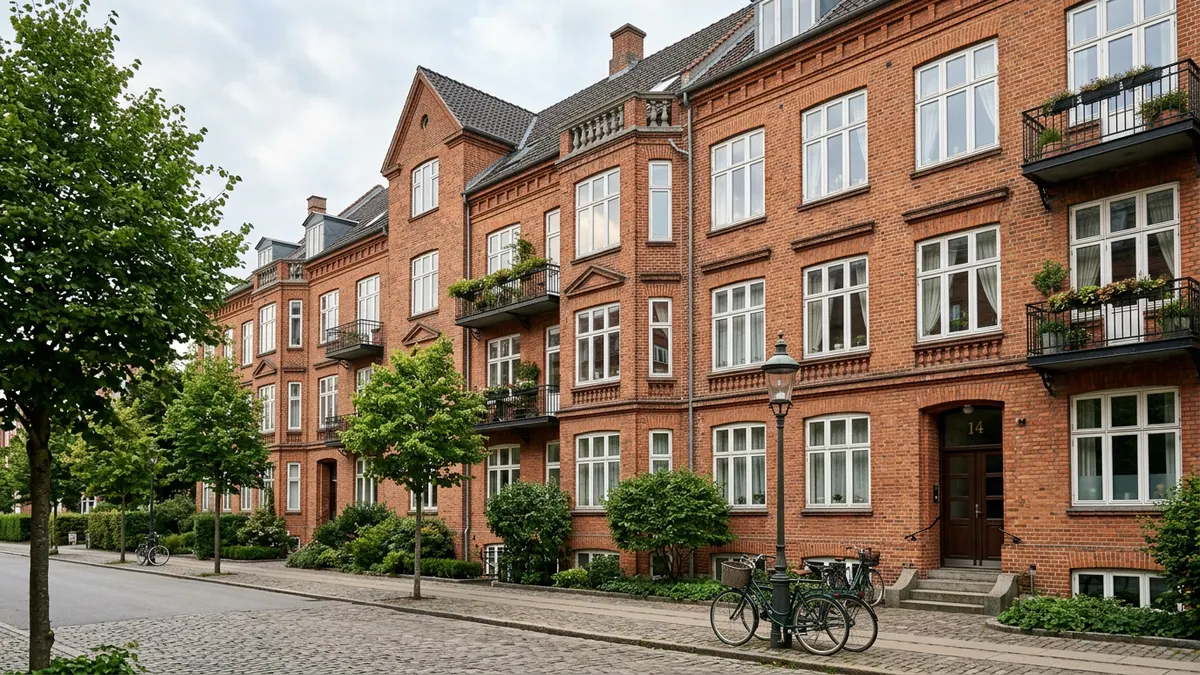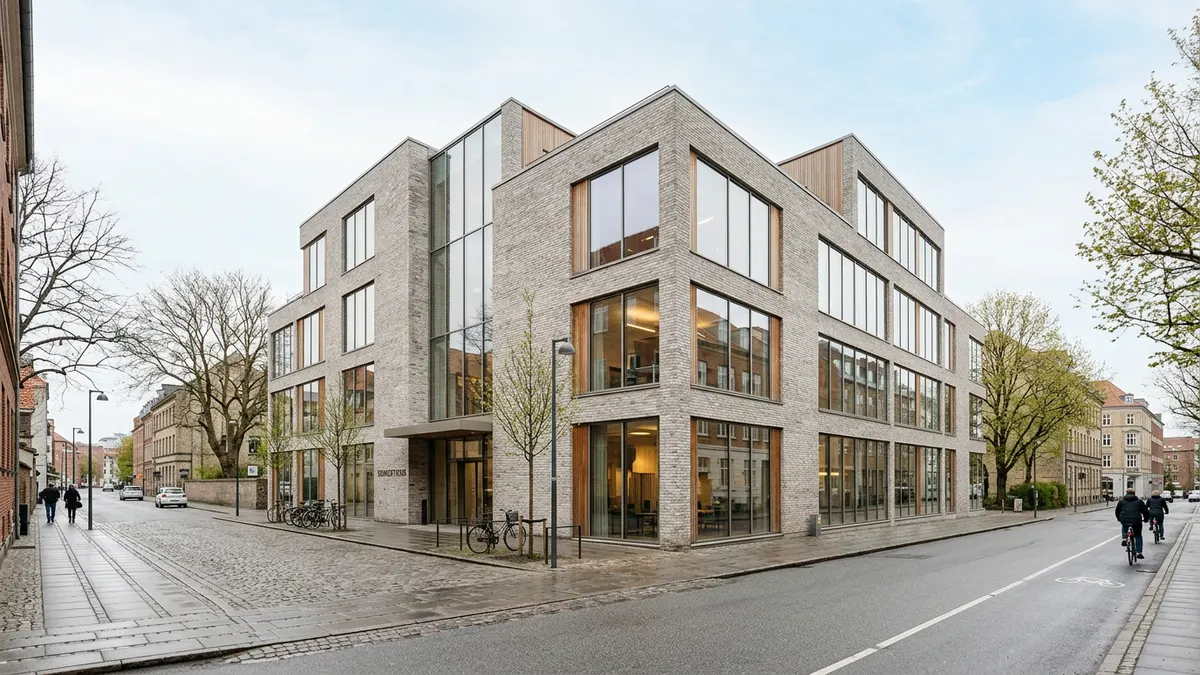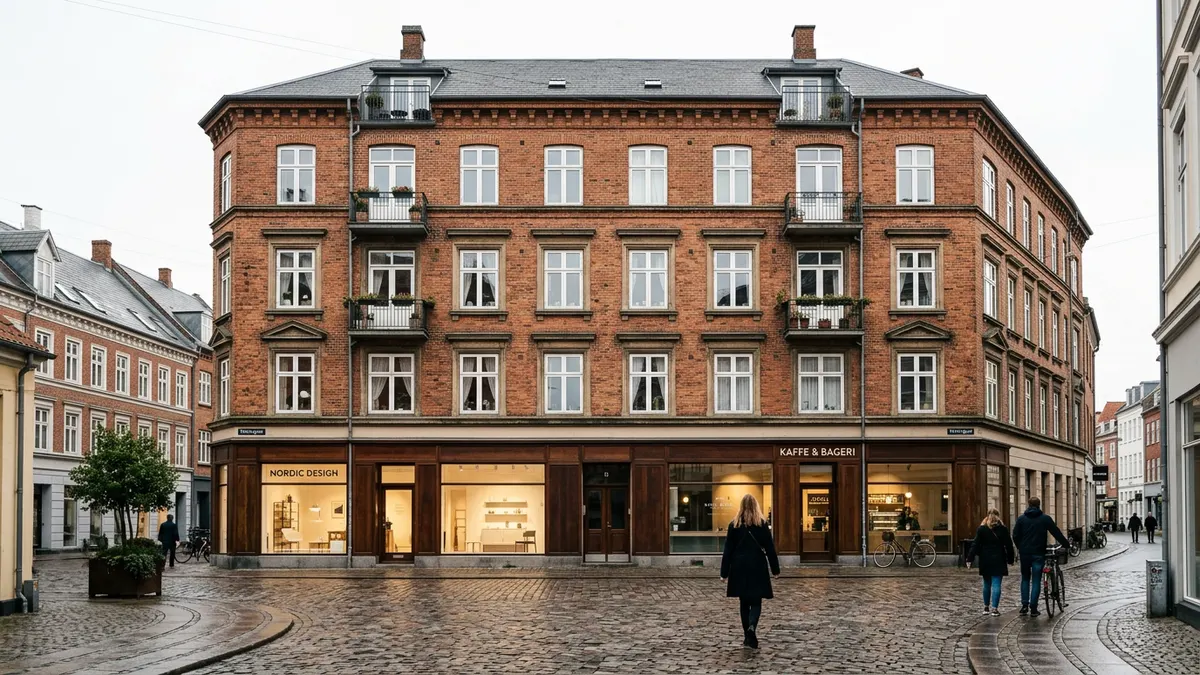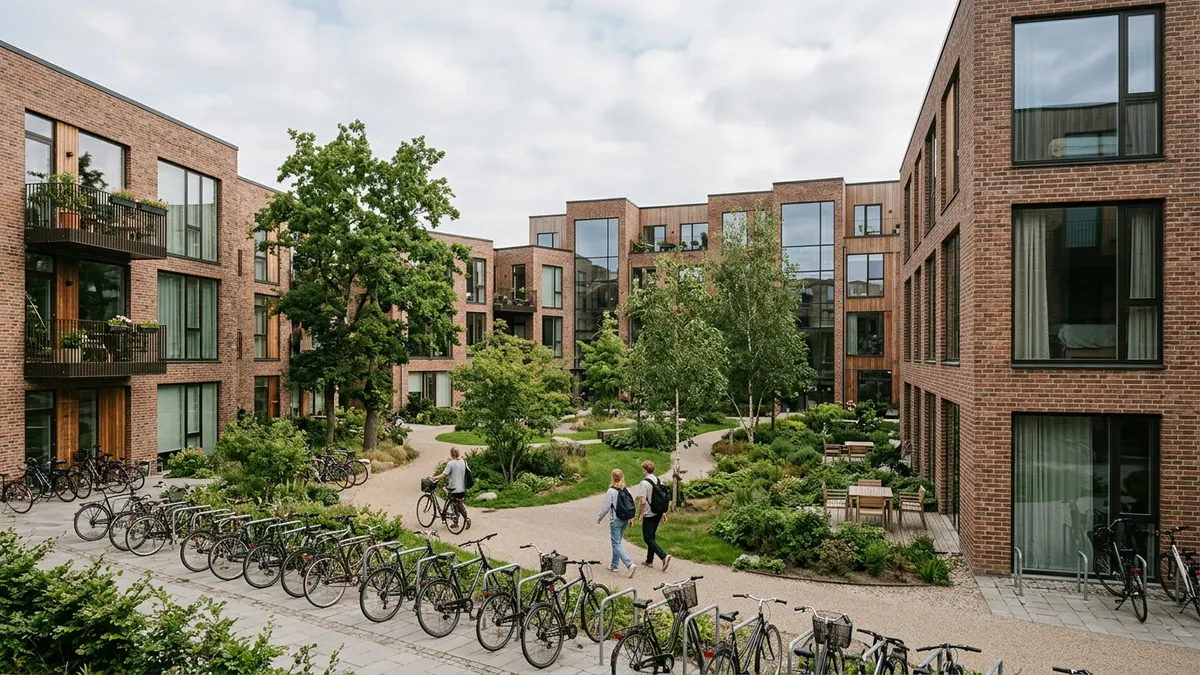
Investing in student housing in Danish university cities such as Copenhagen, Aarhus, Odense, and Aalborg offers investors a stable cash flow driven by constant demand. By focusing on properties with optimised floor plans and central locations, investors can achieve low vacancy risk and a solid return over time in a regulated market.
The dynamics behind student housing investment in Denmark
The Danish real estate market has historically been characterised by a high degree of stability, and the student housing segment constitutes a specific niche. When discussing investment in student housing, it typically refers to smaller apartments, shared flats, or dedicated dormitory buildings aimed at students at the country's higher education institutions.
In September 2026, we see a market where urbanisation towards the major educational cities continues, albeit at a more nuanced pace than in previous decades. Fundamentally, the driver behind this asset class is demographic development and a political desire for a highly educated workforce. As long as tens of thousands of students are admitted every year, there will be a fundamental need for a roof over their heads. For an investor, this means an inherent security in the form of a large and renewable tenant group.
However, it is important to understand that student housing is not a homogenous mass. There is a significant difference between investing in a one-bedroom apartment in Copenhagen NV compared to a larger portfolio of shareable apartments in Aalborg Vestby. The strategy behind a successful investment requires insight into local lokalplaner (local district plans), knowledge of the Lejeloven (Danish Rent Act), and an understanding of student preferences, which are currently shifting towards sustainability and social communities.
Geographical hotspots: Where does the investment make most sense?
Denmark has four primary university cities, each offering different risk profiles and return opportunities. The choice of city is crucial for your exit strategy and daily operations.
Copenhagen and Frederiksberg
Copenhagen remains the country's largest educational city with institutions such as KU, CBS, and DTU (Lyngby). Here, demand is massive, and vacancy is in practice close to zero for well-located homes. The challenge for the investor is the high price per square metre, which pressures the ongoing yield. Investing in student housing in the capital is often a 'value-add' or a capital appreciation case, where one bets on long-term equity rather than immediate liquidity.
Aarhus
Aarhus is the country's youngest city measured by average age, and the university is centrally located. Here, the student housing market is characterised by both new builds in Aarhus Ø and classic properties in the Øgadekvarteret and Trøjborg districts. Aarhus offers a balance between a certain yield and reasonable expectations for capital growth.
Odense and Aalborg
In Odense, the transformation of the city and the expansion of SDU (University of Southern Denmark) have created an exciting market. Prices are more affordable than in Aarhus and Copenhagen, which can provide a higher ongoing yield. The same applies to Aalborg, where urban development along the harbour has created many new homes. As an investor here, one must be particularly aware of the supply of new student housing, as a large supply of new builds can affect rental prices in older properties.
Legislation and framework conditions for student rentals
One of the most important factors when investing in student housing is knowledge of Danish rental legislation. Denmark has one of the world's most tenant-protective legal frameworks, which places great demands on the landlord's professionalism. One should be particularly aware of the rules regarding rent setting.
For properties built before 1991, rules regarding omkostningsbestemt leje (cost-based rent) or det lejedes værdi (value of the rented premises) typically apply. If an investor carries out thorough modernisations (according to the so-called Section 19, subsection 2 of the current Rent Act), they can in certain cases achieve a higher rent. However, the rules for modernising small buildings versus larger properties differ, and there is ongoing political focus on this area. We always recommend consulting a specialised property lawyer to ensure that the rent level is legally sustainable, as the Huslejenævnet (Rent Control Board) can reduce the rent retroactively if it is set too high.
Furthermore, one must be aware of BBR-registreringer (Building and Dwelling Register records) and local plans. Some municipalities impose bopælspligt (residency requirements), while others have specific requirements that certain properties may only be occupied by students. This can affect the property's value and your options for future resale.
Risk management and operational optimisation
Although student housing investment is considered stable, it is not without risks. Understanding and minimising these risks is the key to a healthy return.
- Re-letting costs: Students move more often than families or seniors. An average student typically lives in the same home for 2–4 years. This leads to more frequent refurbishments and administrative costs for ind- og udflytningssyn (move-in and move-out inspections).
- Wear and tear: Smaller apartments occupied by young people may experience heavier wear and tear than average. This requires a robust maintenance plan and a buffer in the budget for ongoing repairs.
- Interest rate environment: As property investment is often geared (financed with loans), the interest rate level affects the direct return. In 2026, we see a market where financing costs require sharper property selection.
To optimise operations, many professional investors use digital administrative platforms that automate rent collection and communication with tenants. This reduces fixed costs and increases transparency in the investment.
Comparison of investment types
Below is a general comparison of different approaches to student housing investment. Please note that figures are indicative and depend on the specific case.
| Parameters | Single Apartment (Condominium) | Small Rental Property (2-6 units) | Large Portfolio / Dormitory Building |
|---|---|---|---|
| Barrier to entry | Low - requires limited capital | Medium - requires professional finance | High - requires large equity or funds |
| Risk diversification | Low - 100% vacancy upon moving out | Medium - spread across several units | High - many units minimise losses |
| Operating costs | Often higher per unit (owners' assoc.) | Can be optimised via self-management | Scales efficiently with a caretaker |
| Yield potential | Typically 2-4% in major cities | Typically 3-6% depending on city | Typically 4-7% with professional ops |
The future of student housing: Trends towards 2030
Looking at student housing investment from a longer perspective, we see several trends that will shape the market towards 2030. Firstly, there is an increasing focus on sustainability (ESG). Students in 2026 are highly conscious of their carbon footprint, and properties with low energy costs and good waste sorting facilities will be more attractive.
Secondly, we see a movement towards 'Co-living'. Many students seek community to counteract loneliness. Properties designed with shared kitchens, roof terraces, or study rooms can often achieve a higher rent per square metre because students are paying for more than just their room – they are paying for a social network. For the investor, this means thinking about architectural value creation rather than just raw square footage.
Finally, technology plays a larger role. High-speed internet (fibre), keyless entry systems, and apps for booking communal laundry are now standard requirements for the modern student. Investing in these facilities can significantly reduce the time a property stays on the market during re-letting.
Financing your property investment
The choice of financing is crucial for your 'Return on Equity'. In Denmark, we primarily use the realkreditsystemet (mortgage credit system), which is unique and ensures relatively cheap financing. When investing in rental properties, you can typically borrow up to 60-80% of the property's value via realkredit (mortgage credit), while the rest is financed via bank loans and equity.
It is important to have a close dialogue with your financial institution early in the process. Banks view student housing positively due to stable demand, but they often require a documented operational plan and solid personal or corporate finances. We recommend obtaining a professional valuation of the property before the purchase agreement is signed to ensure that the basis for the loan is in order.
How to find the right cases
The market for investment properties is largely characterised by 'off-market' transactions. Many of the best student housing investments never reach public portals. It requires a strong network among agents, administrators, and other investors to gain access to these deals.
When looking for a case, you should look for:
- Location relative to campus: The closer to the educational institution, the better.
- Infrastructure: Proximity to light rail, metro, or good cycle paths is essential.
- Floor plan: Can the apartment be shared by two students? This increases the total ability to pay.
- Maintenance status: Avoid properties with large hidden renovation needs in the roof or foundation, unless the price reflects this.
This is where a professional sourcing partner can make a difference. By having a finger on the pulse and knowing the local conditions in cities like Odense or Aalborg, one can identify potential that the average investor might overlook.
Tax and company structure
When investing in student housing, you should consider whether the properties should be owned privately, via the virksomhedsordningen (VSO - business tax scheme), or in an anpartsselskab (ApS - private limited company). There are major differences in the taxation of ongoing profits and the capital gains upon a potential sale. In 2026, the rules for corporation tax and dividend tax remain complex and can change due to political intervention. Therefore, it is essential to consult an accountant or tax expert before structuring your investment. PropertyInvestments does not provide tax advice, but we are happy to facilitate contact with experts in the field.
Summary of the strategy
Investing in student housing is not a 'get rich quick' method, but a long-term strategy for wealth preservation and stable growth. By focusing on the major university cities, understanding the legislation, and optimising operations, you can build a portfolio that withstands economic fluctuations better than many other asset classes.
Whether you are an experienced investor or looking at your first property, the groundwork is the most important part. The market in 2026 requires precision, diligence, and a steady hand.
Frequently asked questions
Is investing in student housing safe in 2026?
No investment is risk-free, but student housing is considered among the most stable property assets due to the constant need for education and urbanisation. Risk is minimised by good location and thorough legal due diligence.
What return can one expect?
The return (yield) varies greatly by geography. In Copenhagen, it is often between 2-4%, while in cities like Aalborg or Odense, you can find cases with 4-6% or higher. However, this depends on the condition of the property and the rent level.
Should I buy as a private individual or a company?
It depends on your overall finances and time horizon. Many choose an ApS (private limited company) to limit liability and reinvest profits more efficiently, but private ownership can be advantageous in certain cases. Always seek advice from an accountant.
How do you handle vacancy when a tenant moves out?
By investing in student housing close to educational institutions and ensuring good condition, vacancy is usually minimal. Many landlords advertise 1–2 months before move-in to ensure a smooth transition between tenants.
How PropertyInvestments can help
PropertyInvestments has helped Danish and international investors navigate the Danish property market since 1985. We source relevant investment properties that fit your profile, and we help prepare the property for operation or sale. We follow the process all the way from the first inspection until the deal is finally closed and the deed has received its tinglysningsafgift (land registration fee) and is registered.
If you would like a professional and concrete dialogue about your opportunities for investment in student housing or other types of investment properties, you are welcome to contact us at info@propertyinvestments.dk or telephone +45 31 16 31 00. We are happy to have a non-binding meeting about your investment goals.