Investing in a boligudlejningsejendom (residential investment property) in Denmark offers a stable return through ongoing rental income and potential capital appreciation. The benefits include inflation protection and tax advantages, while risks primarily relate to vacancy, interest rate developments, and the complex Danish tenancy legislation. Success requires thorough due diligence and insight into regional market differences.
The Danish residential investment property market in 2026
The Danish property market has historically been regarded as a safe haven for both national and international investors. When looking at a boligudlejningsejendom as an asset class, it is characterised by a high degree of stability compared to the more volatile stock markets. In September 2026, we see a market marked by a normalisation following the interest rate hikes of previous years, which has created a more balanced relationship between buyers and sellers.
Demand for rental housing remains high, particularly in the major growth cities such as Copenhagen, Aarhus, Odense, and Aalborg. Urbanisation drives a constant influx of students and young professionals, supporting a low vacancy risk in central areas. However, we are also seeing increasing interest in secondary cities such as Roskilde, Køge, and the Triangle Region (Vejle, Kolding, Fredericia), where entry prices are often lower and the direct yield can be higher.
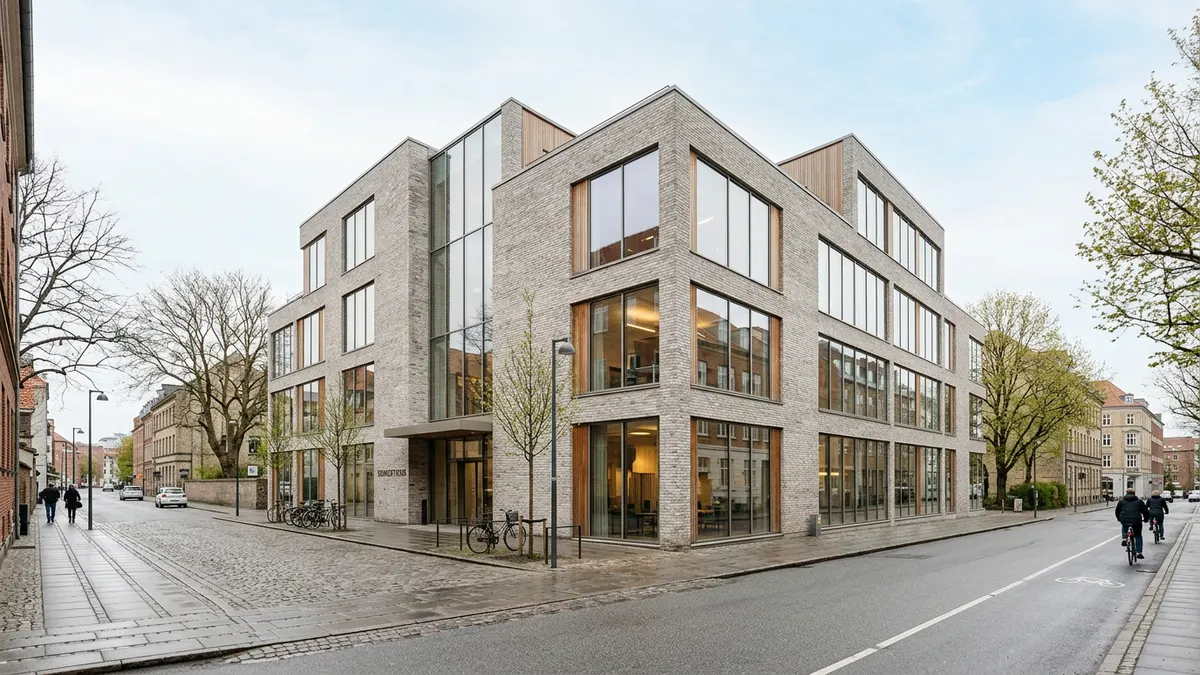
For an investor, it is crucial to understand that the Danish market is strictly regulated. There are significant differences between investing in newly constructed properties versus older properties built before 1991, as rent setting follows different sets of rules. This creates both challenges and opportunities for those who manage to navigate the legal framework.
Gains from investing in residential investment property
There are several fundamental reasons why a boligudlejningsejendom is considered an attractive investment. The benefits range from ongoing cash flow to long-term wealth gains.
Ongoing cash flow and stability
The most immediate benefit is the rental income. A well-managed property generates a monthly surplus after operating costs and financing. As housing is a basic need, demand is less sensitive to economic cycles than, for example, office or retail space. During periods of economic uncertainty, more people often choose to rent rather than own, which can strengthen the rental market.
Value appreciation over time
Historically, real estate in Denmark has followed or exceeded inflation. Although prices can fluctuate in the short term, the long-term trend has been upward, especially in areas with population growth. This value appreciation is realised upon sale or can be utilised through refinancing for further investments.
Inflation protection
Lease agreements in Denmark often contain a clause regarding annual net price indexing. This means that rental income increases in line with inflation, protecting the investor's purchasing power. This is a significant advantage compared to bonds or cash savings.
Tax aspects
Investing in real estate allows for depreciation on certain parts of the property (though rarely on the residential part itself in residential buildings, but on installations and operating equipment). Furthermore, interest expenses are deductible, and when investing through a company (ApS (private limited company) or A/S (public limited company)), profits are taxed at the corporate tax rate, which can be advantageous when reinvesting returns. We always recommend consulting an accountant for specific advice on tax matters.
Significant risks in rental properties
No investment is without risk, and a boligudlejningsejendom requires active management to minimise potential losses. It is important to distinguish market risks from operational risks.
Legislation and regulation
The Danish Rent Act (Lejeloven) is known for being very protective of the tenant. For an investor, this means that one cannot freely set the rent in older properties. Rules regarding omkostningsbestemt leje (cost-based rent) or det lejedes værdi (value of the rented premises) can lead to the rent being reduced by the Huslejenævn (Rent Control Board) if it is assessed as too high. Furthermore, terminating tenants is very difficult unless specific conditions are met.
Interest rate increases and financing
Property investment is often highly geared (leveraged). If you have chosen variable financing, rising interest rates can quickly erode profits. Even with fixed-rate loans, the interest rate level will affect the property's market value; when interest rates rise, the value of future cash flows typically falls, which can lead to a decrease in property prices.
Vacancy risk
Vacancy occurs when homes stand empty without tenants. Although demand is high in Copenhagen and Aarhus, an oversupply of new construction in certain districts or in smaller provincial towns can lead to periods without rental income. Maintenance costs and taxes still accrue even if no money is coming in.
Maintenance and unforeseen expenses
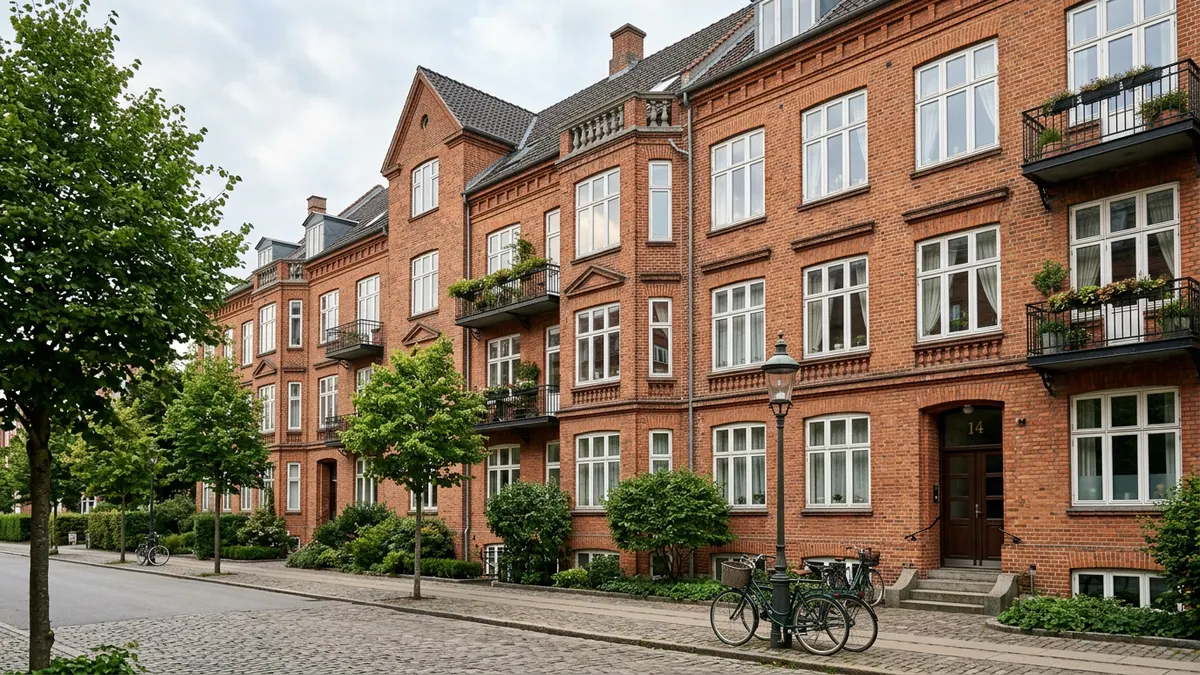
Older properties can hide technical challenges such as damp, leaking roofs, or outdated installations. Unforeseen repairs can require significant capital and negatively impact the year's return. A thorough technical due diligence before purchase is therefore essential.
Comparison of investment types
Below is an overview of typical differences in residential property investments depending on property type and geography.
| Area/Type | Typical Yield | Risk | Rental Potential |
|---|---|---|---|
| Copenhagen City (Classic) | 2.5% - 3.5% | Low | Very High |
| Aarhus C (New Build) | 3.0% - 4.0% | Low/Medium | High |
| Triangle Region (Residential) | 4.5% - 6.0% | Medium | Stable |
| Provincial Towns (Zealand/Jutland) | 6.0% - 8.0% | Higher | Varying |
Note: Figures are estimates based on market averages in September 2026 and do not constitute a guarantee of future results. Local variations occur.
Geographical considerations in Denmark
The choice of location is perhaps the most important decision when sourcing a boligudlejningsejendom. Geography determines both your direct yield and your long-term risk.
The Capital Region and Copenhagen
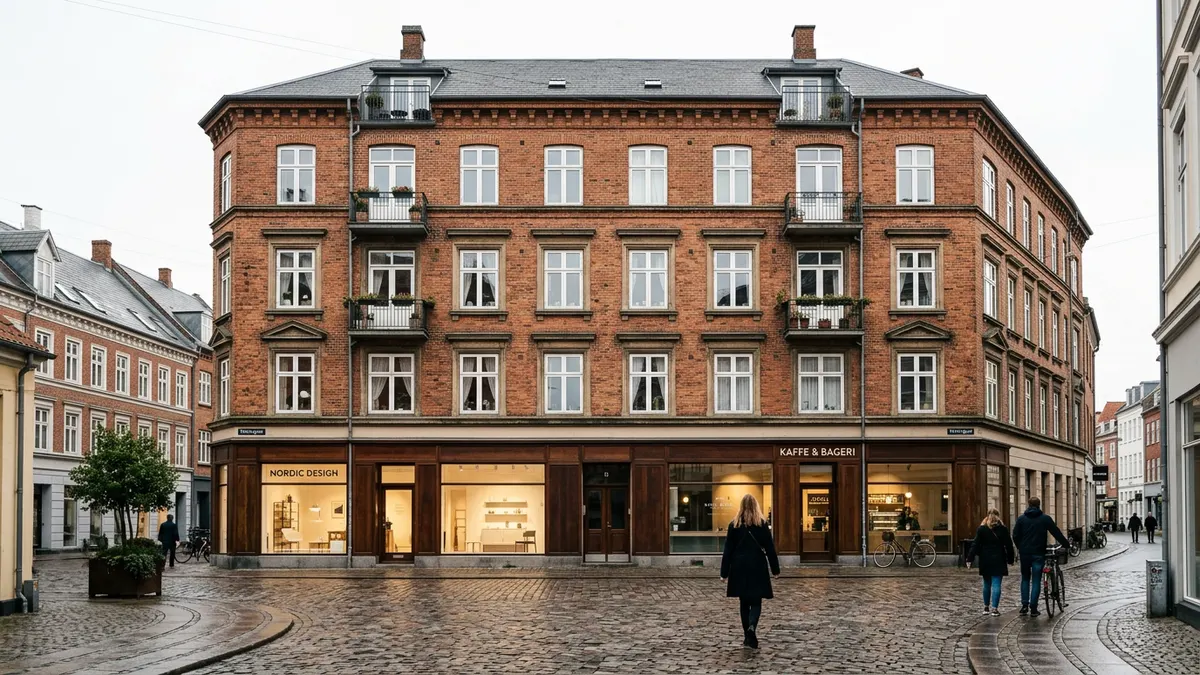
Copenhagen remains the most liquid market. Here, demand is massive, and re-letting often happens within days. Conversely, the yield is low due to high prices per square metre. Investors here primarily bet on value preservation and long-term growth. Areas like Valby, Amager, and the new districts in Nordhavn remain in focus.
East Jutland and Aarhus
As the country's second-largest growth engine, Aarhus attracts many students. This creates a strong market for smaller apartments. Prices are more moderate than in Copenhagen, but rent levels are still high enough to ensure healthy operations. Silkeborg and Skanderborg are also experiencing great growth as satellite towns to Aarhus.
Funen and Odense
Odense has undergone a transformation with a light rail system and urban development. The city offers an interesting balance where one can still find properties with a reasonable yield, while the city grows as a knowledge hub for robotics and health research.
North Jutland and Aalborg
Aalborg has managed to transition from an industrial city to a university city. The market for residential investment properties here is characterised by stability, but one should be aware of a certain risk of oversupply of new apartments in certain harbour areas.
Legal framework: What every investor should know
When operating a boligudlejningsejendom in Denmark, you are subject to complex regulations. It is crucial to know the difference between the various rent-setting principles:
- Markedsleje (Market Rent): Applies to properties built after 31 December 1991, as well as thoroughly modernised leases under certain conditions. Here, there is greater freedom of contract.
- Omkostningsbestemt leje (Cost-based Rent): Typically applies to older properties in regulated municipalities. The rent is set based on actual operating expenses plus a return for the landlord.
- Det lejedes værdi (Value of the Rented Premises): Often used in unregulated municipalities or in disputes over rent levels in certain property types. Here, the rent is compared with similar leases in the area.
In addition, one must be aware of the rules regarding tilbudspligt (obligation to offer), where tenants under certain circumstances must be offered the opportunity to buy the property on a cooperative basis if it changes hands. The rules are complex and change periodically through political initiatives. We always refer to the Ministry of Justice or a specialised property lawyer for the latest interpretation of the law.
Operation and optimisation of your investment
A boligudlejningsejendom is not a passive investment unless you outsource the management. Effective operation involves:
- Tenant Management: Screening tenants to ensure timely payment and good order.
- Maintenance Plans: A 10-year maintenance plan helps budget for large expenses such as roof replacement or facade renovation.
- Energy Optimisation: With a focus on ESG (Environmental, Social, and Governance), energy optimisation has become a significant factor. Better energy ratings can increase property value and make it more attractive to tenants wanting lower heating bills.
- Digitalisation: Using digital platforms for rent collection and communication with tenants reduces administrative costs.
Financing strategies
In the current market of 2026, financing is a key component. Realkreditlån (mortgage credit loans) are the foundation of Danish property financing and offer some of the world's most favourable terms. Typically, a residential investment property can be financed up to 80% via mortgage credit, while the remaining 20% is financed via equity or bank loans.
Investors should consider the combination of fixed and variable interest rates as well as the possibility of afdragsfrihed (interest-only periods). Interest-only periods can increase monthly cash flow but also increase the total debt burden over time. It is important to have a robust financial structure that can withstand minor fluctuations in market interest rates.
The Due Diligence process
Before signing a purchase agreement for a boligudlejningsejendom, a thorough due diligence process is essential. It should include:
- Financial Due Diligence: Review of rent rolls, operating accounts, and arrears.
- Legal Due Diligence: Review of lease agreements, servitutter (easements/covenants), and any legal disputes with tenants.
- Technical Due Diligence: Condition report, energy certificate, and assessment of future maintenance needs.
- Commercial Due Diligence: Analysis of the local area, future construction plans nearby, and general demand.
This process minimises the risk of unpleasant surprises after the takeover.
Conclusion
Investing in a boligudlejningsejendom in Denmark requires patience, insight, and a professional approach. While the rewards in the form of stable returns and value appreciation are attractive, the legal and operational risks are real. By focusing on the right geographical areas and ensuring a healthy financial structure, property investment can, however, constitute a solid cornerstone in an investment portfolio.
We always recommend that investors seek professional advice from brokers, lawyers, and accountants before making major investments in the property market.
Frequently asked questions
What is a normal return on a residential investment property?
The return, also called the yield, varies depending on location. In Copenhagen, it typically lies between 2.5% and 3.5%, while in provincial towns, one can achieve between 5% and 8%. However, the total return also includes expected capital appreciation.
Can you freely set the rent in Denmark?
No, rent setting is strictly regulated. In newer properties (post-1991), there is more freedom, but in older properties, the rent is often bound by rules on cost-based rent or the value of the rented premises. Always contact a professional to have the rent level assessed.
Is it best to invest privately or through a company?
It depends on your other finances and the purpose of the investment. Many choose an ApS or A/S to separate the investment from personal finances and to achieve tax benefits upon reinvestment, but this also entails more administrative requirements.
What does vacancy risk mean?
Vacancy risk (tomgangsrisiko) is the risk that one or more leases stand empty for a period. This means loss of rental income, while the owner's fixed expenses for property tax, insurance, and heating must still be paid.
How PropertyInvestments can help
PropertyInvestments has assisted Danish and international investors since 1985 in finding the right investment objects in Denmark. We source residential investment properties, perform initial analyses, and prepare properties for sale. Our experience ensures that the process from sourcing to final sale proceeds professionally and concretely.
If you are looking for a specific boligudlejningsejendom or wish to hear more about the market's opportunities in 2026, you are welcome to contact us for a non-binding dialogue.
Contact: Email: info@propertyinvestments.dk Telephone: +45 31 16 31 00