Commercial property investment covers the purchase and operation of properties for office, retail, or showroom purposes with the aim of achieving stable rental income and capital appreciation. Success requires insight into location, lease agreements, and market dynamics in Danish growth cities such as Copenhagen, Aarhus, Odense, and Aalborg to ensure a long-term return.
The potential of commercial property investment in the Danish market
The Danish commercial property market has historically been characterised by stability and transparency. For investors seeking an alternative or supplement to residential buy-to-let, a commercial property investment often offers other advantages, including longer lease terms and a different risk profile. Since 1985, the market has evolved significantly, but the fundamental principles of location and tenant mix have remained central.
The commercial market is divided into several segments, where office, retail, and showrooms constitute significant parts. Each property type requires a specific approach to valuation and operation. In Denmark, the framework for commercial leasing is regulated by the Erhvervslejeloven (Business Rent Act), which grants parties a high degree of contractual freedom compared to residential tenancy law. This allows professional investors to tailor agreements that reflect specific risks and desired returns.
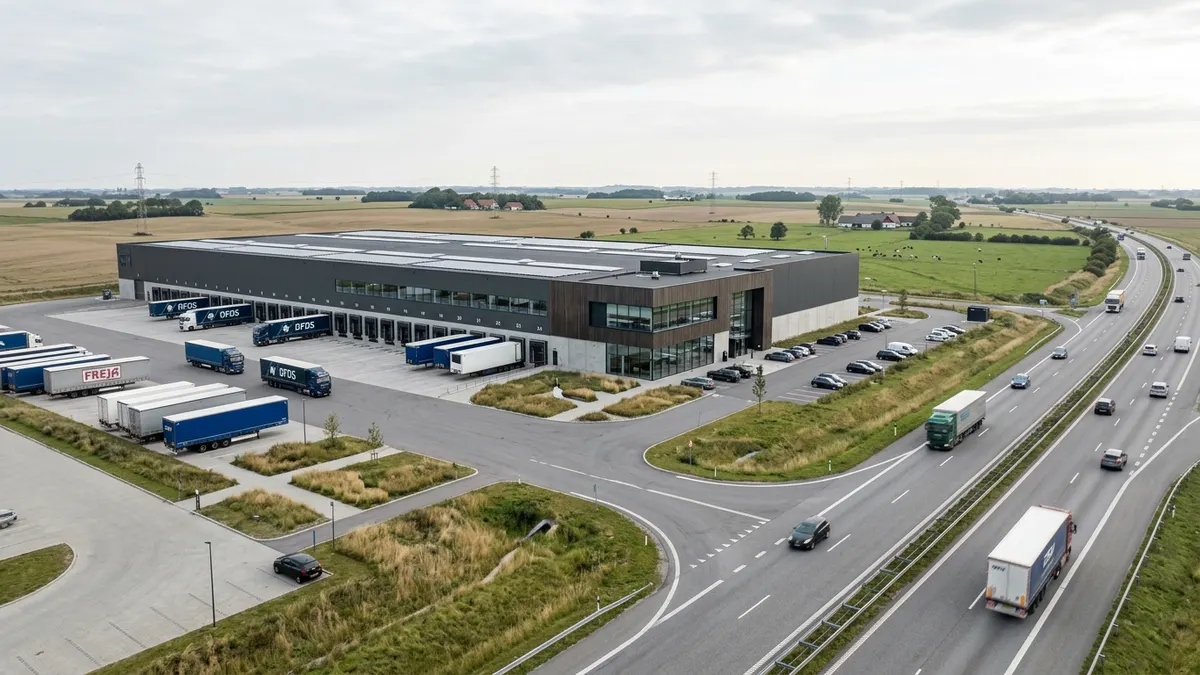
When looking at the geographical landscape, there is a large difference in dynamics between Greater Copenhagen and the regional growth centres. While the capital often experiences the lowest yield due to high security and demand, cities such as the Triangle Area (Vejle, Kolding, Fredericia) can offer attractive opportunities for logistics and combination properties with showroom facilities.
Office properties: Stability and modern requirements
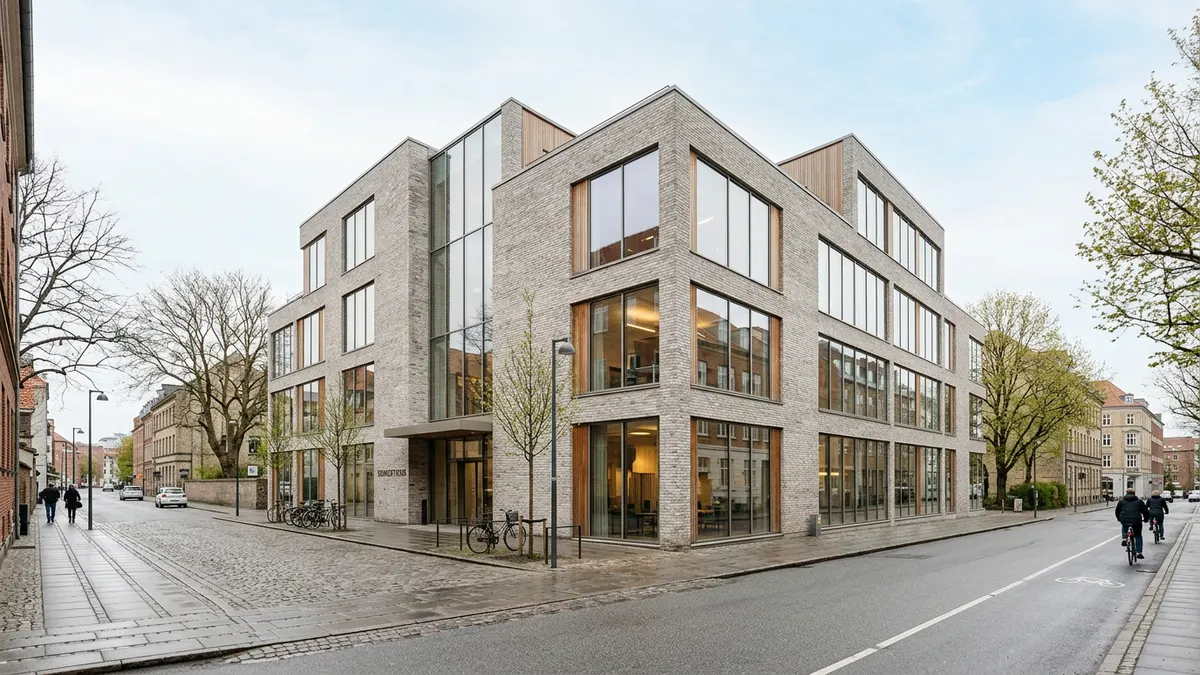
The office segment has undergone a transformation in recent years. Where the focus was previously on square footage alone, modern office investment is now about functionality, indoor climate, and flexibility. For a commercial property investment in the office sector, it is crucial to understand tenants' needs for modern facilities.
The importance of location for offices
For office properties, infrastructure is the most important parameter. Proximity to the motorway network, train stations, and the Metro (in Copenhagen) is directly correlated with the property's vacancy risk. Investors often look towards areas like Ørestad, Nordhavn, or the central bridge districts, but office house concepts in Aarhus C and eastern Aalborg are also in high demand.
Lease structure
Unlike residential rentals, commercial leases are often non-terminable for a period of years. This provides the investor with a predictable cash flow. However, it is important to be aware of maintenance obligations, which can typically be imposed on the tenant to a higher degree than in residential property, including internal maintenance and, in some cases, parts of the external maintenance via fællesomkostninger (service charges).
Retail properties and the dynamics of trade
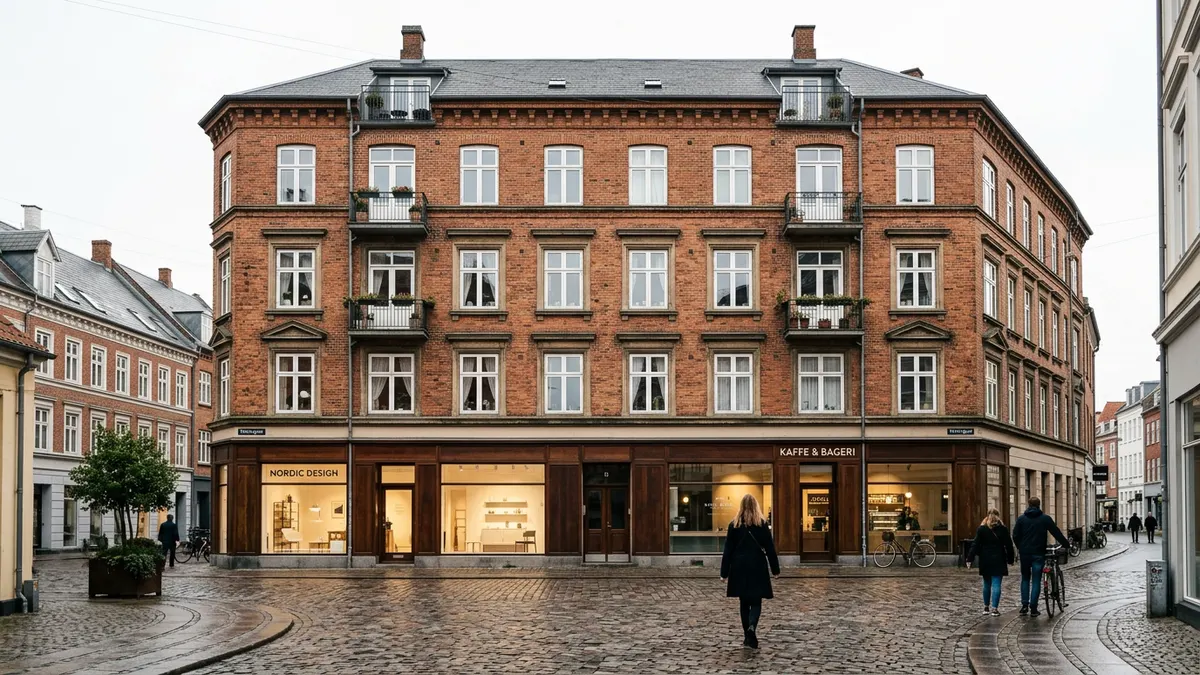
Investing in retail properties requires a watchful eye on consumer patterns. Although e-commerce has changed the landscape, physical stores remain central to many brands, especially in 'high street' locations or in combination with showrooms.
| Parameters | High Street Shop | Mall-based Shop | Showroom/Retail Park |
|---|---|---|---|
| Location | A-location in city centre | Shopping centres | Outskirts/arterial roads |
| Footfall | Natural pedestrian traffic | Planned visits | Target driving |
| Lease length | Often 3-10 years | Varying | Often 5-15 years |
| Risk | Low at top locations | Dependent on mall ops | Dependent on visibility |
In a commercial retail investment, one must assess the property's convertibility. If a retail tenant vacates, it is essential that the premises can be easily adapted for a new type of business or potentially changed to a cafe/restaurant (which requires myndighedsgodkendelse (planning permission/authority approval)).
Showrooms as a growing investment niche
Showrooms function as a bridge between warehouse and shop. These are premises where companies can display their products without necessarily having a large stock at the same address. This type of property is often found along major arterial roads into cities like Odense or along Ring 3 around Copenhagen.
Investors find showrooms attractive because they often require less intensive fit-out than offices, yet can still command a reasonable rent per square metre. Tenants are typically well-established companies within design, furniture, cars, or technical equipment, which often means solid tenants with good creditworthiness.
Legislation and framework conditions in Denmark
When working with commercial property investment, it is crucial to understand the legal framework. In Denmark, the Erhvervslejeloven (Business Rent Act) is the starting point, but the act is largely derogable. This means that the agreement between the landlord and tenant is the most important document.
Key points in the commercial lease:
- Non-terminability: How long is the tenant bound, and does the landlord also have a non-termination period?
- Rent adjustment: Should the rent be adjusted according to the Nettoprisindekset (Net Price Index - NPI), and is there a minimum adjustment?
- VAT: Most commercial properties are VAT-registered, which allows for the deduction of VAT on operating expenses and refurbishments. However, one should always seek advice from an accountant or tax expert regarding moms (VAT) matters.
- Assignment rights: Does the tenant have the right to transfer the lease to a third party (afståelsesret)? This is standard in many contracts but can be restricted.
PropertyInvestments always recommends that investors seek legal assistance for reviewing contracts, as small phrasings can have a significant impact on the property's value at a later sale.
Financing commercial properties
Financing commercial properties in Denmark differs from private residential homes. The mortgage credit system (realkreditsystemet) is still the foundation, but the loan-to-value limits for commercial are typically lower (often around 60-70% depending on property type and tenant profile). The remaining financing is often via bank loans or equity.
Investors should be aware that financial institutions place great emphasis on the stability of rental income and the property's alternative use. A property with a very specific layout may be harder to finance than a standardised office unit, as the vacancy risk is assessed as higher.
Management and optimization of the property portfolio
An active approach to asset management is key to increasing the return on a commercial property investment. This involves not just collecting rent, but also continuously optimizing the property's energy rating, maintenance status, and tenant mix.
In Denmark, we see an increasing trend towards sustainability certifications such as DGNB. Although it requires an initial investment, experience shows that certified properties often have lower vacancy rates and can attract larger, international tenants who have strict requirements for their ESG (Environmental, Social, and Governance) reporting.
Geographical considerations in 2026
- Greater Copenhagen: Continued high demand, but competition for prime assets. Focus on converting older industrial properties into modern offices.
- Aarhus: Strong growth in the harbour area and urban business districts. Good balance between risk and return.
- Odense: The transformation of the city centre and growth in robotics technology creates demand for both offices and specialised showrooms.
- The Triangle Area: Denmark's logistical centre. Here, showrooms and combination properties are particularly relevant due to the central location in the country.
Risk management in commercial investment
No investment is without risk. In commercial property, the primary risks are:
- Vacancy risk: The property standing empty for a period without rental income.
- Interest rate risk: Increases in financing costs can erode returns.
- Tenant risk: A tenant going bankrupt or failing to meet payment obligations.
- Market risk: General economic downturns that reduce demand for commercial premises.
To counter these risks, professional actors use thorough due diligence before purchase. This includes a technical review of the building, a legal review of all contracts, and a financial analysis of the tenants' robustness.
Preparing for sale and exit strategy
When a property is to be sold, preparation is vital. At PropertyInvestments, we know that a well-documented property achieves a better price. This means all leases must be up to date, maintenance plans must be transparent, and the financial overview must be flawless.
An investor should always have their exit strategy in mind when the property is purchased. Is the goal to keep the property for 20 years for the ongoing income, or is the strategy to optimize the property over 5 years and sell it on for a profit? The choice of strategy affects which type of commercial property investment is the right one.
Conclusion on commercial properties
Investment in offices, retail, and showrooms offers a diversity of opportunities in the Danish landscape. By focusing on quality, location, and solid lease agreements, investors can build a portfolio that withstands market fluctuations. However, it requires in-depth knowledge of local conditions and a proactive approach to property management.
The Danish market in September 2026 is characterised by a mature approach to property investment, where data and sustainability play a leading role. For the right investor, commercial property remains one of the most attractive assets for wealth preservation and growth.
Frequently asked questions
What is the typical yield on commercial properties?
The return, also called the yield, varies depending on location and property type. In Copenhagen K (City Centre), the yield is typically lower due to high security, while regional cities and industrial properties often offer a higher yield to compensate for potentially higher risk.
Is it better to invest in offices than in retail?
There is no single answer, as it depends on the investor's risk appetite. Offices often have stable tenants, while retail in the right locations can be extremely lucrative. The retail market, however, is more sensitive to changes in consumer behaviour.
What rules apply to the termination of commercial tenants?
Termination is regulated by the Erhvervslejeloven (Business Rent Act), but in commercial contexts, there is significant contractual freedom. Often, non-termination periods of several years are agreed upon. If nothing is agreed, the notice period is typically three months, but certain types of leases have special protection.
Do you have to pay VAT on the rent for a commercial property?
As a starting point, the leasing of real estate is VAT-exempt, but the landlord can choose to voluntarily register for VAT (frivillig momsregistrering) to deduct VAT on costs. This requires the tenant to be VAT-registered. We always recommend speaking with an accountant about this.
How PropertyInvestments can help
PropertyInvestments has since 1985 assisted Danish and international investors with the sourcing, setup, and sale of investment properties in Denmark. We prepare properties for sale and ensure the process runs professionally from the initial analyses to the final transfer (overdragelse). If you are looking for advice or specific investment opportunities within office, retail, or showrooms, you are welcome to contact us for a non-binding dialogue.
Contact us at info@propertyinvestments.dk or telephone +45 31 16 31 00 to hear more about your opportunities for commercial property investment.