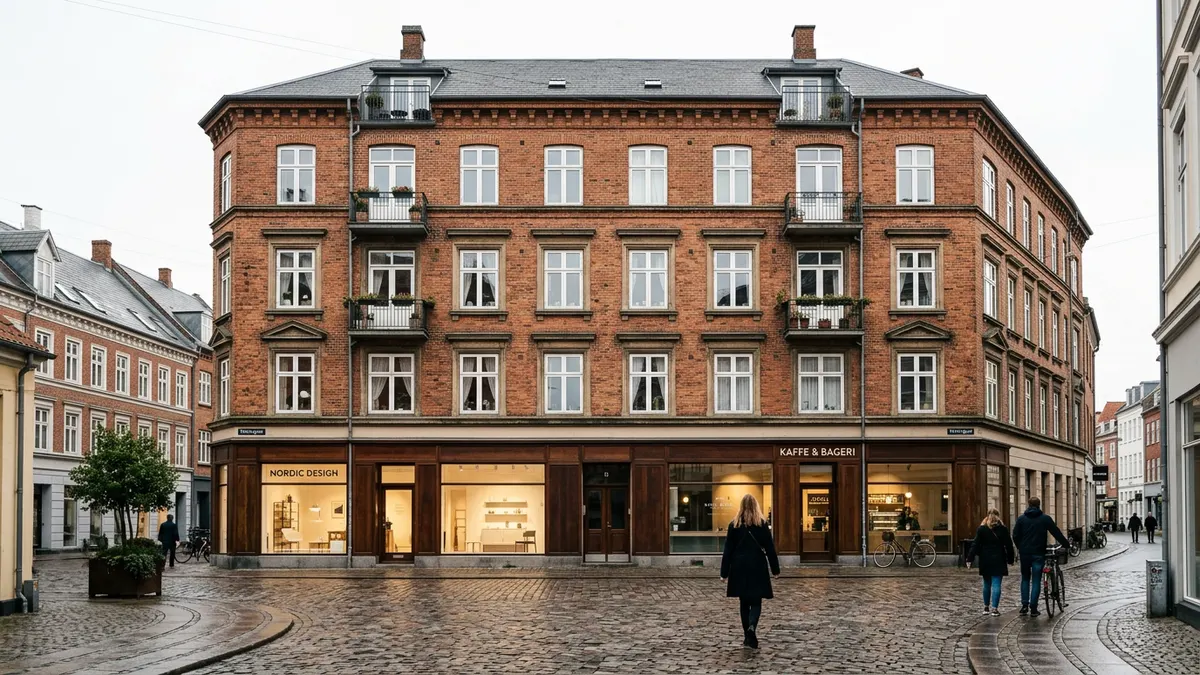
Mixed-use properties are investment assets that combine both residential and commercial spaces within the same cadastre (matrikel), typically featuring retail or offices on the ground floor and residential units on the upper floors. This property type offers investors risk diversification through different tenancy categories and is subject to both the Danish Residential Rent Act (Lejeloven) and the Danish Commercial Rent Act (Erhvervslejeloven), depending on the unit's use.
What characterises mixed-use properties in Denmark?
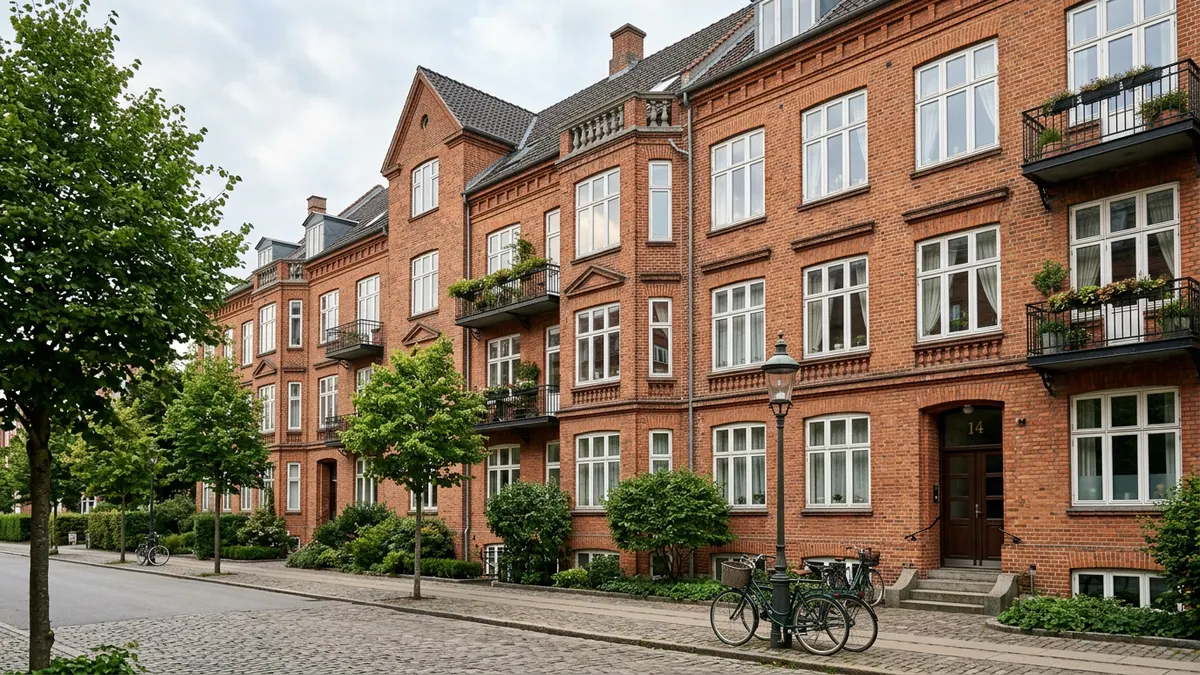
When discussing mixed-use properties in the Danish market, we refer to buildings where the use is split between residential purposes and commercial utilisation. This is a classic feature of the Danish cityscape, especially in the older urban centres of Copenhagen, Aarhus, Odense, and Aalborg, where ground floors have historically been dedicated to trade, while the other floors housed the city's residents.
From an investment perspective, these properties differ from pure residential or pure commercial real estate by having a more complex risk profile and a differentiated legal basis. For an investor, this means navigating two different sets of rules: lejeloven (the Residential Rent Act) for the residential part and erhvervslejeloven (the Commercial Rent Act) for the commercial part. This places demands on administration but also provides unique flexibility regarding cash flows and valuation.
One of the most significant characteristics of mixed-use properties is their resilience to economic fluctuations. While commercial tenants may be more sensitive to economic cycles, the demand for housing in major Danish cities is often stable. Conversely, the commercial portion often allows for higher rental income per square metre and longer binding periods for tenants, which can stabilise the property's operation.
Advantages of investing in mixed-use properties
There are several strategic reasons why both private investors and institutional actors look toward mixed-use properties. The benefits primarily relate to risk management and optimisation potential.
Risk spread through diversification
By owning a property with multiple uses, the investor spreads their risk. If retail is challenged for a period by increased e-commerce, the residential part will often continue to generate a stable return. Conversely, a strong commercial tenant with a non-terminable contract can secure the foundation of the property's financing, even if a vacancy should occur in a single residential apartment.
Optimisation of square footage
Mixed-use properties often allow for the most efficient use of a building's square footage. Ground floors are rarely attractive for residential purposes due to noise and lack of privacy, but they are ideal for shops, cafes, or service industries. By placing commercial units here and residences above, one maximises the rental value of every single square metre in the building.
Varying lease terms
The Commercial Rent Act allows for a high degree of freedom of contract compared to the highly protective Residential Rent Act. This means that for the commercial part, terms regarding maintenance, non-terminability, and rent levels can be agreed upon that are harder to implement in the residential market. This mix of tight regulation and contractual freedom creates an exciting dynamic for the professional investor.
Legal framework: A balance between two worlds
It is crucial for any investor in mixed-use properties to understand the legal landscape. Since the property is divided into two use types, one must handle two different types of lease agreements and comply with different rules for notice of rent increases, maintenance obligations, and termination.
| Area | Residential (Lejeloven) | Commercial (Erhvervslejeloven) |
|---|---|---|
| Rent setting | Often regulated (cost-based rent or value of the leased premises) | Supply and demand (market rent) |
| Termination | Very limited for the landlord | High freedom of contract; often non-terminable periods |
| Maintenance | Often the landlord's duty (internal/external maintenance accounts) | Can be agreed freely (often tenant's internal maintenance) |
| VAT | VAT exempt | Can often be VAT registered (beneficial for deductions) |
It is important to note that VAT conditions in mixed-use properties can be complex. Commercial leasing can, under certain circumstances, be made subject to VAT, allowing the landlord to deduct VAT on operating costs and investments related to the commercial part. Residential leasing is generally VAT exempt. One should always seek advice from a tax expert or accountant to ensure correct handling of partial deduction rights (momsfradrag).
The importance of location for mixed-use properties (GEO)
Geography plays a central role in the success of this property type. A mixed-use property in Randers may have entirely different conditions than a similar one in Lyngby or Roskilde.
The Capital Region and major cities
In Copenhagen and Aarhus, demand for both residential and commercial square footage is extremely high. Here, the risk of vacancy is minimal, but the yield requirements are also lower as prices are pushed up. In cities like Odense and Aalborg, we see strong development in urban centres where mixed-use properties are in high demand due to urban densification.
Regional cities and growth centres
Cities like Vejle, Kolding, and Horsens have experienced significant growth in recent years. Here, investors can often find mixed-use properties with a higher initial yield than in the largest cities. However, it is important to carefully analyse the ground floor's potential: is the street characterised by life and trade, or are there many empty shop windows? The local urban development plan from the kommune (municipality) is an essential tool here.
Smaller towns and the provinces
In smaller towns, the commercial part of a mixed-use property may pose a greater risk. If the local grocer or hairdresser closes, it may take time to find a new tenant. On the other hand, the acquisition price is lower, and the residential part can often carry a large part of the financing, so the commercial part acts as an "upside".
Valuation and financing
The valuation of mixed-use properties requires a split of income streams. The residential part is typically valued based on a yield requirement reflecting stability and market-conform rent. The commercial part is assessed based on market rent for comparable premises in the area, the tenant's creditworthiness, and the length of the contract.
Regarding financing, mortgage credit institutions (realkreditinstitutter) will typically perform a weighted assessment. The loan-to-value limit for residential rental properties is normally up to 80%, while for commercial properties it is 60%. For a mixed-use property, the total leverage will depend on the distribution between residential and commercial areas and their respective values. It is therefore important to have an accurate BBR (Building and Dwelling Register) measurement and a clear breakdown of the operating budget.
Investors should also be aware that maintenance needs can vary greatly. Commercial leases often wear differently than residential ones, and requirements for facilities like ventilation, waste management, and parking can be stricter for the commercial part. A thorough Technical Due Diligence (TDD) is therefore indispensable before a purchase.
Potential for optimisation and transformation
One of the most interesting aspects of mixed-use properties is the possibility of value addition through transformation. The market is constantly changing, and what was a good shop in the 1990s might be better suited as a co-working space or even housing today.
Conversion from commercial to residential
In areas with high housing shortages, it can often pay off to investigate whether commercial areas (especially on the 1st floor or in backhouses) can be converted to residences. This requires permission from the municipality and compliance with building regulation requirements for habitation (natural light, insulation, escape routes). Such a conversion can often significantly lift the property's total value, as residential square metres in many cities trade at higher prices than office space.
Modernisation of commercial premises
By upgrading the ground floor facade or installing modern facilities, one can attract tenants with higher paying capacity and better creditworthiness. A strong anchor tenant in the commercial part (e.g., a national chain or a solid medical clinic) will reduce the risk of the entire investment and make it more attractive for a potential resale.
Challenges to be aware of
No investment is without risks. For mixed-use properties, there are specific pitfalls to navigate:
- Noise and nuisances: Conflicts between the commercial tenant's operations (e.g., a restaurant or bar) and the residential tenants' desire for peace can be an administrative headache. It is important to have clear house rules and good sound insulation.
- Commercial vacancy: Where residences can almost always be rented out if the price is right, specific commercial premises can stand empty for longer if they no longer fit the market's needs.
- Complex administration: The requirement to handle different notice periods, consumption accounts, and maintenance rules means that a professional property manager is often needed.
- Tax matters: The allocation of property taxes (ejendomsskatter) and coverage charges (dækningsafgift) between residential and commercial must be handled correctly to ensure costs are placed with the right tenants in accordance with the leases.
It is always recommended to seek professional legal and financial advice before entering into agreements for the purchase of mixed-use properties, as mistakes in the due diligence phase can become costly in the long run.
Summary of investing in mixed-use properties
Investing in mixed-use properties requires a keen eye on both residential market stability and commercial dynamics. For the right investor, it is an obvious opportunity to build a portfolio that is resilient to crises and offers multiple levers for value creation. Whether looking at growth cities like Roskilde or established markets in Copenhagen, understanding the interplay between residential and commercial is the key to success.
When sourcing these properties, it is essential to look beyond the current rental income and consider the property's potential over a 5-10 year period. Are there unused attic spaces? Can the backhouse be converted? Is the commercial rent significantly below market level? The answers to these questions often define the difference between a good and a fantastic investment.
Frequently asked questions
What is the difference between the Residential and Commercial Rent Acts?
The Residential Rent Act (Lejeloven) is highly protective of the tenant with strict rules for termination and rent setting. The Commercial Rent Act (Erhvervslejeloven) allows for much greater freedom of contract between landlord and tenant, providing the opportunity to tailor contracts to the specific needs of the business operation.
Can you get a mortgage for a mixed-use property?
Yes, it is possible. Financing is typically calculated as a weighted average, where the residential part can be leveraged up to 80% and the commercial part up to 60%. The final assessment depends on the property's condition, location, and the stability of the rental income.
How is VAT handled in mixed-use properties?
Residential leasing is VAT exempt, while for the commercial part, one can often choose to be voluntarily VAT registered. This allows for the deduction of VAT on costs related to commercial areas but requires a precise breakdown of the accounts. Always contact an accountant for specific advice.
Where is the best place to invest in mixed-use properties?
It depends on your risk appetite. The largest cities (Copenhagen, Aarhus) provide the highest security and lowest yields. Growth cities in the provinces (e.g., Vejle, Horsens, Randers) can offer higher returns but require a more thorough analysis of the commercial part's future rental possibilities.
How PropertyInvestments can help
PropertyInvestments has helped Danish and international investors find the right investment objects in Denmark since 1985. We have extensive experience in sourcing mixed-use properties and understand the complexity of assessing both residential and commercial areas.
We assist throughout the entire process – from the initial market screening and technical review to the final optimisation and preparation for sale. If you are looking for a professional partner to identify and execute on investment opportunities within mixed-use properties, you are welcome to contact us for a non-binding dialogue.
Contact us at info@propertyinvestments.dk or phone +45 31 16 31 00 to hear more about current opportunities.