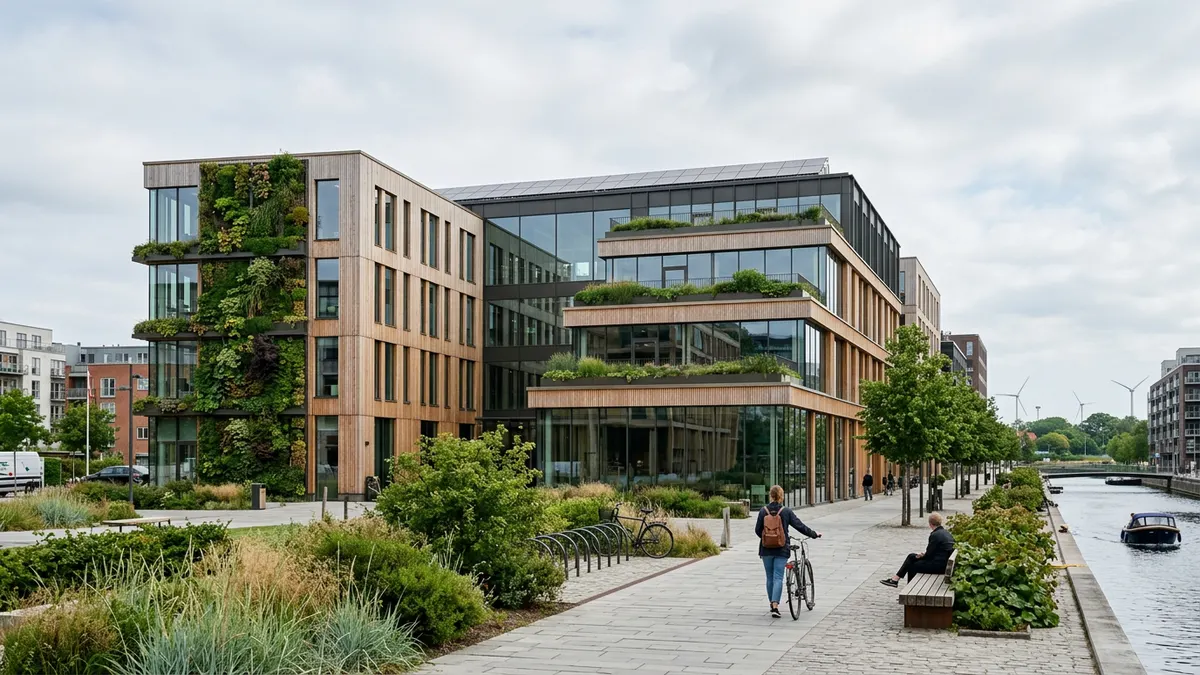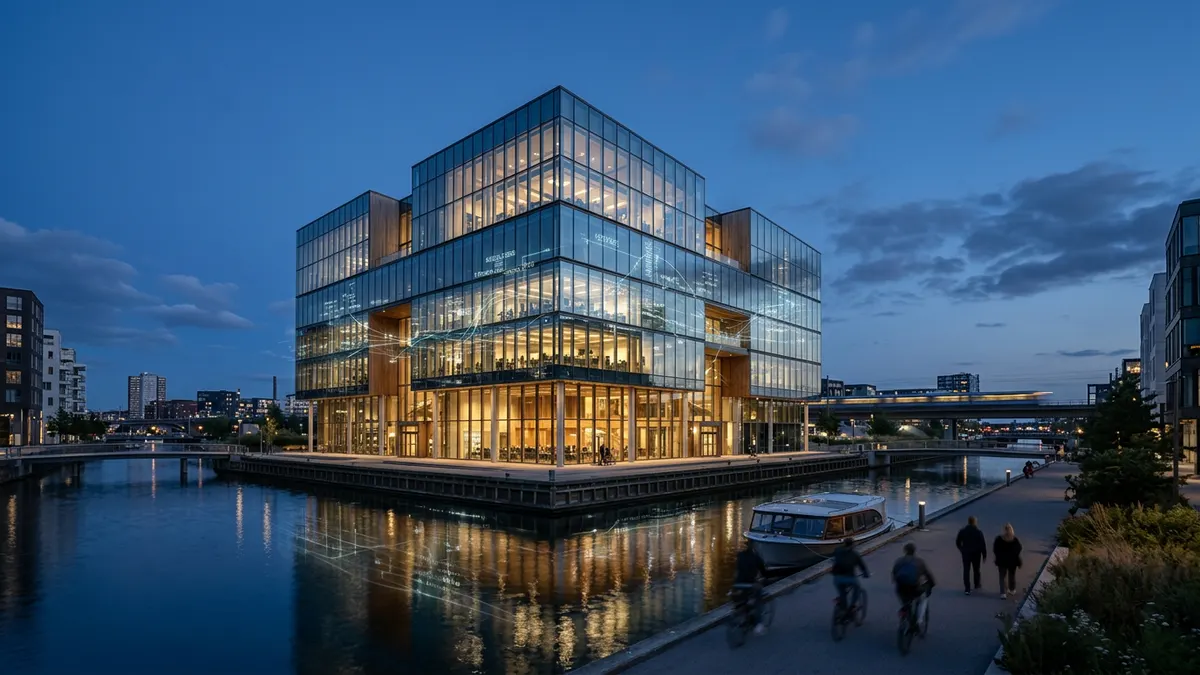
Proptech Denmark is transforming property investment by digitalising the entire value chain from sourcing and due diligence to administration and energy management. By utilising data analysis, artificial intelligence, and IoT devices, investors today can optimise their returns, reduce operating costs, and meet increasing sustainability requirements through precise monitoring and automated processes.
What is PropTech, and why is it crucial in Denmark?
The term PropTech is a portmanteau of "Property Technology" and covers the technological solutions that optimise the way we buy, sell, rent, and operate real estate. In a Danish context, proptech danmark has evolved from being a niche phenomenon to becoming a central part of the strategy for both private investors and institutional players in cities such as Copenhagen, Aarhus, Odense, and Aalborg.
The Danish property market has traditionally been characterised by manual processes, physical archives, and a degree of conservatism. However, with rising interest rates, tightened ESG (Environmental, Social, and Governance) requirements, and a need for higher transparency, technology has become a necessity rather than an option. PropTech is not merely about new gadgets; it is about democratising access to data so that decisions are made on an informed basis rather than gut feelings.
For an investor, this means being able to assess the risk of an investment property in, for example, the Triangle Region far more accurately by drawing on historical data regarding rent levels, vacancy periods, and energy consumption. The technology bridges the gap between the physical bricks and mortar and digital insight.
Sourcing and data analysis: The foundation of proptech danmark
Identifying the right investment opportunity is often the most time-consuming part of the process. Previously, it required an extensive network and physical review of localplans (local plans) in municipalities like Gentofte or Roskilde. Today, sourcing is largely driven by algorithms that can scan the market for properties not yet officially offered for sale (off-market).
Big Data in valuation
By combining data from BBR (Bygnings- og Boligregistret (Building and Dwelling Register)), tingbogen (the land registry), and local market analyses, PropTech platforms can deliver an estimated market value with unprecedented precision. This reduces time spent on initial screenings and allows the investor to focus on cases that truly meet the return requirements. It is, however, important to note that while algorithms provide a strong foundation, one should always supplement with professional advice to assess building technical conditions and local legal practices.
Geographical trends and heatmaps
Advanced GIS (Geographic Information Systems) tools make it possible to visualise urban development. An investor can see heatmaps showing where population growth is greatest in Aarhus N, or where planned infrastructure projects in Odense will affect commercial property prices. This form of predictive analysis is one of the cores of the modern PropTech landscape.
Digital Due Diligence and transparency
Once a property is found, the due diligence phase begins. Here, technology has replaced the days when folders with tenancy agreements and maintenance plans filled entire desks. Virtual Data Rooms (VDR) are now the standard, but PropTech takes it a step further.
- Automated contract review: AI tools can now review hundreds of tenancy agreements in minutes to identify atypical terms, notice periods, or missing indexations.
- Digital condition assessment: Drones and 3D scanning (Matterport) are increasingly used to document a property's condition in cities like Esbjerg or Herning without necessarily sending a full team every time.
- ESG compliance: Technology makes it possible to pull energimærker (energy performance certificates) and consumption data automatically, which is essential for investors reporting to financial institutions under the EU taxonomy for sustainable activities.
It is always recommended to consult specialists in property law and tax, as technical errors in the data foundation can occur even in the most advanced systems.
Operation and Smart Building technology
Once the property is acquired, the focus shifts to operation and value creation. Here, the Internet of Things (IoT) plays a leading role. Smart Building solutions transform older properties in Copenhagen’s bridge districts or modern office blocks in Skejby into intelligent units.
| Technology Type | Function | Benefit for Investor |
|---|---|---|
| Smart meters | Real-time monitoring of water, electricity, and heating. | Early detection of leaks and optimised consumption. |
| Indoor climate sensors | Measuring CO2, humidity, and temperature. | Higher tenant satisfaction and longer lease periods. |
| Predictive maintenance | Sensors on lifts and HVAC systems. | Repair before breakdown, saving significant costs. |
| Access control | Digital keys via smartphones. | Easier administration of move-ins and move-outs. |
Implementing these technologies can increase the property's value, as operating expenses (OPEX) are brought down, and the property becomes more attractive to tenants who value sustainability and comfort highly.
Digital property management and tenant experience
Property administration has long been a heavy item in the budget. With modern proptech danmark solutions, bookkeeping, rent collection, and notifications of rent increases are automated. This minimises the risk of human error, which can otherwise be costly in relation to Lejeloven (the Rent Act).
For the tenant, technology means a smoother daily life. Through tenant apps, residents in property complexes in Aalborg or Vejle can communicate directly with property services, report faults, or book shared facilities. Higher tenant loyalty reduces vacancies, which directly impacts the investors' bottom line positively.
It is, however, important to ensure that all digital platforms comply with GDPR rules, especially regarding the processing of personal data about tenants. Here, one should seek advice from experts in data protection law.
Tokenisation and the future of financing
One of the most debated trends in PropTech is the tokenisation of real estate via blockchain technology. Although it is still at an early stage in Denmark, it opens up the possibility of dividing ownership of a property into smaller digital shares (tokens).
This could potentially enable smaller investors to buy into large commercial properties in Copenhagen K, which would otherwise only be accessible to pension funds. It can also increase liquidity in the market, as these tokens can theoretically be traded faster than an entire property. However, there are many unresolved questions regarding Danish legislation and tinglysning (land registration), which is why one should follow developments closely via official channels such as Finanstilsynet (the Financial Supervisory Authority).
Challenges and considerations with PropTech
While technology offers many advantages, it is not without challenges. Integrating new systems with existing (legacy) systems can be complex and expensive. Additionally, data security is a growing concern; the more a building is online, the more vulnerable it is to cyberattacks.
Investors must also be aware that technology can never replace human assessment of a location or a building’s architectural quality. An algorithm can look at numbers, but it cannot assess the atmosphere of a neighbourhood or the potential in a local urban planning vision in the same way as an experienced advisor.
The green transition driven by technology
By September 2026, the requirements for documentation of CO2 footprints have only become stricter. PropTech is the only realistic way to collect the necessary data to meet national climate goals and investors' own ESG targets. By using software to simulate energy renovations, one can calculate the most cost-effective path to a better energy rating.
In cities like Sønderborg, which has a strong profile in energy efficiency, we are already seeing examples of how entire districts are digitally connected to share surplus heat. This is PropTech on a large scale, fundamentally changing the prerequisites for property investment.
Summary: Technology as a tool for better investment
PropTech in Denmark is no longer a future vision but a current requirement to remain competitive. By embracing digital tools, investors can reduce risks, optimise operations, and contribute to the green transition. Whether investing in residential rental properties in Horsens or office buildings in Ørestad, the ability to exploit data will be decisive for success.
It is always recommended to carry out thorough analyses and seek professional assistance from legal, tax, and financial advisors, as the Danish property market is subject to complex legislation, including Lejeloven (the Rent Act) and planloven (the Planning Act), which technology alone cannot navigate.
Frequently asked questions
What does PropTech mean for private property investors?
For private investors, PropTech means access to data and tools that were previously only available to large funds. It makes it possible to carry out more precise analyses of potential investment properties and optimise the administration of smaller portfolios via automation.
Is it expensive to implement Smart Building technology?
Costs vary depending on the property's size and current condition. Although initial costs can be significant, experience often shows that savings on electricity, water, and heating, as well as reduced maintenance, can quickly pay back the investment.
How does PropTech affect property valuation?
Properties with implemented PropTech and Smart Building solutions can often achieve a higher valuation. This is due to lower operating expenses (better net operating income) and a better ESG profile, making them more attractive to both tenants and future buyers.
Can technology replace a property manager?
Technology can automate many routine tasks such as invoicing and data collection, but the human factor is still important for conflict resolution, personal tenant contact, and strategic advice. PropTech should be seen as a tool that frees up time for value-adding tasks.
How PropertyInvestments can help
PropertyInvestments has helped Danish and international investors navigate the Danish property market since 1985. We combine our many years of experience with a modern approach to sourcing and property valuation. Whether you are looking for investment properties in growth areas or need help preparing a property for sale, we are ready with professional expertise.
Contact us for a non-binding dialogue about your options:
- Email: info@propertyinvestments.dk
- Phone: +45 31 16 31 00
Note: PropertyInvestments does not provide legal or tax advice. We always recommend that investors seek independent advice from relevant professionals before any transaction.