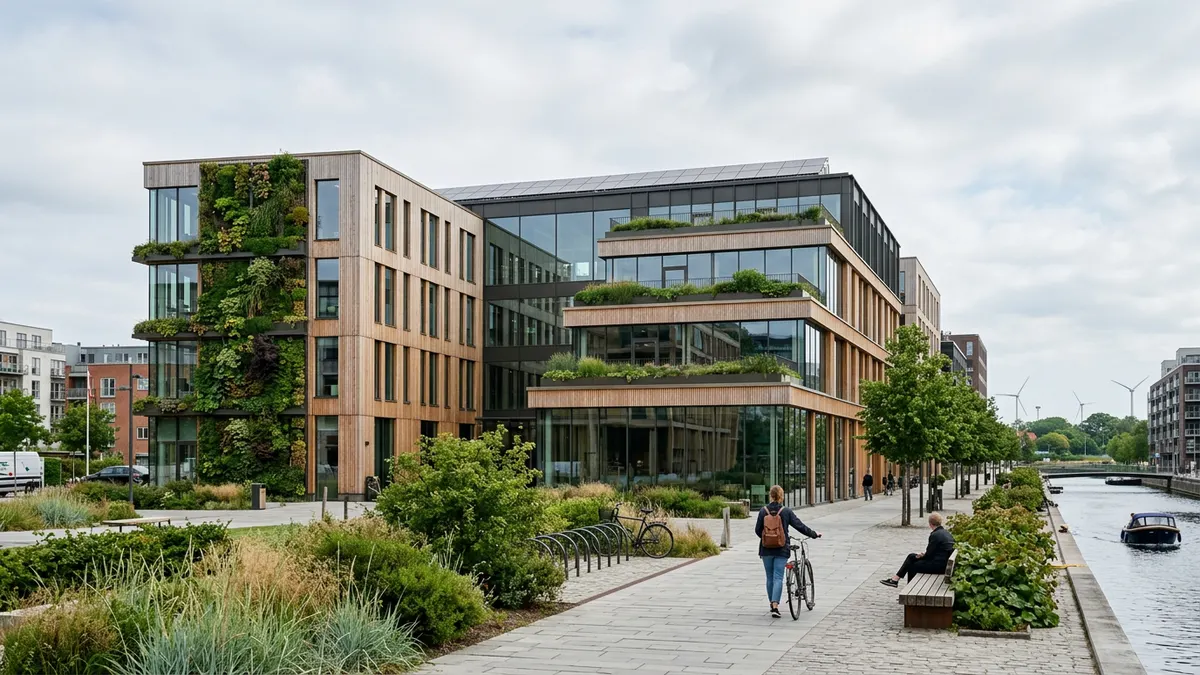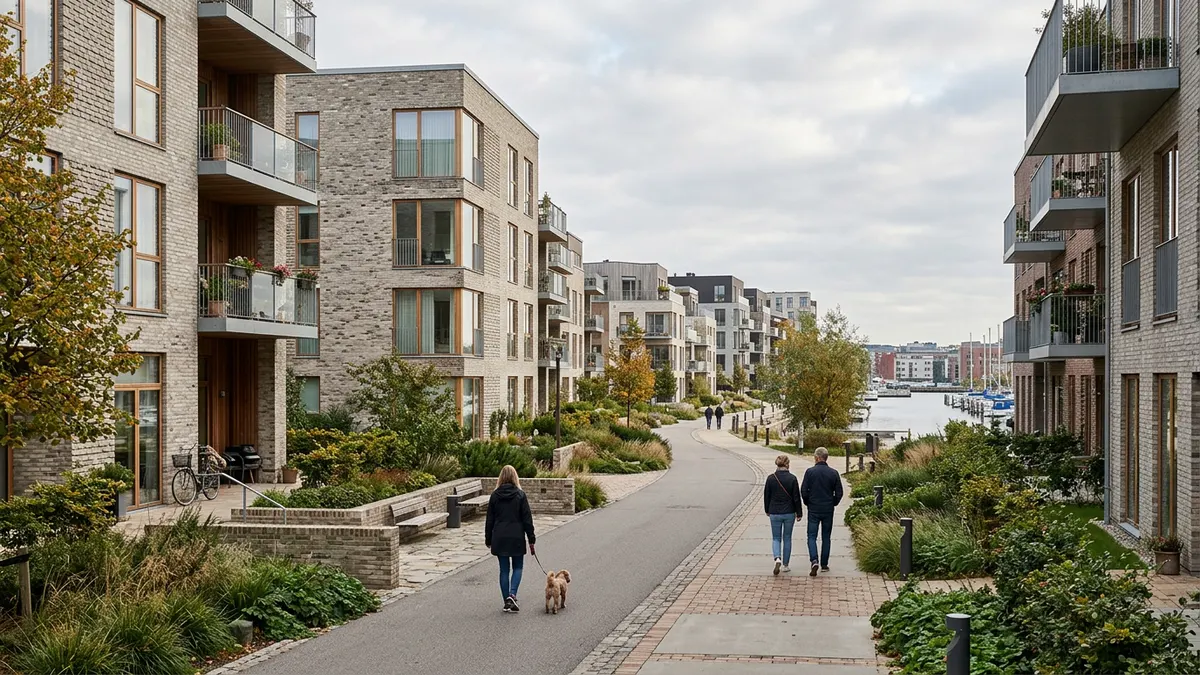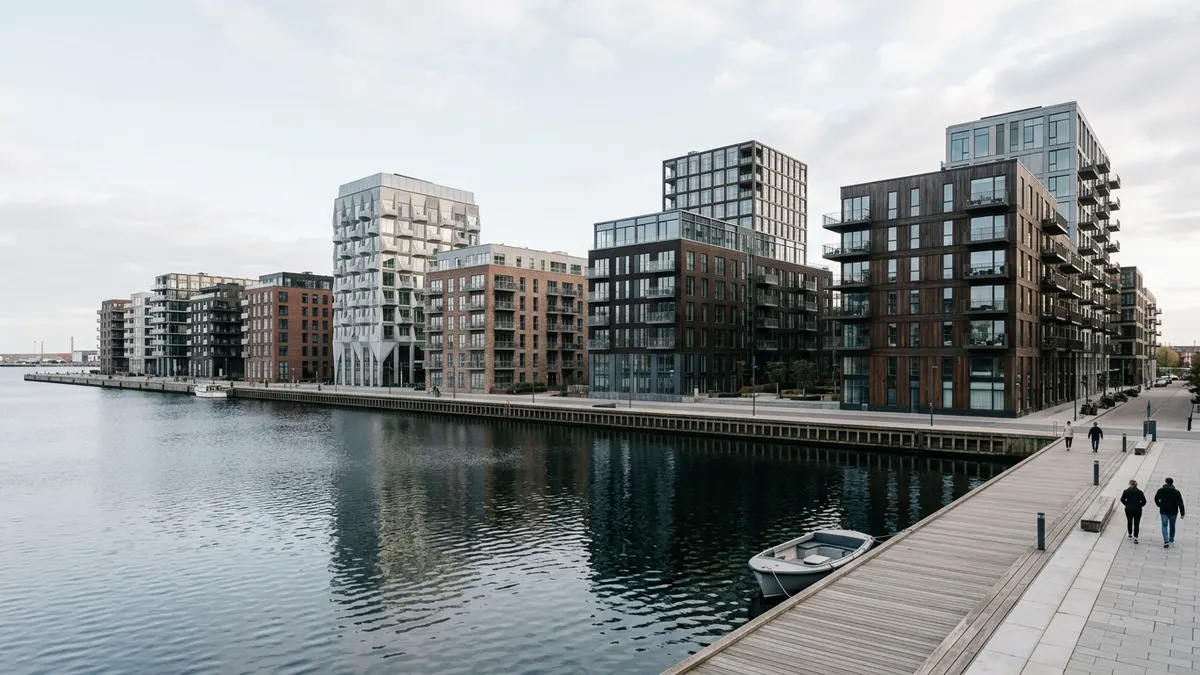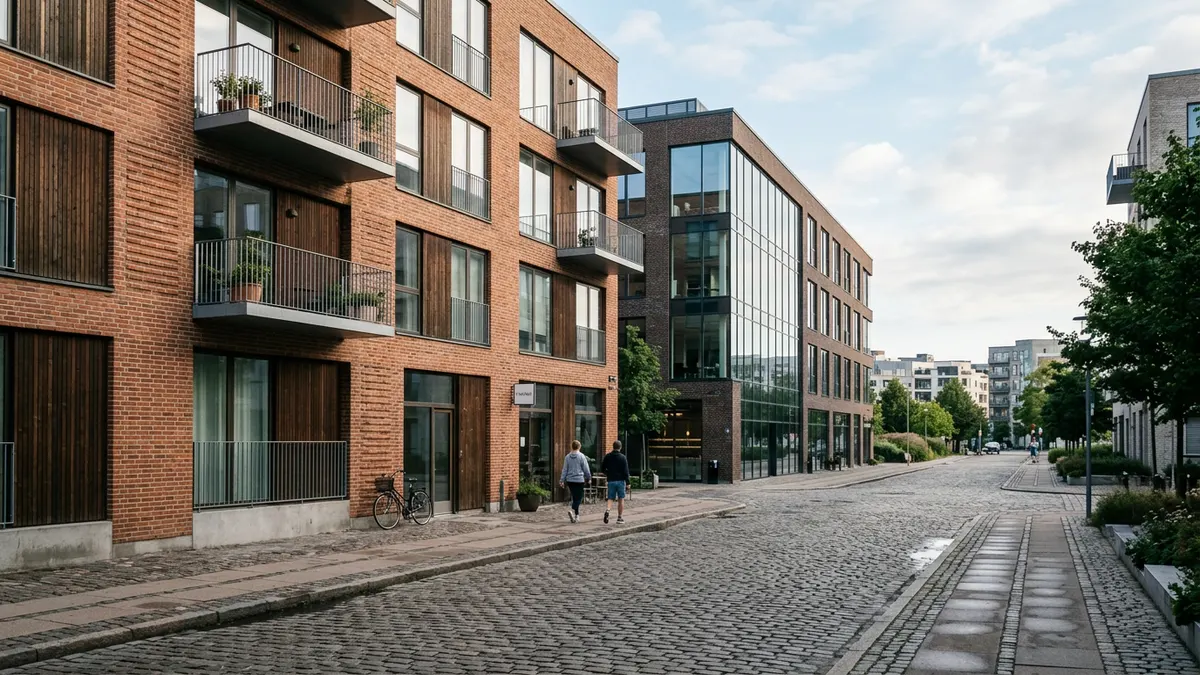
For 2026, the property market forecast points to stabilisation driven by normalised interest rates, sustained urbanisation towards growth hubs such as Copenhagen and Aarhus, and increasing demand for energy-efficient tenancies. Investors should focus on long-term operating yields rather than short-term capital appreciation, while regulatory frameworks for sustainability become the primary parameter for future value preservation.
Property market forecast: State of the Danish investment landscape in 2026
Looking at the Danish property market in September 2026, we find ourselves in a period where the macroeconomic fluctuations of recent years have been replaced by a new normal. After a time of significant interest rate adjustments and supply chain uncertainty, we now see the contours of a market that rewards substance and documented operations. The current property market forecast indicates that the fundamental need for housing and optimised commercial square metres in major Danish cities remains intact, but requirements for property condition and compliance have tightened.
Denmark has historically been considered a safe haven for both national and international investors. This position is maintained into 2026, supported by a stable regulatory framework and a transparent process for property transactions. For the investor, this means the risk is calculable, even though yields have found a new level compared to the previous decade.
Developments in 2026 clearly show that the market has become more selective. While almost all property categories experienced growth during the ultra-low interest rate years, there is now clear differentiation between A-locations with high energy ratings and secondary properties requiring significant investment to meet modern standards. This creates opportunities for professional players who understand how to correctly value the necessary upgrades.
The impact of interest rate levels on investment strategy in 2026
The interest rate market is always the most important engine for property investment. In 2026, we have seen a stabilisation of long-term rates, providing investors with a predictability that was missing in previous years. Although we have not returned to a zero-interest environment, the market has adjusted to the current level, and property pricing has largely corrected accordingly.
For the serious investor, this means the focus has shifted from leverage-driven growth to operational value creation. When financing costs are higher, a property's ability to generate stable cash flow becomes crucial. This has led to a more conservative approach to LTV (Loan to Value) ratios, with many preferring a higher equity share to ensure robustness against potential market fluctuations.
It is important to note that funding sources have also changed. In addition to traditional mortgage credit institutions, 2026 sees increased activity from alternative financing sources and funds seeking properties with strong ESG (Environmental, Social, and Governance) profiles. Finanstilsynet (The Danish Financial Supervisory Authority) guidelines and banks' own requirements for sustainability reporting mean that financing terms are often directly linked to the property's energy class and climate footprint.
Demographic development and the effect of urbanisation on cities
Urbanisation in Denmark continues unabated towards 2030, and in 2026, we see the effects clearly in the largest cities. Copenhagen, Aarhus, Odense, and Aalborg continue to experience population growth that exceeds the supply of new housing. This creates a solid foundation for the rental market.
Copenhagen and Surroundings
The capital region remains the primary target for international investors. In 2026, housing demand in Copenhagen is characterised by a shortage of family homes and an increasing need for modern senior housing. Urban development areas such as Nordhavn, Sydhavn, and the new districts along the light rail in suburban municipalities attract significant attention. Prices here reflect the popularity of the location, but vacancy rates are historically low.
Aarhus and the East Jutland Growth Cities
Aarhus has cemented its position as a city with high growth and a strong educational environment. In 2026, we see increased interest in the peripheral towns around Aarhus, such as Skanderborg and Horsens, where investors can find attractive yields by offering housing to commuters who seek more space for their money but still want proximity to the Aarhus job market. The "East Jutland Metropolis" concept is now a reality that investors must consider in their geographical allocation.
Odense and Aalborg
Odense has benefited greatly from investments in infrastructure and robotics, creating many new jobs and a subsequent need for housing. Aalborg continues its transformation from an industrial city to a knowledge hub, reflected in numerous conversion projects of harbour areas and older commercial properties into modern residential and office environments.
The Housing Market: Rental vs. Owner-Occupied
In 2026, the rental market is characterised by great stability. High barriers to entry in the owner-occupied market, due to stricter credit assessments and deposit requirements, mean more people are choosing to rent for longer periods. This applies not only to the young but increasingly to middle-aged and senior citizens who wish to release capital from their previous homes.
An important trend in this property market forecast is the emergence of specialised housing forms. "Build-to-rent" projects, where entire properties are designed and built specifically for rental and professional administration, have become the norm. These properties often offer facilities such as communal rooms, guest rooms, and car-sharing schemes, which increase tenant loyalty and reduce turnover rates.
Below is an overview of expected trends for various asset classes in 2026:
| Asset Class | Expected Demand | Primary Driver | Investor Focus Area |
|---|---|---|---|
| Residential Rental (City) | High | Urbanisation & Pop. Growth | Energy efficiency & optimised plans |
| Logistics & Warehouse | Very High | E-commerce & Supply Chain security | Motorway proximity & automation |
| Office Property | Moderate | Hybrid work & quality needs | Flexibility & shared facilities |
| Retail | Selective | Experience economy & proximity | Location and mixed-use |
Commercial Property: Logistics remains at the forefront
The logistics sector is perhaps the most robust part of the commercial property market in 2026. The need for efficient distribution centres near major cities has risen significantly as e-commerce delivery times have become even shorter. Simultaneously, many companies have chosen to increase their local inventory capacity in Denmark to avoid vulnerabilities in global supply chains.
However, investing in logistics properties in 2026 requires an understanding of modern requirements for ceiling height, floor load capacity, and sustainability. Solar panels on roofs and charging stations for electric trucks are now standard requirements from major tenants. Geographically, areas along the E45 in Jutland and around Ring 4 near Copenhagen remain the most sought-after locations.
The office market is undergoing a transformation. In 2026, companies demand fewer but better square metres. The office has become a tool for attracting talent, meaning properties with poor indoor climates or uninspiring settings experience rising vacancies, while modern, certified office buildings in city centres achieve record-high rent levels.
Sustainability and ESG as the foundation for value
It is no longer possible to discuss property investment without mentioning sustainability. In 2026, the EU Taxonomy and ESG reporting requirements are fully integrated into the Danish market. A property's energy rating has a direct influence on its market value and liquidity.
Investors today must consider:
- Energy Class: Buildings with energy ratings A and B obtain better financing and lower operating costs.
- Certifications: DGNB certification (or equivalent) is often a requirement from institutional investors and larger tenant segments.
- Carbon Footprint: There is increased focus on the embodied carbon in building materials during renovation and new construction.
Properties that do not meet these standards risk becoming "stranded assets"—assets that are difficult to let and sell unless significant investments are made in energy optimisation. However, this also creates a niche for "value-add" investors who buy older properties with the intent of transforming them into green profile buildings.
Legal and Tax Frameworks
The Danish market is characterised by regulation, including Boligreguleringsloven (The Housing Regulation Act) and Lejeloven (The Rent Act). In 2026, it is crucial to stay updated on the latest rules for rent setting and notification of improvements. In particular, the rules regarding the modernisation of tenancies (formerly known as section 5, subsection 2 of the Housing Regulation Act, now incorporated into the consolidated Rent Act) require precise legal advice to ensure investment calculations hold true.
Furthermore, property taxes are a topic of ongoing debate and adjustment. The new property tax system, which was years in the making, is fully implemented by 2026, and investors should ensure their budgets reflect actual assessments and tax rates. We always recommend consulting specialised accountants and lawyers for a precise review of the tax implications of a specific investment, as PropertyInvestments does not provide legal or tax advice.
Risk Management in a Mature Market
Although the property market forecast for 2026 is generally positive, thorough risk management is necessary. Key risk factors in the current market include:
- Interest Rate Changes: Even if the market is stable, unexpected inflation figures could lead to new rate hikes.
- Vacancies: Especially in secondary commercial properties, vacancy periods may lengthen.
- Legislation: Changes in rental laws or environmental requirements can affect Net Operating Income (NOI).
- Execution Risk: For renovation projects, managing construction costs and timelines is critical.
A diversified portfolio, both geographically and across asset classes, remains the best protection against local market dips. In 2026, many investors choose to spread their engagements between, for example, residential rentals in Aarhus and logistics in Zealand to balance risk and return.
Future Outlook: Towards 2027 and Beyond
Looking ahead, we expect technological development to play an even greater role. "PropTech" (Property Technology) is gaining ground with solutions for more efficient property management, smarter energy control, and improved tenant experience via digital platforms. Investors who are quickest to adopt these technologies will likely experience lower operating costs and higher tenant satisfaction.
Overall, the Danish property market in 2026 is a market for the professional and well-informed investor. Quick gains are harder to find, but for those who do their homework and focus on quality and sustainability, the foundation for a solid and long-term investment is stronger than ever.
Frequently asked questions
Which city in Denmark is best for investment in 2026?
There is no single answer, but Copenhagen and Aarhus offer the most security and liquidity. Odense and the Triangle Area (Vejle, Kolding, Fredericia) can often offer slightly higher yields, but with a marginally higher risk profile.
How do current interest rates affect property prices?
Prices have generally corrected to the current interest rate levels. This means yield requirements have increased, which has dampened price rises but created a healthier relationship between rental income and financing costs.
Is it still a good idea to invest in office properties?
Yes, if the property is modern and flexible. There is a "flight to quality" where tenants seek the best offices. Older, unmodernised office spaces outside city centres are associated with higher risk.
What importance does ESG have for my investment?
ESG is crucial. Poor energy ratings can lead to higher interest rates, lower rental value, and more difficult resale. Sustainability has become an integrated part of valuation.
How PropertyInvestments can help
PropertyInvestments has been active in the Danish market since 1985. We assist both Danish and international investors in navigating the market through sourcing opportunities, setting up investment cases, and preparation for sale. We follow the process from the initial analysis until the final sale is completed. If you wish for a non-binding dialogue about your options or are seeking specific property types in Denmark, you are welcome to contact us at info@propertyinvestments.dk or by telephone at +45 31 16 31 00.