Due diligence when purchasing an off-plan development (projektejendom) at the drawing stage is a comprehensive process that protects the investor against technical, legal, and economic risks before construction is completed. The process involves a thorough examination of local plans, building permits, contractor guarantees, and rental potential to validate the investment case and ensure the property's future value and operational stability.
Why off-plan property due diligence is crucial in the current market
Investing in a property that has not yet been built requires a different approach than purchasing existing rental properties. When buying at the drawing stage, you are effectively buying a promise of future value. Therefore, structured off-plan due diligence is the foundation for minimising the inherent risks associated with the construction process and market developments.
In Denmark, we often see these projects in growth hubs like Copenhagen, Aarhus, Odense, and Aalborg, but also in surrounding growth municipalities such as Roskilde, Køge, and Silkeborg. The advantage of buying early is often a lower entry price or the opportunity to influence the project's final design. The risk, however, is that the finished product deviates from expectations or the timeline slips.
A thorough investigation focuses not only on the physical framework but largely on the legal agreements binding the developer, contractor, and investor together. This is where potential pitfalls in easements (servitutter), environmental conditions, or financial guarantees are identified.
Legal due diligence: Securing rights and obligations
The legal part of the investigation is often the most time-consuming. For development projects, one must ensure that the seller (the developer) actually holds the necessary rights to construct the project as described.
Local plans and building permits
The first step is to verify that the project fully complies with the current local plan (lokalplan). In cities like Copenhagen and Aarhus, local plans can be very specific regarding material choices, parking standards, and plot ratios. If the building permit (byggetilladelse) has not yet been issued, the purchase agreement must contain clear conditions regarding what happens if the permit is refused or contains significant restrictions.
Contractual conditions and guarantees
When buying off-plan, you are dependent on the contractor's ability to deliver. Here, you should examine:
- AB 18 / ABT 18 terms: Have the standard Danish construction conditions been followed, and what deviations have been written in?
- Guarantee schemes: Have the necessary bank guarantees for completion been provided?
- Insurance: Has a comprehensive contract works insurance (entrepriseforsikring) and structural defects insurance (byggeskadeforsikring) been taken out?
It is always recommended to seek professional legal advice from solicitors specialising in property law to review these documents thoroughly.
Technical due diligence of future builds
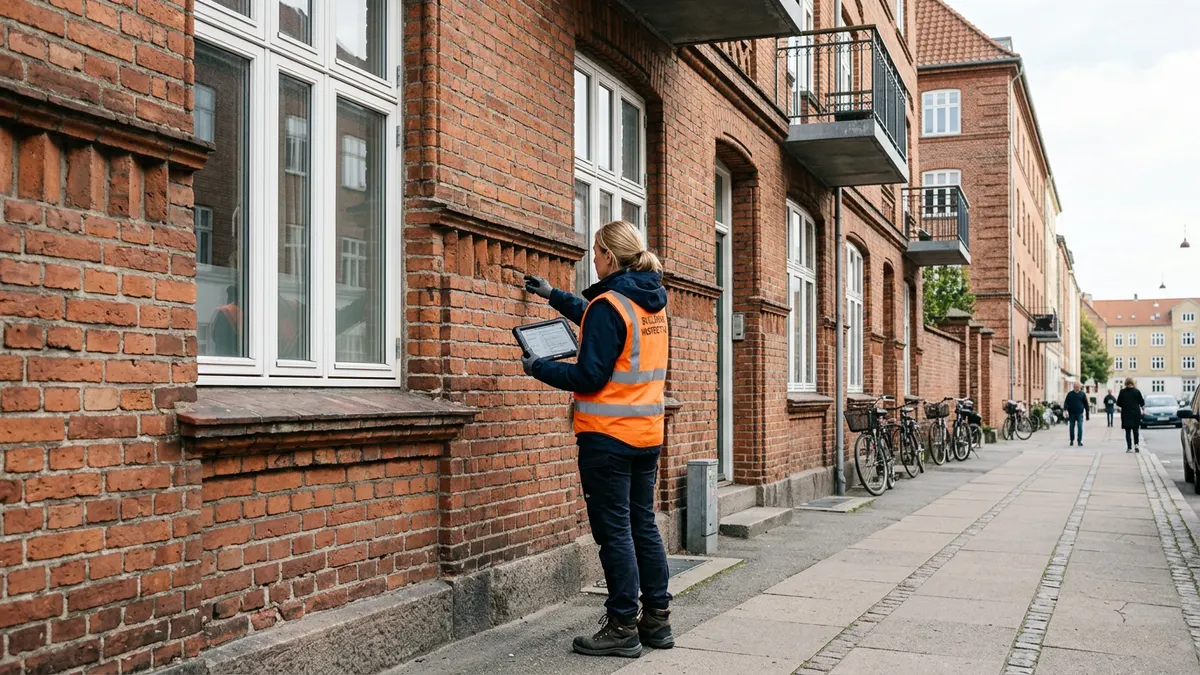
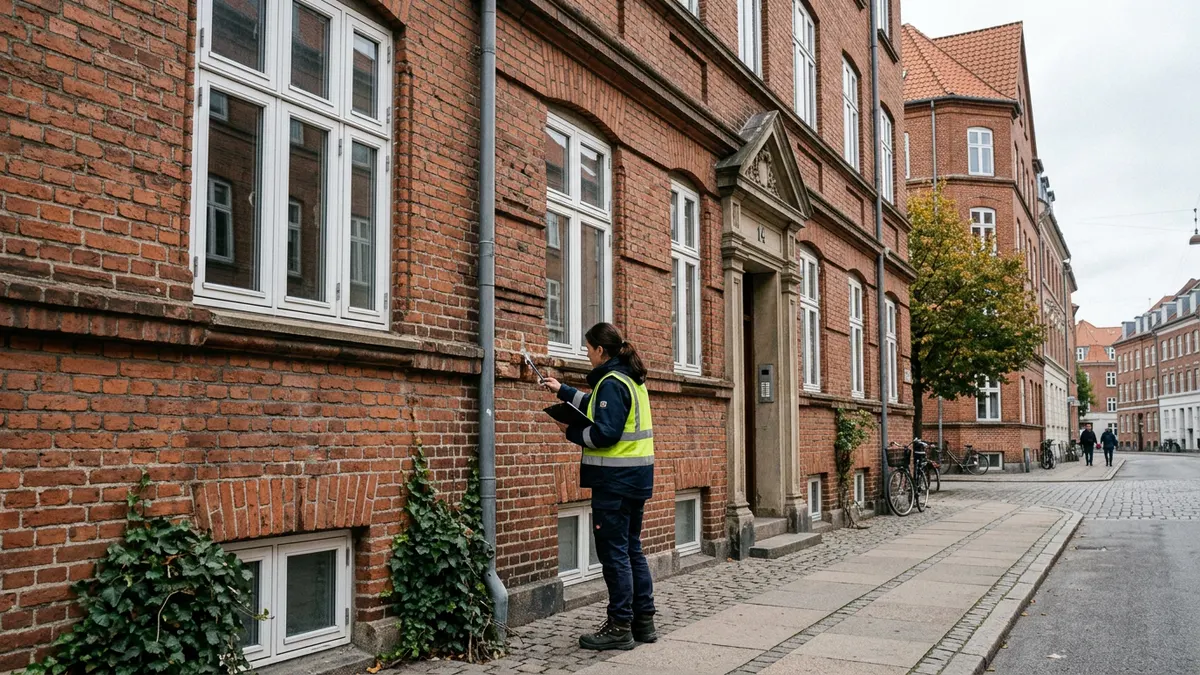
Even though the bricks have not yet been laid, technical due diligence remains relevant. The focus here is on technical specifications, material choices, and engineering calculations.
Technical review of drawing materials
A technical building consultant should review the project material to ensure that the chosen solutions are durable and meet modern requirements for energy efficiency (such as DGNB certification, which is becoming increasingly common in Danish construction projects). This includes:
- Material quality: Are materials chosen for long-term operation and maintenance or merely low initial cost?
- Energy class: Does the building comply with the latest requirements in the Building Regulations (bygningsreglementet (BR18)) and any forthcoming tightenings?
- Installations: Have modern facilities such as electric vehicle charging stations, ventilation, and waste sorting been considered, which are crucial for future letting?
| Focus Area | Importance for Off-Plan | Risk of Omission |
|---|---|---|
| Soil conditions | High | Unforeseen foundation costs |
| Environmental conditions | High | Liability for contaminated soil |
| Material selection | Medium | High future maintenance costs |
| Energy rating | High | Lower attractiveness for tenants/buyers |
Economic due diligence and market analysis
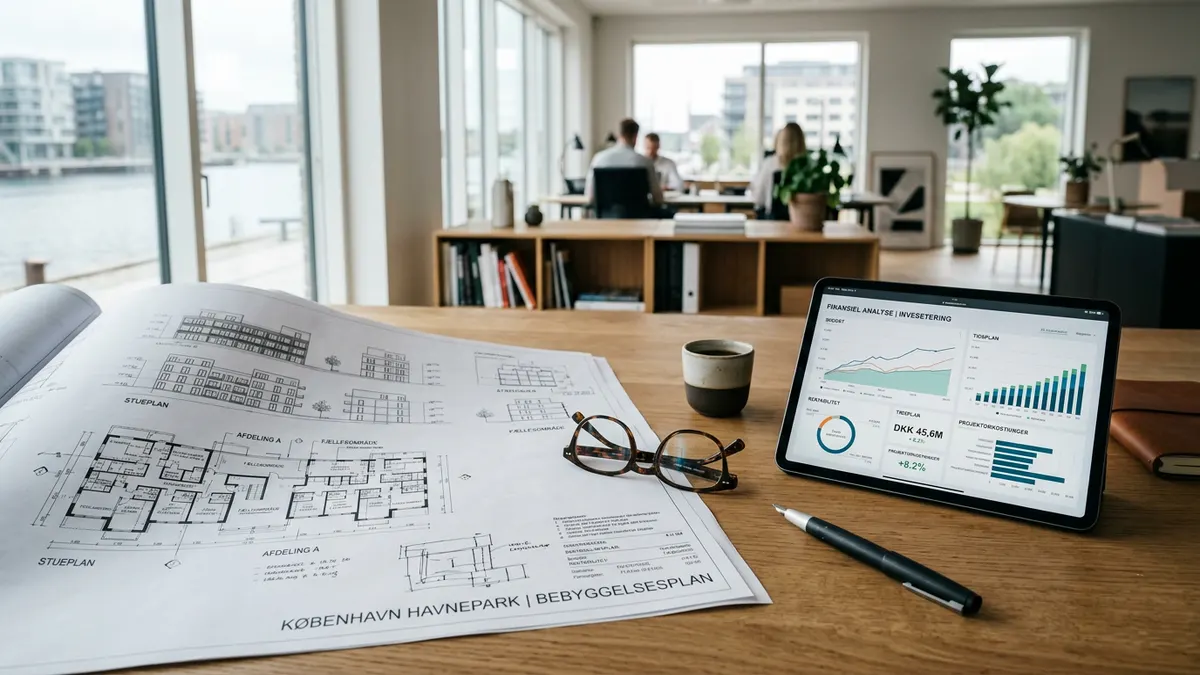
When buying at the drawing stage, the economic model is based on estimates. A significant part of your off-plan due diligence consists of verifying these estimates.
Validation of rental levels
The investor must research the local market in, for example, Odense, Esbjerg, or Roskilde to see if the budgeted rent is realistic. If the project is marketed with a rent per square metre that is 20% above the market, the investment case is vulnerable. One should look at:
- Vacancy rate (tomgangsrate): What is the average vacancy in the area?
- Comparable properties: What does a newly built apartment cost in the same area?
- Demographic development: Are people moving to or from the municipality?
Operating budgets
The operating budget for a newly built property should be lower than for an older property, but it is not zero. Funds must be set aside for ongoing maintenance, administration, insurance, and caretaking. It is important to ensure these items are realistically budgeted in the investment prospectus.
Geographical considerations in Denmark
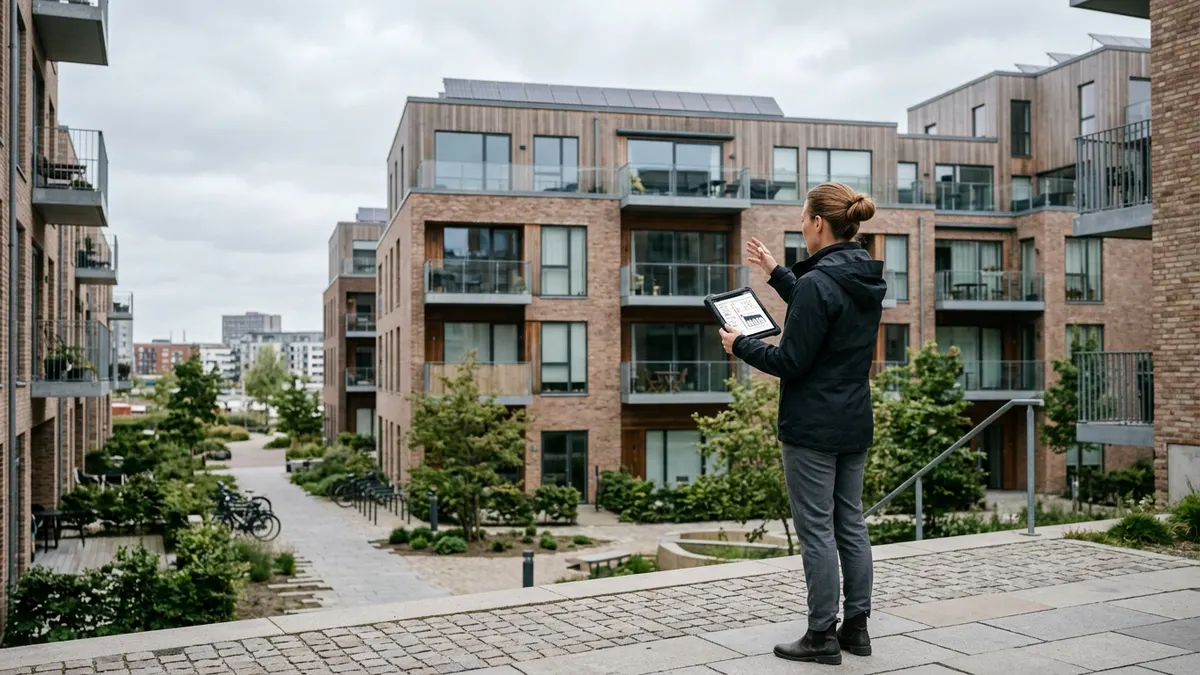
Location is, as always, crucial for real estate, but for development projects, the geographical context is even more important as one is often buying into areas under transformation.
Greater Copenhagen and surroundings
In areas like Nordhavn, Jernbanebyen, or the new quarters in Hvidovre and Glostrup, we see many off-plan projects. Here, due diligence is focused on infrastructure connections (like the upcoming metro or light rail) and the overall completion of the area. It can be difficult to rent out at top price if the property is finished two years before the rest of the neighbourhood and is surrounded by construction sites.
Aarhus and the East Jutland growth cities
Aarhus Ø and the new districts around Lisbjerg are examples of areas with high project activity. Here, it is essential to assess the supply of similar housing. If 5,000 homes are built simultaneously, it can pressure rental levels in the first years after completion.
The Triangle Region and Odense
Odense has undergone a massive transformation, and cities like Vejle and Kolding attract many investors due to their logistical location. Here, it is particularly important to assess whether local businesses are growing and thus creating a need for new housing.
Risk management: Delays and defects
One of the biggest challenges with development projects is the delivery date. In Denmark, the construction industry is subject to changing conditions in terms of material prices and labour.
Liquidated damages and compensation
A thorough review of the purchase agreement must ensure there are clear rules for delays. Have liquidated damages (dagbøder) been agreed upon? When does the buyer have the right to rescind the contract? It is important to have a legal advisor define what constitutes a "material delay."
Handover inspection
Even though the purchase happens at the drawing stage, your due diligence only concludes at the handover inspection (afleveringsforretning). Here, the property must be checked for defects. It is customary in Denmark to withhold part of the purchase price (or provide a guarantee) until the most significant defects are rectified. This must be agreed upon in advance in the purchase agreement.
Environmental and Sustainable Due Diligence (ESG)
In 2026, ESG (Environmental, Social, and Governance) is no longer a choice but a necessity for professional investors. When buying off-plan, you have a unique opportunity to ensure the property meets future requirements from authorities and financial institutions.
EU Taxonomy and financing
Many banks now offer better financing terms for "green" properties. Part of your due diligence should be to investigate whether the project complies with the EU Taxonomy criteria. This can have a direct influence on the property's exit value and your ongoing interest expenses.
Social sustainability
In larger construction projects in, for example, Aalborg or Copenhagen, social sustainability is also considered. Are there common areas that promote neighbourliness? Is there a good mix of housing types? These factors help ensure low tenant turnover, which is positive for the property's long-term return.
Tax considerations and structuring
Note: PropertyInvestments does not provide legal or tax advice. We always recommend contacting your own accountant or tax solicitor.
When purchasing development projects, it is important to consider the ownership structure from the start. Should the property be owned personally, in a corporate form, or via a fund? Additionally, there are questions regarding VAT (moms) refunds on construction costs and property taxes (ejendomsskatter) during the construction period. In Denmark, rules from the tax authority (SKAT) can change, and it is therefore crucial to get a current assessment of the tax consequences of buying a property that will only generate income in 12-24 months.
Conclusion
Buying an off-plan property at the drawing stage provides access to modern, energy-efficient properties with a potentially high return, but it requires a disciplined approach to analysis. By performing structured off-plan due diligence covering legal, technical, economic, and geographical aspects, investors can navigate the Danish property market safely.
It is about asking the right questions early in the process: Is the building right (byggeret) secured? Is the budget realistic? And have future requirements for sustainability been taken into account? When these answers are available in black and white, the foundation for a sound investment is laid.
Frequently asked questions
What is the biggest risk when buying an off-plan property?
The biggest risk is typically construction delays or contractor insolvency. Both can be managed through thorough contractual due diligence, ensuring bank guarantees and clear agreements on liquidated damages and rescission rights.
When do I have to pay for the property?
This varies, but often a deposit is paid upon signing, while the remaining balance is only due upon final handover and the issuance of an occupancy permit (ibrugtagningstilladelse). It is important to specify in the purchase agreement that the purchase price is only released to the seller when the property is defect-free and ready for move-in.
Should I hire my own advisors when the seller has prepared all the material?
Yes. The seller's advisors look after the seller's interests. As a buyer, you should always have your own technical advisor (architect/engineer) and legal advisor (solicitor) to review the material independently.
What significance does the local plan have for my purchase?
The local plan (lokalplan) sets the framework for what may be built. If the project does not comply with the local plan, it could mean the building cannot be approved or must be significantly altered. You should always check if the necessary exemptions (dispensationer) have been granted by the municipality.
How PropertyInvestments can help
At PropertyInvestments, we have helped Danish and international investors navigate the Danish property market since 1985. We assist with project sourcing, assessment of the investment case, and ensure that the process from the drawing stage to final sale or operation proceeds professionally.
If you are considering investing in Danish development projects and want an experienced partner to assist with the oversight, you are welcome to contact us for a non-binding dialogue about your options.
Contact information: Email: info@propertyinvestments.dk Phone: +45 31 16 31 00