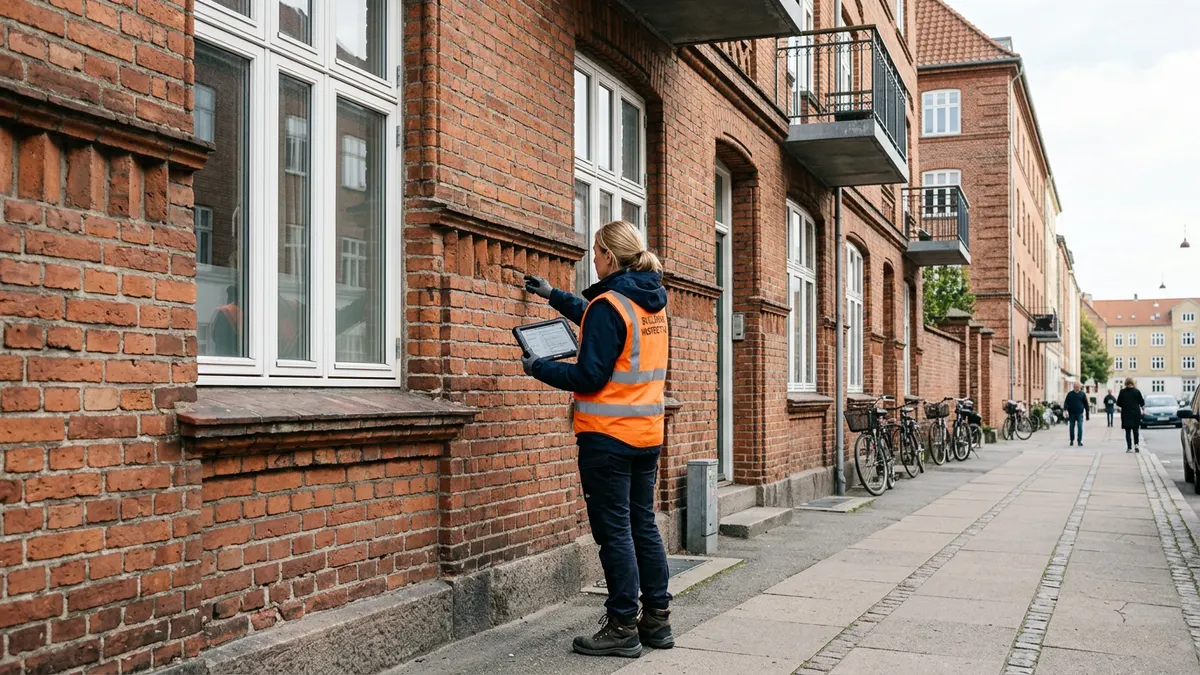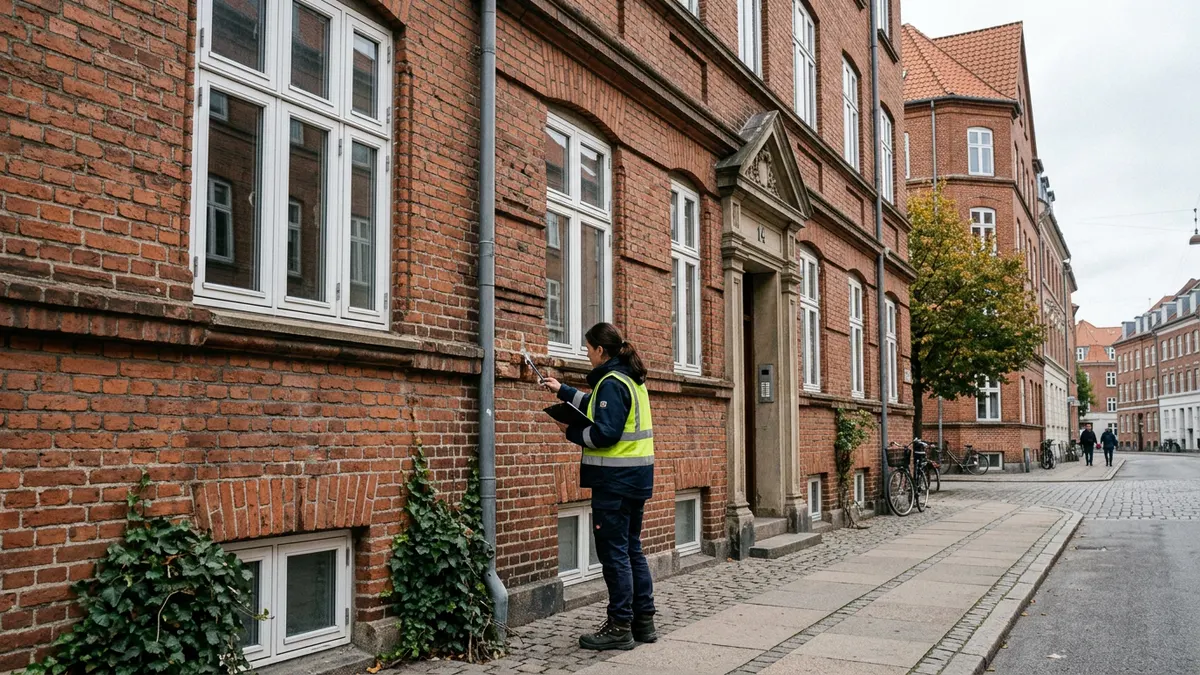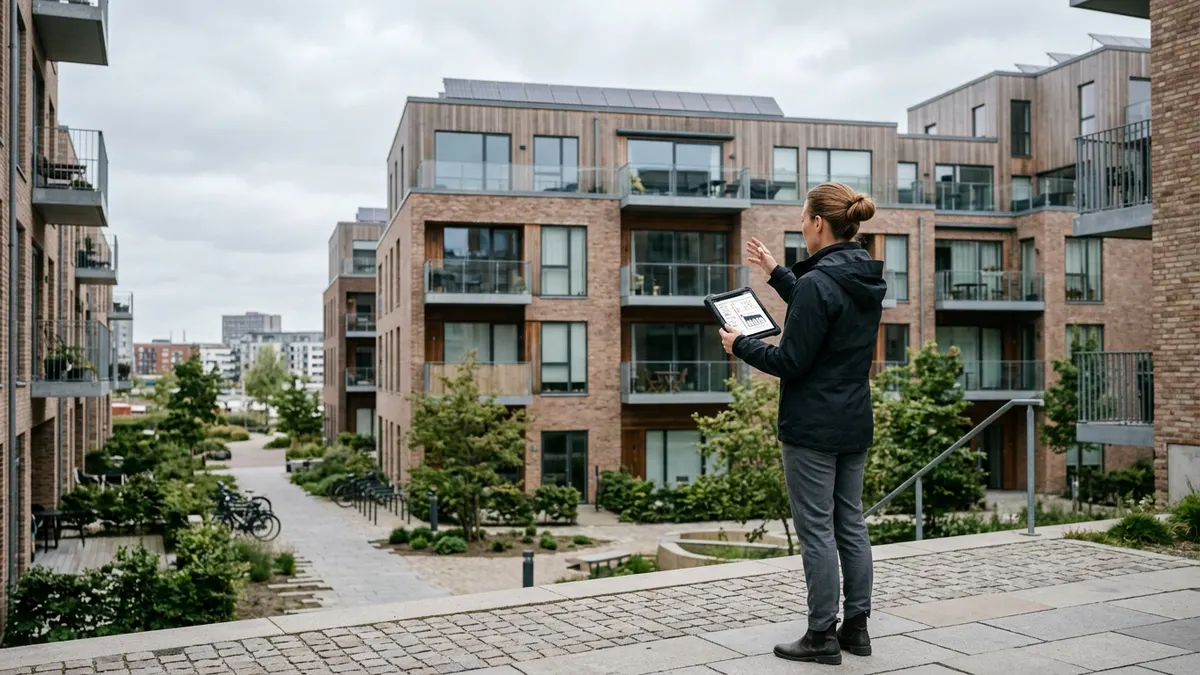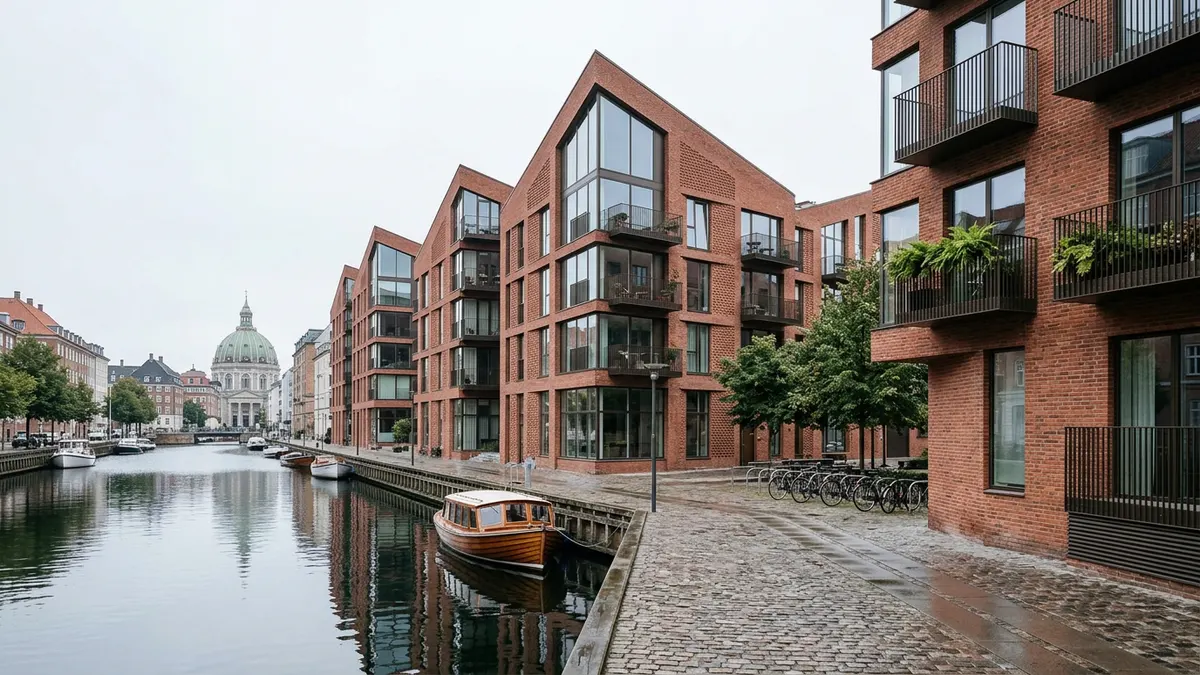
Off-market properties are investment assets traded outside the public market and standard listing portals. By utilising discrete sourcing, investors can gain advantages such as reduced competition, transaction confidentiality, and the possibility of more direct negotiations with the seller, which often ensures a more stable process for both buyer and seller.
What are off-market properties in the Danish context?
The term off-market covers properties that are for sale but are not widely advertised to the public via estate agents' websites or portals like Ejendomstorvet. In Denmark, this market is significant, especially regarding larger residential rental properties or commercial complexes in cities like Copenhagen, Aarhus, Odense, and Aalborg.
When a property is traded off-market, it often occurs through closed networks and specialised advisors. The seller may not want the exposure that comes with a public sale – this could be due to considerations for existing tenants, discretion towards business associates, or a desire only to receive enquiries from pre-qualified investors. For the investor, this means that access to these opportunities requires a strong network and a proactive approach to sourcing.
The market for off-market properties requires deep insight into local conditions. Where the public market is often characterised by transparency, the off-market segment is based on trust and long-term relationships. This is where one finds opportunities that have not yet been "picked" by the masses, and where there is room to create value through strategic dialogue.
The benefits of discrete sourcing and off-market transactions
There are several compelling reasons why professional investors seek off-market properties. The primary advantage is the elimination of the direct competition encountered in the open market. When a property is listed publicly, it often triggers a bidding round where the price is pushed up and the terms become less favourable for the buyer.
Reduced competition and fewer bidding wars
In off-market deals, one typically avoids overheated bidding wars. Because the property is only presented to a selected group, there is peace to conduct thorough due diligence. The buyer gets time to investigate the property's technical condition, review tenancy agreements, and assess future optimisation potential without the time pressure that a public auction entails.
Confidentiality for both parties
Discretion is often a decisive factor, especially in smaller local communities or for very large transactions. A seller may wish for staff or tenants not to become anxious about a pending sale before everything is in place. For the buyer, discretion can be about building a portfolio in a specific area without signalling their strategy to competitors.
Better access to unique opportunities
Some of the most attractive properties in Denmark never reach the public market. This often applies to historic properties in Copenhagen K or strategically important logistics properties in the Triangle Area (Vejle, Kolding, Fredericia). These properties change hands in closed circles because the owners prefer a fast and secure trade with a counterparty they know can handle the task.
The process behind sourcing off-market properties
Sourcing off-market properties is a proactive discipline. It is not about waiting for the phone to ring, but about identifying potential targets before they are even put up for sale. This requires a systematic approach and knowledge of property data, tinglysninger (land registrations), and local market movements.
A typical process for discrete sourcing includes the following steps:
- Identification of investment criteria: Determining geography, asset type (residential, commercial, logistics), and desired yield.
- Data-driven screening: Using public registers to find properties that fit the profile but are not on offer.
- Direct contact: Establishing a dialogue with the owner to explore interest in a sale.
- Pre-qualification: Assessing whether the property meets technical and financial requirements.
- Structured negotiation: Entering into an agreement under confidentiality.
In cities like Aarhus and Roskilde, where demand for residential rental properties is high, this process may be the only way to find properties with a reasonable yield, as the public market is often priced very aggressively.
Comparison: Off-market vs. the open market
It is relevant to look at the differences between the two ways of trading property to understand why professional actors often prefer the discrete route.
| Parameters | The open market | Off-market |
|---|---|---|
| Visibility | High - everyone can see the property | Low - only for selected investors |
| Pricing | Often driven by bidding rounds | Based on valuation and negotiation |
| Competition | High - many potential buyers | Low - typically only one or few actors |
| Speed | Can take a long time due to marketing | Can be fast if the chemistry is right |
| Discretion | No discretion | High degree of confidentiality |
| Due Diligence | Often under time pressure | Typically more time for review |
Geographical focal points in Denmark
The market for off-market properties varies significantly depending on where in the country you are located. Each region has its own dynamics that an investor should be aware of.
The Capital Region and Greater Copenhagen
In Copenhagen, the fight for square metres is intense. Here, off-market deals are almost a necessity if one wishes to acquire properties with development potential in areas like Vesterbro, Nørrebro, or the new urban development areas in Nordhavn. Here, relationships with large property owners and law firms often pave the way.
Aarhus and East Jutland
Aarhus is experiencing massive growth, which means many residential rental properties are traded internally between local investors. In cities like Randers and Horsens, we also see an increase in discrete sourcing, as investors move towards areas with slightly higher yields than in Aarhus C itself.
The Triangle Area and Funen
Odense, with its light rail and general urban development, has attracted much capital. Here, many family-owned property companies exist where a generational change can lead to an off-market deal. The Triangle Area is particularly interesting for logistics and commercial properties, where discretion is important to protect the company's operational interests during a sale.
Valuation and legal considerations
When buying off-market properties, it is crucial to have a precise understanding of the valuation. Since there is no public bidding round to set the market price, the price must be found through a thorough analysis of the property's cash flow, maintenance status, and market-conform rent.
It is always recommended to seek professional advice from accountants and lawyers specialising in property trade. The rules regarding the Lejeloven (Rent Act), including Paragraph 5, Section 2 (current rules in residential conditions), as well as rules on tilbudspligt (the right of first refusal for tenants), apply regardless of whether a property is traded publicly or off-market. One must be particularly aware of the Lov om leje (Rent Act) and Lov om boligforhold (Housing Conditions Act), as errors in the process regarding the right of first refusal can have serious consequences for the validity of the trade. For current guidance on these rules, one should consult the Ministry of Justice or a specialised property lawyer.
Furthermore, as an investor, one must be aware of tax matters, including ejendomsavancebeskatning (property capital gains tax) and VAT matters when selling new buildings or building plots. Here, it is important to refer to SKAT (the Danish Customs and Tax Administration) for the latest rates and practices.
Challenges of off-market properties
Although the benefits are many, off-market sourcing is not without challenges. It requires patience and a high degree of trust between the parties. Since there is no agent who has "prepared" the case for the broad market, the data basis can initially be deficient. This places greater demands on the buyer's own organisation or advisors to be able to validate information quickly.
Another challenge can be the price. Some sellers expect an "off-market premium" for selling outside the market. Here, it is the investor's task to assess whether the benefits of a discrete trade and the lack of competition outweigh a potentially higher purchase price.
Risk management in discrete deals
Risk management is essential. One should never skip technical or legal investigations just because the trade takes place discretely. On the contrary, one should use the lack of competition to go even deeper into due diligence. This includes:
- Technical review of the building mass (roof, facade, installations).
- Legal check of tenancy agreements and any tinglyste servitutter (registered easements/covenants).
- Environmental technical investigations, especially for commercial properties.
- Financial modelling based on realistic operating costs.
The future of the off-market market in Denmark
We see a tendency for the market for off-market properties to become more structured. Digitalisation makes it easier to screen data, but personal relationships remain the core of discrete trading. As the Danish property market becomes more mature and attracts more international investors, we expect demand for professional sourcing to increase.
Investors from abroad often prefer off-market opportunities as they seek security and a professional counterparty who can navigate Danish bureaucracy and legislation. For Danish investors, it is about maintaining an edge in a market where good assets are in short supply.
Frequently asked questions
What does it mean that a property is off-market?
It means that the property is for sale or can be purchased, but it is not advertised publicly on portals or agent sites. The sale takes place through closed networks and direct contact.
Are off-market properties cheaper than other properties?
Not necessarily. The price often reflects market value, but the buyer saves money by avoiding bidding wars that can drive the price above real levels. The advantage often lies in the terms and access rather than just the price.
How do you get access to off-market properties?
It requires a strong network of property owners, lawyers, and specialised advisors. You can also drive sourcing yourself by contacting owners of properties that fit into your investment strategy.
Are there special legal rules for off-market deals?
The legal rules for the transfer itself, including the Rent Act rules and the right of first refusal, are the same as in a public sale. Only the exposure of the property is different. Always seek professional advice from a lawyer.
Which types of properties are typically traded off-market?
It is often larger residential rental properties, commercial and logistics properties, and properties with development potential where the seller desires a discrete process.
How PropertyInvestments can help
PropertyInvestments has specialised since 1985 in bridging the gap between property owners and investors in the Danish market. We work focused on sourcing off-market properties, where we identify and present opportunities that match specific investment profiles. Our work encompasses everything from initial contact and screening to preparing the property and assistance throughout the sales process until the deal is final.
We advise both Danish and foreign investors on the Danish market with a concrete and professional approach. If you are looking for discrete investment opportunities or wish to dispose of a property without public exposure, you are welcome to contact us for a confidential dialogue about your options.
Contact us at info@propertyinvestments.dk or phone +45 31 16 31 00 to hear more about how we can assist with your next property investment.