A lokalplan (local plan) for property development is the legally binding document that establishes the framework for usage, plot ratio, and architecture within a specific area. For investors, understanding planning legislation and the process for byggetilladelser (building permits) is crucial for assessing a project's feasibility, value, and legal restrictions before acquisition or conversion.
Understanding the role of the local plan in property development
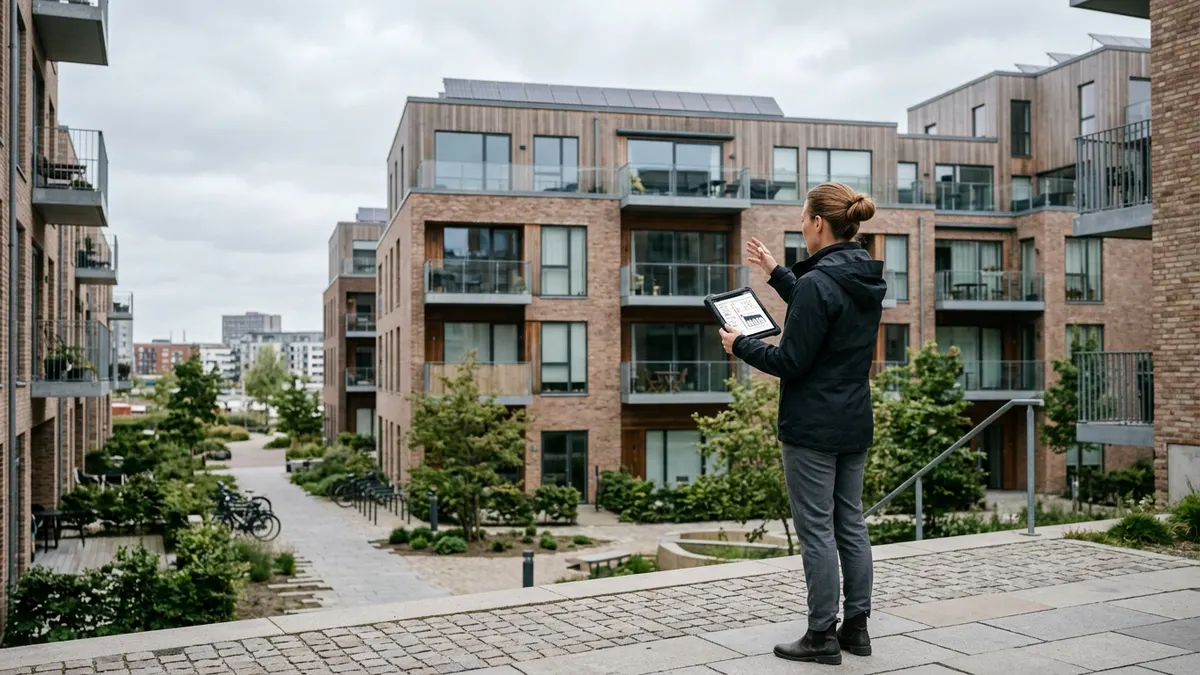
Within Danish property development, the lokalplan (local plan) is the primary tool used by municipalities to control physical development. When an investor identifies potential in a property—whether in Copenhagen, Aarhus, or growth cities like Vejle and Roskilde—it is the lokalplan that dictates what may occur on the matrikel (land parcel). A lokalplan is a detailed plan applicable to a defined geographical area. It determines everything from building heights and material choices to the placement of roads and the preservation of green spaces.
For an investor, working with a lokalplan and property development means being able to navigate political and administrative processes. The Planlov (Planning Act) gives municipalities broad powers, but it also ensures a democratic process where neighbours and stakeholders have the right to be heard. Consequently, changing a lokalplan is rarely a fast process. It requires patience and often close dialogue with the municipality's technical department to ensure the project vision aligns with the municipality’s overarching strategy, which is enshrined in the kommuneplan (municipal plan).
It is important to distinguish between the kommuneplan and the lokalplan. The kommuneplan is the high-level vision for the entire municipality over a 12-year period, while the lokalplan is the specific legislation for the individual plot. If a desired project conflicts with the kommuneplan framework, it requires a kommuneplantillæg (municipal plan amendment), which further complicates and extends the process.
From idea to building permit: The administrative journey
Once the framework in the lokalplan is settled, or if the project remains within existing parameters, the next step is the application for a byggetilladelse (building permit). A byggetilladelse is the authority’s official approval that the specific construction project complies with both the Planlov provisions and the requirements of the Bygningsreglementet (Building Regulations, currently BR18).
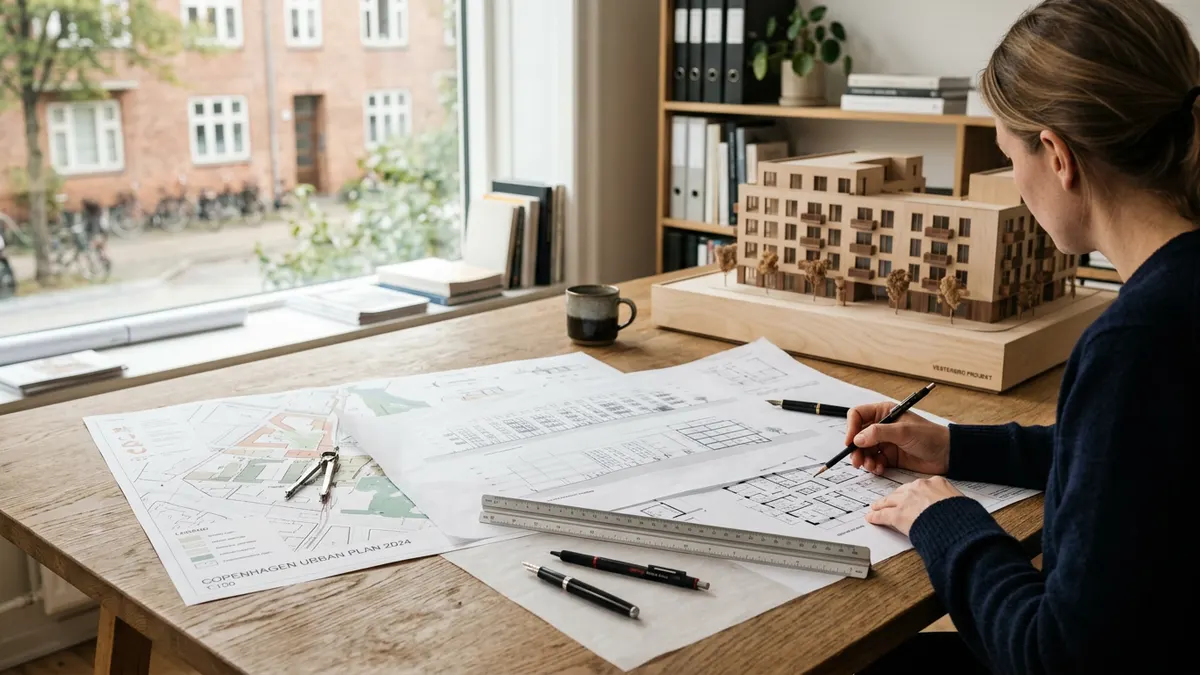
Process times for obtaining a building permit vary significantly between Danish municipalities. In growth areas such as the Greater Copenhagen area or around Odense, processing times can be substantial due to high activity. Investors should therefore factor a time buffer into their liquidity budgets for this phase. The application is submitted digitally via the 'Byg og Miljø' portal, and it often requires technical assistance from architects and engineers to ensure all necessary documentation is attached.
No construction may commence without a valid building permit. If one acts against the provisions of a lokalplan without a dispensation (variance/exemption), the municipality can demand legalisation, which in the worst case may mean the demolition of the structure or a halt to construction, resulting in major financial losses.
Strategic assessment of local plans and property development
To succeed with lokalplan and property development, the investor must perform an in-depth screening of the property’s planning status. Below are the central elements to investigate:
- Usage provisions: May the property be used for residential, commercial, or a combination? Converting offices to residential is a popular strategy, but it often requires a new lokalplan if the area is zoned strictly for business.
- Plot ratio (bebyggelsesprocent): How many square metres may be built relative to the size of the plot? This figure is fundamental for calculating the property's yield potential.
- Height and distance requirements: How high can you build, and how close to the boundary? This can limit the ability to add extra floors to existing buildings.
- Easements and covenants: In addition to the lokalplan, private servitutter (easements) may rest on the land, limiting rights of use. These are found in the tingbogen (land registry).
Comparison of plan types and requirements
The table below illustrates the typical differences between the planning levels an investor encounters in the Danish system.
| Planning Level | Binding for whom? | Duration/Revision | Focus Area |
|---|---|---|---|
| Kommuneplan | Authorities | Every 4 years | Overarching framework, urban growth, infrastructure |
| Lokalplan | The individual landowner | Until repealed | Architecture, usage, detailed control |
| Bygningsreglement | Developer/Contractor | Ongoing updates | Technical requirements, fire, insulation, statics |
| Lokalplanvejledninger | Guiding | Ad hoc | The municipality's aesthetic wishes and practice |
Geographical differences in planning practice
Although the Planlov is national, it is administered locally by 98 different municipal councils. This means that practices for exemptions and the speed of lokalplan drafting vary markedly. In large cities like Copenhagen and Aarhus, we often see very detailed local plans that set strict requirements for materials such as brick, wood, and sustainability certifications (such as DGNB).
In other regions, for example in South Jutland (Kolding, Esbjerg) or North Jutland (Aalborg), there may be a different approach to urban development, where authorities might be more open to converting older industrial areas to residential purposes more quickly to attract new citizens. However, investors must always be aware that political shifts in a municipality can change the course of urban development, underlining the importance of a thorough risk analysis.
For investors focused on brownfield development (omdannelsesprojekter), it is worth noting that environmental conditions and local planning often go hand in hand. Old industrial sites in urban zones often require extensive jordrensning (soil remediation) before a lokalplan for residential purposes can be finally adopted.
Exemptions and zoning status
It is possible to apply for a dispensation (exemption) from a lokalplan, but this should never be taken for granted by an investor. According to the Planlov, exemptions can only be granted for minor provisions. If there is a significant deviation from the lokalplan principles—such as a major change in usage or a significant exceedance of the plot ratio—the municipality cannot simply grant an exemption. It requires a new lokalplan process.
Zoning status is another critical element. Denmark is divided into byzone (urban zone), sommerhuszone (summer cottage zone), and landzone (rural zone). Generally, it is significantly more difficult to develop properties in a rural zone, as this requires a landzonetilladelse (rural zone permit), often granted with a view to preserving landscape values. Most property development projects occur by incorporating rural zone areas into the urban zone via a lokalplan, which significantly increases land value (the so-called zonegevinst or zoning gain).
It is always recommended to seek professional advice from lawyers or specialised consultants before entering into purchase agreements conditional on planning changes. Tax rules regarding property capital gains and zone changes should likewise be clarified with an accountant or SKAT (the Danish Tax Agency).
The five phases of a local plan process
For an investor wishing to influence the development of a specific area, the process typically looks like this:
- Idea phase and dialogue: The investor presents a project proposal to the municipal administration. Here, it is assessed whether the project aligns with the kommuneplan.
- Start report (startredegørelse): The administration prepares a report for the politicians in the technical committee, who decide whether to proceed with a lokalplan.
- Drafting the plan proposal: The municipality writes the legal document (the draft lokalplan) in collaboration with the investor/developer.
- Public consultation: The proposal is sent for consultation (typically 4-8 weeks). Here, citizens and authorities can submit objections.
- Political adoption: After the consultation, any objections are processed, and the lokalplan is finally adopted by the municipal council.
This entire process typically takes between 6 and 18 months, depending on the project's complexity and political attention. This is a significant factor in calculating 'time-to-market'.
Technical requirements and Building Regulations
Once the lokalplan is secured, the actual construction must comply with the Bygningsreglementet. By 2026, requirements for sustainability, energy consumption, and indoor climate will be stricter than ever. Investors must be aware of 'functional requirements,' where it is not always specified exactly how something should be built, but what performance it must have (e.g., sound insulation or heat loss).
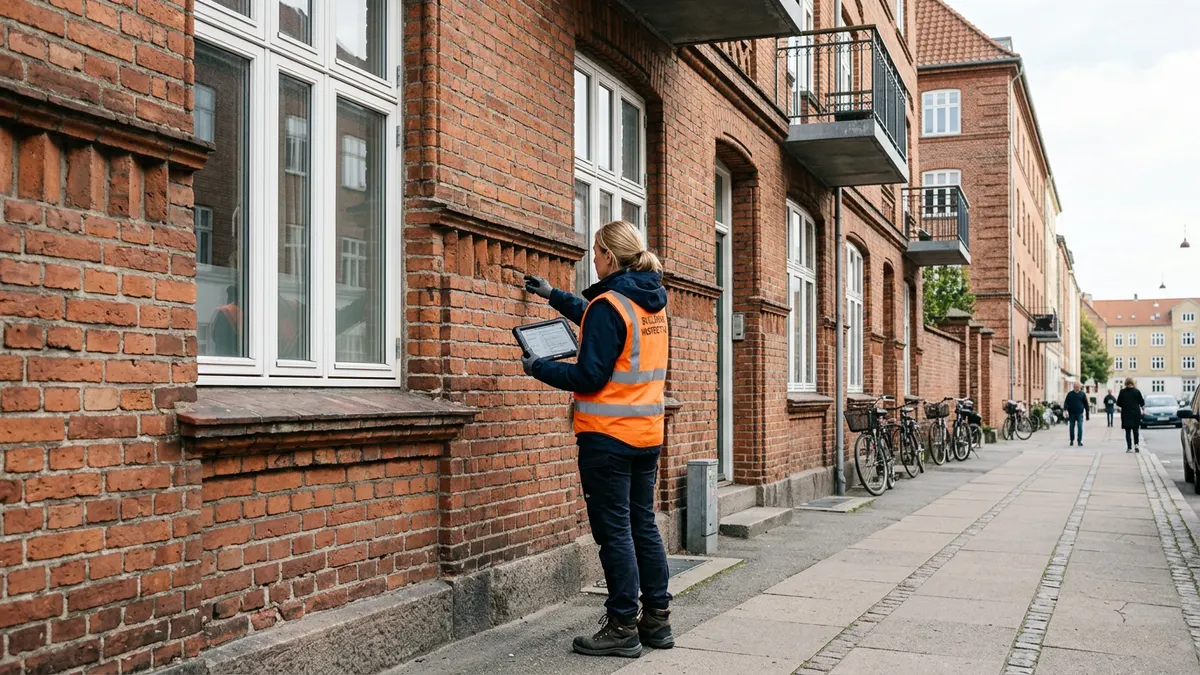
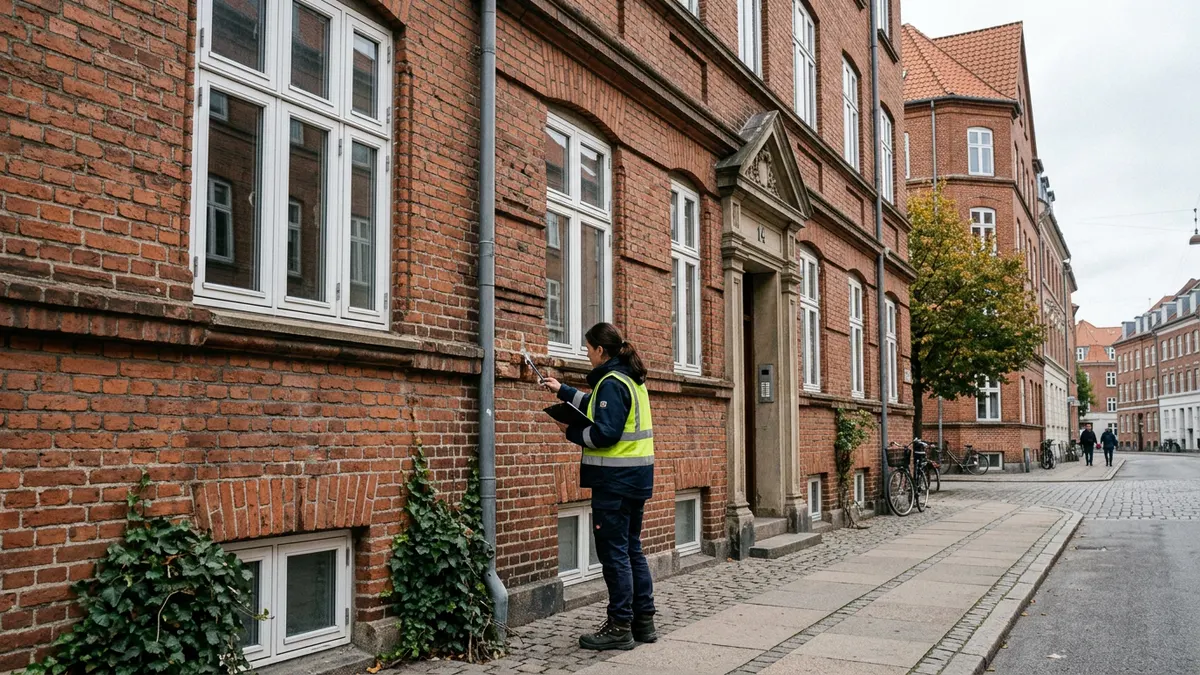
For investors in existing properties, it is important to know that a significant change of use (e.g., from warehouse to office) can trigger requirements that the entire building be upgraded to modern standards for insulation and fire safety. This can make an apparently cheap project very costly.
Conclusion on planning law for investors
Navigating planning legislation is one of the most complex disciplines within Danish property investment. Deep insight into the interplay between lokalplaner and building permits is not just an administrative necessity but a strategic advantage. By understanding municipal visions and the mechanisms of the Planlov, one can identify opportunities that others overlook and minimise the risk of expensive missteps.
It is essential to remember that no information in this guide can replace specific professional advice. Planning law is subject to ongoing changes and interpretations by the courts and the Planklagenævnet (Planning Appeals Board). Therefore, investors should always consult specialists before committing to large investments.
Frequently asked questions
How long does it take to get a building permit?
Processing times vary greatly from municipality to municipality. While some municipalities aim for 30-60 days, several months can pass during busy periods or for complex cases. It is recommended to check the specific municipality's current waiting times on their website.
Can you build without a local plan?
Yes, if the area is not covered by a lokalplan, the kommuneplan framework and the general provisions of the Bygningsreglementet apply. However, larger constructions or significant changes in an area will almost always trigger a requirement for a lokalplan first.
What do I do if neighbours complain about the local plan?
Neighbours have the right to submit objections during the public consultation. The municipal council is obliged to read and consider these, but they are not required to follow them. If the lokalplan is finally adopted, certain legal aspects can be appealed to the Planklagenævnet.
What does it cost to have a local plan prepared?
It depends on the municipality. Some municipalities charge fees for processing, while others see it as part of their business service. Added to this are the investor's own costs for architects, environmental reports, and consultants to provide material for the plan.
What is a plot ratio (bebyggelsesprocent)?
The plot ratio indicates how many square metres of floor space you may build relative to the total size of the plot. If a plot is 1,000 m2 and the plot ratio is 40, a maximum of 400 m2 of building may be constructed.
How PropertyInvestments can help
PropertyInvestments has been active in the Danish market since 1985 and has in-depth knowledge of the processes surrounding the sourcing and preparation of investment properties. We assist investors in identifying properties with development potential and navigate the dialogue regarding the initial assessments of planning conditions.
If you are looking for a professional partner to identify or prepare your next property investment in Denmark, please feel free to contact us for a non-binding dialogue about your options.
Contact us at: info@propertyinvestments.dk or telephone +45 31 16 31 00.