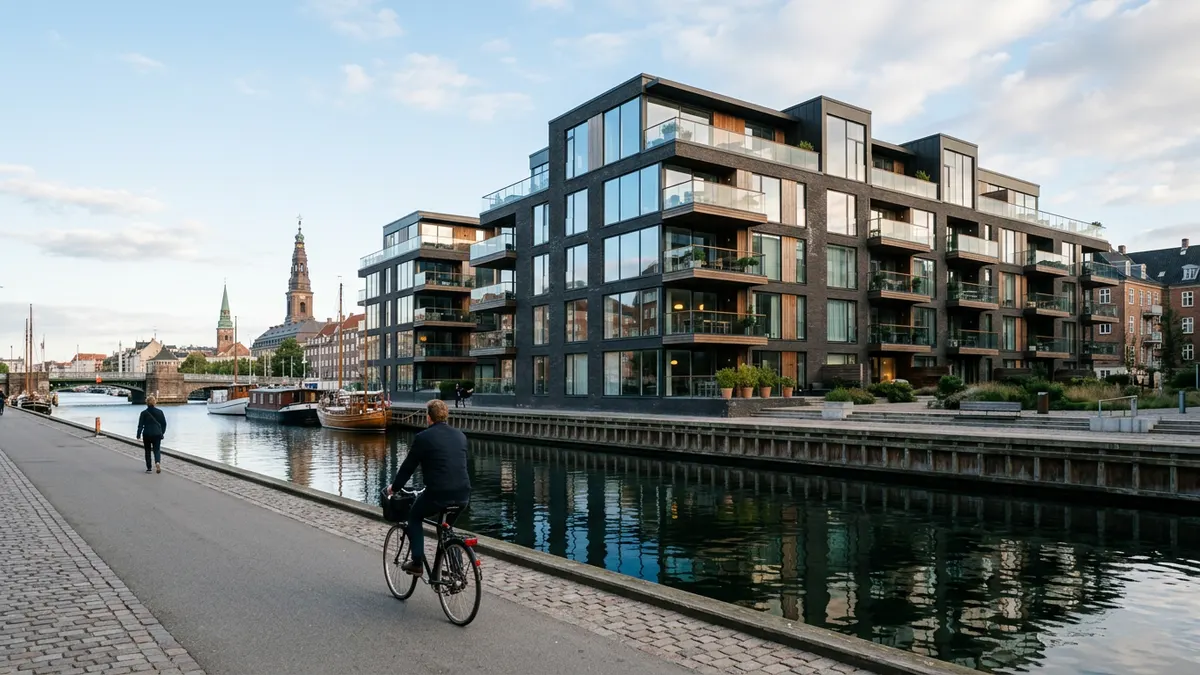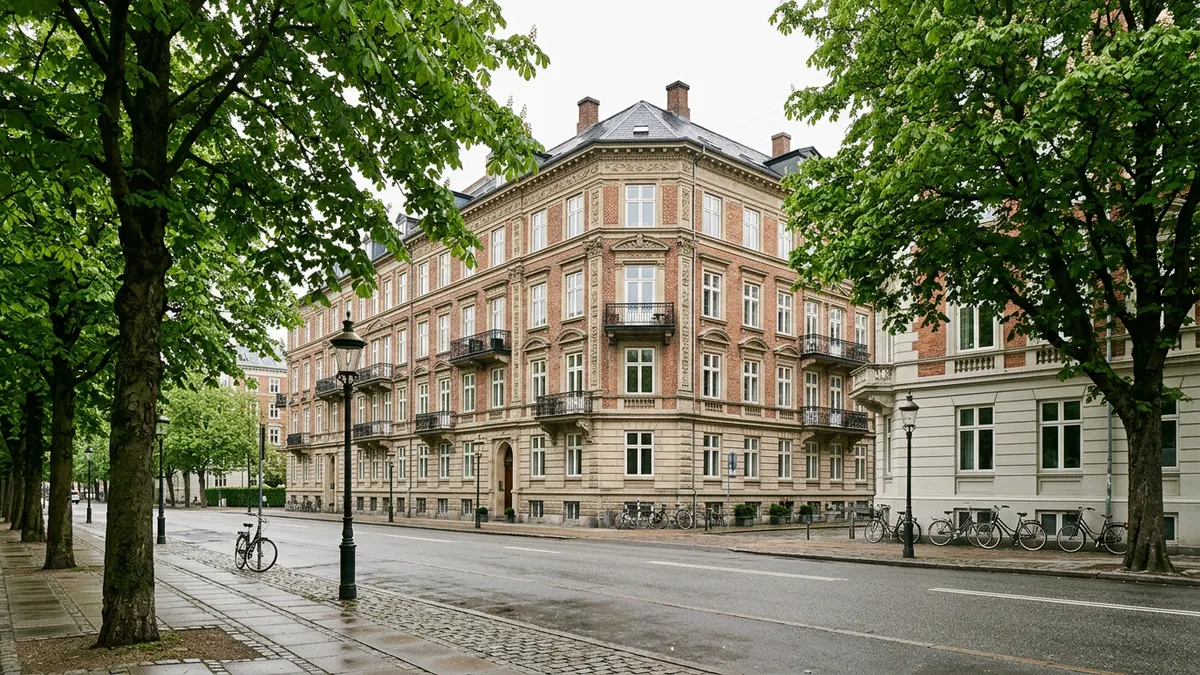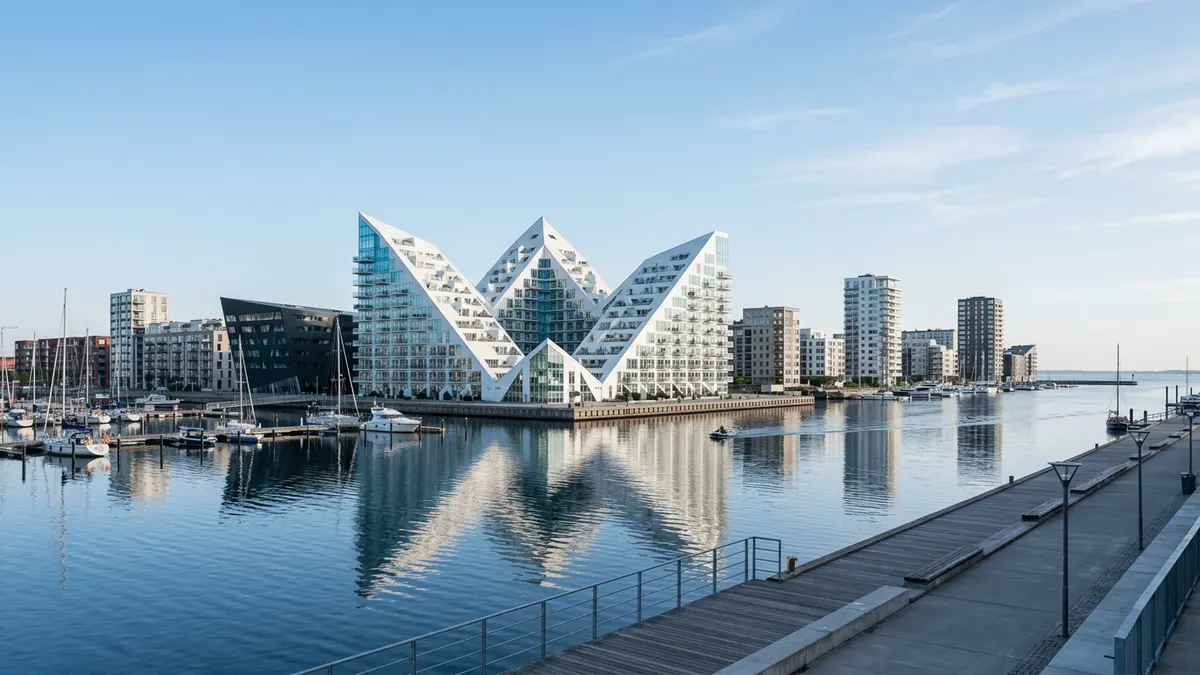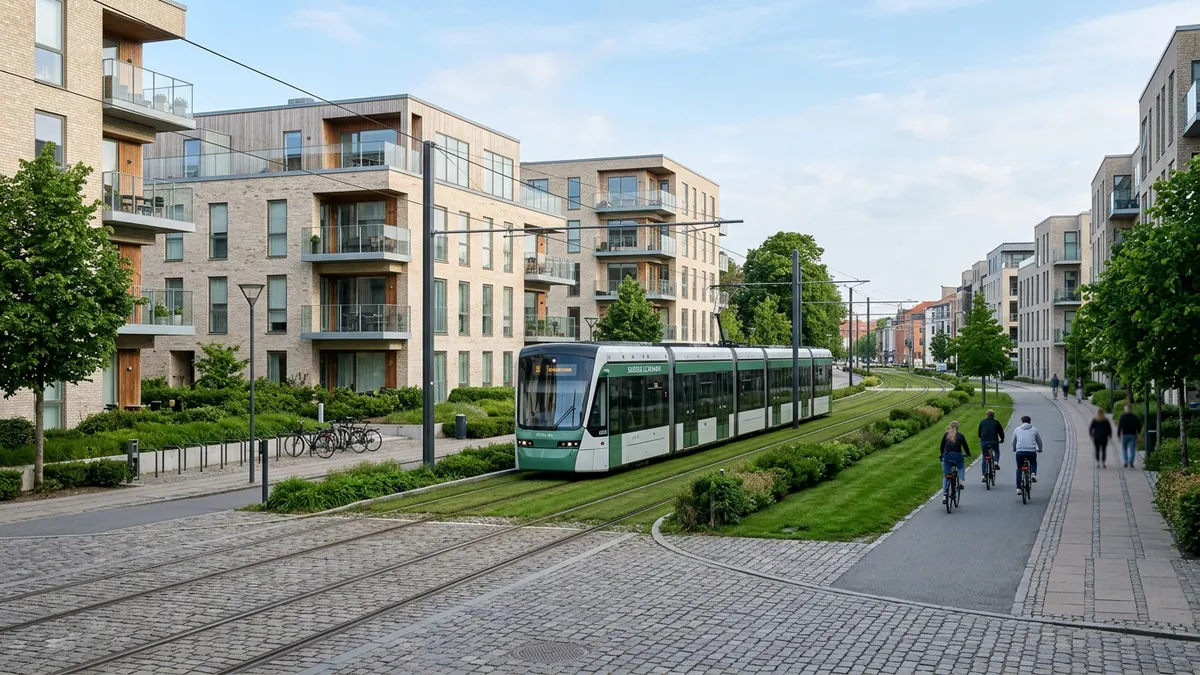
Odense has undergone a significant transformation from an industrial town to a knowledge-based metropolis, making investment property in Odense attractive for both Danish and international investors. The city's strategic location on Funen, combined with massive infrastructure investments like the Light Rail and the development of new urban districts, creates a stable foundation for long-term capital appreciation and consistent rental income.
Odense's transformation as an investment destination
In 2026, Odense stands as one of the most interesting examples of urban planning in Northern Europe. The former central artery, Thomas B. Thriges Gade, which once split the city in two, has now been replaced by a cohesive urban quarter featuring green spaces, housing, and culture. This physical change has not only altered the city's appearance but also its economic gravity.
For an investor, this development means that the geographical focus has shifted. Where investments were previously centred around the historic city core, we are now seeing a spread towards new urban development areas. This growth is supported by the Odense Light Rail, which serves as the city's artery, connecting key hubs: from Tarup in the northwest through the centre and the central station to the University of Southern Denmark (SDU) and the new super-hospital (OUH) in the southeast.
This infrastructure is crucial for the pricing of an investment property in Odense. Properties located near light rail stops have historically experienced higher demand from both tenants and buyers, as mobility has become a key factor for modern urban dwellers.
Demographic development and tenant demand
Odense's population growth is one of the primary drivers for the housing market. The city increasingly attracts students, researchers, and specialists, particularly within robotics and IT. With the University of Southern Denmark as an engine, there is a constant need for smaller homes for students, as well as larger family homes for graduates who choose to stay in the city after completing their education.
Segmentation of the rental market
When considering an investment property in Odense, it is essential to understand the different tenant segments:
- Students: Odense is one of Denmark's largest student cities. The need for small, affordable housing is constant, especially in areas like the Munkebjerg quarter and near SDU.
- Young professionals: With the growth of the robotics cluster (Odense Robotics), a need has arisen for modern apartments with high standards and proximity to the city's cultural life.
- Families: There is a trend of families moving towards townhouses near the city or larger apartments in the quieter parts of Odense C and Odense M.
- Seniors: The growing segment of those aged 60+ often seeks modern accessibility housing with lifts and balconies in central locations.
Economic key figures and market conditions
The Danish property market is generally characterised by stability compared to many other European markets. In Odense, we have seen more moderate price development than in Copenhagen and Aarhus, which often results in a more attractive yield for investors seeking stability over aggressive speculation.
| Factor | Description | Investor Relevance |
|---|---|---|
| Infrastructure | Light Rail and the motorway network (E20) | Increases property value along transport corridors |
| Employment | High growth in technology and health sectors | Ensures stable payment ability among tenants |
| Housing stock | Mix of historic townhouses and modern new builds | Opportunity for both project development and value-add |
| Education | University of Southern Denmark (SDU) | Constant flow of new tenants every year |
It is important to note that yield requirements and financing terms vary depending on the property's condition, location, and the composition of lease agreements. Investors should always consult the Finanstilsynet (Danish Financial Supervisory Authority) guidelines and seek professional advice on financing structures.
Legal framework for investment property in Odense
As an investor in Danish property, there are several legal aspects to be aware of. Lejeloven (The Rent Act) and Boligreguleringsloven (The Housing Regulation Act) are central elements that define the framework for setting rent and maintenance obligations.
Rent setting
In Denmark, there are various principles for rent setting, including omkostningsbestemt leje (cost-based rent), det lejedes værdi (value of the rented premises), and fri lejefastsættelse (free rent setting—typically for properties occupied after 31 December 1991). In Odense, many older properties exist where the rent is regulated according to the value of the premises or cost-based principles. It is crucial for an investment case to conduct a thorough legal due diligence of existing lease agreements.
Taxation and rules
Rules for property taxation, including grundskyld (land tax) and ejendomsværdiskat (property value tax), are subject to ongoing political adjustments. In 2026, the new property tax system is fully implemented, providing greater transparency but also requiring precise calculation in the investment budget. We always recommend consulting a tax advisor or SKAT (the Danish Tax Agency) for the latest rates and rules.
Selected areas with growth potential
Odense is not just one homogenous city but consists of districts each with their own characteristics and investment profile. When sourcing an investment property in Odense, the following areas should be evaluated:
Odense Harbour
The harbour has transformed from an industrial port into an exclusive urban district. Here, you primarily find new builds with a focus on architecture and harbour views. This area appeals to tenants with higher disposable incomes and investors focused on modern assets with low maintenance costs.
Vesterbro and Bolbro
These areas have experienced a renaissance alongside urban renewal and the arrival of the light rail. Here, there are often opportunities to find properties with potential for optimisation (value-add), where renovation can increase the property's value and rent level within the legal framework.
Odense M and Hunderup
Traditionally the most attractive residential areas in Odense. Investment properties here are characterised by high security and low vacancy rates, but often also a lower direct yield due to high entry prices. Here, one primarily invests for long-term wealth preservation.
Risk management in property investment
No investment is without risk. In the Danish market, including Odense, investors must consider:
- Interest rate variations: Changes in general interest rate levels affect both financing costs and yield requirements for properties.
- Vacancy risk: Although Odense has healthy population growth, specific segments or an oversupply of certain housing types can lead to temporary vacancies.
- Legislation: Changes in rental legislation can have a direct influence on a property's net operating income.
To counter these risks, thorough market insight and conservative budgeting are necessary. Since 1985, PropertyInvestments has assisted investors in navigating these conditions through detailed analysis and local knowledge.
Commercial properties vs. Residential letting
While residential letting is often seen as the most stable asset class, Odense also offers opportunities within commercial property. The city's focus on robotics technology has created demand for specialised office facilities and light industry/warehousing in areas like southeast Odense near the motorway.
Commercial lease agreements in Denmark are typically characterised by greater freedom of contract than residential leases, which can provide the investor with other advantages, such as longer binding periods (non-cancellability) and net-lease structures where the tenant handles a larger portion of operations. However, this requires deeper insight into the needs of local businesses.
Comparison with other Danish growth cities
Looking at the Danish map, Odense places itself strongly in the middle. Where Copenhagen often has very low yield requirements and Aarhus has experienced massive price increases, Odense offers a balance in 2026. Other cities like Aalborg, Esbjerg, and Vejle also have their strengths, but Odense's unique combination of central location (60-90 minutes to Copenhagen and Aarhus by train) and a focused business strategy makes it a cornerstone in many property portfolios.
Future prospects for investment property in Odense
Looking ahead to the end of the decade, Odense is expected to continue its integration with the rest of Denmark. The completion of the new super-hospital and the continued expansion of the knowledge city will cement Odense as a regional metropolis. For investors, this means the timing for market entry remains relevant, provided one has access to the right cases that are not necessarily offered on the open market (off-market).
The Danish property market requires patience and professionalism. Successful investment in Odense is about understanding the city's DNA—from the cobbled streets of the Hans Christian Andersen quarter to the high-tech facilities in Cortex Park.
Frequently asked questions
What is a typical yield on an investment property in Odense?
The yield varies significantly depending on property type and location. Generally, Odense often sits slightly higher in yield than Copenhagen for comparable assets, but precise figures depend on the specific case and market conditions in 2026. We recommend an individual assessment of every case.
Is there a residency requirement in Odense for investors?
For residential properties in Denmark, bopælspligt (residency requirement) rules often apply, meaning the home must be occupied. As a professional investor letting out the homes, this is rarely an obstacle, but one must be aware of municipal guidelines and rules regarding summer houses versus year-round residences. Contact Justitsministeriet (The Ministry of Justice) or Odense Municipality for specific rules.
How does the Light Rail affect property prices?
Experience from both Odense and other cities like Aarhus shows that proximity to efficient infrastructure often supports property values and reduces the risk of vacancy, as it makes the property attractive to a broader segment of tenants without cars.
What legal requirements are there for rental properties?
There are extensive requirements regarding fire safety, energimærkning (energy performance certificates), and the drafting of the lease agreement. Furthermore, one must comply with the rules in Lejeloven (The Rent Act). It is always recommended to use a specialised lawyer or property manager to ensure compliance.
How PropertyInvestments can help
PropertyInvestments has served as a trusted partner for investors in the Danish market since 1985. We offer a complete solution where we source relevant investment opportunities in Odense, perform technical and financial reviews, and prepare the property for operation or resale. Our local network often gives us access to properties before they hit the public market.
If you are considering expanding your portfolio with an investment property in Odense, you are welcome to contact us for a non-binding dialogue about your investment criteria. We help both Danish and foreign investors find security and value in the Danish property market.
Contact us at info@propertyinvestments.dk or by phone at +45 31 16 31 00 to hear more about current opportunities.