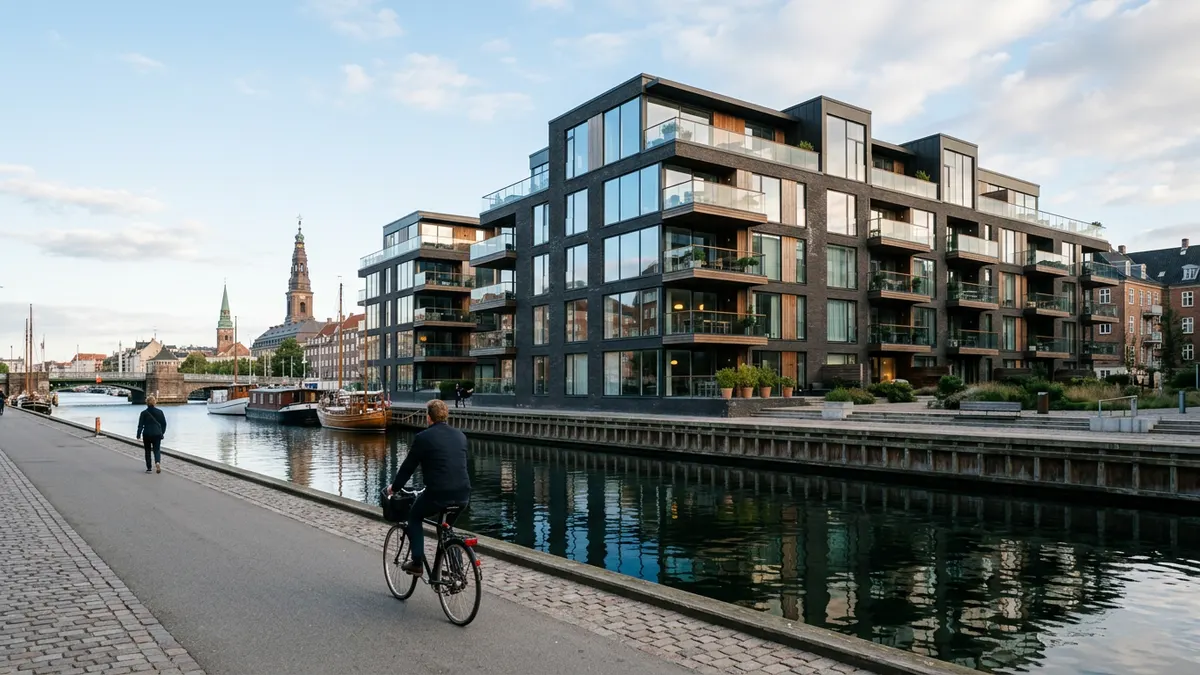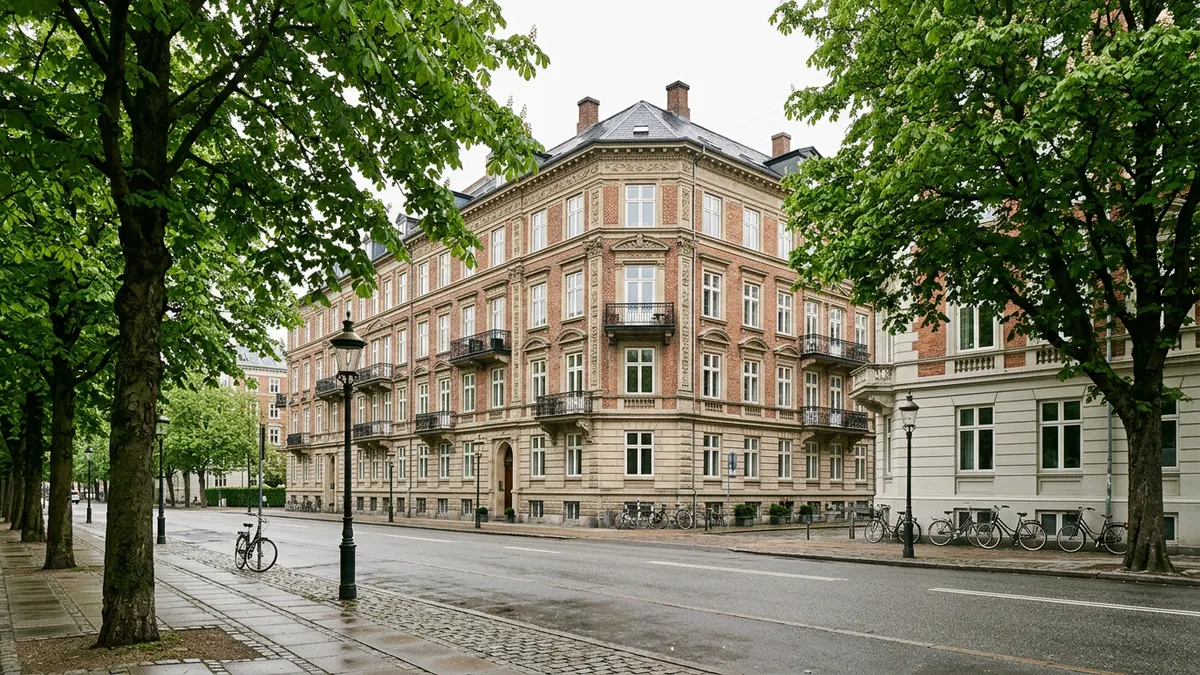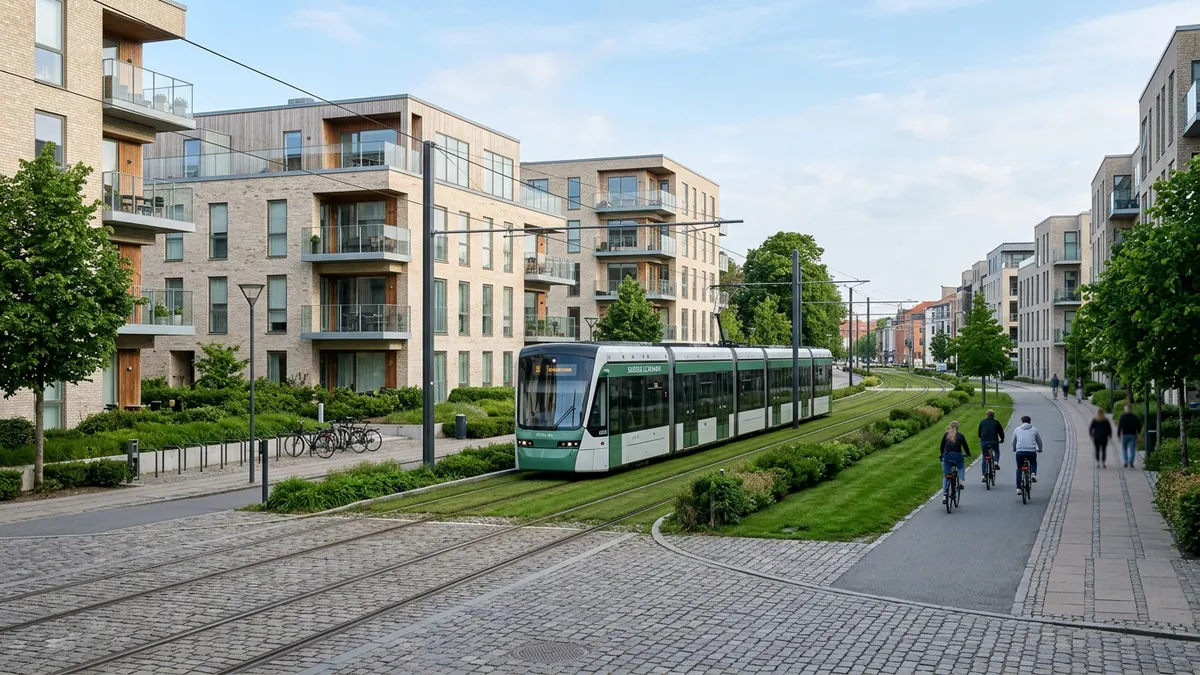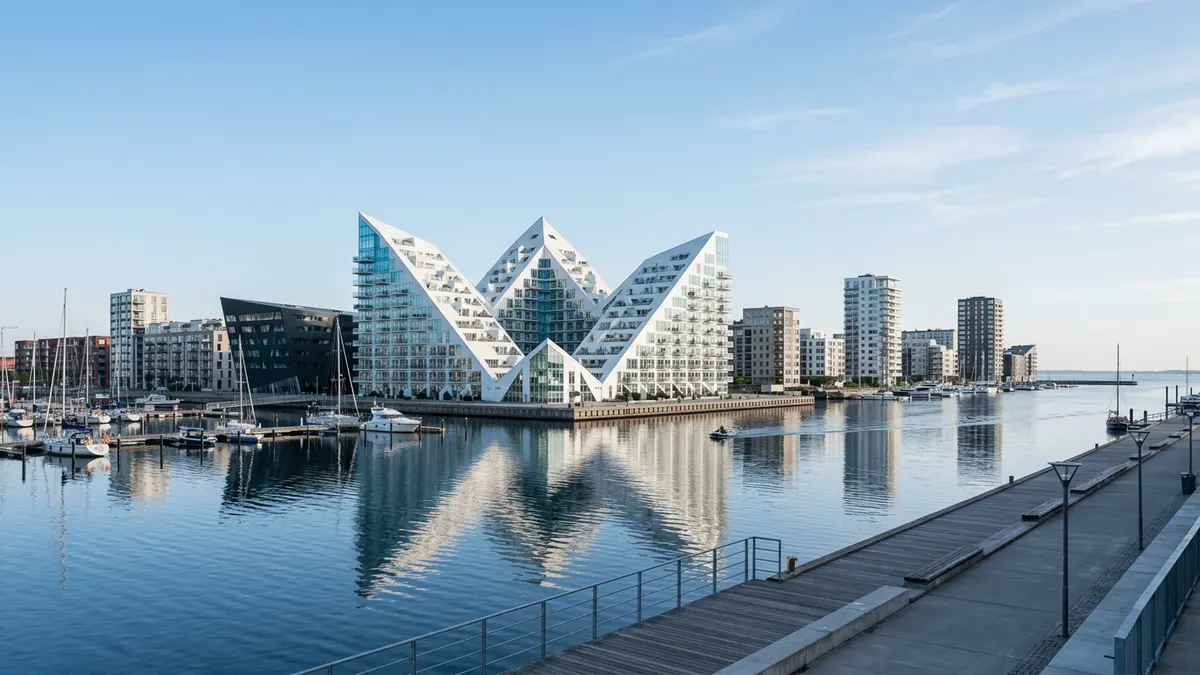
Aarhus is experiencing significant population growth and solid economic development, making an investment property in Aarhus an attractive asset class. With the city's status as an educational hub and the growth rate in East Jutland, stability is combined with long-term return potential for investors seeking both residential and commercial properties in a regulated market.
The strategic importance of Aarhus in the Danish property market
Aarhus is no longer just Denmark's second-largest city; it serves as the primary engine for the entire Jutlandic growth. When looking at the market for an investment property in Aarhus, it is necessary to understand the city's unique position. While Copenhagen often grabs the headlines, Aarhus has over recent decades built an infrastructure and a business sector that makes it highly resilient to economic fluctuations.
The city's geographical location in the heart of Jutland means that it attracts labour and students from North Jutland, Central Jutland, and Southern Denmark. This constant flow of newcomers creates fundamental pressure on the housing market, which is one of the most decisive factors for a property investor. When demand exceeds supply, a low vacancy risk is ensured, which is essential for a healthy property portfolio.
In September 2026, we see that Aarhus continues its transformation from a regional city to an international knowledge city. This is supported by massive investments in infrastructure, including the expansion of the light rail and the modernisation of the harbour areas. For investors, this means that districts previously considered peripheral are now being integrated more closely into the city centre, opening up new investment opportunities.
Demographic development as a foundation for investment property in Aarhus
One of the most reliable indicators of a successful investment in real estate is demographics. Aarhus stands out by having one of the youngest populations in Denmark, primarily due to the city's large educational institutions such as Aarhus University and VIA University College. This creates a sustained demand for smaller apartments and shared housing.
However, Aarhus is not just for students. We see a tendency for many to stay in the city after completing their education, which increases the need for larger owner-occupied and rental homes for families. At the same time, the growing segment of what is called "the grey gold" – affluent seniors – is moving towards the city centre to be close to cultural life and facilities. This versatility in the resident composition means that an investment property in Aarhus can target many different segments, thereby spreading the risk for the investor.
According to projections from Danmarks Statistik (Statistics Denmark), Aarhus is expected to continue its growth for many years to come. For an investor, however, it is important to note that growth is not evenly distributed. Areas such as Aarhus Ø, the old freight yard area (Godsbanen), and Trøjborg experience different dynamics. Where Aarhus Ø is characterised by modern new builds with higher rent levels, Trøjborg offers a more classic portfolio of older properties with a different risk and return profile.
Table: Comparison of districts in Aarhus (General trends)
| District | Typical Property Type | Primary Target Group | Characteristics |
|---|---|---|---|
| Aarhus C | Classic blocks | Students & Young professionals | Low vacancy, stable rent |
| Aarhus Ø | Modern architecture | Seniors & High-end tenants | Higher rent levels, new builds |
| Trøjborg | Older brick properties | Students | Historic charm, near University |
| Viby/Åbyhøj | Villas and terraced houses | Families | Long-term tenants, quieter areas |
Market dynamics and the economic landscape in 2026
When considering an investment property in Aarhus in 2026, one must take into account the current interest rate environment and the regulatory framework. The Danish market is known for its stability, but it requires insight into local conditions to navigate correctly. Guidelines from Finanstilsynet (the Danish Financial Supervisory Authority) and the current rules in Lejeloven (the Danish Rent Act) are factors that directly affect the ongoing return.
It is important to understand the difference between the regulated and unregulated rental market in Denmark. Many older properties in Aarhus are subject to cost-based rent, while newer properties (built after 1991) typically have free rent setting. This has a major impact on the valuation of an investment property in Aarhus. Investors should always consult legal advisors to ensure that rent levels comply with current legislation, including the rules on thorough improvements (popularly called § 19, para. 2 modernisations, formerly § 5, para. 2).
In addition to the housing market, Aarhus is also a powerhouse for commercial real estate. The city houses some of Denmark's largest companies within IT, energy, and logistics. The Port of Aarhus is one of the largest in Northern Europe, supporting strong demand for warehouse and logistics properties in the peripheral areas around the E45 motorway. This geographic aspect is important: investment does not have to be limited to the 8000 postcode but can advantageously include growth zones in Skanderborg, Randers, and Horsens, which are closely linked to the Aarhus economy.
The legal framework for property investment in Denmark
For foreign investors, it is worth noting that Denmark offers a very secure legal system, but also specific rules for the acquisition of real estate. Generally, companies can buy properties for investment, but there is a difference between buying a property as an "asset deal" or a "share deal" (purchasing the company behind the property). Each model has its tax and legal consequences, which should be discussed with an accountant or tax expert.
Tax rules in Denmark for properties change continuously. This applies to both ejendomsværdiskat (property value tax) and grundskyld (land tax). We always recommend seeking updated advice from SKAT (the Danish Tax Agency) or a specialised advisor to get the most accurate calculations for a specific investment property in Aarhus. In 2026, there is a continued focus on sustainability requirements (ESG), and a property's energy rating plays an increasingly large role in both financing options and rental value.
Energy renovation is no longer just an option, but a necessity to future-proof one's investment. Buildings with poor energy ratings risk falling in value, as both tenants and lenders place stricter demands on climate impact. This is particularly relevant in Aarhus, where the municipality has ambitious climate goals that may affect future local plans and building requirements.
Why choose Aarhus over other Danish cities?
Although Copenhagen is the nation's capital, Aarhus often offers a different yield. Prices in Aarhus C are generally lower than in Copenhagen K, but rent levels are still relatively high, which can result in a better return on invested capital. At the same time, the risk is lower than in many smaller provincial towns, where dependence on a single large workplace can make the market vulnerable.
Aarhus benefits from being the cultural and educational centre for all of Jutland. The city's university is among the best in the world, ensuring a constant influx of talent. This spills over into the business sector, where especially the IT sector in Aarhus (known as "IT-byen Katrinebjerg") is in rapid growth. For an investor in a commercially oriented investment property in Aarhus, this is an important parameter, as it ensures tenants with high payment capacity and long-term perspectives.
Compared to cities like Odense and Aalborg, Aarhus has a more mature infrastructure and a larger critical mass of investors. This makes it easier to divest properties again (exit strategy), as liquidity in the market is high. There are always buyers for well-located properties in Aarhus, whether they are Danish pension funds or international private equity firms.
Important areas to watch:
- Aarhus South: Areas like Viby and Tranbjerg are seeing great interest from families who want to live close to the city but in greener surroundings.
- Brabrand and Gellerup: Undergoing a massive architectural and social transformation, which can provide interesting opportunities for the long-term investor.
- The E45 corridor: Ideal for logistics and commercial properties, as the connection to the rest of Europe is optimal.
Risk management when buying investment property in Aarhus
Every investment involves risk, and the property market is no exception. When buying an investment property in Aarhus, one should perform thorough due diligence. This includes not only the financial figures but also a technical review of the building. Old properties in central Aarhus can hide unforeseen expenses for maintenance of roofs, facades, or piping.
Another risk is political decisions. Local plans can change, and new construction projects in the neighbourhood can affect views, light conditions, and traffic flow. It is therefore crucial to have knowledge of Aarhus Municipality's master plans. PropertyInvestments follows these processes closely to advise investors on where the next big development areas are emerging and where to be cautious.
Financing is also a key factor. The Danish mortgage systems are unique and offer some of the world's most stable loan options, but requirements for self-financing can vary depending on the property type and the investor's profile. A solid business case with realistic estimates for rental income and operating expenses is a prerequisite for achieving attractive loan terms from banks and mortgage credit institutions.
Strategies for yield optimisation
Once an investment property in Aarhus has been acquired, the work of optimising operations begins. This can happen through:
- Energy optimisation: Replacing windows, insulation, and optimising heating systems reduces operating costs and makes rentals more attractive.
- Modernisation upon tenant turnover: By upgrading kitchens and bathrooms in accordance with current legislation, the rental value can often be increased.
- Professional property management: Efficient collection of rent, handling of tenants, and ongoing maintenance minimises vacancy and ensures satisfied tenants.
In Aarhus, we see an increasing trend towards "co-living" and shared housing, especially among the many students. By designing properties that support this, one can often achieve a higher rent per square metre than if renting to a single household. However, this requires closer administration and an understanding of the specific rules that apply to the renting of rooms.
It is also worth considering the property's use. In certain cases, it can be advantageous to convert commercial spaces into residential units if the local plan allows it. This is a process that requires good dialogue with the municipality and insight into Bygningsreglementet (the Danish Building Regulations, BR18), but it can unlock significant added value in an investment property in Aarhus.
Summary of the market in 2026
Aarhus stands strong in 2026. The city has proven its resilience against shifting economic winds and continues to attract both capital and people. For the serious investor, an investment property in Aarhus offers a combination of ongoing cash flow and potential for capital growth.
Whether one is an experienced investor with a large portfolio or a new player in the market, thoroughness in the groundwork is crucial. The market in Aarhus is professional, and one competes with skilled actors. Success, therefore, requires local insight, a strong network, and a patient approach to value creation.
The region around Aarhus, including satellite towns like Hinnerup, Hadsten, and Skanderborg, should also be included in considerations. The improved infrastructure allows commuters to live further out, spreading growth and creating new pockets of value in the East Jutland landscape. The common thread for all these areas is the economic gravity exerted by Aarhus.
Frequently asked questions
What is the typical yield on an investment property in Aarhus?
The yield varies depending on location and property type. In Aarhus C, the initial yield is typically lower due to the low risk, while in peripheral areas or when investing in commercial properties, one can often achieve a higher ongoing return. Contact a professional advisor for specific market data.
What rules apply to the modernisation of rental units?
The rules are primarily found in Lejeloven (the Danish Rent Act). Many investors use the rules for thorough modernisation to increase rent, but this requires certain amount limits and quality requirements to be met. We always recommend legal advice from a property lawyer before initiating major projects.
Is it safe for foreign investors to buy property in Aarhus?
Yes, Denmark is considered one of the safest countries in the world to invest in due to high transparency and a stable legal system. Foreign companies can generally acquire investment properties but should investigate tax conditions in relation to their home country and Denmark.
How does the light rail affect property prices?
Infrastructure projects like Letbanen (the light rail) have historically had a positive effect on property values along the route. Areas that were previously isolated become more attractive for tenants without a car, increasing demand and thus the rent level in specific districts.
How PropertyInvestments can help
PropertyInvestments has since 1985 helped Danish and international investors find the right opportunities in the Danish market. We source, set up, and sell investment properties with a focus on concrete value creation and professionalism. Our process includes everything from the initial screening of the market to preparing the property for sale and following up on the final transaction.
If you are considering an investment property in Aarhus or want a non-binding dialogue about your options in the current market, you are welcome to contact us. We do not provide legal or tax advice, but we facilitate contact with the most competent professional advisors and ensure that your investment is built on a solid data foundation.
Contact us at info@propertyinvestments.dk or call +45 31 16 31 00 to hear more about current projects and market insights.