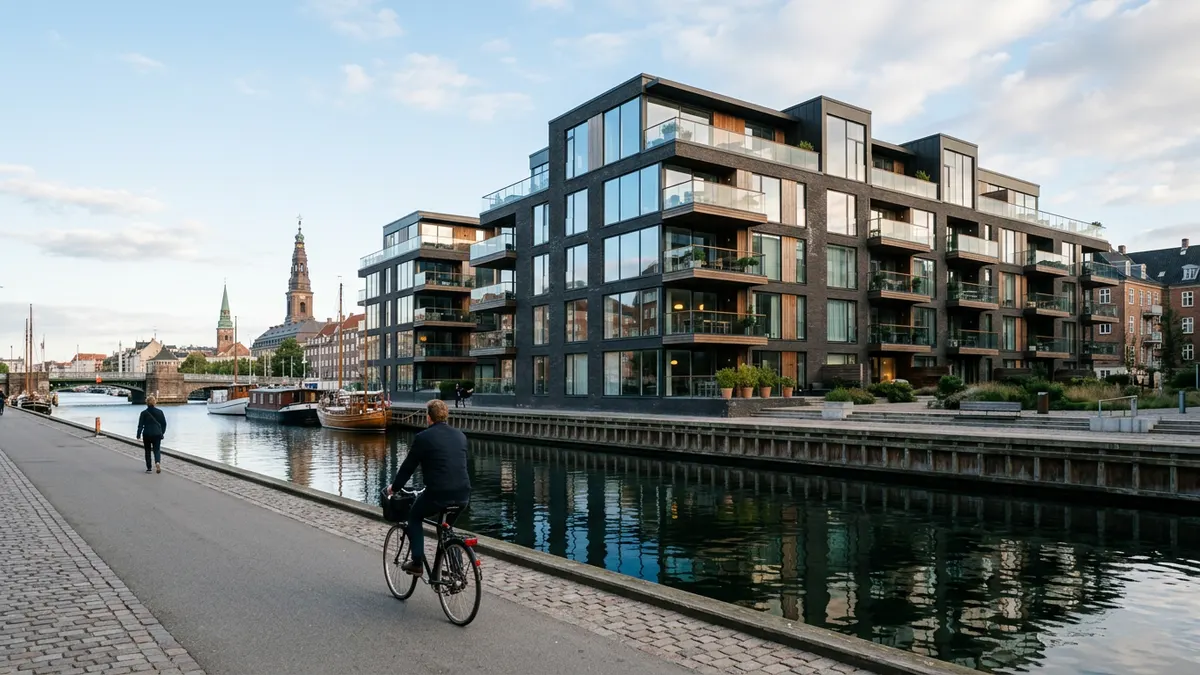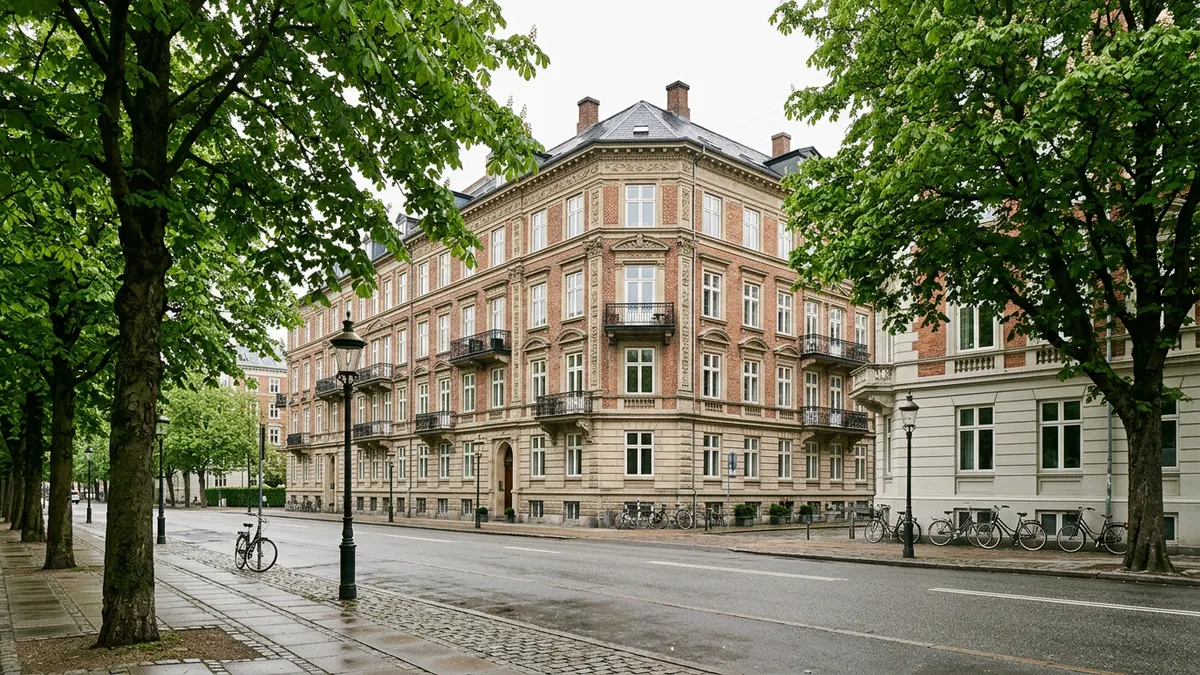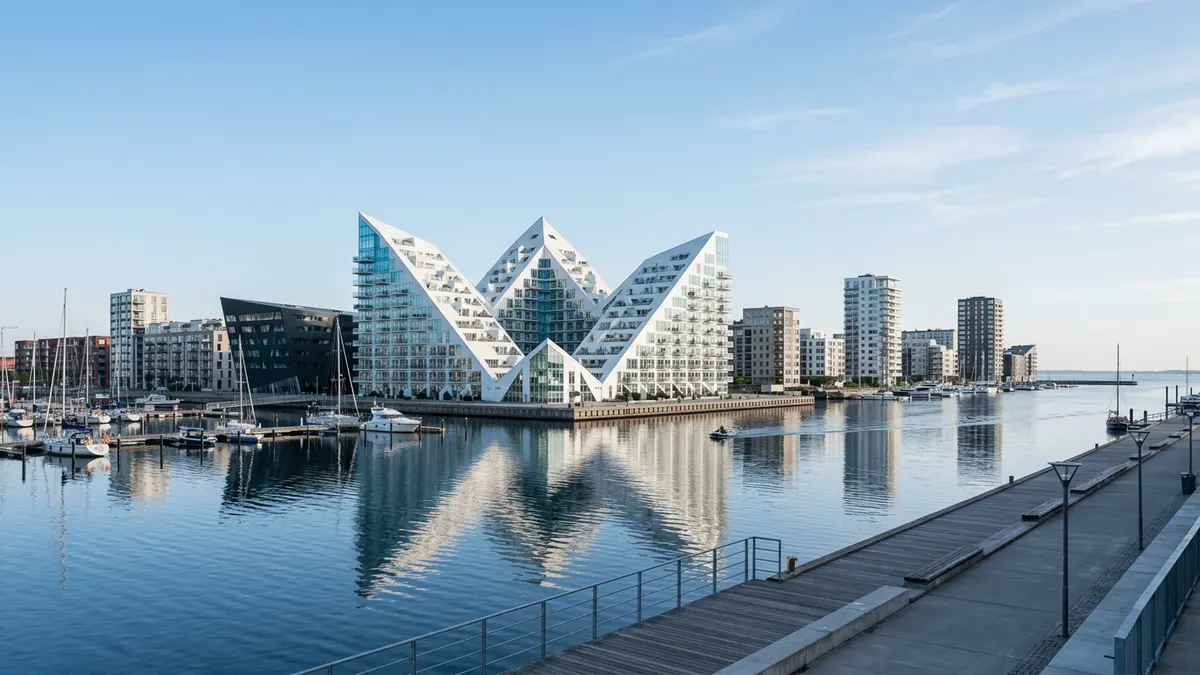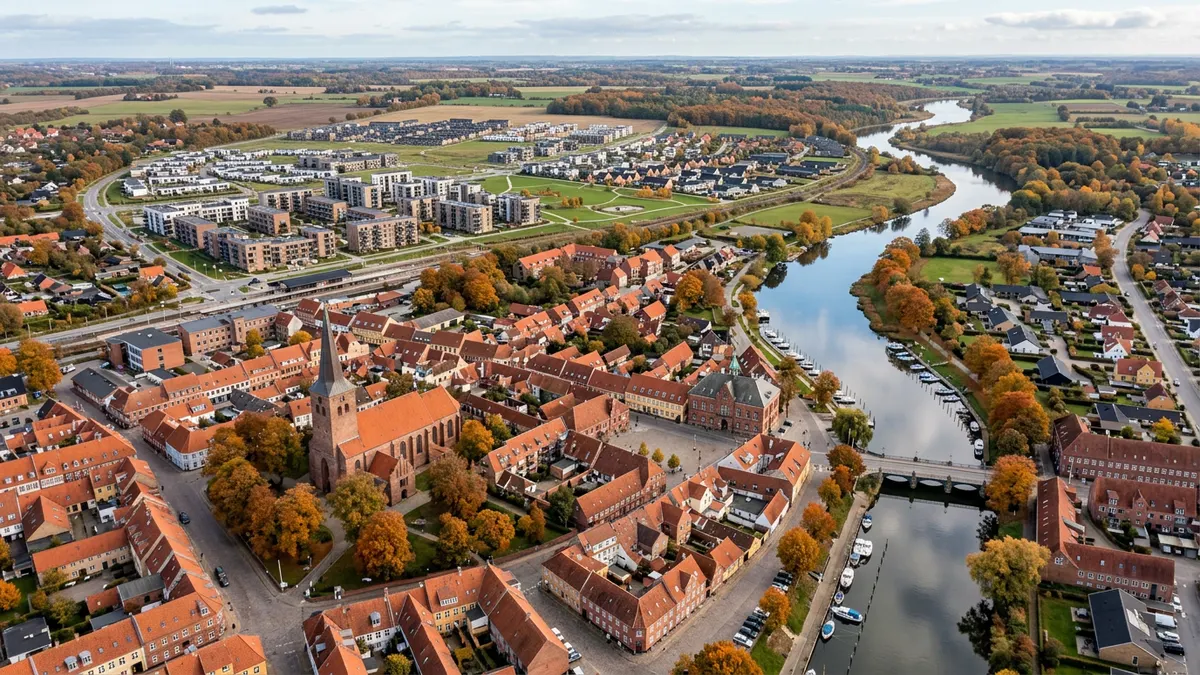
Næstved serves as South Zealand's primary growth centre, where stable population growth and infrastructure improvements create an attractive market for an investment property Næstved. The city's balance between a historical town centre and modern business districts attracts both Danish and international investors seeking long-term returns through residential letting and commercial premises in a region with high commercial activity.
The strategic landscape for investment property Næstved
In September 2026, Næstved stands as one of the most central players in the Zealand property economy outside Greater Copenhagen. Over decades, the city has consolidated its position as a hub for education and trade, which is directly reflected in the demand for well-located properties. When considering an investment property Næstved, one looks into a market characterised by a higher degree of stability compared to the often more volatile markets in Copenhagen and Aarhus.
Næstved's role as a regional hub is supported by its geographical location. With connections south towards Vordingborg and Lolland-Falster, and north towards Ringsted, Køge, and Copenhagen, the city functions as a logistical and administrative bastion. This creates a natural demand for both residential square footage and modern commercial premises that can service the local hinterland.
In recent years, investors have turned their gaze towards Næstved because yield levels are often more attractive than in the capital region, while the vacancy risk is kept at a controlled level due to the city's size and significance. However, it is essential to perform thorough due diligence, as the market is divided into distinct zones with widely varying growth potentials.
Demographic development and housing demand
One of the most decisive factors for the value of an investment property Næstved is the demographic composition. Næstved Municipality is one of the largest in the country by population, and the city's ability to retain families with children as well as seniors creates a differentiated demand for housing.
Segmentation of rental housing
- Student housing: As an educational city for large parts of South Zealand, there is a constant need for smaller tenancies close to educational institutions and the station.
- Family housing: There is an increasing interest in terraced houses and larger apartments on the outskirts of the town centre, where infrastructure and green areas are highly valued.
- Senior housing: Just like in the rest of Denmark, Næstved is seeing an increase in the number of seniors wishing to move from large detached houses to central, maintenance-free rental apartments with lifts and balconies.
This diversity in demand means that an investor can assemble a portfolio that is resilient to economic fluctuations. While students are less affected by interest rate hikes, family homes are often characterised by longer residency times for tenants, reducing costs for re-letting and refurbishment.
Infrastructure and its impact on property prices
Infrastructure is the backbone of any property investment. Næstved has undergone significant improvements linking the city closer to the rest of Zealand. The expansion of the road network, including connections to the motorway network at Rønnede and Ringsted, has made it possible for commuters to settle in Næstved and work in Køge or Copenhagen.
The rail connection is likewise a critical factor. Upgrades to signalling systems and track work on the South Line (Sydbanen) aim to shorten travel time towards the capital. For an investor, this means that properties located within a radius of 1-2 kilometres from Næstved Station or Næstved Nord station possess an inherent value stability. Here, access to transport is one of the primary drivers for rental levels.
Furthermore, the upcoming Fehmarn Belt connection plays an indirect but important role. Although the connection lies further south, general activity in Region Zealand is expected to increase, which may lead to derived effects in the form of logistics companies and sub-suppliers moving towards Næstved due to the city's existing business climate.
The commercial market in Næstved: Opportunities and pitfalls
Commercial properties in Næstved cover a wide spectrum from retail in the historical town centre to large logistics and production properties in the business areas on the city's periphery. When purchasing a commercial investment property Næstved, it is crucial to understand the local planning conditions and business structure.
Retail and city life
The Næstved City Association (Næstved Cityforening) works actively to preserve the city centre as a vibrant commercial hub. Although e-commerce challenges physical stores globally, Næstved has managed to maintain a strong position as a regional shopping destination, supplemented by the Næstved Storcenter. Investors in retail properties should focus on tenancies that can accommodate experience-based business, cafés, or clinics, which are less vulnerable to e-commerce.
Office and professional services
There is a stable demand for modern office space. We see a trend where smaller companies seek out co-working spaces or smaller, flexible tenancies. Large, older office buildings can advantageously be converted into housing if the local plan (lokalplan) allows it, which is a strategy many investors have employed successfully in Næstved.
Warehouse and logistics
The areas around Næstved Nord and by the major approach roads are ideal for warehousing and light industry. Here, access conditions for heavy traffic are decisive. With increasing sustainability requirements in the supply chain, we see increased demand for properties with optimised energy consumption and good facilities for employees.
Comparison of investment parameters
To provide an overview of how Næstved positions itself relative to comparable cities, the following table can be used as a general indication of market conditions in 2026. Note that figures are estimates and may vary depending on the property's condition and precise location.
| Parameters | Næstved | Ringsted | Slagelse | Køge |
|---|---|---|---|---|
| Expected Yield (Residential) | 4.0% - 5.5% | 4.2% - 5.8% | 4.5% - 6.0% | 3.5% - 4.8% |
| Population Growth | Stable/Increasing | Increasing | Stable | High |
| Commuter Options | Good | Very good | Good | Excellent |
| Business Activity | High (Regional) | Medium (Logistics) | Medium | High (Port/Logistics) |
Source: General market observations. Specific assessments should always be obtained from an expert advisor.
Legal and tax considerations
When acquiring an investment property Næstved, it is important to be aware of the applicable Danish rules for property ownership. This includes, among other things, the tenancy legislation (lejelovgivningen), which in Denmark is relatively protective of residential tenants. Investors must be particularly aware of the rules regarding thorough modernisation (formerly known as Section 5, subsection 2, now integrated into the consolidated Rent Act (lejeloven)), which can have a major influence on the potential rent level.
Furthermore, as an investor, one must relate to the municipal property taxes (ejendomsskatter) and any potential coverage charges (dækningsafgift (property tax on commercial buildings)) on commercial properties. Tax rates are set locally, and it is recommended to consult the Danish Tax Agency (SKAT) or a tax advisor to get the latest rates and rules for depreciation on commercial buildings.
For foreign investors, special rules apply regarding company structuring. Many choose to establish a Danish ApS (anpartsselskab (private limited company)) or A/S (aktieselskab (public limited company)) to own the properties to optimise administration and tax conditions. It is essential here to get advice from lawyers specialising in Danish property law.
Sustainability and ESG in property investments
In 2026, ESG (Environmental, Social, and Governance) is no longer an option but a necessity for the professional investor. Banks and financing institutions increasingly place requirements on the property's energy label (energimærke) and climate footprint before granting loans.
In Næstved, we see a wave of renovation projects where older properties are energy-upgraded through insulation, window replacement, and installation of heat pumps or district heating where possible. An investment property Næstved with a poor energy label will in the future experience a greater loss of value and more difficult financing terms than a property that is future-proofed.
Social sustainability is also about creating good frameworks for tenants. Properties with common areas, good lighting conditions, and safe surroundings have proven lower turnover rates, which directly improves the property's Net Operating Income (NOI).
Case study trends: From industry to residential
Although we do not mention specific addresses, the trend in Næstved is clear: transforming former industrial areas close to the centre into modern residential quarters. These projects often require close cooperation with Næstved Municipality regarding local planning. Investors who can navigate these processes can often achieve significant value added by converting areas to higher and better use.
However, it is a process that requires patience and capital. Environmental investigations of the soil and securing infrastructure are costly items that must be factored into the initial budget. Here, local insight into Næstved's soil conditions and historical use of the areas is crucial.
Financing property purchases in Næstved
The Danish mortgage system (realkreditsystemet) is unique and provides access to cheap financing compared to many other countries. When purchasing an investment property Næstved, financing will typically consist of a combination of mortgage loans (realkreditlån (up to 60-80% depending on property type)) and bank financing or equity.
In the current market in 2026, lenders have become more selective. They focus not only on the property's value but to a high degree on the tenants' creditworthiness and the stability of the cash flow. A well-documented investment case with realistic budgets for maintenance and vacancy is the prerequisite for achieving the best loan terms. We always recommend entering into dialogue with several financing partners and seeking professional help for the preparation of loan materials.
Risk management and portfolio optimisation
Every investment involves risk. In Næstved, the primary risks are linked to:
- Interest rate developments: As property investment is often geared, interest rate increases directly affect the return on the invested capital.
- Vacancy (tomgang): Although Næstved is stable, specific areas or property types may experience periods with vacant tenancies.
- Legislation: Changes in the Rent Act or tax rules can change the premises for an investment overnight.
To counter these risks, one should diversify investments across different property types and ensure a robust financial structure with appropriate liquidity reserves. Maintenance should be seen as an investment in retaining the property's value rather than a cost.
Future prospects for the property market in South Zealand
Looking ahead towards the end of the decade, Næstved is expected to maintain its dominance in the region. The city is large enough to have an independent economic engine that is not solely dependent on developments in Copenhagen. The continued focus on making Næstved an attractive place to live through culture, nature (such as the area around Karrebæksminde and Herlufsholm), and education will ensure sustained demand for housing.
For the business community, the green transition will create new opportunities. Companies working with circular economy and renewable energy will gravitate towards cities with plenty of space and strong infrastructure, which Næstved can offer. Investors who are early in offering facilities that support these industries will stand strong.
Conclusion
Næstved offers a rare combination of regional strength, demographic stability, and attractive return opportunities. Whether you are an experienced investor with a large portfolio or a newer player in the market, an investment property Næstved is worth considering as part of a diversified strategy. Success, however, requires in-depth knowledge of local conditions, a sharp analysis of the property's operational potential, and a proactive approach to ESG and property management.
It is always recommended to seek professional advice from estate agents, lawyers, and accountants with specific knowledge of the Danish market to ensure that all aspects of the investment are correctly illuminated.
Frequently asked questions
Why invest in an investment property Næstved rather than in Copenhagen?
Næstved typically offers a higher direct return (yield) due to lower acquisition prices per square metre. At the same time, Næstved functions as a regional hub, providing a higher degree of stability compared to other smaller provincial towns.
Which areas in Næstved are most attractive for residential investment?
Areas close to Næstved Station, the historical town centre, and newly developed quarters with access to nature and shopping are generally most sought after. Commuters prefer homes with easy access to the major approach roads towards Ringsted and Køge.
What should I be aware of regarding commercial properties in Næstved?
You should especially be aware of the property's application possibilities according to the local plan and its flexibility. The demand for traditional retail is changing, while warehouse and logistics properties with good access conditions experience stable demand.
How does current rental legislation affect my investment opportunities?
Danish rental legislation regulates both the size of the rent and the tenant's rights. It is crucial to understand the rules for cost-based rent (omkostningsbestemt leje) and market rent (markedsleje) to be able to set a realistic budget for the property's operation and maintenance.
Are there requirements for energy labelling when selling investment properties?
Yes, when selling and letting properties in Denmark, there is a legal requirement for a valid energy label (energimærke). Furthermore, banks and financing institutions increasingly weigh the energy label heavily in their assessment of loan options and interest rates.
How PropertyInvestments can help
PropertyInvestments has been active in the Danish property market since 1985. We help both Danish and international investors navigate the market for investment properties. Our services include:
- Sourcing of relevant investment cases in Næstved and the rest of the country.
- Set-up and optimisation of property portfolios.
- Preparation of properties for sale and management of the sales process to completion.
We act as a professional and concrete partner who knows the local market conditions intimately. For a non-binding dialogue about your options for an investment property Næstved, you are welcome to contact us at info@propertyinvestments.dk or telephone +45 31 16 31 00.