Esbjerg is Denmark's energy metropolis, where an investment property in Esbjerg offers exposure to massive port expansion, the green transition, and stable population growth. The city's unique position as a hub for offshore wind and Power-to-X creates a sustained need for both modern residential rentals and commercial premises, supporting healthy return potential for long-term investors.
Esbjerg as a growth engine in the West Jutland market
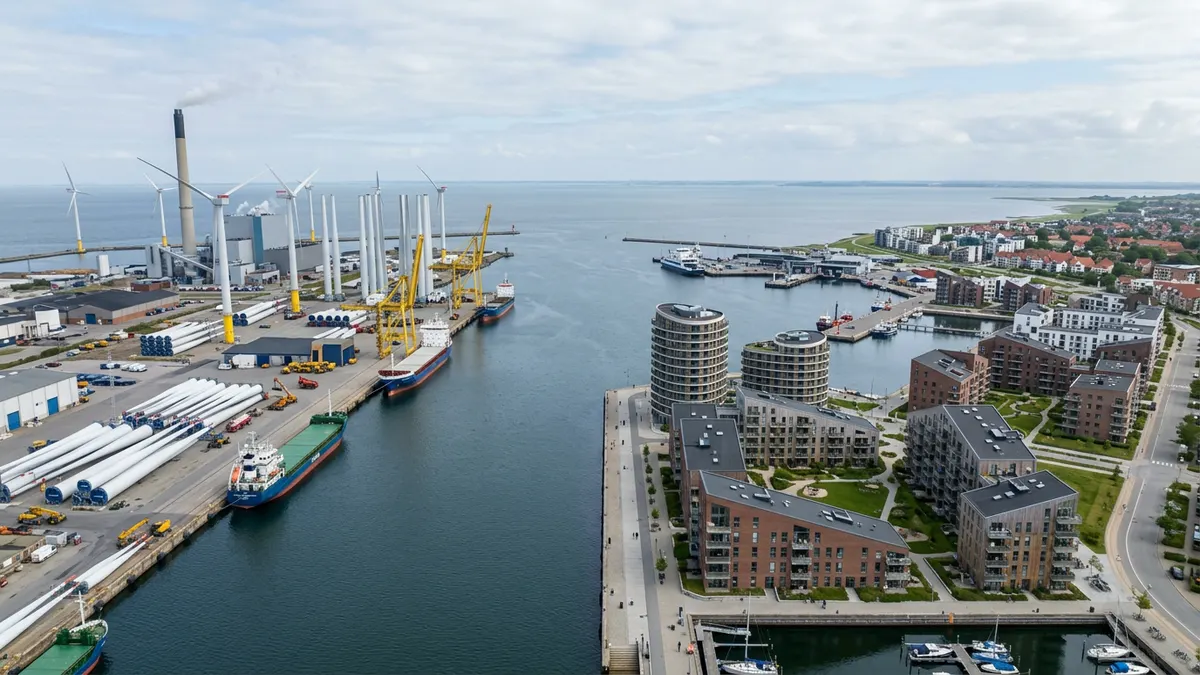
When viewing the Danish property market in 2026, Esbjerg stands out as a city that has successfully transformed from a traditional fishing and oil town into a global centre for renewable energy. For investors seeking an investment property in Esbjerg, it is crucial to understand the economic engine driving the city. Port Esbjerg is today one of Europe's leading shipment ports for offshore wind turbines, and planned expansions leading up to 2030 are expected to create thousands of new jobs.
This development has a direct impact on the property market. When large international companies within the energy sector establish themselves or expand existing facilities, a demand follows for both office capacity and housing for the incoming workforce. In contrast to the very tight markets in Copenhagen or Aarhus, Esbjerg still offers barriers to entry that are manageable for both smaller private investors and larger institutional players.
The geographical location as the gateway to the North Sea makes Esbjerg unique. While cities like Odense and Aalborg also experience growth, Esbjerg has a niche within heavy industry and energy that is difficult to replicate. This creates robustness in the market, as the city's economy is tied to long-term infrastructure projects spanning decades.
Demographics and housing needs in 6700 Esbjerg
Population development in Esbjerg Municipality has been stable, but the composition of residents is changing. There is a trend of more young people choosing to stay in the city after completing their education at the University of Southern Denmark or technical schools, just as international specialists move in to work in the energy sector. This places demands on the quality of an investment property in Esbjerg.
Modern tenants today demand more than just four walls. Focus is placed on:
- Energy rating: With current energy requirements and focus on sustainability, properties with high energy classes (A or B) are significantly more attractive and future-proof.
- Location: Proximity to the port, the railway station, and the city centre remains in high demand.
- Facilities: High-speed internet, modern kitchen-diners, and good parking options are often decisive for the void periods of apartments.
For an investor, this means one should look closely at the property's state of maintenance. Older portfolios in Esbjerg centre may have great optimisation potential through renovation, but this requires insight into local building permit processing and knowledge of the lejelovgivningen (the Rent Act), including rules on thorough modernisations (formerly known as section 5, subsection 2, now in the new Rent Act).
The business climate and logistics properties
Esbjerg is not just about housing. The city's status as a logistical hub makes commercial properties and warehouse facilities particularly interesting. The E20 motorway connects Esbjerg directly with Kolding, Odense, and the rest of Europe, making areas like Esbjerg N and Kjersing ideal locations for logistics companies.
Investing in commercial properties requires a different approach than residential. Here, lease contracts are often longer, and one typically sees NNN contracts (Net-Net-Net), where the tenant is responsible for a larger share of the operating costs. In Esbjerg, we see strong demand for multi-purpose properties, where there are both office facilities and workshop or warehouse space under one roof. This is due to the many service companies supporting the offshore industry.
| Property Type | Typical Focus Area in Esbjerg | Growth Factor |
|---|---|---|
| Residential Rental | Esbjerg C, Østerbyen | Urbanisation and students |
| Logistics/Warehouse | Kjersing, Esbjerg N | Port expansion and E20 |
| Office | Waterfront, Dokken | Energy companies and consultants |
| Retail | Kongensgade, Broen | Local purchasing power |
Yield and valuation in the West Jutland market
Historically, the afkastkrav (yield requirements) in Esbjerg have been higher than in the largest Danish cities. This reflects a risk premium, but for the well-informed investor, it can also mean a better cash-flow profile from day one. In 2026, however, we see some convergence, as professional investors increasingly look towards Esbjerg, which pushes yield requirements down slightly for the best assets (Prime properties).
When valuing an investment property in Esbjerg, the yield model is typically used. Here, one looks at the normalised Net Operating Income (NOI) divided by the purchase price. However, it is important to take into account:
- Void risk: Although demand is good, the market is smaller than in Copenhagen. A void period may therefore last longer if the property is not priced correctly.
- Maintenance costs: The salt-heavy environment by the coast can wear harder on facades and windows than in inland cities like Herning or Silkeborg.
- Tax conditions: Investors should always consult a tax advisor regarding depreciation on commercial properties and the specific rules for ejendomsskatter (property taxes), which can vary locally.
It is important to note that PropertyInvestments does not provide legal or tax advice. We always recommend involving your own solicitor and accountant in the process, as rules from SKAT (the Danish Tax Agency) and the Ministry of Justice can change continuously.
Development areas: From Dokken to Esbjerg Strand
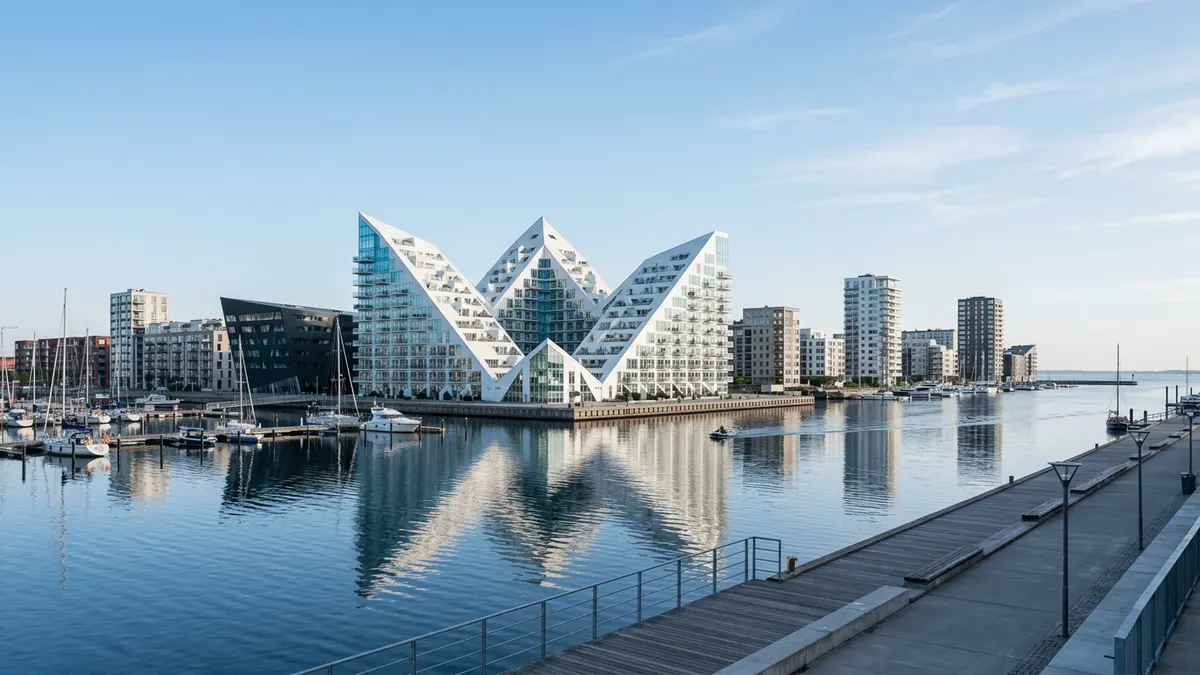
Esbjerg is undergoing a physical transformation. The area around Dokken and Esbjerg Strand are examples of how the city is opening up towards the water. For investors, these urban development projects mean new opportunities to buy into new builds or project properties. New construction in these areas often attracts the top segment of tenants, who are willing to pay a premium for sea views and modern conveniences.
At the same time, we see a revitalisation of older districts. The areas around the old hospital and former industrial sites near the centre are being transformed into attractive residential areas. Here, as an investor, one can find properties with potential for value appreciation through active asset management.
The geo-focus an investor should have also extends to neighbouring municipalities like Varde and Fanø, but Esbjerg remains the economic gravity centre. The synergy between the port and the city is the primary driver, and any investment object should be assessed in relation to its proximity and relevance to this axis.
Legal framework for property investment in Denmark
For foreign investors, it is essential to be aware of the Danish rules for acquiring real estate. In principle, foreign companies can invest in commercial properties in Denmark, but there are specific rules for residential properties that require insight into, among other things, the erhvervelsesbekendtgørelsen (the Acquisition Executive Order). For Danish investors, it is primarily the rent legislation that forms the legal framework.
The Rent Act in Denmark is known for being tenant-protective. This means that as a landlord, you must have control over everything from move-in reports to the notification of rent adjustments. In Esbjerg, as in many other larger Danish cities, there are rules regarding bopælspligt (residency obligation), which you must comply with if you invest in housing.
We encourage all interested parties to seek updated information from relevant authorities such as the Danish Financial Supervisory Authority or the Ministry of Justice to ensure they are fully informed about the latest legislative changes and practices in the field.
Strategies for sourcing investment properties
Finding the right investment property in Esbjerg requires a strong local network. Many of the best deals take place "off-market" before they reach the usual portals. This is often due to a wish for discretion from the seller's side, or because professional actors prefer to deal directly with known parties.
A good sourcing strategy involves:
- Local knowledge: Understanding which streets are on the rise and which are stagnating.
- Networking: Contact with local commercial agents, administrators, and banks.
- Analytical approach: The ability to quickly screen properties based on key figures and technical condition.
At PropertyInvestments, we have been active in the Danish market since 1985, and we have seen Esbjerg develop through various economic cycles. Our experience shows that the investors who succeed in Esbjerg are those who understand the city's DNA and dare to invest in the areas where infrastructure is improving.
Risk and mitigation in property investments
No investment is without risk. In Esbjerg, the primary risks are linked to the global economy's impact on the energy sector. Although the green transition seems inevitable, political decisions or changes in government subsidies could affect the pace of port expansions.
To mitigate these risks, an investor should:
- Diversify their portfolio: Avoid being too exposed to one specific type of tenant or one very small geographical area.
- Secure robust financing: Work closely with financial institutions on long-term financing solutions that can withstand interest rate fluctuations.
- Professional management: Ensure the property is looked after by a professional administrator who minimises vacancy and ensures timely maintenance.
Esbjerg offers a unique combination of industrial foundation and modern urban development. For those seeking an investment property in Esbjerg, the market in 2026 is characterised by professionalism and optimism, driven by the enormous investments in North Sea resources.
Frequently asked questions
Why is Esbjerg attractive for property investors right now?
Esbjerg is experiencing massive growth due to port expansions and the city's role as a European hub for offshore wind and green energy. This creates jobs and increased demand for housing and commercial premises.
Which areas in Esbjerg are most popular for residential rentals?
Esbjerg C and new urban development areas like Dokken and Esbjerg Strand are in high demand. Østerbyen is also popular due to its proximity to educational institutions and the city centre.
What is the typical yield on an investment property in Esbjerg?
Yields vary depending on property type and condition, but generally, yield requirements in Esbjerg are often slightly higher than in Copenhagen and Aarhus, which can provide better ongoing cash flow.
Are special permits required for foreign investors?
Foreign companies can generally buy commercial properties, but specific rules exist for residential properties. We always recommend seeking legal advice from a Danish solicitor to ensure compliance with current legislation.
How PropertyInvestments can help
PropertyInvestments has since 1985 assisted Danish and international investors in finding the right opportunities in the Danish property market. We offer help with sourcing, preparing properties for sale, and following up on the entire sales process until the deal is final.
If you are considering acquiring an investment property in Esbjerg, we are ready for a non-binding dialogue about your options and strategies. Contact us at info@propertyinvestments.dk or telephone +45 31 16 31 00 to hear more about how we can support your next investment in Denmark.