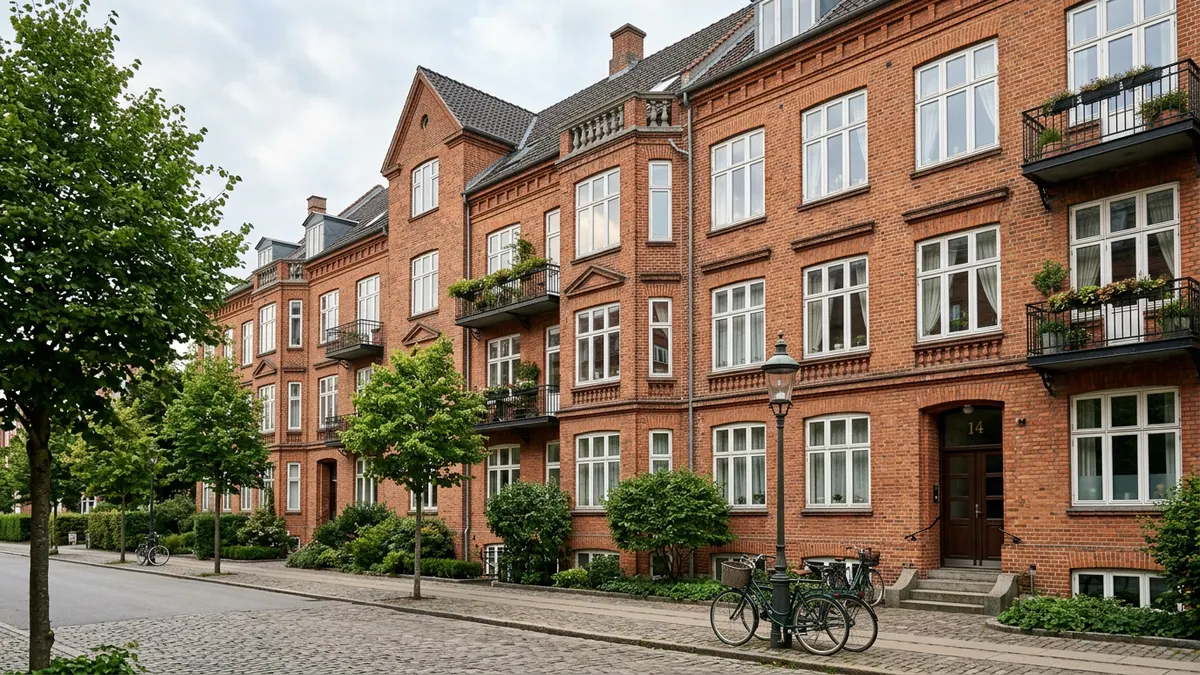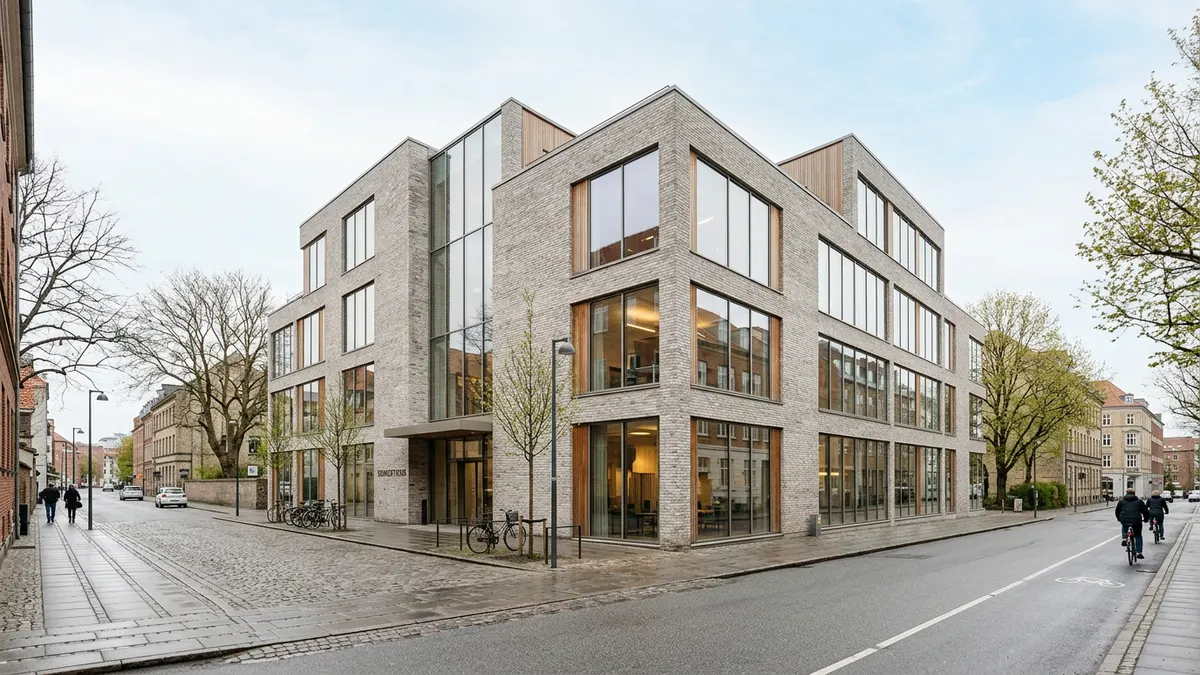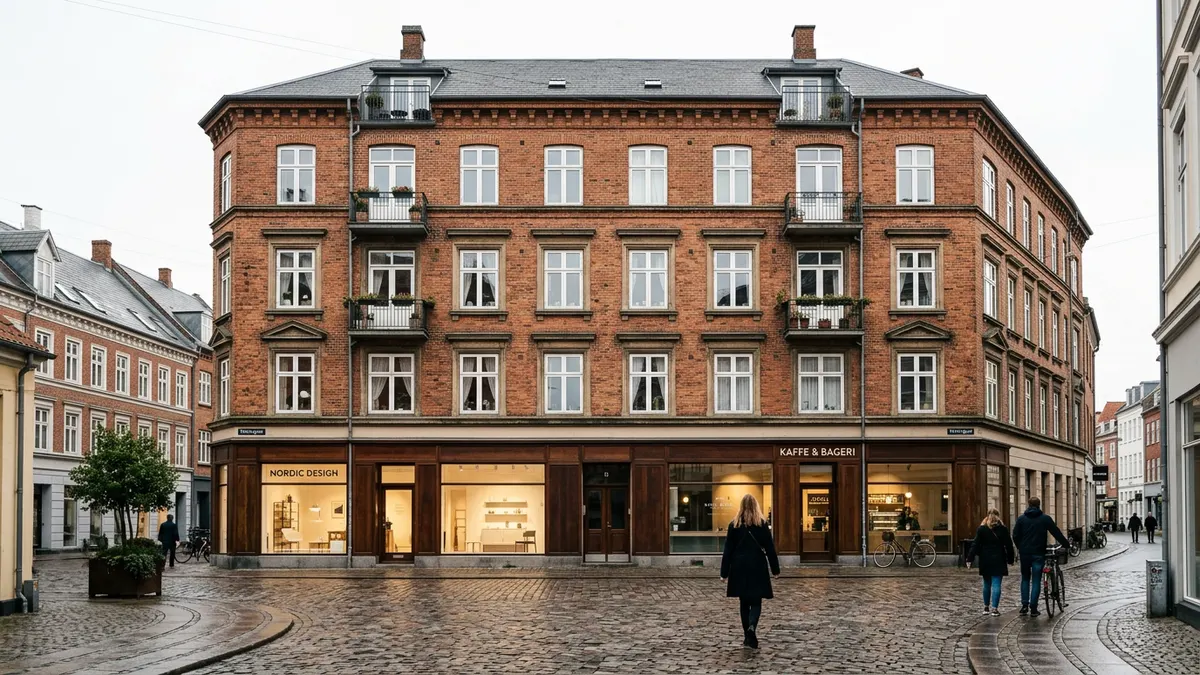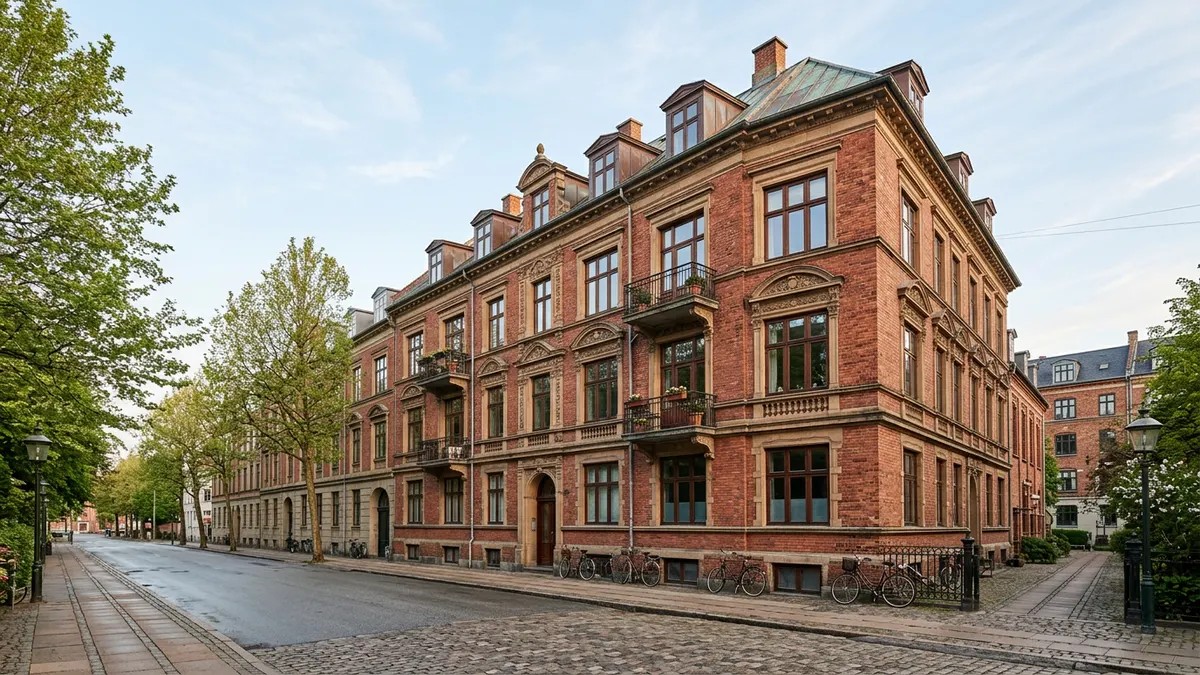
Investing in andelsboliger (housing cooperatives) differs significantly from owner-occupied properties, as you purchase a share in an association rather than the bricks and mortar themselves. For investors, the potential often lies in erhvervsandele (commercial cooperative units) or the strategic acquisition of entire property complexes for conversion, which requires deep insight into the Andelsboligforeningsloven (Cooperative Housing Association Act) and local market conditions in cities like Copenhagen and Aarhus.
Basic principles for investing in housing cooperatives
When discussing investment in andelsboliger in a Danish context, it is crucial first to define what a housing cooperative actually is. An andelsboligforening (housing cooperative association) is a legal entity that owns a property. As a shareholder, you do not own your specific apartment, but rather a right of use to a dwelling combined with a proportional share of the association's assets and debt. This legal setup has far-reaching consequences for how one can act as an investor.
For the private investor, it is worth noting that the Andelsboligforeningsloven (Cooperative Housing Association Act) is primarily designed to ensure affordable housing for residents rather than speculative gain. Therefore, there is a cap on the sales price (maksimalprisen (the maximum price)), which is the fundamental difference from the owner-occupied market, where supply and demand rule freely. Investing in cooperatives, therefore, requires a different strategic approach, looking at factors such as the underlying property value, the association's financial structure, and the possibility of acquiring commercial shares.
In cities like Copenhagen, Frederiksberg, and Aarhus, the cooperative housing market represents a massive part of the total housing stock. For professional actors, interest often involves the possibility of buying entire properties that can potentially be converted into cooperatives, or conversely, buying cooperative properties with a view to operating the commercial premises often found on the ground floor of these buildings.
Legislation and framework conditions in the Danish market
The legal foundation for cooperatives is found in the Lov om andelsboligforeninger og andre boligfællesskaber (Act on Cooperative Housing Associations and Other Housing Communities). The law regulates everything from the establishment of the association to how the price of a share may be calculated. As an investor, it is critical to understand the three primary valuation methods that associations can use to determine their value:
- Acquisition price: The value based on what the property originally cost to build or acquire. This method is rarely used today in older associations, as it is often far below market value.
- Valuer's assessment: A valuation performed by a qualified valuer (valuarvurdering (valuer's assessment)) who estimates the property's value as a rental property. This is the most common method in growth areas like Odense and Aalborg, as it better reflects market trends.
- Public property assessment: Based on Skat (the Danish Tax Agency) assessments (den offentlige ejendomsvurdering (public property assessment)). As the public assessment system has been under restructuring for several years, many associations have chosen to freeze older assessments or switch to valuer assessments.
For an investor considering investing in cooperatives through commercial units, it is important to consult the latest rules from the Ministry of Justice and Skat, as rules for valuation and taxation are continuously adjusted. We always recommend seeking legal assistance before entering into agreements to purchase shares for investment purposes, as the vedtægter (articles of association) in individual associations can often contain restrictions on subletting and resale.
Table: Comparison of owner-occupied vs. cooperative housing for investors
| Parameters | Owner-occupied | Cooperative Housing |
|---|---|---|
| Ownership | Direct ownership of deed | Right of use and share in association |
| Pricing | Market-driven (free) | Maximum price regulated |
| Financing | Mortgage credit loans (up to 80%) | Cooperative housing loans (bank loans) |
| Rental Access | Generally free (cf. Rent Act) | Often very limited in articles of association |
| Taxation | Property value tax | No property value tax for shareholder |
Commercial shares: An overlooked investment opportunity
Many large housing cooperatives in major Danish cities contain commercial premises on the ground floor. These premises often function as erhvervsandele (commercial cooperative units). For a professional investor, this can be an interesting entry point. Unlike residential units, which have residency requirements (bopælspligt (residency requirement)) and strict subletting rules, commercial shares can in some cases be traded and operated on terms that more closely resemble commercial real estate.
However, investing in cooperatives via commercial areas requires reading the association's vedtægter (articles of association) carefully. Some associations have a right of first refusal (forkøbsret (right of first refusal)) or set requirements for the type of business that may be operated (e.g., office versus café). The advantage of commercial shares is often a lower entry price compared to owner-occupied commercial premises, but one must be aware of being subject to the association's generalforsamling (general meeting) regarding decisions on property maintenance, which can affect operating expenses.
In Copenhagen K and Vesterbro, we often see commercial shares changing hands between investors who see value in the stable environment offered by a well-managed housing cooperative. Here, it is especially important to assess the association's overall finances, including its debt levels and renteswap (interest rate swap) agreements, if any, as this directly affects the security of the investment.
Risk assessment and financial due diligence
One of the biggest pitfalls in cooperative investment is the association's internal finances. Since a shareholder is liable for a portion of the association's debt (typically pro rata or joint and several, depending on the articles of association), thorough due diligence is essential. This involves an analysis of:
- Debt structure: Have interest-only loans been taken out, or have complex financial instruments like interest rate swaps been used? In periods of rising interest rates, associations with variable rates may be forced to increase the monthly boligafgift (housing fee) significantly.
- Maintenance plans: A property from the 1920s requires ongoing renovation of roofs, facades, and downpipes. If the association has not saved sufficiently, large extra charges or increases in the housing fee may occur.
- Reserves and equity: How close is the current andelskrone (share value unit) to the maximum price? If the valuer's assessment falls, the andelskrone may also fall, resulting in a loss of value for the investor.
It is also important to understand that financing for cooperatives cannot be obtained via mortgage credit institutions directly to the individual shareholder. Instead, bank loans are taken out with a pledge in the andelsbrev (share certificate). The interest rate on these loans is typically higher than on mortgage credit loans, affecting the overall yield on the investment.
Geographical differences in the Danish cooperative market
The market for investing in cooperatives looks very different depending on where in the country you are located.
The Capital Region (Copenhagen and Frederiksberg)
Here, demand is extremely high, and cooperatives are often sold before they hit the open market. For investors, the focus here is often on consolidating portfolios that include both owner-occupied and cooperative interests. Residency requirements (bopælspligt) are strictly enforced in Copenhagen Municipality, making traditional "buy-to-let" investment in individual residential shares almost impossible for professional actors.
Aarhus and surroundings
In the "City of Smiles," the market is also tight, but there are more recent housing cooperatives where the articles of association may be more modern and flexible. Investors here often look at growth areas like Aarhus Ø or the historic districts, where commercial shares on the ground floor can be attractive investment objects.
The Triangle Region and Odense
In cities like Vejle, Kolding, and Odense, square-metre prices are lower, which can provide a different dynamic in valuation. Here, one occasionally sees that valuer assessments are closer to the actual trade price, reducing the technical risk of price drops but also limiting rapid equity appreciation.
Future trends and regulatory considerations
As of September 2026, the Danish property market is characterised by stabilisation following the interest rate hikes of previous years. For the cooperative sector, this means an increased focus on energy efficiency. Associations that invest in heat pumps, insulation, and new windows often see a positive effect on their valuer assessments as operating costs fall.
Ongoing political discussions regarding the design of the Andelsboliglov (Cooperative Housing Act) continue. Investors should monitor announcements from Finanstilsynet (the Danish Financial Supervisory Authority) and relevant ministries regarding lending rules and valuation principles. Any changes in the "Blackstone legislation" (lejelovens § 19 (Section 19 of the Rent Act)) also have an indirect effect on the cooperative market, as it influences the valuer assessments many associations rely on.
For the long-term investor, stability is the keyword. Housing cooperatives are generally robust against economic fluctuations compared to purely speculative construction projects, precisely because of the regulated price cap and collective management. However, it requires acting with respect for the association's democracy and legal framework.
Strategies for portfolio optimisation with shares
If a professional investor wishes to incorporate cooperative investment into their strategy, several advanced methods exist:
- Conversion of rental properties: Purchasing an older rental property with a view to offering tenants the opportunity to form a housing cooperative (tilbudspligt (duty of offer)). This requires compliance with Rent Act rules but can release capital for the investor in certain market situations.
- Asset Management of commercial areas: By optimising the operation of commercial premises in a cooperative, one can create a stable cash flow. The key here is good relations with the association's bestyrelse (board of directors).
- Strategic consultancy: Many investors act as consultants for associations in connection with major development projects, e.g., utilising attic spaces for new roof apartments, which can increase the association's total value and thus the value of the investor's own shares in the property.
It is important to emphasise that all property investment involves risk. The value of a share can fall, and the housing fee can rise. Therefore, one should never invest money one cannot afford to lose and should always consult an accountant or financial advisor specialising in the Danish cooperative market.
Final considerations
Investing in cooperatives is not for everyone. It requires patience, legal acumen, and an understanding of the unique Danish association culture. Where the owner-occupied market is often driven by quick trades and short-term gains, the cooperative market is characterised by long-term stability and regulation. For the right investor who understands how to navigate the rules of maximum price, valuer assessments, and commercial shares, it can, however, be a solid component of a diversified property portfolio.
Whether looking towards Copenhagen's districts, students in Aarhus, or businesses in Odense, thoroughness is the most important tool. By combining market data with an in-depth analysis of the individual association's articles of association and accounts, one can identify opportunities that others overlook.
Frequently asked questions
Can you buy a cooperative apartment solely for rental purposes?
As a general rule, no. Most housing cooperatives have residency requirements (bopælspligt) in their articles of association, meaning the owner must live in the apartment. Some associations allow subletting (fremleje) for a limited period (typically 2 years) due to overseas posting or illness, but as a pure investment case, it is rarely possible for residential units.
How do interest rate swaps affect my investment in a housing cooperative?
If an association has an interest rate swap agreement, it can negatively affect the andelskrone (share value) if interest rates fall, as the agreement gains a negative market value which is deducted from the property's value. Conversely, it can in some cases protect against rate hikes, but these are complex instruments requiring professional review of the association's accounts.
What is the difference between a valuer's assessment and a public assessment?
A valuer's assessment (valuarvurdering) is performed by a real estate agent with a valuer qualification and is based on what the property would cost as a private rental property. A public assessment is the administrative pricing by Skat. The valuer's assessment is often higher in growth cities but must be renewed every one or two years to remain valid for determining the share value.
Are commercial shares subject to the same price caps as residential shares?
It depends on the association's vedtægter (articles of association). Often, commercial shares are also subject to a maximum price principle, but they are typically more flexible regarding who can own them and how they can be used commercially compared to residential shares.
How PropertyInvestments can help
At PropertyInvestments, we have helped investors navigate the Danish property market since 1985. We assist with the sourcing of investment properties and advice on portfolio optimisation, including assessing the potential in properties with cooperative potential or existing commercial shares. Our approach is based on concrete market data and years of experience with Danish regulatory requirements. Contact us at info@propertyinvestments.dk or +45 31 16 31 00 for a non-binding dialogue about your investment strategy.