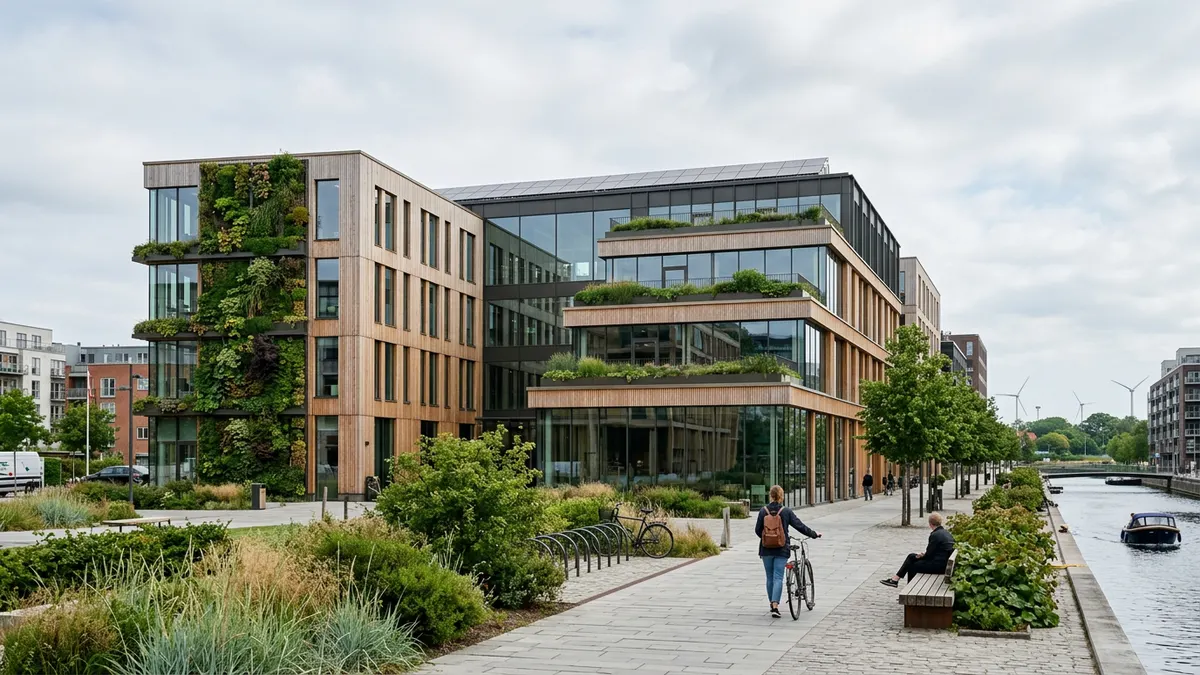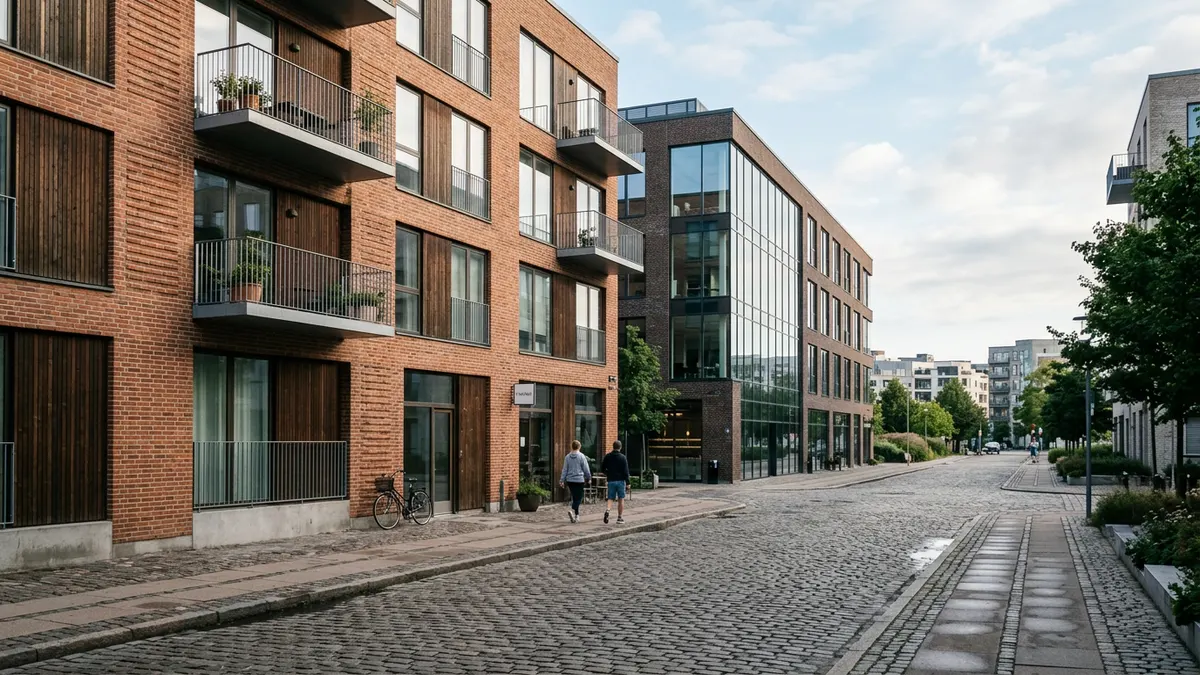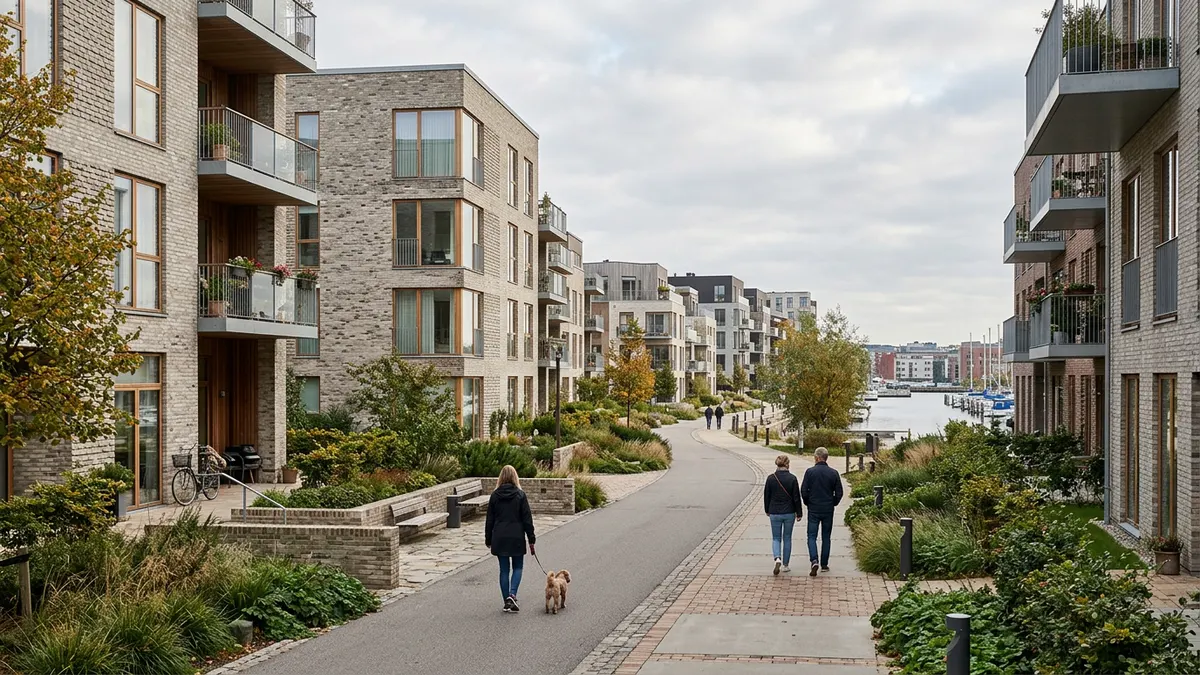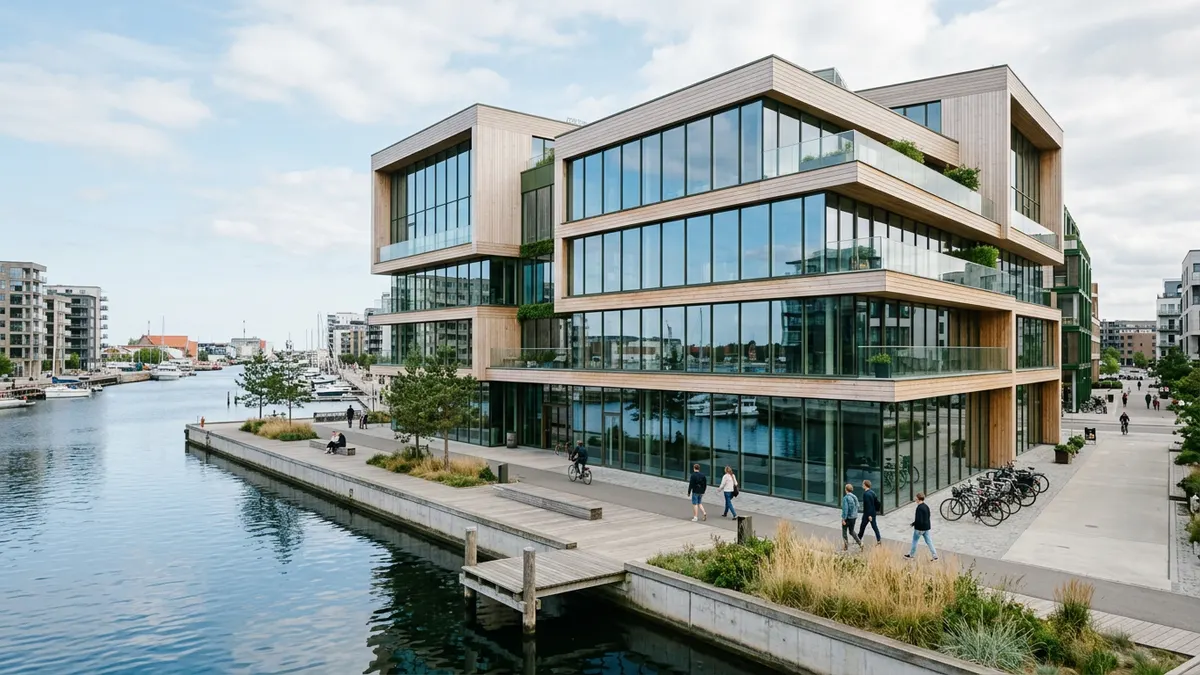
A DGNB certification property acts as a hallmark of sustainability in the Danish real estate market, assessing buildings based on environmental, economic, and social quality. For investors, certification signifies reduced risk, lower operating costs, and a stronger position regarding future legislation and ESG reporting requirements from financial institutions and tenants.
What is DGNB certification in a Danish context?
DGNB (Deutsche Gesellschaft für Nachhaltiges Bauen) is the dominant certification system for sustainable construction in Denmark. The system is adapted to Danish building regulations and standards, making it particularly relevant for property investors operating in cities such as Copenhagen, Aarhus, and Odense. While many other certifications focus primarily on the environment, DGNB stands out by taking a holistic approach.
Achieving a DGNB certification on a property requires the building to meet specific requirements within six main areas: environmental quality, economic quality, socio-cultural and functional quality, technical quality, process quality, and site quality. This broad approach ensures that the property is not only energy-efficient but also economically viable over time and creates a healthy indoor climate for users.
For the serious investor, DGNB is not just a way to signal a green conscience; it is a tool for future-proofing a portfolio. As the EU Taxonomy for sustainable activities gains ground, the need for documentable sustainability becomes a necessity rather than a choice. A DGNB-certified property provides this documentation in a form that banks, pension funds, and international investors recognise and acknowledge.
The economic value of DGNB certification property
Investing in sustainability often raises the question of additional costs versus additional returns. Experience from the Danish market in September 2026 shows that although the establishment costs of a certified building may be higher due to documentation requirements and material choices, this is often offset by a range of economic advantages over the building's life cycle.
Lower operating costs and higher operational reliability
A significant part of the DGNB evaluation focuses on technical quality and the building's energy consumption. By optimising systems for ventilation, lighting, and heating, ongoing operating costs are significantly reduced. In an era of fluctuating energy prices, this is a direct advantage for the owner, whether it is a net property or a property where utility charges are paid by the tenant. A building with low resource consumption is simply more robust against market fluctuations.
Attractiveness to tenants and lower vacancy rates
Growing companies, especially in major business hubs like Copenhagen's Nordhavn or Aarhus Ø, increasingly place demands on their headquarters. They want premises that support their own ESG goals (Environmental, Social, and Governance). A DGNB-certified property makes it easier for the tenant to report on their environmental impact, making the lease more attractive. This often leads to faster letting and longer commitment periods, reducing the risk of vacancy – one of the greatest threats to returns in property investment.
Financing advantages and 'Green Loans'
Financial institutions in Denmark and the rest of the EU increasingly favour green assets. Many banks now offer distinct green loans with lower interest rates or more lenient loan terms for buildings with recognised certifications like DGNB Gold or Platinum. As financing costs constitute a large part of the total investment calculation, even a small interest rate reduction can have a significant impact on the total return on invested capital.
The three pillars of DGNB: A deeper understanding
To understand why a DGNB certification on a property is so comprehensive, one must look at the three fundamental pillars on which the system rests. These are crucial for both the property's functionality and its market value.
| Quality Area | Focus in DGNB | Significance for Investor |
|---|---|---|
| Environmental | CO2 footprint, resource consumption, biodiversity | Future-proofing against CO2 taxes and regulation. |
| Economic | Life Cycle Costing (LCC), flexibility, market value | Lower maintenance and higher resale value. |
| Social | Indoor climate, user comfort, accessibility | Higher user satisfaction and lower tenant turnover. |
Environmental quality (Ecological Quality)
Here, the building's impact on the global and local environment is assessed. This includes everything from the use of certified timber to the minimisation of water consumption. For investors in areas with strict environmental requirements, such as densely built-up districts in major Danish cities, this ensures compliance with current and future environmental legislation.
Economic quality (Economic Quality)
This is often the point that surprises investors the most. DGNB looks at the building's life cycle costs (LCC). This means that one does not just look at what it costs to build, but what it costs to operate and maintain the building over the next 50 years. Furthermore, the building's flexibility is assessed; can an office property easily be converted into residential units if the market changes? This kind of "adaptability" significantly increases the property's long-term value.
Socio-cultural and functional quality (Social Quality)
People spend up to 90% of their time indoors. DGNB measures factors such as thermal comfort, acoustics, and daylight. A building that is pleasant to stay in creates more productive employees for commercial tenants and a higher quality of life for residential tenants. This reduces conflicts and creates a more stable tenant relationship.
Implementation of DGNB in Danish regions
The spread of DGNB-certified properties is not equally distributed across the country, but the trend is spreading from the major cities to the provinces.
In the Capital Region (Copenhagen, Frederiksberg, and surroundings), certification has gradually become a standard for new construction of a certain size. Investors here see it as a necessity to compete for large international tenants who demand the highest standards in sustainability.
In Region Midtjylland, particularly in Aarhus, there has been sharp growth in certified commercial buildings. Aarhus Municipality has ambitions to be climate-neutral, which influences the requirements for new building projects. Here, certification acts as a bridge between the developer's ambitions and the municipality's planning strategy.
In Region Syddanmark, led by Odense and the Triangle Area, DGNB is also gaining ground, especially within logistics properties. Historically, the logistics sector has focused on functionality, but with increasing demands for supply chain sustainability, certified warehouses are becoming more sought after.
ESG reporting and DGNB: What investors need to know
ESG (Environmental, Social, and Governance) has become a central concept in the financial sector. For property investors, the challenge is often obtaining valid data to document the property's performance. Here, DGNB serves as a ready-made package of documentation.
When an investor needs to report to their stakeholders or comply with the EU's Disclosure Regulation, the DGNB manual provides the necessary answers. However, one should be aware that sustainability reporting rules are continuously changed by the EU and Danish authorities. It is always recommended to consult specialised advisors to ensure that your reporting meets the latest requirements from the Finanstilsynet (Danish Financial Supervisory Authority) and relevant EU bodies.
Owning a portfolio of certified properties also reduces the so-called "transition risk". This is the risk of a property losing value because it no longer meets new standards for energy efficiency or environmental impact. By investing in a DGNB certification property, you minimise the likelihood of holding a "stranded asset" – a property that is impossible to sell or lease without massive investment in upgrades.
Challenges and considerations in certification
Although the benefits are many, the process towards a DGNB certification is not without challenges. It requires early planning and a dedicated effort from the entire project team – from architects and engineers to the executing contractor.
- The documentation burden: A large part of the cost of DGNB lies in documenting materials and processes. This requires all involved parties to provide precise data on everything from the chemical composition of paint to the transport distance for concrete.
- Certification levels: There are different levels: Silver, Gold, and Platinum. The choice of level should be based on a cost-benefit analysis. While Platinum sends the strongest signal, Gold can often be the most economically optimal point for many commercial projects.
- Renovation (DGNB for existing buildings): It is important to note that DGNB is not only for new builds. Specific systems exist for existing buildings and comprehensive renovations. This is particularly relevant in cities like Copenhagen, where a large part of the property stock is of an older date.
Legal and tax aspects
When investing in certified properties, it is important to have the legal framework in order. Lease agreements often need to be adapted to reflect green elements – so-called "Green Leases". These contracts may contain provisions on energy consumption, waste sorting, and maintenance that support the building's certification.
Tax-wise, there may be various incentives or depreciation rules that apply to energy-efficient measures. As tax rules are complex and subject to ongoing changes by SKAT (Danish Tax Agency) and the Folketing (Danish Parliament), investors should always seek professional tax advice before major investments. PropertyInvestments does not provide legal or tax advice, but we facilitate contact with experts who can ensure the correct structuring of the investment.
The future of sustainable properties in Denmark
Looking ahead towards the end of the 2020s, there are no signs that sustainability requirements will diminish. On the contrary, we will likely see even stricter requirements in the building regulations (BR) regarding CO2 ceilings per square metre. Buildings that are already built to DGNB standards today will stand significantly stronger when these requirements are tightened.
Digitalisation also plays a role. Many modern DGNB buildings are equipped with sensors providing real-time data on energy consumption and indoor climate. This allows the owner to engage in proactive Asset Management, where operations can be optimised continuously rather than reacting to problems when they arise.
For the international investor, Denmark offers a stable and transparent market. By choosing DGNB-certified assets, you reduce linguistic and cultural barriers in technical due diligence, as the system follows an internationally recognised methodology. This makes it easier to compare an investment in Copenhagen with a similar one in Berlin or Hamburg.
Summary of investor value
Investing in a DGNB certification property is fundamentally about risk management and value creation. By choosing certified buildings, you ensure:
- Documentation of ESG efforts to lenders and shareholders.
- Reduced operating and maintenance costs through a focus on life cycle.
- Higher attractiveness to modern tenants, ensuring cash flow.
- Future-proofing against legislative tightening in Danish building regulations.
- A stronger profile for resale to institutional investors.
Whether sourcing properties for an existing portfolio or looking to build a new one from scratch in Denmark, sustainability certifications should be a standard part of the decision-making basis.
Frequently asked questions
What does it cost to get a DGNB certification on a property?
Costs vary depending on the size of the project and the desired certification level. They cover a fee to the Rådet for Bæredygtigt Byggeri (Danish Green Building Council) and expenses for a DGNB consultant, as well as extra documentation from advisors and contractors. Generally, relative costs decrease with project size.
Can existing buildings be certified?
Yes, there is a specific DGNB standard for buildings in operation. This is an excellent tool for investors who wish to optimise their existing portfolio and document the sustainability of properties to tenants and banks without undertaking a total renovation.
Is DGNB better than LEED or BREEAM?
No certification is objectively "best," but DGNB is particularly suitable for the Danish market as it is fully integrated with Danish standards and legislation. LEED and BREEAM are American and British systems often used by international investors, but DGNB is gaining ground throughout Northern Europe due to its strong focus on life cycle economics.
How long does the certification process take?
The process runs alongside the construction project. It starts in the planning phase and is only completed when the building is finished and the final documentation has been submitted and audited. For existing buildings, the timeframe depends on data availability and any improvement works.
How PropertyInvestments can help
At PropertyInvestments, we have worked with the Danish real estate market since 1985. We help investors navigate the market for sustainable properties, whether it involves sourcing new projects with DGNB potential or preparing existing properties for sale.
We offer concrete advice on market trends and connect investors with the necessary subject matter experts in certification, law, and finance. Contact us at info@propertyinvestments.dk or telephone +45 31 16 31 00 for a non-binding discussion about your next property investment in Denmark.