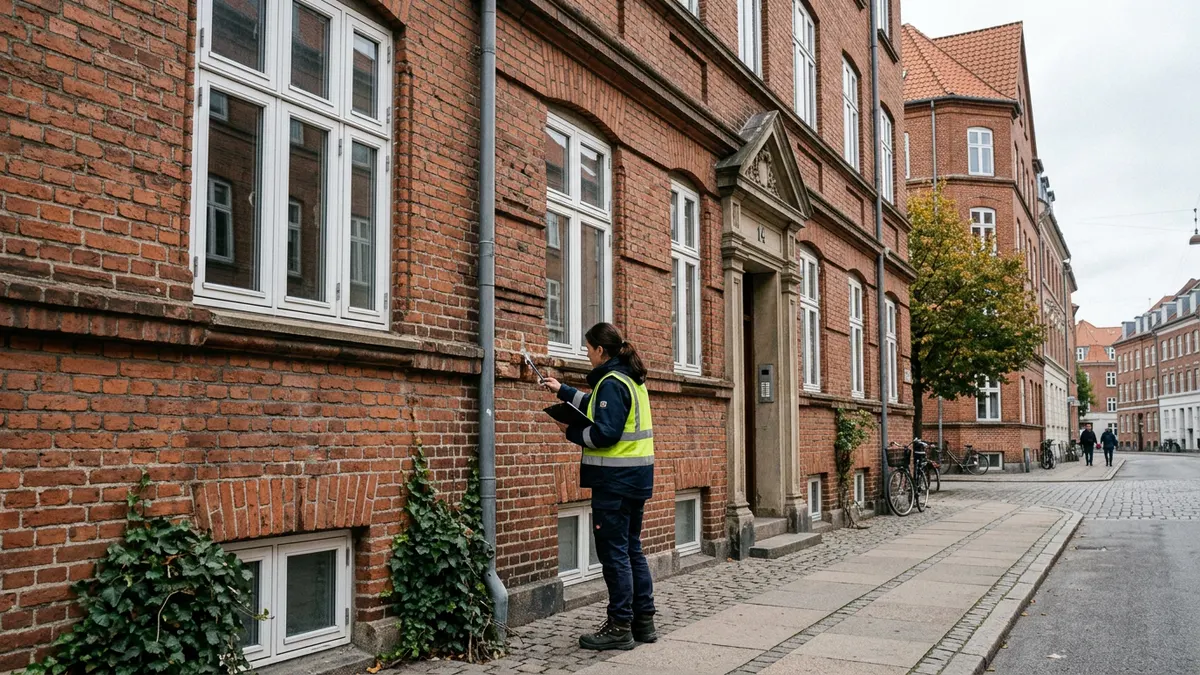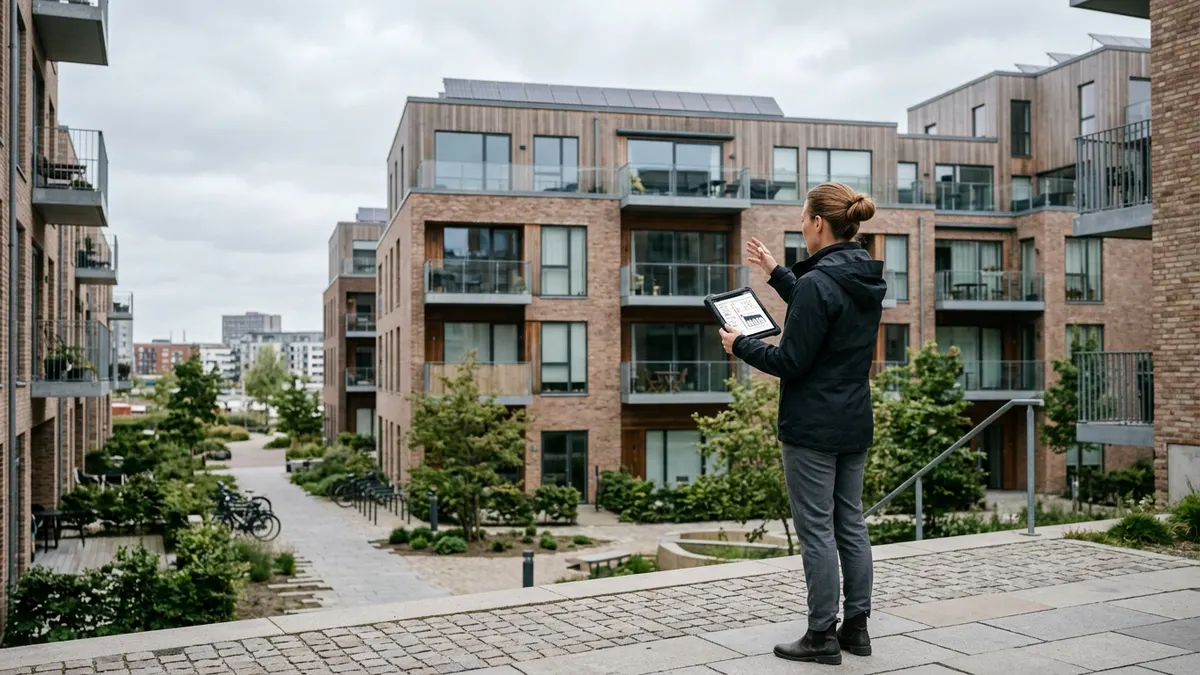
Financial due diligence is the systematic investigation of an investment property's economic foundation, including a meticulous review of lease agreements, operating accounts, and cash flows. The process identifies hidden risks and validates the expected return, ensuring that the investor makes a decision based on factual data rather than estimates before the purchase agreement is finally signed.
Why financial due diligence is crucial in the Danish property market
When investing in real estate in Denmark – whether in growth zones like Copenhagen and Aarhus, or more stable markets like Odense and Aalborg – the financial review is the cornerstone of any transaction. Financial due diligence is not merely about checking that the numbers add up; it is about understanding the quality of the underlying income and the sustainability of the operating expenses.
In a market characterised by complex rental laws, including Boligreguleringsloven (the Housing Regulation Act) and Lejeloven (the Rent Act), a small error in a lease agreement can have major financial consequences. An overlooked detail regarding maintenance obligations or incorrect rent indexing can mean that the property valuation is based on a flawed foundation. Therefore, the financial review is the tool that bridges the gap between the seller's prospectus and the cold hard facts of reality.
For both Danish and international investors, transparency is essential. Denmark is considered one of the most transparent markets in the world, but it still requires local expertise to navigate specific Danish accounting standards and the case law associated with commercial and residential leasing. Financial due diligence acts as the investor's safety net, ensuring the agreed price reflects the property's true earning potential.
Review of lease agreements: Identifying income risks
Lease agreements are the property's most important asset. Without valid leases, the property is merely a collection of bricks with ongoing expenses. During financial due diligence, the focus is particularly on validating rental income and assessing its stability over time.
Analysis of rent levels and market rent
The first step is to assess whether the current rent corresponds to the market rent. In Denmark, this is especially relevant for residential tenancies, where rules on det lejedes værdi (value of the rented premises) or omkostningsbestemt leje (cost-based rent) can limit the ability to increase rent. In commercial leases, there is typically greater freedom of contract, but one must be aware of notice periods and non-termination periods.
Key areas of investigation include:
- Rent Regulation: How is the rent adjusted annually? Is it tied to the nettoprisindekset (Net Price Index - NPI), and is there a minimum or a cap? In periods of high inflation, these clauses are critical for the property's real return.
- Non-termination: How long are the tenants bound? A long non-termination period with a solid tenant (e.g., a public institution or an established retail chain) significantly increases the property value.
- Right of Assignment: Does the tenant have the right to transfer the lease to a third party? This can affect the owner's control over the tenant mix.
Taxes, duties, and operating expenses
A vital part of the contract is the distribution of operating expenses. In Denmark, a distinction is often made between what can be charged as acontobeløb (on-account payments) for utilities like heat and water, and what must be included in the base rent. Flawed wording regarding ejendomsskatter (property taxes) or insurance premiums can mean the expense falls on the landlord instead of the tenant, directly eroding the Net Operating Income (NOI).
Accounting analysis: From gross income to net profit
Once the leases are validated, the focus shifts to the property's historical accounts. The purpose of this part of the financial due diligence is to verify that the reported operating expenses are realistic and representative of future operations.
Verification of operating costs
Accounts for the last 3-5 years are typically reviewed to spot trends. It is important to distinguish between ongoing maintenance and larger CAPEX (capital expenditure). Sellers may sometimes have an interest in capitalising maintenance expenses as investments to make the operating result look better.
Typical items investigated:
- Property taxes and duties: Do the reported amounts match the kommune (municipality) assessments?
- Insurance: Is the property correctly insured, and is the premium at market level?
- Caretaker and cleaning: Are there contracts in place that the buyer is obliged to take over, and is the price reasonable?
- Administration: What is the cost of day-to-day property management?
Vacancy analysis
Historical vacancy is a key indicator of the property's health. If a property in, for example, Randers or Esbjerg has had chronically high vacancy, the cause must be investigated. Is it due to poor management, rent levels above market, or the property's physical condition? Financial due diligence must uncover whether the current vacancy is temporary or structural.
| Item | Focus area during Due Diligence | Risk of lack of control |
|---|---|---|
| Gross Rent | Validation against bank transfers | Overestimated income |
| Taxes | Municipal property tax bills | Unexpected expense increases |
| Maintenance | Historical spend vs. budget | Under-budgeted wear and tear |
| Vacancy | Historical log of vacant sqm | Incorrect yield calculation |
The financial process in a Danish context
The Danish market has its own peculiarities that make financial due diligence a discipline requiring local knowledge. For instance, the realkreditsystem (mortgage credit system) plays a central role. In a property purchase, one must investigate whether existing loans can be taken over or if new financing must be established. This requires insight into bidragssatser (administration fees), price losses, and loan terms from institutes like Nykredit, Realkredit Danmark, or Jyske Realkredit.
VAT status in real estate
One of the most complex areas of Danish property economics is moms (VAT). For commercial properties, one must check if the property is voluntarily VAT-registered. If you buy a property where VAT-liable renovations have been carried out within the last 10 years, a momsreguleringsforpligtelse (VAT adjustment obligation) may rest on the property. If the use of the property changes to, for example, residential purposes (which are VAT-exempt), the buyer could be met with a repayment demand from SKAT (the Danish Tax Agency). A thorough financial due diligence will always include a review of VAT adjustment obligations.
Deposits and prepaid rent
In Denmark, it is customary for tenants to pay up to 3 months' depositum (security deposit) and 3 months' forudbetalt leje (prepaid rent). In a transaction, these amounts must be calculated precisely. It is essential to ensure these funds are transferred to the buyer or offset against the purchase price, as they constitute a liability to the tenants. We often see errors in the settlement of these items leading to post-closing adjustments that could have been avoided with due diligence.
GEO-specific considerations: From Greater Copenhagen to the provinces
The risk profile in financial due diligence changes depending on geography. In Copenhagen and the surrounding area, the focus is often on validating whether the rent is set correctly in relation to the very stringent rules in the Housing Regulation Act. Here, the risk of claims for rent reduction from Huslejenævnet (the Rent Control Board) is a real economic factor to be calculated.
In cities like the Trekantområdet (Triangle Region: Vejle, Kolding, Fredericia), where logistics properties are popular, the focus shifts to tenant creditworthiness and contract duration. A logistics property with only one tenant requires a very deep analysis of that company's accounts, as the property's value is directly correlated with the tenant's ability to pay.
For investors looking at development properties in cities like Roskilde or Køge, it is important to assess financial estimates for completion and letting. Here, the due diligence process becomes more forward-looking, testing the robustness of the seller's project budgets.
Pitfalls of insufficient investigation
Without structured financial due diligence, you risk buying a "lemon" – a property that looks profitable on the surface but hides economic time bombs. Some common pitfalls include:
- Rent Discounts: The seller may have given tenants temporary rent free periods (e.g., "3 months free"), which do not appear clearly in the rent roll but affect the first year's cash flow.
- Missing Maintenance Provisions: Particularly in older residential properties, there may be statutory requirements for maintenance provisions (e.g., under sections 119/120 of the Rent Act), which limit the free cash flow from collected rent.
- Hidden Liabilities: Service contracts for lifts, ventilation systems, or heating control entered into at inflated prices or with long notice periods.
These risks can be minimised by having a set checklist and using advisors who understand the local conditions in specific Danish municipalities.
Data visualisation and reporting
The result of a financial due diligence should always culminate in a report that does not just list problems but quantifies them. If a risk of a DKK 500,000 loss is found due to a VAT error, this amount should be directly included in the purchase price negotiations.
A good due diligence report typically includes:
- A normalised operating statement (removing extraordinary items).
- A cash flow forecast for the next 5-10 years.
- A sensitivity analysis (what happens to the return if interest rates rise or vacancy increases?).
- A list of appendices and deficiencies in the data room.
The interaction with legal and technical due diligence
It is important to understand that the financial review does not stand alone. It must be coordinated with juridisk due diligence (legal due diligence, checking title, easements, and local zoning plans) and teknisk due diligence (technical due diligence, checking the roof, facade, electrics, and plumbing). If the technical report shows the roof needs replacing in two years, the financial analysis must incorporate this CAPEX expense into the budget to see if the investment remains viable.
In Denmark, we often see these three tracks running in parallel over a period of 4-8 weeks. Time pressure can be high, especially in a high-demand market, but one should never cut corners in the financial analysis. This is where you protect yourself against the largest economic surprises.
Conclusion
Financial due diligence is much more than an auditing task; it is a strategic assessment of a property's future viability. By combining a detailed review of lease agreements with an in-depth accounting analysis, investors can safely navigate the Danish property market. Whether buying a portfolio in Hillerød or a single property in Silkeborg, it is the underlying figures and contractual terms that determine the success of the investment.
We always recommend that investors align themselves with specialised advisors, accountants, and property experts to ensure an impartial and professional review. Rules at SKAT, the Danish Business Authority, and within Rent Legislation are updated regularly, requiring current knowledge to identify all nuances in the process. This article does not constitute legal or tax advice, and specific advice should always be sought before an investment.
Frequently asked questions
How long does financial due diligence typically take?
The process usually takes between 3 and 6 weeks, depending on the size of the property and the quality of the data room provided by the seller. For large portfolios, it may take longer.
What is the biggest risk of skipping financial due diligence?
The greatest risk is overpaying for a property based on inflated income or underestimated expenses, as well as taking over hidden liabilities like VAT adjustment claims or maintenance obligations.
Can I perform financial due diligence myself?
Even if you have experience, it is recommended to use external experts to review leases and accounts to ensure objectivity and to benefit from specialised knowledge of Danish tenancy law and tax conditions.
What role does the Rent Act play in due diligence?
The Rent Act and the Housing Regulation Act set the framework for how much rent can be charged. Due diligence ensures the current rent is legal, avoiding future claims for repayment of overcharged rent.
What does financial due diligence cost?
The price depends on the scope of the task, the number of tenancies, and the complexity. However, it is a fraction of the potential cost of buying a property with significant hidden defects.
How PropertyInvestments can help
Since 1985, PropertyInvestments has assisted both Danish and international investors with the sourcing and preparation of investment properties throughout Denmark. We understand the importance of a thorough process and help coordinate efforts between all parties in a transaction. Our focus is always on delivering a solid decision-making basis built on facts and concrete data from the Danish market. For a non-binding dialogue about your next property investment, contact us at info@propertyinvestments.dk or call +45 31 16 31 00.