A professional commercial property broker (erhvervsmægler) functions as the strategic link between buyer and seller in complex real estate transactions. This involves everything from precise valuation and technical due diligence to sourcing off-market opportunities and ensuring legal compliance, which minimises risk and optimises returns for the investor throughout the process.
The architect behind the property transaction
When navigating the Danish market for investment properties, it is essential to understand that a commercial property broker's function extends far beyond merely facilitating a contact. In a market characterised by high complexity, both legally and financially, the broker acts as the transaction's architect. The role requires in-depth knowledge of planning legislation (planlovgivningen), the Rent Act (lejeloven), and the specific market dynamics applicable in cities such as Copenhagen, Aarhus, Odense, and Aalborg.
For the professional investor, it is about reducing asymmetric information. The seller often knows more about the property than the buyer, and this is where the broker steps in to ensure transparency. This is achieved through a structured process where data is verified and the property's potential is analysed objectively. Without this professional foundation, an investor can quickly overlook significant risks related to, for example, maintenance backlogs or unfavourable lease agreements.
Strategic consultancy rather than just sales
One of the most significant differences between a traditional estate agent and a specialised commercial broker is the focus on investment logic. A commercial property broker's function is largely rooted in financial consultancy. It is not just about bricks and mortar, but about cash flow, yield (kapitalafkast), and exit strategies. In cities like Roskilde or Vejle, where commercial development is growing, the broker will analyse the area's demographics and future infrastructure projects to assess the property's long-term value.
Valuation and market analysis as a foundation
The core of any property deal is the price. But what is a property actually worth? A commercial broker's function involves performing complex calculations that take into account far more than just the price per square metre. Yield-based models are often used here, looking at the property's net operating income (nettodriftsafkast) relative to market interest rates and risk.
Valuation methods
Several methods exist for determining the value of an investment property in Denmark. The broker will typically use a combination of the following:
- The Yield Method: Calculating the property's value based on the expected annual return.
- The DCF Model (Discounted Cash Flow): A more advanced analysis that looks at future cash flows and discounts them to present value. This is particularly relevant for larger portfolios or development properties.
- The Comparison Method: Analysis of realised sales prices for similar properties in the same geographical area, e.g., in Frederiksberg or Aarhus C.
An accurate valuation also requires insight into rent levels. The broker must know whether the current rent corresponds to the "value of the rented premises" (det lejedes værdi) or "market rent" (markedsleje), which is crucial for future rent adjustments. Reference is often made here to current case law and the complex rules of the Rent Act (lejeloven), making professional advice indispensable.
Sourcing and access to off-market opportunities
A significant part of a commercial broker's function, especially for firms like PropertyInvestments, is sourcing. Many of the most attractive investment cases in Denmark never reach the public market. They are traded "off-market" through closed networks and direct, discreet enquiries.
Why off-market?
Sellers of larger commercial properties or residential rental properties often desire discretion. They do not wish to unsettle tenants or signal strategic changes to competitors. Here, the broker acts as a trusted intermediary who can match a property with the right buyer profile without creating unnecessary attention. For the investor, this means access to unique opportunities where one is not in a direct price war with the entire market.
In growth areas such as the Triangle Region (Trekantområdet) or the new districts of Copenhagen (e.g., Nordhavn and Sydhavn), the ability to source these items before others is a decisive competitive advantage. It requires a network built over decades and a deep understanding of which investors are seeking which types of assets.
The process in a professional transaction
To ensure a secure deal, the commercial broker follows a structured process. This process is designed to uncover all relevant matters before the final signature takes place.
| Phase | Content | Broker's Focus |
|---|---|---|
| Preparation | Collection of data, lease agreements, property tax bills, and energy labels. | Data quality and overview. |
| Marketing | Preparation of a prospectus (Investment Memorandum). | Presentation of the investment case. |
| Due Diligence | Review of legal, technical, and financial conditions. | Risk minimisation and verification. |
| Negotiation | Price negotiation and determination of terms in the purchase agreement. | Optimising terms for the client. |
| Closing | Land registration (tinglysning), completion statement, and handover. | Ensuring formal correctness. |
Technical and legal due diligence
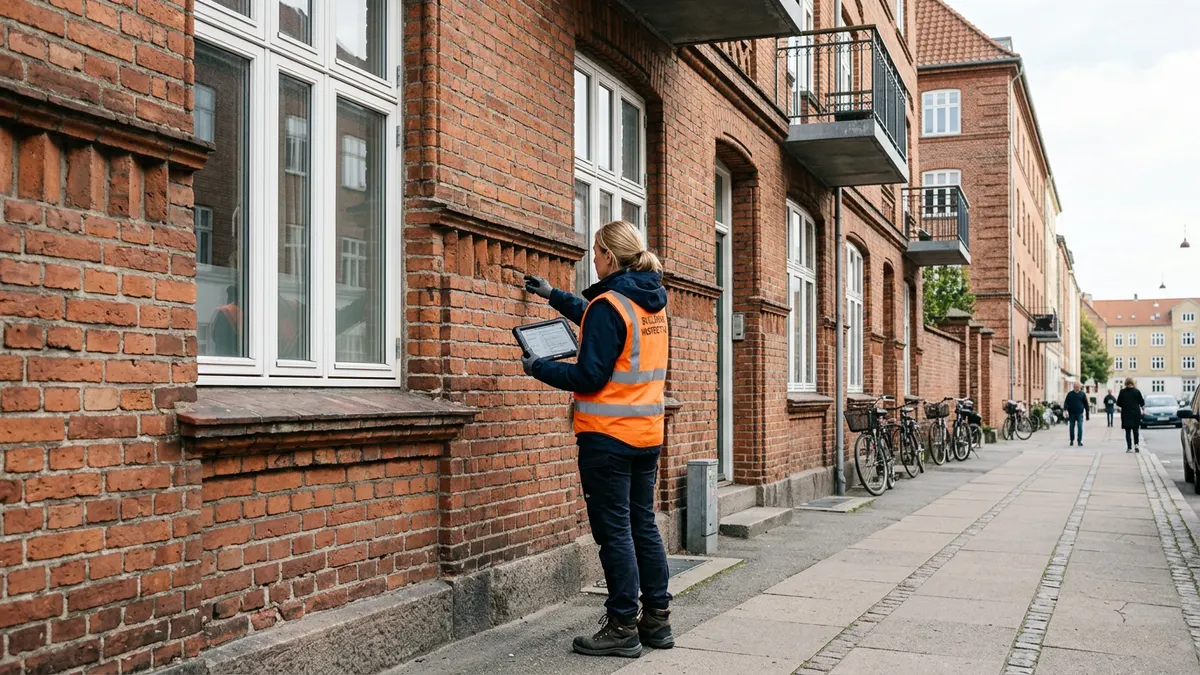
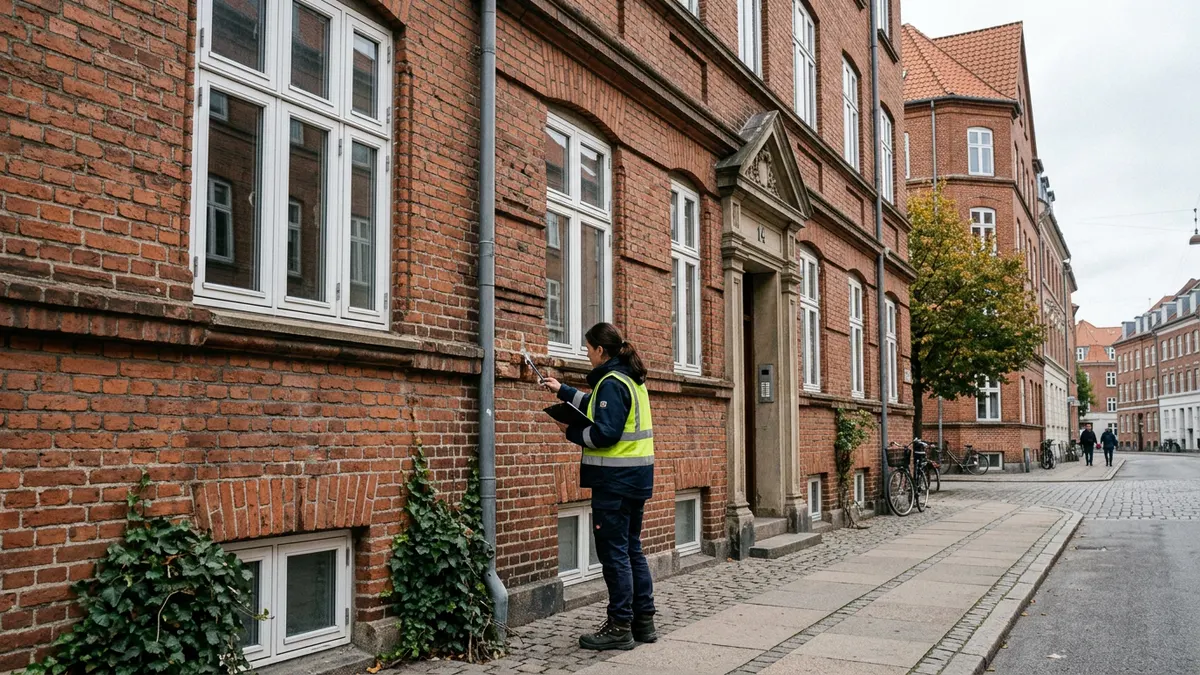
The due diligence phase is perhaps the most important part of a commercial broker's function. Here, one dives into the property's "state of health". Are there registered easements (servitutter) that limit usage? Are there illegal building alterations not registered in the Building and Dwelling Register (BBR)? What is the property's energy status in relation to upcoming EU requirements for energy efficiency?
It is always recommended that investors use specialised lawyers and accountants in this phase, but the commercial broker is the one who coordinates the flow of information and ensures all questions are answered. In Denmark, environmental conditions are also a significant factor, especially with commercial properties where former industry may have left soil contamination. Here, dialogue with the relevant authorities and regions is central.
Structuring the investment
A commercial broker's function also involves advising on how the transaction is structured. Should the property be purchased as an "asset deal" (direct purchase of the property) or as a "share deal" (purchase of the company that owns the property)? The choice has major consequences for tax, VAT (moms), and land registration fees (tinglysningsafgift).
Although the broker does not provide legal or tax advice, they can set up scenarios for the investor to discuss with their own advisors. In share deals, for example, there are special considerations regarding deferred tax (udskudt skat) to be aware of. Professional insight into these mechanisms is crucial for comparing two different investment offers correctly.
Market segments and geographical nuances
The Danish market is not homogeneous. A commercial broker's function varies depending on whether it concerns office leases, retail properties, logistics centres, or residential rental properties.
Residential rentals in growth cities
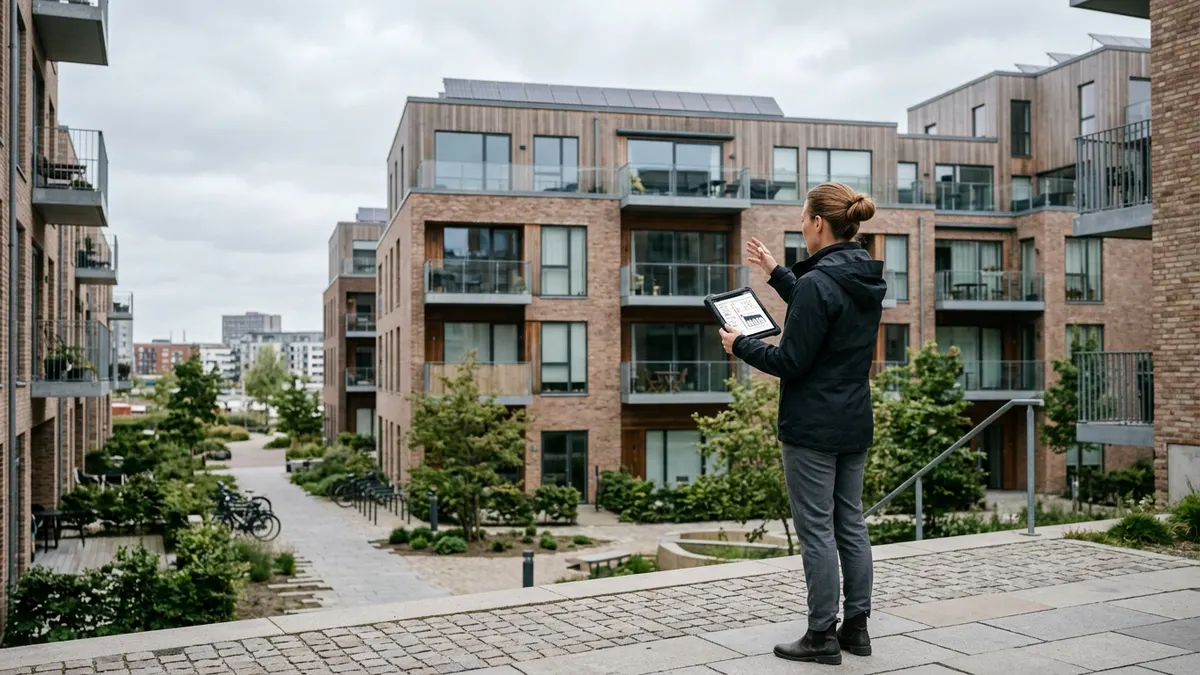
In cities like Aarhus and Copenhagen, demand for residential rental properties remains high. Here, the broker's role is often to analyse the rental basis. Is it covered by the rules on cost-based rent (omkostningsbestemt leje), or can the rent be set freely? Understanding the Housing Regulation Act (now incorporated into the Rent Act) is central here to assessing the property's true value.
Logistics and commerce in the provinces
For logistics properties along the motorway network, e.g., near Køge, Fredericia, or Kolding, the focus is different. Here it is about infrastructure, ceiling height, floor load-bearing capacity, and future expansion possibilities. A commercial broker's function here is to understand the tenants' needs and ensure the property is future-proofed in relation to the green transition and automation within warehouse management.
Financing coordination
Although the investor typically has their own contact with their mortgage credit institution (realkreditinstitut) or bank, the commercial broker often plays a role in presenting the case to the financing sources. A well-documented prospectus with clear projections and a realistic risk assessment makes the financing process significantly easier. The broker knows what the credit departments in Danish financial institutions emphasize and can help angle the material so it appears professional and credible.
In a time of fluctuating interest rates, this part of the process has become even more important. The choice between fixed or variable rates, as well as understanding contribution rates (bidragssatser) and loan types, are discussions where the commercial broker's market knowledge can provide valuable sparring.
Compliance and ethics in property trading
As a professional actor, one is subject to strict requirements for anti-money laundering checks (KYC - Know Your Customer) and general ethical conduct. An important commercial broker function is to ensure that all parties are verified and that the transaction takes place according to current Danish legislation. This creates security for both Danish and international investors, who must be able to trust that the legal framework is followed to the letter.
PropertyInvestments has navigated this landscape since 1985 with a focus on integrity and professionalism. In an industry that can sometimes seem opaque, it is the broker's task to act as the professional anchor, ensuring all agreements are documented and nothing is left to chance.
Optimising the property before sale
For sellers, a significant commercial broker function is to prepare the property for sale (salgsmodning). This can involve renegotiating lease agreements, closing unresolved building cases, or making minor technical improvements that can lift the property's overall valuation. A small investment in preparation can often result in a significantly higher sales price, as it reduces the buyer's perceived risk.
The importance of documentation
A property with incomplete documentation is often traded at a "risk discount". The broker's task is to remove this discount by ensuring the data room is complete. This includes:
- Updated rent overviews and contracts.
- Maintenance plans and technical reports.
- Insurance policies and claims history.
- Municipal correspondence and local plans (lokalplaner).
When all this is in place, the transaction can be completed faster and with fewer bumps in the road.
The commercial broker of the future: ESG and digitalisation
In 2026, ESG (Environmental, Social, and Governance) has become an integrated part of every property transaction. A modern commercial broker function now also involves advising on the property's climate footprint. Investors increasingly look at energy labels, CO2 emissions, and certifications such as DGNB. The broker must be able to read these reports and explain how they affect the property's value and financing options in the future.
Digitalisation has also changed the way we source and analyse data. Using AI to identify market trends and predictive analyses of rental development are tools that the professional broker uses to give their clients an advantage.
Summary of the commercial broker's contribution
Overall, a commercial broker's function is to reduce complexity and create value. Through market knowledge, networking, and technical insight, the broker ensures that the investor makes decisions on an informed basis. Whether you are an experienced property developer or a foreign investor looking to enter the Danish market, the right advice is the foundation for a successful investment.
It is important to emphasise that property investment always involves risk, and that historical returns are not a guarantee of future results. Therefore, one should always seek professional brokerage, legal, and tax advice before committing to a transaction.
Frequently asked questions
What is the most important function of a commercial property broker?
The most important function is to create transparency and match the right parties through qualified valuation, sourcing, and management of the due diligence process, so that transaction risk is minimised.
How does a commercial broker find off-market properties?
This happens through an extensive network built over many years, direct contact with property owners, and knowledge of companies' needs to divest assets discreetly away from public portals.
What does it cost to use a commercial property broker?
The fee typically varies depending on the size of the transaction, complexity, and the scope of the advice provided. It is usually agreed as a percentage of the purchase price or as a fixed fee upon commencement and completion.
Why is due diligence so important in commercial deals?
Because commercial properties are subject to complex rules on rent, environment, and usage. Due diligence ensures that the buyer does not take over hidden liabilities or defects that could significantly impair the property's value.
Can a commercial property broker help with financing?
The broker does not provide loans but can help structure the investment case and present it professionally to banks and mortgage institutions to optimise the chances of good loan terms.
How PropertyInvestments can help
PropertyInvestments has specialised in helping Danish and international investors navigate the Danish property market since 1985. We offer a complete solution where we source the right items, handle the technical and financial preparation, and lead the transaction safely to the finish line.
Whether you are looking for a residential rental property in Copenhagen or logistics facilities in Jutland, we are ready with concrete experience and a strong network. Contact us at info@propertyinvestments.dk or telephone +45 31 16 31 00 for a non-binding discussion of your investment goals.