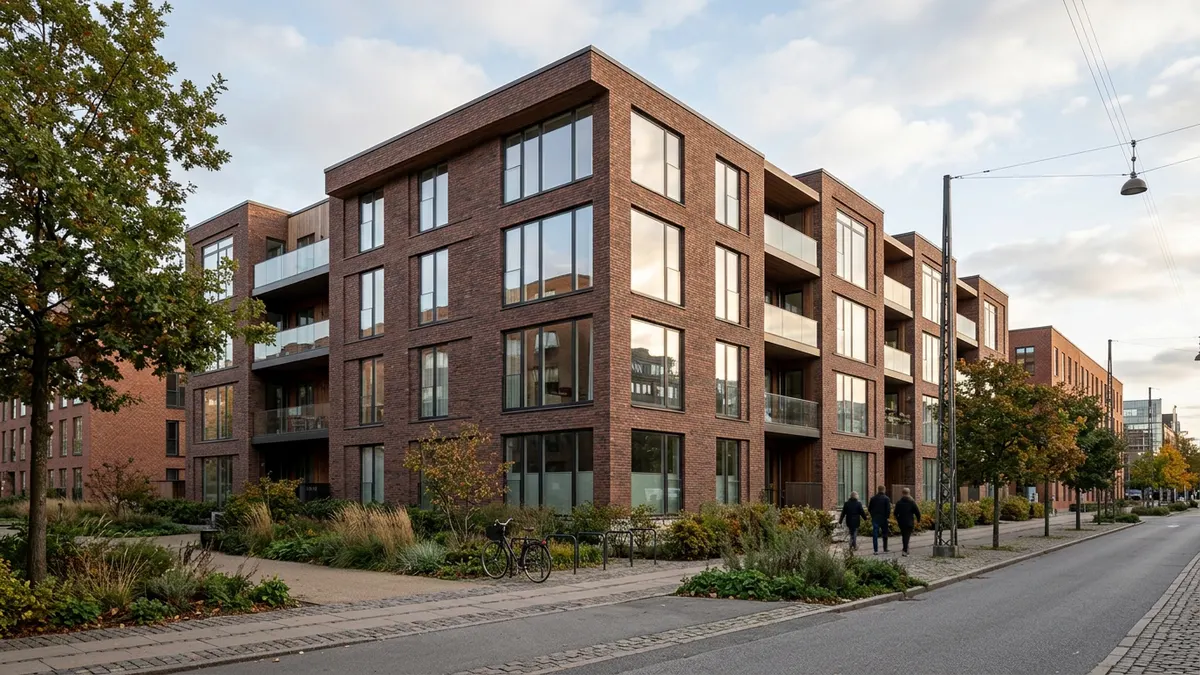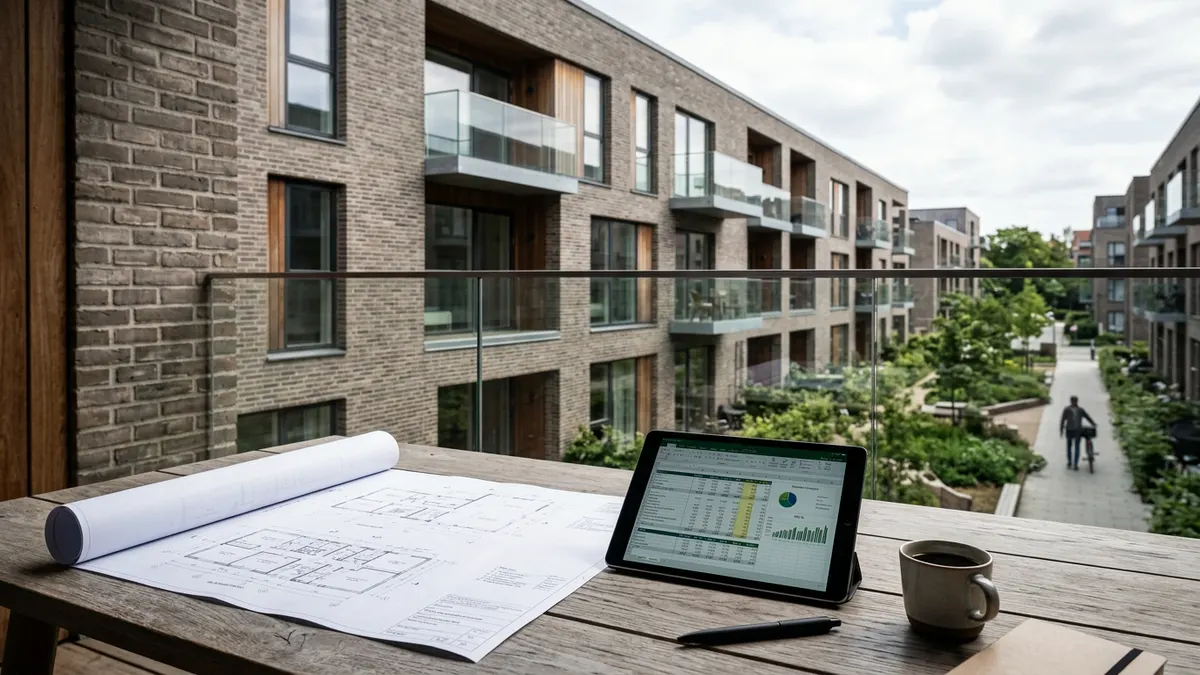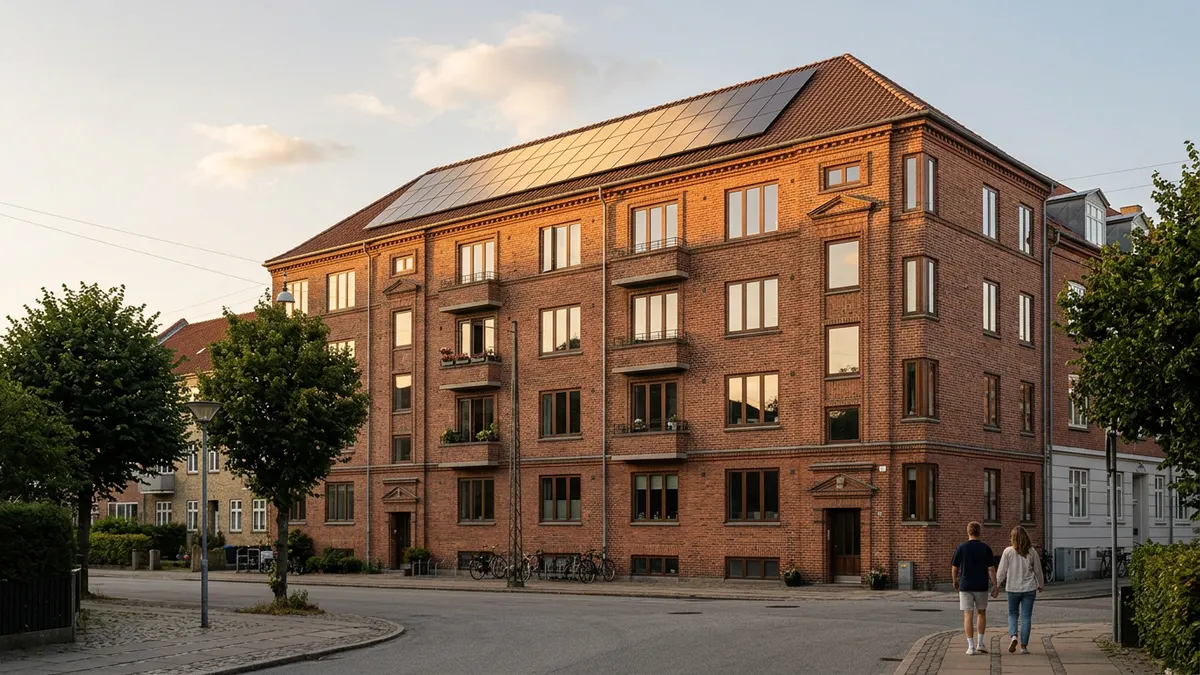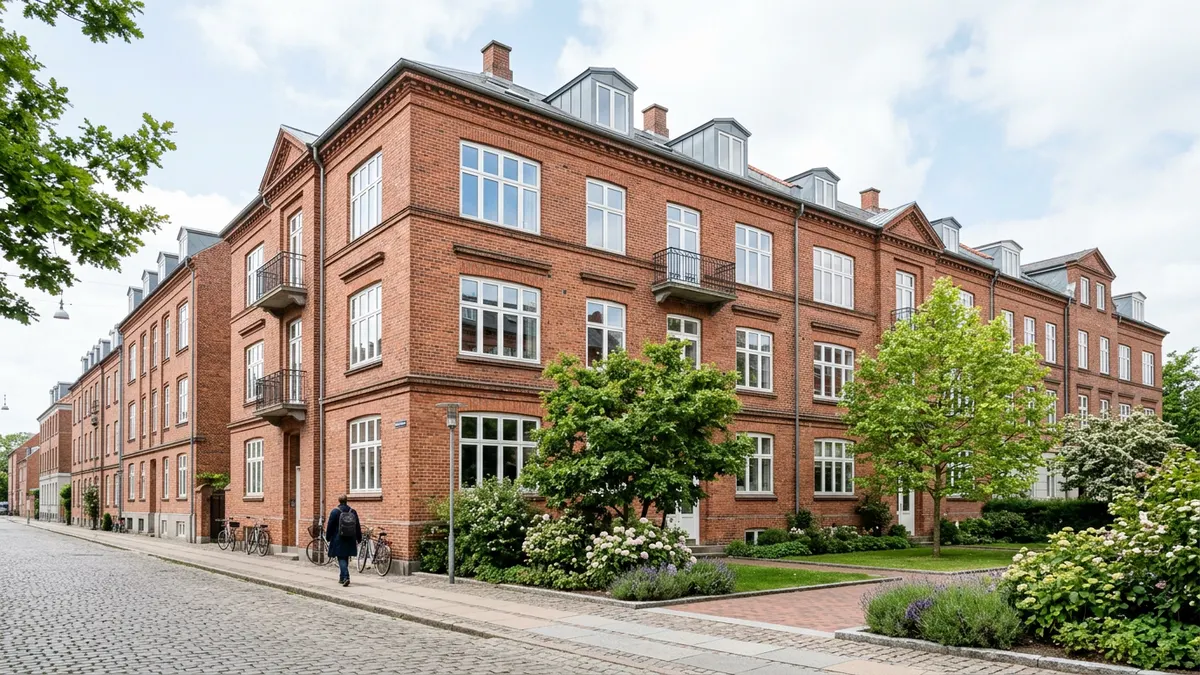
Subdivision into condominiums is a strategic process where a unified rental property is cadastrally divided into independent legal units. This manoeuvre can significantly increase the total market value of the property, as the sum of the individual flats upon potential resale often exceeds the value of the property as a single rental unit, provided the legislative requirements are met.
The potential of subdivision into condominiums for investors
When an investor chooses to undertake a subdivision into condominiums, the nature of the asset changes fundamentally. Instead of owning one large property with multiple tenancies, one now owns a series of individual assets that can be disposed of separately. This creates liquidity flexibility that is difficult to achieve with traditional rental properties. In cities like Copenhagen, Aarhus, Odense, and Aalborg, we have historically seen that the demand for owner-occupied housing often drives prices higher per square metre than the demand for entire investment properties.
The value increase primarily arises through what is known as the "subdivision premium". The market for private home buyers is much larger than the market for property investors, and private buyers often finance their purchases via long-term mortgage loans, giving them a different payment capacity than an investor who must calculate a direct return on rental income.
However, it is important to emphasise that the process is complex and requires in-depth knowledge of the ejerlejlighedsloven (the Danish Condominium Act) and local district plans. Each region in Denmark may have specific servitutter (easements) or planning restrictions that apply.
Legislative framework and the Danish Condominium Act
To complete a subdivision into condominiums, the property must meet a number of specific criteria according to Ejerlejlighedsloven (the Condominium Act). The rules have been tightened several times to ensure a balance between tenants and owners and to maintain a healthy rental market. One of the most significant restrictions is found in Section 10 of the Condominium Act (formerly Sections 14 and 15), which sets out conditions for which older properties may be subdivided at all.
Typically, a distinction is made between new-build properties and existing properties. New-build properties constructed for the purpose are, as a rule, always possible to subdivide. Challenges often arise with older rental properties built before 1966, where a number of restrictions exist to prevent low-cost rental housing from disappearing from the market. You should always consult the Ministry of Justice's latest executive orders or a legal advisor, as rules vary depending on the property's age and the number of residential units.
Conditions for subdividing older properties
For properties built before 1 July 1966, special rules apply. Here are some of the factors to be investigated:
- The number of flats in the property.
- Whether the property is registered as a residential property.
- The presence of commercial areas.
- Requirements for maintenance standards and energy labeling.
The technical process: From unified property to condominiums
The subdivision itself is not merely a legal exercise but also a technical task for a chartered surveyor. The process starts with a survey of the entire property. A beskikket landinspektør (chartered surveyor) must prepare the so-called subdivision lists and report the subdivision to the Danish Geodata Agency and subsequently to the Tinglysningsretten (the Land Registry Court).
A vital part of the process is the determination of fordelingstal (allocation keys/shares). The allocation key determines how large a share of the common expenses and rights each individual flat has in the owners' association. This figure is typically based on the flats' mutual area or value. A skewed distribution can lead to future conflicts in the owners' association, which is why it is essential that this is done correctly from the start.
Steps in the subdivision process:
- Property screening: Review of BBR-meddelelser (Building and Dwelling Register notifications), district plans, and easements.
- Surveyor measurement: Precise measurement of all internal and external areas.
- Drafting of articles of association: Establishing the basic rules for the future owners' association.
- Authority approval: Submission to relevant authorities.
- Land registration: Final registration of the individual flat sheets in the Tingbogen (the Land Register).
Economic potential and value appreciation
The value increase by subdividing into condominiums can be illustrated by the difference between a property's value as a rental property (based on yield) and its value as the sum of individual owner-occupied flats (based on market prices for residential housing).
| Factor | Rental Property (Unified) | Condominiums (Subdivided) |
|---|---|---|
| Buyer segment | Institutional/private investors | Private home buyers |
| Financing | Commercial lending (often lower LTV) | Private mortgages (up to 80%) |
| Valuation | Based on operations and yield requirements | Based on supply/demand per m2 |
| Liquidity | Low (takes time to sell the whole property) | High (easier to sell individual units) |
| Risk diversification | Concentrated | Possibility of partial divestment |
It is important to note that there are significant costs associated with subdivision, including fees for the surveyor, lawyer, and any tinglysningsafgift (land registration fee) to the state. Additionally, there may be requirements for energy improvements or fire protection before a subdivision can be approved. Therefore, a thorough cost-benefit analysis should always be prepared before starting the project.
Geographical differences in the Danish market
The opportunities and economic incentives for subdivision vary significantly across Denmark. The strategy is most prevalent in the major growth cities.
Copenhagen and Frederiksberg
In the capital area, square metre prices for condominiums are historically high. Here, the pressure on the housing market is so great that even smaller properties can yield a significant profit upon subdivision. However, district plans in Copenhagen Municipality are often very restrictive regarding minimum flat sizes, which one must be aware of during mergers or new subdivisions.
Aarhus and East Jutland
Aarhus has experienced explosive growth, and areas such as Aarhus Ø and the central bridge quarters (Trøjborg, Frederiksbjerg) are particularly attractive for these types of projects. Here, we often see investors buying older properties with a view to thorough renovation and subsequent subdivision.
Odense and Aalborg
In Odense, urban transformation has created new opportunities. Although square metre prices are lower than in Copenhagen, the costs of the subdivision process itself are often the same, meaning margins must be calculated even more precisely here. Aalborg likewise has a strong market for smaller condominiums for students and young professionals.
Tax considerations and VAT
When working with value appreciation through subdivision, it is crucial to understand the tax consequences. The sale of condominiums can be considered næringsvirksomhed (professional trading) if it happens systematically for profit. This means the gain is taxed as personal income or corporate income rather than capital gains.
VAT rules for the sale of new condominiums or properties that have undergone significant renovations are also highly complex. If a property is considered "new" in a VAT sense, 25% VAT must be added to the sales price, which can shift the entire profitability of the project. We always recommend seeking specialised advice from an accountant or tax lawyer experienced in property transactions.
Strategic preparation for sale
Once the subdivision is legally completed, work begins on maximising the value of the individual units. By presenting the flats as independent homes rather than just part of a rental portfolio, you open up to a wider audience.
Preparation may include:
- Establishing an owners' association: A well-functioning ejerforening (owners' association) with sound articles of association and a realistic maintenance plan increases security for buyers.
- Modernisation: Often, updating the kitchen and bathroom in the individual units will provide a value increase exceeding the investment when the flat is sold as owner-occupied housing.
- Documentation: Ensure all material regarding the property's condition, including tilstandsrapporter (condition reports, where relevant) and electrical installation reports, is in order.
Risks and pitfalls of subdivision
Although the potential is great, subdivision into condominiums is not without risk. The greatest risk is often the time factor. Public authority processing can take a long time, and during that period, you are exposed to market changes and interest rate fluctuations.
Furthermore, existing lease agreements can complicate the process. The Lejeloven (Danish Rent Act) gives tenants a forkøbsret (right of first refusal/offer obligation) in certain cases when a property is subdivided and sold. This means the tenants must have the opportunity to buy the property on a cooperative basis before the individual condominiums can be sold to a third party. This is a critical legal process that must be handled with great precision to avoid compensation claims or the cancellation of sales.
Summary of the value chain
For the professional investor, subdivision is about transforming an illiquid asset into multiple liquid assets. It requires patience, technical insight, and a strong network of advisors. By navigating correctly through the restrictions of the Condominium Act and hitting market demand in the right geographical areas, one can achieve a value increase far above the ordinary market return.
Always remember to consult relevant authorities such as SKAT (the Danish Customs and Tax Administration), the Ministry of Justice, or your local municipality's technical department for the latest rules, as practice in this area can change continuously.
Frequently asked questions
Can all properties be subdivided into condominiums?
No, not all properties can be subdivided. There are strict rules in Ejerlejlighedsloven, especially for older rental properties built before 1966. Furthermore, district plans and easements can prevent subdivision. You should always start with a thorough screening of the property's legal status.
How long does a subdivision process typically take?
A subdivision typically takes between 6 and 18 months, depending on the complexity of the property, the surveyor's work, and the processing time at the Danish Geodata Agency and the Land Registry Court. If physical changes or building permits are required, the process may take longer.
What does it cost to have a property subdivided?
Costs vary significantly but include fees for the surveyor, lawyer, and land registration fees. Added to this are any expenses for technical improvements to the property to meet modern requirements for fire protection and energy labelling.
Do tenants have a right of first refusal when subdividing?
Yes, in many cases, a subdivision and subsequent sale trigger the rules on tilbudspligt (offer obligation) under the Rent Act. This means the tenants must be offered the chance to buy the property as a andelsboligforening (cooperative housing association) on the same terms that the property could otherwise be sold.
How PropertyInvestments can help
Since 1985, at PropertyInvestments, we have assisted both Danish and international investors with the sourcing and optimisation of investment properties in Denmark. We offer consultancy throughout the entire value chain – from the initial screening of subdivision potential to the final preparation and execution of the sale.
If you own a rental property and are considering whether a subdivision into condominiums is the right strategy for your portfolio, you are welcome to contact us for a professional dialogue about your options. We ensure a calm and professional process focused on concrete value appreciation.
Contact us at info@propertyinvestments.dk or by telephone at +45 31 16 31 00 for a non-binding enquiry.