Achieving the highest price when selling investment property requires a strategic combination of technical optimisation, legal precision, and targeted exposure to relevant investors. By focusing on operational optimisation, maintenance standards, and lease structures, one can maximise the property's yield and thus its market value in a professional market.
Strategic preparation before a sale of investment property
The market for investment property in Denmark, from the dense urban environments of Copenhagen and Aarhus to growth areas in Odense and Aalborg, is characterised by a high degree of professionalism in September 2026. When an investor or property owner considers a sale, the process begins long before the actual listing. Preparation is the foundation for justifying a premium price.
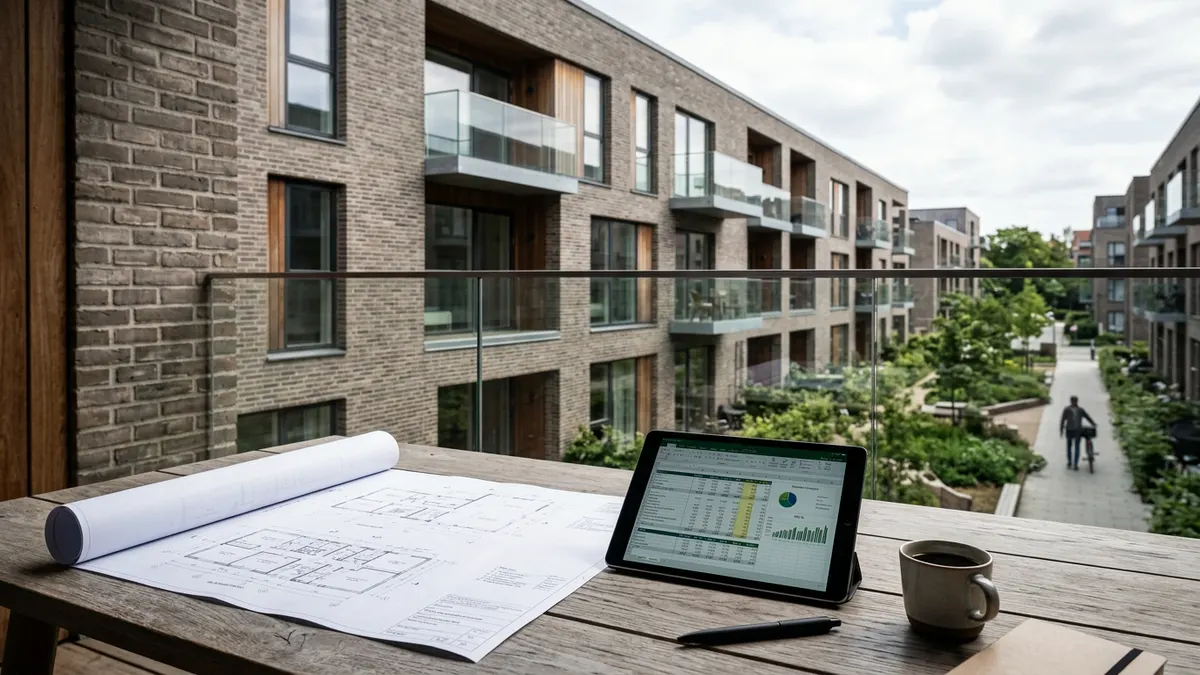
First and foremost, it is about documentation. A buyer of a professional rental property is effectively buying a cash flow with an associated risk profile. The better you can document the stability of this cash flow, the lower the risk premium the buyer will demand. This is directly reflected in the yield at which the property is traded. Documentation should include everything from the last five years of operating accounts to a complete review of lejekontrakter (lease agreements), servitutter (easements/covenants), and technical reports.
During this phase, one should also assess the property's physical condition. It is rarely economically optimal to carry out major renovations immediately before a sale, as the buyer will often want to leave their own mark. However, rectifying critical defects or making cosmetic improvements to stairwells and common areas can have a disproportionately large positive effect on the first impression a potential investor gets during a viewing.
Optimising operations as a value driver
When selling investment property, operational figures are the primary tool for pricing. A property with optimised operating expenses will, all else being equal, appear more attractive. It may therefore be advantageous to review all service agreements, insurance, and administration costs to ensure the property is run as efficiently as possible.
Rental potential and lease agreements
One of the most critical factors for pricing is the rent level compared to market rent. In Denmark, rental legislation is complex, and it is crucial to know whether the rent is set according to the rules for omkostningsbestemt leje (cost-based rent), det lejedes værdi (value of the rented premises), or fri fastsættelse (free rent setting). If there is untapped rental potential – for example, through modernisation according to the current rules in lejeloven (the Danish Rent Act) – this must be made clear to the buyer.
It is recommended to have a legal review of all lease agreements. Errors in contracts, missing notices for indexation, or lack of clarity regarding utility accounts can lead to price reductions in the 11th hour of a deal. An investor will always seek to cover risks of future lawsuits with tenants or claims for rent reduction.
Operating expenses and maintenance plans
Buyers today place great emphasis on the property's energy performance. A good energimærke (energy label) is no longer just a formality but a direct value driver, as it affects both operating costs for tenants and financing options for the buyer (e.g., via green realkreditlån (mortgage credit loans)). An updated 10-year maintenance plan also gives the buyer peace of mind regarding future capital expenditure (CAPEX), reducing uncertainty in their calculation models.
Geographical nuances in the Danish property market
Pricing when selling investment property varies significantly depending on geography. Although the basic principles of cash flow are the same, investor yield requirements differ greatly between the major cities and the provinces.
| Region / City | Characteristics | Investor Profile |
|---|---|---|
| Greater Copenhagen | Low yield, high security, international interest | Institutional investors, funds |
| Aarhus | Strong growth, large student city, stable market | Pension funds, private property companies |
| Odense & Aalborg | Higher yield, development potential | Regional investors, semi-professional |
| Zealand station towns | Stable rental demand, moderate yield | Local investors, smaller funds |
| Triangle Region | Logistics and commerce, strong infrastructure | Commercial investors, logistics funds |
In Copenhagen and Aarhus, very sharp prices are often seen because investors factor in an expectation of future capital appreciation and very low vacancy risk. Moving towards cities like Roskilde, Køge, or Vejle, one can often achieve a higher ongoing return, but market liquidity may be lower, placing greater demands on the sales effort itself.
Pricing: Yield vs. Price per Square Metre
When discussing the sale of investment property, the yield consideration (required rate of return) is the most central parameter. Yield is calculated as the property's annual net profit divided by the purchase price. However, it is important not to focus blindly on a single figure.
Investors also look at the price per square metre relative to the reinstatement value. If a property is traded at a price per square metre significantly below what it would cost to build new, there may be a built-in safety margin in the investment. Conversely, if the price is very high per square metre, it must be justified by a unique location or an extraordinarily high rent level.
The market interest rate naturally plays a significant role. In an environment with changing interest rates, as seen in recent years, investor yield requirements are adjusted continuously. This is where PropertyInvestments' experience since 1985 becomes relevant, as we have navigated through many different interest rate cycles and understand the psychology behind investor decisions.
Marketing and sourcing the right buyer
A successful sale is not just about putting a sign in the window. For professional investment properties, the best deals often happen 'off-market' or through a structured tender to a selected network of qualified buyers. The advantage of a discreet sales process is that it avoids unsettling tenants and protects the property's reputation if a sale, for some reason, does not go through initially.
A thorough Investment Memorandum is an absolute must. It should contain:
- Executive Summary: Key figures and highlights.
- Location Description: Why is this specific area attractive to tenants?
- Tenant List and Cash Flow: Detailed review of income.
- Operating Budget: Realistic estimates of taxes, insurance, and maintenance.
- Optimisation Measures: What opportunities does a new owner have to increase value?
It is important to target the material to the specific type of investor the property suits. A private investor often looks at the opportunity to manage and optimise themselves, while an institutional investor weighs stability, ESG compliance, and professional administration highly.
Legal and technical due diligence
Once a buyer is found and the general terms are in place in a Letter of Intent, the due diligence phase begins. This is often the most critical phase when selling investment property. The buyer’s advisors will review everything with a fine-tooth comb.
The technical aspects include a review of the building's construction, installations, environmental conditions (e.g., asbestos or soil contamination), and fire safety. Failure to comply with fire requirements can be a total deal-breaker.
The legal aspects cover the property's registered rights and obligations. Are there easements that restrict the property's use? Are there forkøbsretter (rights of first refusal) for the tenants (which is often the case for certain residential rental properties in Denmark, cf. the rules on tilbudspligt (offering obligation) in the Rent Act)? Having clarified these matters before the sales process starts saves time and reduces the risk of the deal falling through.
It is emphasised that PropertyInvestments does not provide legal or tax advice. We always recommend that you as a seller are assisted by specialised lawyers and accountants experienced in property transactions. The rules for, e.g., VAT on the sale of new properties or corporate structures are complex and require specialist knowledge from authorities like SKAT (Danish Tax Agency) or private experts.
Preparing the property for handover
Once the purchase agreement is signed and all conditions are lifted, the actual handover remains. A smooth transfer ensures that no disputes arise after the sale. This involves a thorough review of meter readings for electricity, water, and heat, the handover of keys and service agreements, and information to the tenants.
A good seller ensures that all material is ready digitally in a data room. In 2026, digital data rooms are the standard, and a structured folder setup sends a signal of professionalism that positively affects the buyer's trust in the seller.
The impact of the financing environment on the sales price
When selling investment property, you as a seller are dependent on the buyer's ability to obtain financing. In the Danish market, realkredit (mortgage credit) plays a leading role. Mortgage institutions carry out their own valuations, and if their assessment is significantly below the sales price, the buyer may find it difficult to finance the deal unless they have very large equity.
As a seller, you can facilitate this process by having updated rent assessments and documentation of the property's operating economy ready for the mortgage institution's valuer. The more transparent the property is, the easier it is for the lender to approve the financing, which ultimately supports the high sales price.
Trends in 2026: ESG and sustainability
We cannot talk about the sale of investment property in 2026 without mentioning ESG (Environmental, Social, and Governance). It has become a requirement from both banks and major investors. A property that can demonstrate a clear profile in sustainability – whether through certifications like DGNB or simply through documented energy-saving measures – will typically be traded at a lower yield (and thus a higher price) than a corresponding 'brown' property.
Investors are looking into a future where CO2 taxes and stricter requirements for energy labels may become a reality. Therefore, they factor a 'green premium' or a 'brown discount' into their calculations. If you as a seller have made the right investments in the property's climate envelope or heating sources, this should be highlighted as a significant value factor.
Frequently asked questions
How is the value of my investment property calculated?
The value is typically calculated based on a yield-based model, where the property's normalised net profit is divided by a market-conform yield requirement. Factors such as location, maintenance condition, tenant profile, and interest rates affect this yield requirement.
What is the difference between an 'on-market' and 'off-market' sale?
An on-market sale involves full public exposure via portals and advertising. An off-market sale takes place discreetly, where the property is only presented to a closed network of pre-qualified investors. The latter is often used to ensure peace around the property and target the process towards serious buyers.
Should I renovate my property before a sale?
It depends on the condition of the property. Generally, it is recommended to fix visible defects and ensure a presentable impression. Major renovations should only be carried out if you are certain that the value added exceeds the costs, or if it is necessary to comply with legislation.
How long does a sale of investment property take?
A typical sales process takes between 3 and 9 months from the initial preparations to the final handover. The actual marketing period and due diligence phase often take 2-4 months, depending on the property's complexity and the buyer's financing process.
How PropertyInvestments can help
PropertyInvestments has assisted Danish and international investors since 1985 with sourcing, optimisation, and the sale of investment properties throughout Denmark. We offer thorough preparation of your property for sale, where we identify optimisation potential and ensure that all material meets the requirements of professional investors.
With our extensive network and deep knowledge of the Danish market, we can find the right buyer for your property, whether it is located in one of the major growth cities or in the regions. Contact us at info@propertyinvestments.dk or telephone +45 31 16 31 00 for a non-binding discussion of your property portfolio and current market opportunities.