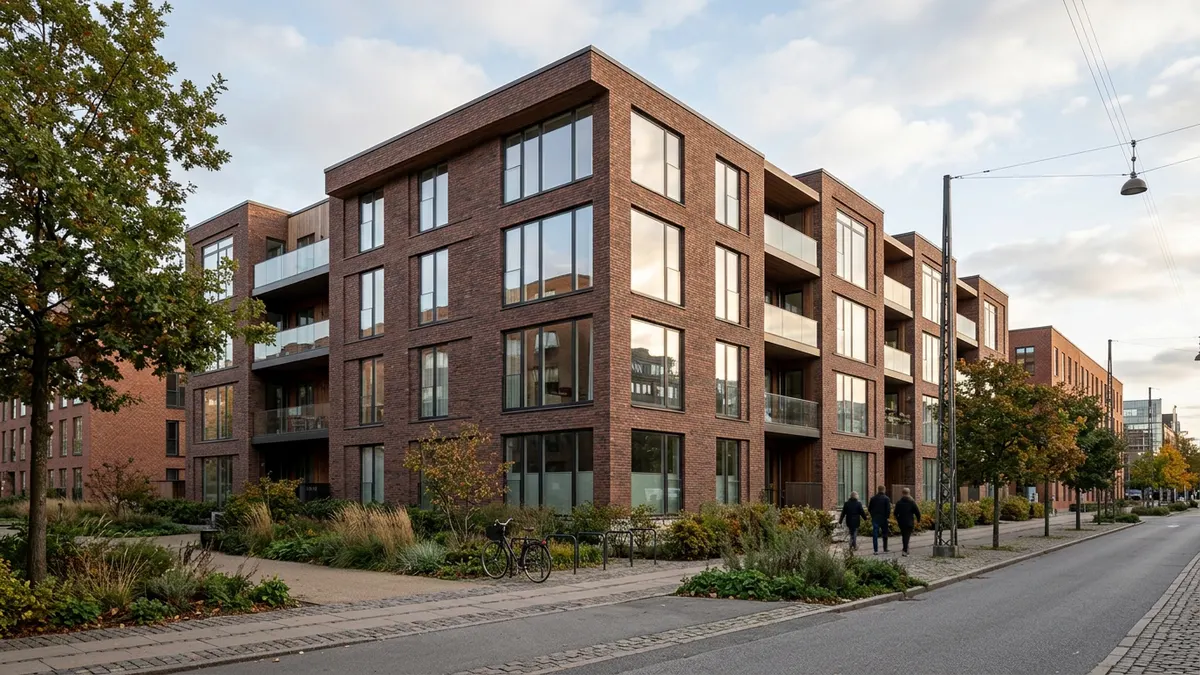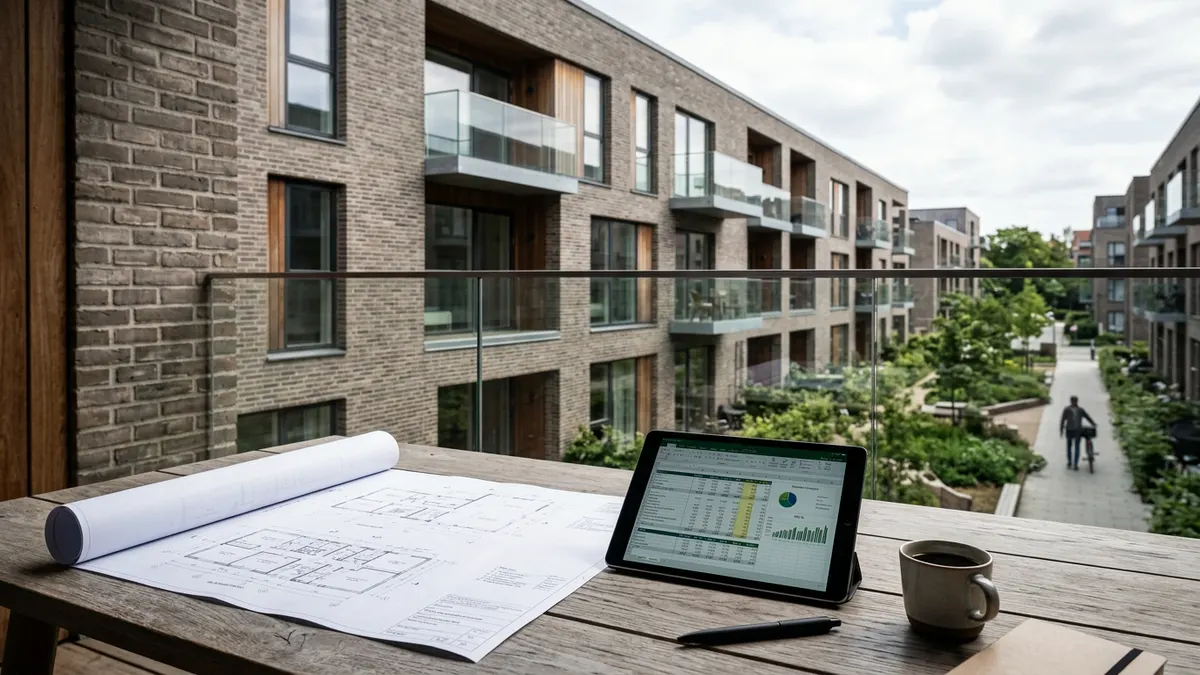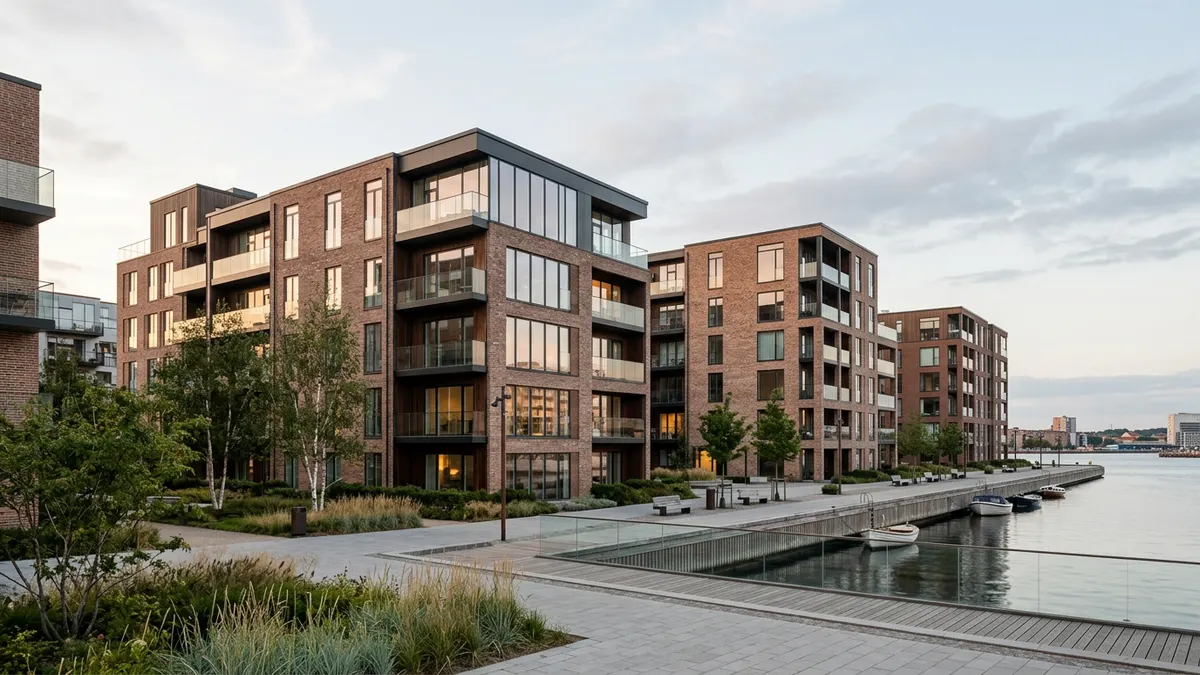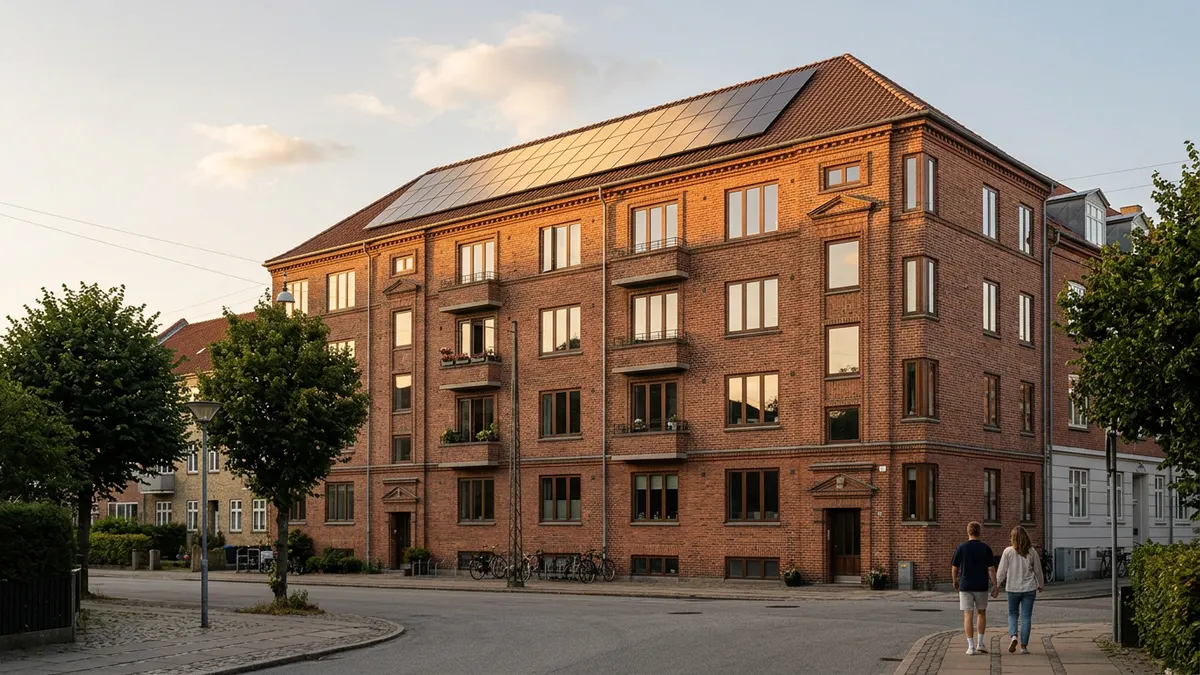
Achieving property value enhancement (værdiforøgelse) requires a strategic approach to both maintenance and modernisation. By combining targeted renovation with contemporary energy optimisation, investors can increase rental income, reduce operating costs, and significantly improve the long-term market value of the property. However, this presupposes a close knowledge of Danish building regulations and market requirements.
The potential for value enhancement in the Danish property market
In 2026, the Danish property market is characterised by a growing gap between properties that meet modern energy requirements and older buildings with outdated installations. For investors, this means that working on property value enhancement is no longer just about cosmetic changes, but about a fundamental optimisation of the building's substance and operating economy.
Looking at major growth cities such as Copenhagen, Aarhus, Odense, and Aalborg, the demand for homes with low energy consumption and a healthy indoor climate is historically high. This is due to both tenants' awareness of utility costs and institutional investors' increased focus on ESG (Environmental, Social, and Governance). A property undergoing a thorough renovation positions itself better in the market, reducing vacancy risks and ensuring a more stable cash flow.
For private investors or smaller investment firms, the opportunity lies in identifying properties with untapped potential. This could be older rental properties in the Triangle Region (Trekantområdet) or residential rentals in cities like Roskilde and Køge, where the foundation is solid but a lack of maintenance has kept the price down. Here, it is essential to understand that value enhancement is a process that starts long before the tradespeople begin—it starts with a thorough analysis of the property's current condition and the legal framework for modernisation.
Strategic renovation as a motor for property value enhancement
Renovation should always be seen as an investment rather than a cost. To ensure the greatest property value enhancement, one should prioritise measures that provide the highest return on investment (ROI). In Denmark, there are traditionally two primary tracks: modernisation of the residential units and optimisation of the building's thermal envelope.
Modernisation of rental units
Interior renovation of kitchens and bathrooms are often the most visible improvements. In many older Copenhagen properties, the establishment of modern bathrooms or open-plan kitchen-diners can significantly increase the rental value. However, it is crucial to be aware of the Danish Rental Act (Lejeloven) rules regarding thoroughly modernised rentals (formerly § 5, subsection 2, current rules in the Rent Act). One should always seek legal advice to ensure that the planned improvements can legally result in a rent increase.
Optimisation of common areas
The first impression of a property is of great importance to its market value. Renovating stairwells, replacing intercom systems with modern digital solutions, and optimising courtyard environments are factors that make the property more attractive to both tenants and potential buyers. In cities like Frederiksberg, where property prices are high, even small changes to the shared surroundings can have a noticeable effect on the overall valuation.
Planned maintenance vs. emergency repairs
A significant part of value enhancement lies in shifting from reactive to proactive maintenance. A property with an up-to-date 10-year maintenance plan (vedligeholdelsesplan) is worth more to an investor because it provides transparency and security regarding future expenses. This includes everything from the remaining lifespan of the roof to the condition of the facade and the integrity of the pointing.
Energy optimisation: Future-proofing the investment
In September 2026, energy optimisation is no longer an optional extra, but a necessity to preserve a property's value. With increasing requirements from EU directives and national targets for CO2 reduction, the property's energy performance certificate (energimærke) becomes a decisive parameter for financing options and valuation.
The energy label as a value marker
An upgrade from an energy label E or F to a B or A can have a direct positive impact on the property's cash value. Many banks and mortgage credit institutions (realkreditinstitutter) now offer more attractive loan terms—so-called "green loans"—for properties with a high energy class. This reduces financing costs and thus increases the annual yield.
Technical installations and management
Replacing older heat sources with heat pumps, installing building management systems (CTS-anlæg), and optimising ventilation systems are central elements. In commercial properties in industrial districts around Hedensted or Horsens, optimising lighting to LED with motion sensors can provide quick savings on the operating budget.
Insulation and thermal envelope
Retrofitting loft insulation and cavity wall insulation are often the most cost-effective measures. Additionally, replacing older panes with 3-layer energy glass is key. Although the investment can be significant, it is quickly reflected in an improved indoor climate, reducing moisture problems and the risk of mould, which can otherwise be expensive items on the maintenance account.
The economic gain of energy optimisation and renovation
To illustrate the connection between investment and return, one can look at the various parameters affected. A strategic property value enhancement is based on an improvement of the Net Property Income (NPI).
| Measure | Effect on Operations | Effect on Property Value |
|---|---|---|
| Energy Renovation (Insulation/Windows) | Lower heat loss and service charges | Higher due to better energy label and lower risk |
| Modernisation of Kitchen/Bath | Potential for higher market rent | Increased due to higher direct yield and tenant stability |
| Optimisation of Heating System | Reduced maintenance costs | Higher due to technical future-proofing |
| Digitalisation (Smart Building) | Efficient property management | Attractive for institutional buyers |
| Facade Renovation | Reduced risk of damp damage | Improved visual appeal and GEO-branding |
When calculating the economic gain, one must remember to include both the direct increase in value and the indirect gain in the form of lower vacancy. In areas such as Esbjerg or Sønderborg, where there can be competition for good tenants, a newly renovated property will always be let first.
Geographical differences in value enhancement potential
The potential for property value enhancement varies depending on where in Denmark the property is located. Local market conditions, demographics, and municipal plans play a significant role in which types of renovation pay off best.
The Major Cities: Copenhagen and Aarhus
In the largest cities, square metre prices are so high that even space optimisation (e.g., converting attic space for residential use or optimising floor plans) provides a massive value increase. Here, the focus is often on exclusive material choices and energy optimisation that supports high rent levels.
Provincial Growth Cities: Vejle, Kolding, and Randers
Here we see a tendency for investors to buy older properties with a view to lifting them from a low energy label to a contemporary level. The focus is often on creating good, solid family homes where fixed heating costs are minimised. These are cities with stable population growth, making investment in renovation less risky.
Regional Hubs
Cities like Næstved, Slagelse, and Holbæk benefit from improved infrastructure towards the capital. Here, renovating older rental properties can attract commuters who want a higher housing standard at a lower price than in Copenhagen. The value enhancement here is often gained by bringing the property up to a level that matches new builds in quality, but with the soul and architecture that older buildings possess.
Legal and administrative considerations
Any process towards property value enhancement must navigate a complex landscape of rules. Without a handle on the legalities, a renovation investment can quickly become a financial burden.
- The Rental Act (Lejeloven): As mentioned, the rules for setting rent after modernisation are crucial. One must know the difference between maintenance and improvement. Only improvements entitle the landlord to a rent increase.
- Building Regulations (BR18 and updates): For major renovations, new requirements come into force regarding insulation, ventilation, and fire safety. It is important to consult a building advisor or architect to ensure compliance.
- Local Plans (Lokalplaner): Before changing facades or utilising attic space in cities like Helsingør or Svendborg, you must ensure it does not conflict with heritage conservation local plans.
- Tax Matters: Depreciation on improvements and maintenance follows specific rules at the Danish Tax Agency (SKAT). It is always recommended to use an accountant specialising in real estate to optimise the tax outcome of the renovation.
Implementation: From plan to finished property
The path to successful property value enhancement requires a structured process. It is no use starting at one end without having the complete overview.
- Screening: Analysis of the property's current energy label, rent level, and technical condition.
- Budgeting: Preparation of realistic budgets that include a buffer for unforeseen expenses (which often arise when renovating older buildings).
- Tendering: Obtaining quotes from reliable contractors. In smaller local communities, it can often pay to use local tradespeople who know the local conditions and building traditions.
- Project Management: Ongoing monitoring to ensure that schedules and quality requirements are met. Poorly executed work can ruin the opportunity for value enhancement.
- Documentation: Save all documentation for improvements for use in future valuations and upon sale.
Risk management in renovation projects
Although the potential for property value enhancement is great, it is not without risks. Interest rate increases, rising material prices, and a lack of qualified labour can squeeze budgets. A sound investment strategy therefore always involves a sensitivity analysis: What happens to the return if the renovation becomes 10% more expensive, or if the rent level does not rise as expected?
It is also important to consider the property's liquidity. A property under renovation can be harder to sell quickly if a capital need arises. Therefore, renovations should often be planned in stages so that the property maintains a certain degree of operation at all times.
Frequently asked questions
Which renovations provide the greatest value enhancement?
Generally, energy optimisation (especially insulation and heating systems) and modernisation of kitchen/bath provide the most direct property value enhancement. Measures that move the property up an energy class have a particularly high significance for both value and financing in 2026.
Can you always raise the rent after a renovation?
No, it depends on the rules of the Rental Act (Lejeloven) and the type of property. A sharp distinction is made between necessary maintenance and actual improvements. It is always recommended to obtain a legal assessment or seek advice from specialists before starting a project.
How long does it take for energy optimisation to pay for itself?
The payback period varies greatly depending on energy prices and the nature of the measure. Retrofitting loft insulation can often pay for itself in a few years, while replacing windows or installing complex energy systems has a longer time horizon but contributes significantly to the property's sale value.
How do ESG requirements affect the value of my property?
Investors and banks today place great emphasis on ESG. Properties with a poor environmental profile (low energy label) risk becoming "stranded assets" with limited access to cheap financing, while optimised properties achieve a premium in the market.
How PropertyInvestments can help
Since 1985, PropertyInvestments has helped investors navigate the Danish property market. We source properties with great potential for value enhancement and advise on optimisation and preparation for sale. Our experience covers all of Denmark, and we assist with both the initial analysis and the final sale process.
Are you an investor looking for properties with optimisation potential, or do you wish to prepare your current portfolio for sale? Contact us for a professional dialogue about your options.
PropertyInvestments Email: info@propertyinvestments.dk Phone: +45 31 16 31 00