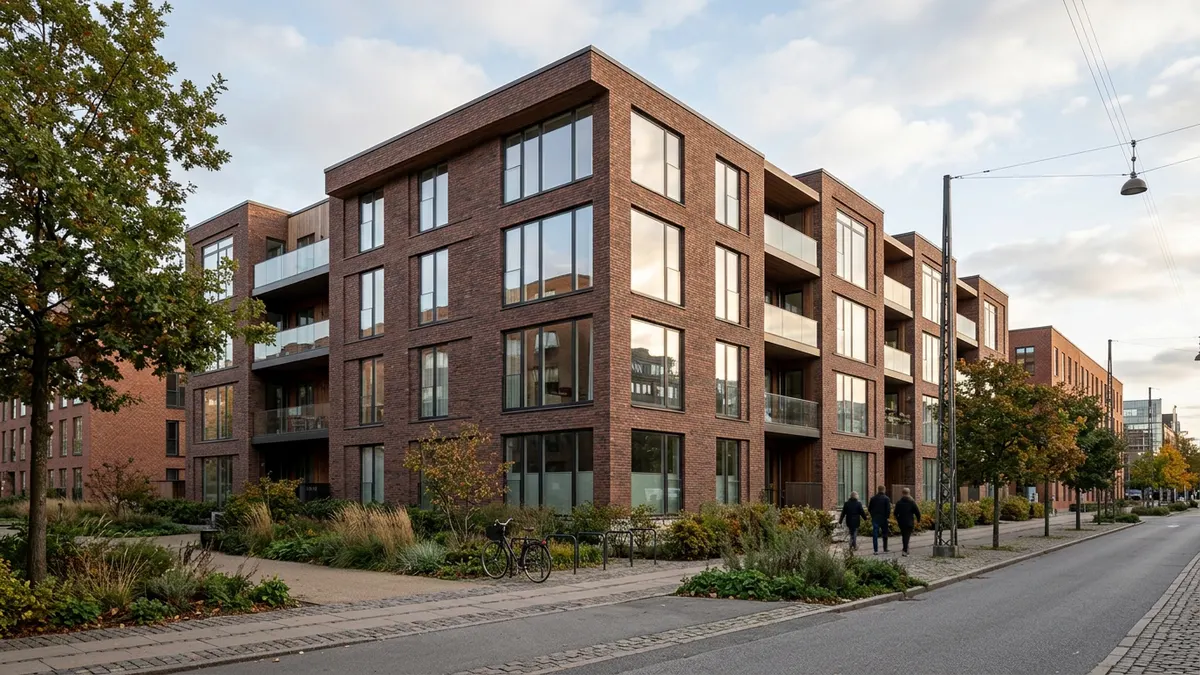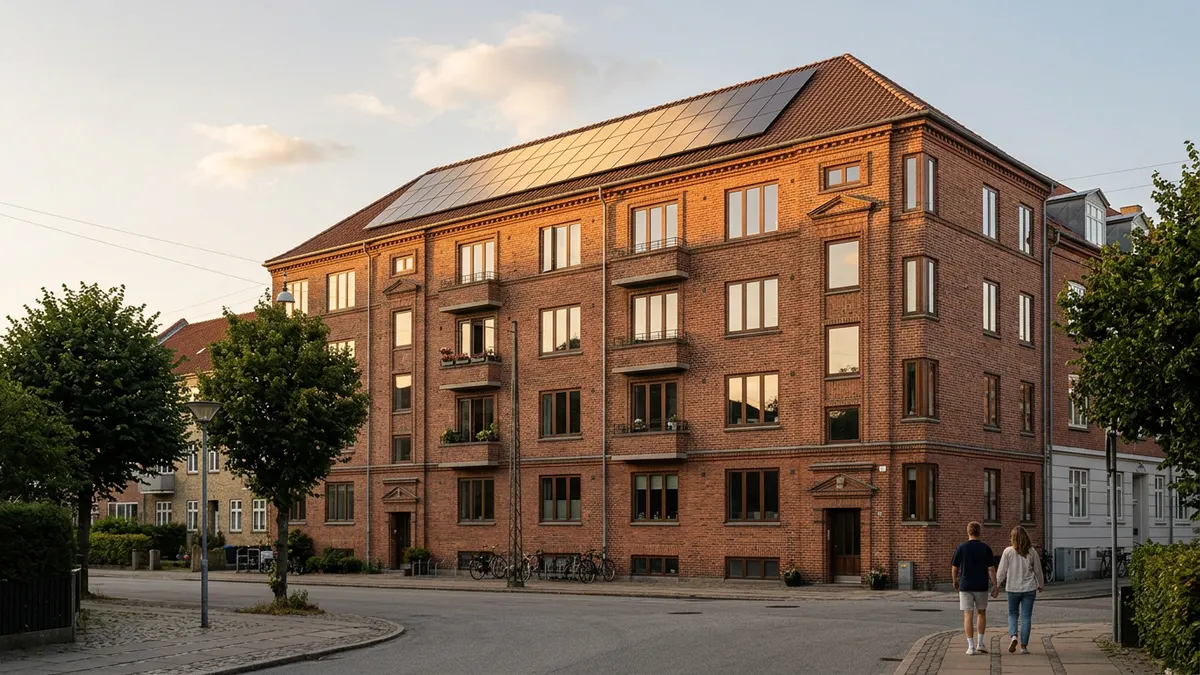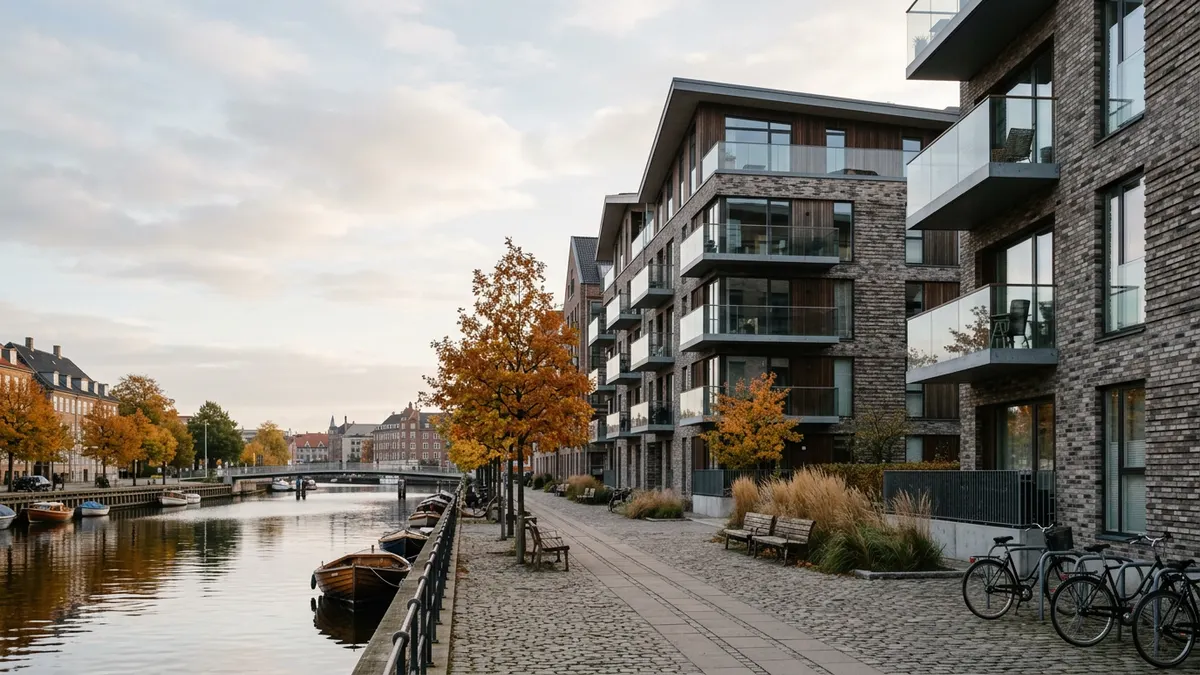
Effective marketing of investment properties in September 2026 is less about broad exposure and more about precise targeting of qualified networks. By combining deep market insight with discreet sourcing, it ensures that properties in cities like Copenhagen, Aarhus, and Odense are matched with investors whose profile and liquidity fit the asset's specific risk class.
Strategic marketing of investment properties in a mature market
When we discuss marketing investment properties in the current Danish market, we are moving away from traditional sales methods known from the residential market. For professional investors, a property is not just a building; it is a cash flow, a legal entity, and a strategic asset. Therefore, marketing requires an approach that prioritises data, discretion, and technical insight over emotional sales pitches.
In 2026, the Danish market has stabilised after a number of years with fluctuating interest rates. This means that investors increasingly demand transparency and documentation. Marketing must therefore reflect this professionalism. It is about presenting a basis for decision-making that is so complete that the investor can perform an initial screening without wasting time. Here, the network plays a crucial role, as many of the most attractive deals take place 'off-market'—that is, away from public portals.
Geographical hotspots and their significance for marketing
Denmark is a small country, but regional differences in the property market are significant. The strategy for marketing investment properties must therefore always be adapted to the specific location. What works for a residential rental property in Copenhagen K is not necessarily the same as what is required for a logistics centre in the Triangle Region.
Copenhagen and Surroundings: Focus on stability and re-letting
In the capital, the competition for good assets is fierce. Here, marketing often revolves around proving the property's long-term value and low vacancy risk. Investors here look at demographic projections and urban development plans from Københavns Kommune (Copenhagen Municipality). Marketing to the right network must emphasise the property's location relative to infrastructure such as the metro and green areas.
Aarhus: The growth city with an educational focus
Aarhus continues to attract both national and international investors. Here, the focus is often on student housing and modern office facilities in areas like Aarhus Ø or the old freight station area (godsbanearealet). Marketing in this segment requires an understanding of the city's unique dynamics and its ability to retain labour.
Odense and the Triangle Region: Logistics and robotics
With Odense's transformation and the Triangle Region's status as a logistical hub, the marketing of commercial properties here focuses on functionality and access to the motorway network. Here, the network of industrial investors is essential, as the requirements for technical specifications are significantly higher than in the residential segment.
Identifying the right investor target group
To succeed in marketing investment properties, one must understand who the buyer is. Investors can be roughly divided into three categories, each requiring a different approach in dialogue:
- Institutional investors: Pension funds and insurance companies seeking long-term, secure returns with low risk (Core/Core+). Here, documentation requirements are extremely high.
- Private Equity and funds: Investors often seeking 'Value-add' opportunities, where they can increase the property's value through renovation or operational optimisation.
- High Net Worth Individuals (HNWI): Private investors often seeking to place capital in physical assets to secure wealth against inflation.
The table below illustrates the typical focal points for these groups:
| Investor Type | Primary Focus | Risk Appetite | Preferred Property Types |
|---|---|---|---|
| Institutional | Cash-flow & ESG | Low | Residential rentals, HQs |
| Private Equity | Return (IRR) | Moderate to high | Value-add, conversion projects |
| HNWI | Wealth preservation | Low to moderate | Mixed residential/commercial, retail |
| Foreign funds | Scalability | Variable | Logistics, larger portfolios |
Off-market sourcing: The discreet marketing
A large proportion of the most successful transactions in Denmark happen through off-market sourcing. This is a form of investment property marketing that takes place 'under the radar'. The advantage of this method is avoiding 'burning the property' by exposing it too widely, which can create doubt about the asset's quality if it is not sold quickly.
When a property is marketed off-market, direct contact is made with a selected network of potential buyers known to have an interest in that specific property type and geography. This requires an extensive and maintained directory of investors, as well as deep trust between the broker/sourcer and the investor. In this environment, Non-Disclosure Agreements (NDA) are standard before detailed material such as lejekontrakter (lease agreements) and maintenance plans are released.
The value of technical due diligence in marketing
Although technically part of the sales process, preparation for due diligence should be seen as part of the marketing strategy. A property that is 'ready for sale' with all documents in order (data room) is significantly easier to market to professional actors. It signals seriousness and minimises the risk of the deal falling through late in the process.
Relevant documents typically include:
- Updated rent rolls and contracts.
- Energimærker (Energy Performance Certificates) and technical condition reports.
- Environmental reports and soil surveys.
- Insurance policies and claims history.
- Lokalplaner (local development plans) and any building permits.
Digital presence and data-driven sourcing
Even though the network is most important, digital marketing of investment properties can support the process. This is not about Facebook ads aimed at the general public, but about the targeted use of professional platforms and data analysis. By analysing transaction data from recent years, one can identify which funds are divesting assets and which are in an acquisition phase.
SEO (Search Engine Optimisation) also plays a role for companies sourcing properties. By being visible for relevant searches, both sellers and buyers seeking professional sparring are attracted. However, it is important to emphasise that the final transaction almost always requires personal contact and technical review.
Legal and tax considerations
When marketing and selling investment properties, it is crucial to understand the framework within which the investor operates. The Danish market is regulated by, among others, Lejeloven (The Rent Act) and Erhvervslejeloven (The Business Rent Act). Changes in legislation, such as recent discussions on lagerbeskatning (taxation on unrealised capital gains) or changes to the residential regulation act (§ 5, para. 2, now § 19), have a direct influence on how a property should be valued and marketed.
We always recommend that both buyer and seller seek professional advice from specialised solicitors and accountants. The rules for VAT on the sale of new properties or building plots are complex, and errors here can have major financial consequences. Similarly, knowledge of the Ministry of Justice's rules on foreign acquisition of real estate in Denmark is essential if marketing properties to international investors.
The importance of the network for long-term investments
Building and maintaining a network within the property industry takes decades. It is this network that provides access to information not found in the newspapers. Who is exiting a market? Which areas is the municipality planning to develop? Where are new major commercial tenants moving in?
For an investor, access to the right network means being presented with opportunities before they become public knowledge. For a seller, it means getting their asset placed with a buyer who values the property correctly and has the capital ready for efficient execution. Marketing investment properties through PropertyInvestments is based exactly on this philosophy of connecting the right parties based on facts and discretion.
Property types in focus in 2026
- Residential Rental: Still the most sought-after asset, especially in growth cities.
- Logistics and Warehousing: Driven by e-commerce and the need for efficient supply chains.
- Office: Focus on flexibility and ESG (Environmental, Social, and Governance) requirements.
- Retail: Selective interest in well-located units with strong anchor tenants.
Environment and sustainability as a marketing parameter
In September 2026, ESG is no longer a choice but a necessity. The marketing of investment properties today must include clear data on energy consumption, CO2 footprint, and any certifications such as DGNB or BREEAM. Investors, especially institutional ones, have strict requirements for their portfolios' green profiles. A property with a poor energy class will today require a significantly higher yield to compensate for the risk associated with future legislative requirements and lower tenant attractiveness.
Summary of investment property marketing
In summary, marketing investment properties today requires a professional, data-driven, and network-based approach. By understanding the specific needs of different investor groups and having in-depth knowledge of local markets in Denmark, one can ensure an efficient sales process. It is about creating trust through correct documentation and discretion, which ultimately leads to successful transactions for all parties.
Frequently asked questions
What does off-market marketing of investment properties mean?
It means the property is sold directly to selected investors through a professional network without being advertised on public property portals. This ensures discretion and target precision.
Which cities in Denmark are most attractive for property investment?
Copenhagen, Aarhus, Odense, and the cities in the Triangle Region (Vejle, Kolding, Fredericia) are traditionally the most attractive due to population growth and business development, but specific targets depend on the investor's risk profile.
Why is ESG important when marketing properties?
Investors and financing sources now place high demands on sustainability. A good ESG profile can lead to better loan terms, lower operating costs, and higher re-letting security, making the property more attractive.
Should I use an advisor to market my property?
Yes, professional assistance from actors with an established network and technical insight can ensure a higher sales price and a more secure process. We also always recommend involving legal and tax expertise.
How PropertyInvestments can help
PropertyInvestments has been active in the Danish property market since 1985. We specialise in sourcing, structuring, and selling investment properties for both Danish and foreign investors. Our approach is based on long-standing relationships and a deep understanding of the technical and legal aspects of a property transaction. We prepare properties for sale and follow the process closely until the transaction is finally completed. If you are looking for a professional partner for the marketing of investment properties or wish to hear about current opportunities in our network, please feel free to contact us.
Contact information: Email: info@propertyinvestments.dk Telephone: +45 31 16 31 00