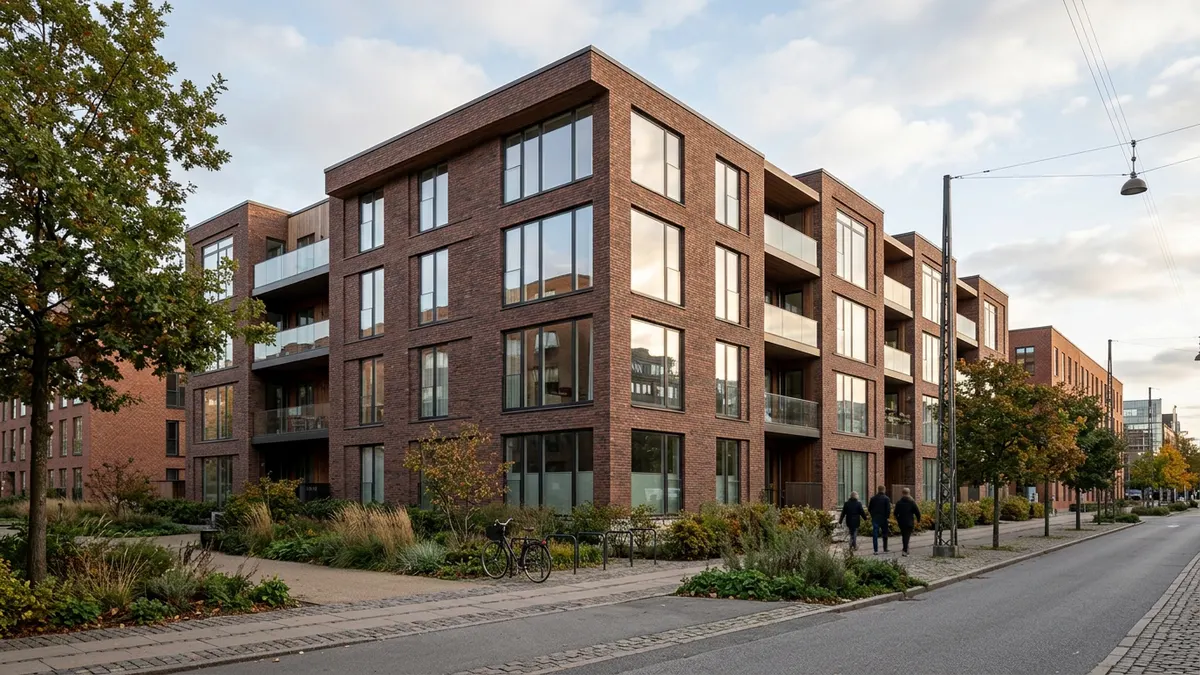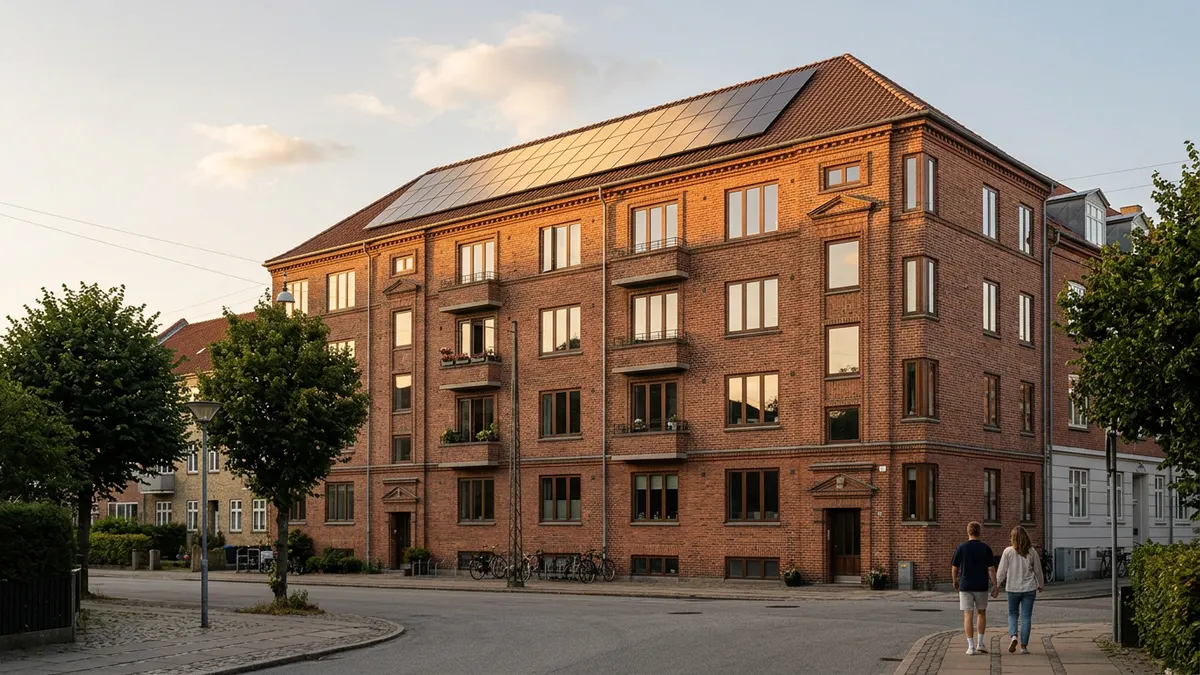
Commercial property pricing today is based on a comprehensive analysis of both macroeconomic indicators and specific property data. By combining operating data, market rent analyses, and location-specific yield requirements, an accurate valuation is ensured, reflecting the real market value for both individual properties and larger portfolios in cities like Copenhagen, Aarhus, and Odense.
The foundation of commercial property pricing in a modern market
The Danish property market has undergone a significant transformation in recent decades. Where valuations previously often relied on rules of thumb and local brokers' gut feelings, in September 2026 we are in an era where data is the primary foundation for any transaction. Correct pricing of commercial property is not merely a question of finding a buyer, but of documenting value to financial institutions, funds, and private investors.
When considering the Danish market, we see large regional differences. Pricing in Greater Copenhagen is driven by different factors than pricing in the Triangle Region or North Jutland. While Copenhagen is often characterised by low yield requirements due to high liquidity and security, we see a different dynamic in growth towns like Roskilde or Køge, where infrastructure projects play a decisive role in future value.
Accurate pricing requires an understanding of the connection between the property's physical condition, its legal status regarding tenants, and broader economic cycles. This is where the data-driven approach shows its strength. By incorporating historical data on vacancy, rent levels, and operating costs, a robust model for the property's future cash flows can be created.
Methods for valuing commercial portfolios
When working with larger portfolios, the complexity of pricing commercial property becomes significantly greater. Here, it is not just the qualities of the individual building that count, but also the portfolio's overall risk profile and synergy effects. Several different methods are typically used to triangulate the correct price.
The Yield Method
This method is the most widespread in Denmark. It takes the property's expected annual net profit divided by a yield requirement (yield). The yield requirement is determined based on market expectations for risk and growth. In a market with rising interest rates, as we have seen periodically, the yield requirement will typically correct upwards, pushing the price down unless rental income can rise correspondingly.
The DCF Model (Discounted Cash Flow)
For more complex investments, or properties with significant development potential, the DCF model is often used. Here, all future payment flows (income minus expenses) are projected over a number of years, typically 10, and discounted back to present value. This method is particularly relevant in areas under transformation, such as the harbour areas in Aarhus or the new districts in Odense, where current income does not necessarily reflect future potential.
The Comparison Method
Although data is king, market transactions remain an important indicator. By looking at what similar properties have traded for in the same geographical area (e.g., logistics properties along the E45 motorway), one gains a benchmark for what investors are actually willing to pay here and now. The challenge in Denmark is often that the market is relatively illiquid compared to large international markets, which is why the basis for comparison must be chosen with great care.
Critical data points in the pricing process
To achieve a credible valuation of commercial property, one must dive into specific datasets. It is no longer enough to look at the latest annual accounts. Investors in 2026 demand transparency and depth.
| Data Point | Impact on Pricing | Relevance |
|---|---|---|
| WALT (Weighted Average Lease Term) | Indicates stability of rental income over time. | High for institutional buyers |
| Market Rent vs. Actual Rent | Shows potential for rent increases or risk of decline. | Critical for DCF analysis |
| Maintenance Backlog | Direct deduction in valuation (CAPEX). | Decisive for net yield |
| Energy Label and ESG Data | Affects financing options and operating costs. | Growing importance in 2026 |
| Demographic Development | Local population growth in e.g. Hillerød or Vejle. | Long-term value stability |
These data must be validated. At PropertyInvestments, we have experienced since 1985 that erroneous data in the startup phase can lead to failed sales processes later. A thorough review of lease agreements to identify hidden obligations or uopsigelighedsperioder (non-termination periods) is essential for the final pricing.
Geographical factors and their influence on commercial property pricing
Denmark is a small country, but the property market is highly fragmented. When discussing commercial property pricing, location is still the most important single factor, but the definition of a "good location" has changed with digitisation and new transport patterns.
The Capital Region (Copenhagen, Gladsaxe, Høje-Taastrup)
Here, demand is typically highest from international funds. Pricing is characterised by low yield requirements, but also by high prices per square metre. Often, the scarcity of byggeretter (building rights) and existing warehouse space close to the city drives the value.
Region Southern Denmark and the Triangle Region (Vejle, Kolding, Fredericia)
This is Denmark's logistical heart. Commercial property pricing here focuses heavily on access to the motorway network and the efficiency of warehouse facilities. We often see larger portfolios of logistics properties here, where economies of scale in operation can justify a higher valuation.
Aarhus and East Jutland
Aarhus acts as a strong magnet for both office and residential investments. Pricing here often mirrors Copenhagen for the best locations, but with a slightly higher yield requirement, attracting investors seeking a balance between risk and return.
Risk management and sensitivity analyses
A serious commercial property valuation always includes a sensitivity analysis. What happens to the value if interest rates rise by 1 percentage point? What if the largest tenant in a multi-user property in Aalborg terminates their lease?
By simulating different scenarios, a potential buyer can be given confidence that the price is robust. This is particularly important when selling commercial portfolios, where risk is spread across multiple tenancies and locations. A diversified portfolio with properties in Esbjerg, Herning, and Slagelse can, all else being equal, have a lower risk profile than a single property, which should be reflected in the pricing.
One must also be aware of legislative factors. The rules for erhvervslejemål (commercial tenancies) and tax matters (such as ejendomsskatter (property taxes) and depreciation rules) are subject to ongoing political review. We always recommend that investors seek current advice from tax experts and lawyers to understand the latest rates from SKAT (the Danish Tax Agency) or guidelines from Erhvervsstyrelsen (the Danish Business Authority), as these directly affect the net yield and thus the pricing.
Optimisation before sale: How to increase the price
Before a property or portfolio is offered for sale, there are several steps one can take to optimise pricing. Data-driven optimisation is about removing uncertainty for the buyer.
- Lease Management: Extending short leases and minimising vacancy increases WALT and thus the price.
- Operational Optimisation: A review of service contracts and consumption costs can increase the Net Operating Income (NOI), which has a direct multiplier effect on the sales price.
- Technical Due Diligence: By having technical reports ready in advance, you reduce the risk of price reductions in the 11th hour of a deal.
- ESG Certification: In 2026, energy classes and sustainability documentation are no longer optional. Properties with poor energy labels are increasingly priced with a "brown discount," while green properties achieve a premium.
The psychology and marketing of pricing
Although we emphasise data, there is also an element of psychology in commercial property pricing. Hitting the right "sweet spot" in the market requires insight into current investor demand. Is the market currently most interested in 'Value-add' projects in Randers, or is it seeking 'Core' investments with secure cash flows in Odense?
The pricing must match the marketing strategy. An asking price that is too high can cause the property to "burn out" on the market, creating mistrust among potential buyers. Conversely, a price that is too low can lead to a quick deal where the seller leaves money on the table. The golden mean is found through in-depth market analysis and a realistic assessment of the property's unique selling points.
Conclusion on pricing in 2026
Pricing commercial property in today's market requires a holistic approach. One must be able to navigate large amounts of data, understand complex financial models, and have a finger on the pulse regarding local market conditions throughout Denmark. Whether dealing with a single retail property in Roskilde or an extensive logistics portfolio distributed across the country, accuracy and documentation are the keywords for a successful transaction.
It is important to emphasise that the commercial property market is subject to constant changes in interest rates, legislation, and demand. Therefore, any pricing should be viewed as a snapshot that must be continuously validated against current market developments and professional advice from specialists in law and tax.
Frequently asked questions
How do interest rates affect commercial property pricing?
Interest rates have a direct impact on investors' yield requirements. When financing costs rise, investors typically demand a higher return to compensate for the risk and increased costs, which, all else being equal, leads to lower pricing unless rental income increases.
What is the difference between pricing office and logistics properties?
Office properties are often priced higher based on location and employee facilities, while logistics are priced on functionality, ceiling height, and infrastructure. Yield requirements can vary significantly between the two segments depending on current demand in cities like Copenhagen versus transport hubs like Fredericia.
What role does ESG play in valuation in 2026?
ESG (Environmental, Social, and Governance) has become a central element in commercial property pricing. Investors look at energy classes, CO2 footprints, and social sustainability. Properties that do not meet modern standards may become harder to finance and thus fall in value.
Can you use online calculators for pricing?
Online calculators can provide a very rough estimate, but they often lack the in-depth data on lease agreements, lokalplaner (local development plans), and the building's technical condition necessary for accurate pricing. A professional valuation is always preferable for larger transactions.
How PropertyInvestments can help
Since 1985, PropertyInvestments has assisted Danish and international investors with the sourcing, optimisation, and sale of commercial properties throughout Denmark. We offer a data-driven approach to commercial property pricing and ensure that your portfolio or individual property is presented correctly to the right investors. Our process follows the sale from the initial analysis to the final tinglysningsafgift (land registration fee) and handover.
For a non-binding dialogue about your opportunities in the current market, you are welcome to contact us at info@propertyinvestments.dk or telephone +45 31 16 31 00.