When a tenant vacates a rental unit in Denmark, the process regarding move-out inspection rules (fraflytningssyn) is defined in the Danish Rent Act (lejeloven) to protect the rights of both landlord and tenant. Landlords must adhere to strict deadlines for summoning, conducting the inspection, and preparing move-in and move-out reports to claim refurbishment costs against the tenant's deposit.
Basic principles of move-out inspection rules
For professional property investors and private landlords, it is crucial to understand that the rules for vacating were significantly tightened with the 2015 amendments to the Rent Act. The purpose was to create greater transparency and reduce the number of disputes in rent assessment committees (huslejenævn) in cities like Copenhagen, Aarhus, and Odense, where the rental market is particularly active.
The rules distinguish between landlords who rent out more than one residential unit and those who rent out only one. For professional players sourcing properties via PropertyInvestments, it is the starting point that you are considered a professional landlord, which entails a mandatory obligation to hold both a move-in inspection (indflytningssyn) and a move-out inspection.
If the landlord does not comply with the formal requirements of the Rent Act – including the deadlines for summoning and delivery of the report – the landlord loses the right to claim payment for refurbishment from the tenant's deposit. This applies regardless of whether the lease has been neglected or not.
Who is covered by the mandatory rules?
According to the Rent Act, landlords who rent out more than one residential apartment are obliged to conduct inspections. This means that if you own a rental property in, for example, Aalborg or Roskilde with multiple units, you must systematically document the condition of the home. If an investor is in doubt about their status, they should seek legal advice from a lawyer specialising in tenancy law.
Summoning to the move-out inspection
One of the most critical components of move-out inspection rules is the summons itself. The landlord must summon the tenant in writing with at least one week's notice, unless otherwise agreed between the parties, after the termination has taken place. It is always recommended to send this summons digitally or as registered mail to have proof that the notice period has been observed.
It is important to note that the inspection itself must take place no later than two weeks after the landlord has become aware that the tenant has moved out. In practice, this often means the inspection is scheduled for the days immediately after the tenant has handed over the keys. If the landlord misses this 14-day deadline, the claim for refurbishment against the deposit is generally forfeited.
Documentation of notification
In a legal context, the burden of proof lies with the landlord. It is therefore necessary to keep a log of all correspondence. In larger cities with a high pace in the real estate market, it is often seen that deficient documentation leads to lost cases in the Rent Assessment Committee. Therefore, ensure you save copies of emails or receipts for the dispatch of the summons.
Conducting the inspection and the move-out report
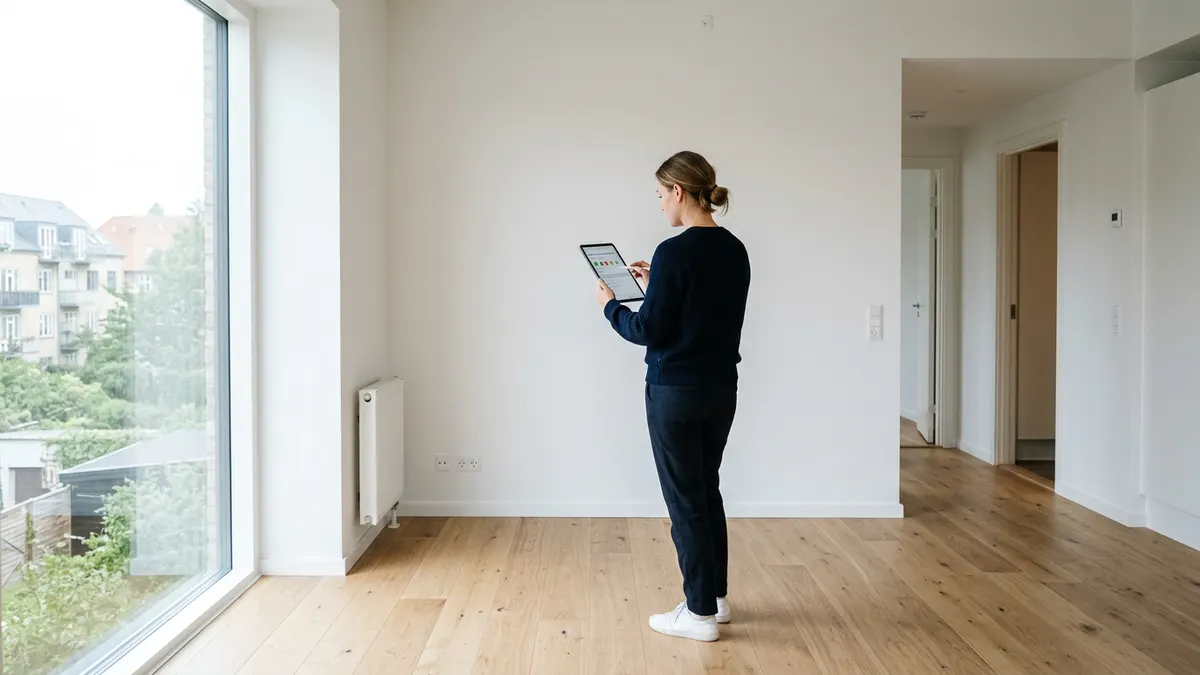
The move-out inspection itself is a physical walkthrough of the lease. Here, it is determined whether damage has occurred for which the tenant is responsible, or whether it is merely a matter of ordinary wear and tear (almindelig slid og ælde). The documentation must result in a move-out report (fraflytningsrapport).
The report must describe the condition of the lease point by point. This includes:
- Walls, ceilings, and woodwork (painting and wallpaper)
- Condition of floors (sanding and lacquering)
- White goods and fixtures
- Any deficiencies or actual neglect
Digital documentation and photos
In 2026, digitalisation is standard. It is customary to take extensive photo documentation of all rooms, corners, surfaces, and installations. These images serve as objective evidence that can be compared with photos from the move-in inspection. Without "before" photos, it is very difficult to document a deterioration in the condition of the lease.
| Documentation requirement | Description | Responsible |
|---|---|---|
| Move-in report | Documentation of condition at takeover | Landlord |
| Photo documentation | Visual evidence of surfaces and fixtures | Both parties |
| Move-out report | Description of condition and refurbishment requirements | Landlord |
| Receipt for delivery | Proof that the tenant received the report at the inspection | Landlord |
Refurbishment: What can you claim?
When discussing move-out inspection rules, one of the most debated topics is the scope of refurbishment. Following the 2015 rules, a landlord can no longer demand "new refurbishment" (nyistandsættelse) upon move-out. This means the tenant can only be required to bring the lease back to the same condition it was in at move-in – however, with the exception of ordinary wear and tear.
Standard refurbishment vs. Neglect
Standard refurbishment (normalistandsættelse) typically includes painting walls, ceilings, and wallpapering, as well as necessary treatment of floors. Neglect (misligholdelse) covers damage resulting from incorrect use or negligence, such as deep gouges in floors, broken windows, or destroyed sanitary ware.
It is important to distinguish sharply between these, as the costs for rectifying neglect always fall on the tenant, while standard refurbishment must be reasonable and necessary in relation to the actual condition of the lease. One cannot demand the painting of walls that appear freshly painted and flawless.
Requirements for the delivery of the report
According to Section 187 of the Rent Act, the move-out report must be delivered to the tenant in connection with the inspection. If the tenant is present, they must receive the report immediately – either physically or digitally (e.g., via email with a read receipt while standing in the lease).
If the tenant refuses to sign for receipt, or if the tenant does not show up for the inspection, the report must be sent to the tenant no later than two weeks after the inspection has been held. If this deadline is not met, the landlord loses the right to offset refurbishment claims against the deposit.
Digital signature
Many professional landlords in Denmark today use specialised apps for property inspections, which automatically generate a PDF and send it to the tenant for digital signing with MitID (Danish national digital ID) or similar. This minimises the risk of procedural errors that can be costly in the end.
Maintenance rules and the A/B schemes
It is crucial to know which maintenance scheme (vedligeholdelsesordning) has been agreed upon in the lease contract (typically in Section 8). In Denmark, there are generally two schemes:
- The A-scheme: The tenant handles interior maintenance during the lease period. Upon move-out, a standard refurbishment is carried out at the tenant's expense.
- The B-scheme: A maintenance account is attached to the lease, into which the landlord pays. Here, it is the account's balance that finances the maintenance.
Most modern investment properties in growth cities like Silkeborg or Esbjerg operate under the A-scheme, as it provides the most predictable operation for the investor. However, it is always the specific lease contract that dictates the framework, and one should always consult current legislation at SKAT (Danish Tax Agency) or relevant authorities regarding tax deductions for maintenance.
Rectifying deficiencies: Deadlines and quotes
Once the move-out report is finished and the requirements are determined, the refurbishment must be initiated. The landlord has a duty to limit the tenant's costs. This means that one must not choose unnecessarily expensive solutions, but instead obtain prices that correspond to the market level for professional craftsmanship.
The tenant generally does not have the right to perform the work themselves after the move-out inspection unless agreed. The work is normally carried out during the "refurbishment period," which is typically the last 14 days of the lease, where the tenant continues to pay rent even if they have moved out. This must, however, be clearly stated in the lease contract.
Settlement of the deposit
Finally, a move-out settlement (flytteopgørelse) must be prepared. Here, the expenses for refurbishment are offset against the tenant's deposit and any prepaid rent. If there is a remaining balance, this must be repaid to the tenant. There is no fixed statutory deadline for when the move-out settlement must be finished, but case law dictates that it must happen within a reasonable time, which is often interpreted as 4-6 weeks once all invoices from tradespeople are available.
Typical pitfalls in move-out inspections
Experience shows that most errors are made in the process leading up to the inspection. Here are some points investors should be extra aware of:
- Missing move-in report: If a correct move-in inspection was not performed, in many cases, refurbishment cannot be claimed at all upon move-out.
- Imprecise descriptions: Writing "the apartment must be painted" is often too unspecific. You should specify exactly which rooms and whether it concerns one or two coats of paint.
- Forgotten deadlines: The 2-week rule for holding the inspection and the 2-week rule for sending the report are absolute.
For foreign investors who own property in Denmark, these rules may seem complex, as they differ significantly from rules in other countries. Therefore, it is essential to have a strong local partner to ensure everything is done by the book.
Final remarks
Compliance with move-out inspection rules is fundamental for a healthy property investment. By being in control of the documentation, you minimise the risk of lengthy cases in the Rent Assessment Committee and ensure that the lease can be quickly re-let in good condition. It is not just about law, but also about good business practice and maintaining the property's value over time.
As rental legislation and rates for administration fees (administrationsgebyrer) may change, it is always recommended to stay updated via the Ministry of Justice (Justitsministeriet) or seek advice from a legal expert before making significant dispositions in your rental business.
Frequently asked questions
How long before must the landlord summon the tenant to a move-out inspection?
The landlord must summon the tenant with at least one week's notice. This applies to landlords who rent out more than one home. It is always recommended to do this in writing to have documentation of timely notification.
What happens if I do not comply with the 2-week deadline?
If the landlord does not hold the move-out inspection no later than two weeks after becoming aware of the move-out, the landlord loses the right to claim payment for refurbishment, unless it concerns neglect where the tenant has acted fraudulently.
Can the tenant demand to paint the apartment themselves?
Generally, the tenant must have maintenance carried out before the handover of keys if they want to handle it themselves. Once the move-out inspection is held and the keys are delivered, the landlord normally has the right to let professional tradespeople perform the work at the tenant's expense.
Must the tenant pay for ordinary wear and tear?
No, following the 2015 Rent Act amendment, the landlord cannot demand that the lease be handed over as new. The tenant is not liable for ordinary wear and tear, but only for maintenance and the rectification of damages (neglect).
How PropertyInvestments can help
PropertyInvestments has helped Danish and international investors navigate the Danish property market since 1985. We source attractive investment opportunities and assist with the practical setup, including advice on property optimization before sale.
For professional investors, we ensure that the formal frameworks are in place so the property appears as a healthy and well-documented investment. Contact us at info@propertyinvestments.dk or +45 31 16 31 00 for a dialogue about your opportunities in the Danish market.