This Lejeloven guide (Tenancy Act guide) provides you as a landlord with an overview of the legal framework for renting out residential and commercial properties in Denmark. The rules ensure a balance between tenant and landlord through provisions on rent setting, maintenance, and termination, which is crucial for a stable property investment in cities such as Copenhagen, Aarhus, and Odense.
Understanding the Danish Tenancy Act
When operating as an investor or landlord in the Danish property market, knowledge of the legislation is the foundation of any successful investment. The Danish Tenancy Act was significantly simplified and consolidated in 2022, merging the previous lejelov (Tenancy Act) and boligreguleringslov (Housing Regulation Act) into one unified law. The aim was to make the rules clearer, but complexity remains high, particularly regarding rent setting and maintenance obligations.
Whether you own a portfolio of apartments in Aalborg or source project properties in the Triangle Region, it is crucial to understand that the legislation largely protects the tenant. This means that many of the law's provisions cannot be deviated from to the detriment of the tenant, even if both parties sign a contract. A Lejeloven guide is therefore not just a practical aid, but a necessary tool for risk management.
The Danish market is geographically differentiated. In so-called regulerede kommuner (regulated municipalities), which include most major cities, there are stricter rules for rent setting than in unregulated municipalities. This directly affects your business case and the potential yield, which is why a thorough legal screening of the property before purchase is essential.
Rent Setting: The Three Different Principles
One of the most complex areas in any Lejeloven guide is the determination of rent. In Denmark, there is no single free market for rent unless the property was occupied after 1991 (or in certain cases 2005). As a landlord, you must navigate between three primary principles:
1. Omkostningsbestemt leje (Cost-based rent)
This principle primarily applies to older properties in regulated municipalities. Here, the rent is calculated based on the property's actual operating expenses (taxes, fees, insurance, administration, and maintenance) plus a capital return. This requires a precise budget and a continuous maintenance account.
2. Det lejedes værdi (Value of the leased premises)
For properties in unregulated municipalities or certain modernised tenancies, "the value of the leased premises" is used. Here, the tenancy is compared with similar tenancies in the same area regarding location, size, quality, and equipment. It is a subjective assessment, which can often lead to cases in the Huslejenævnet (Rent Control Board) if the tenant believes the amount is set too high.
3. Fri lejesætning (Market rent)
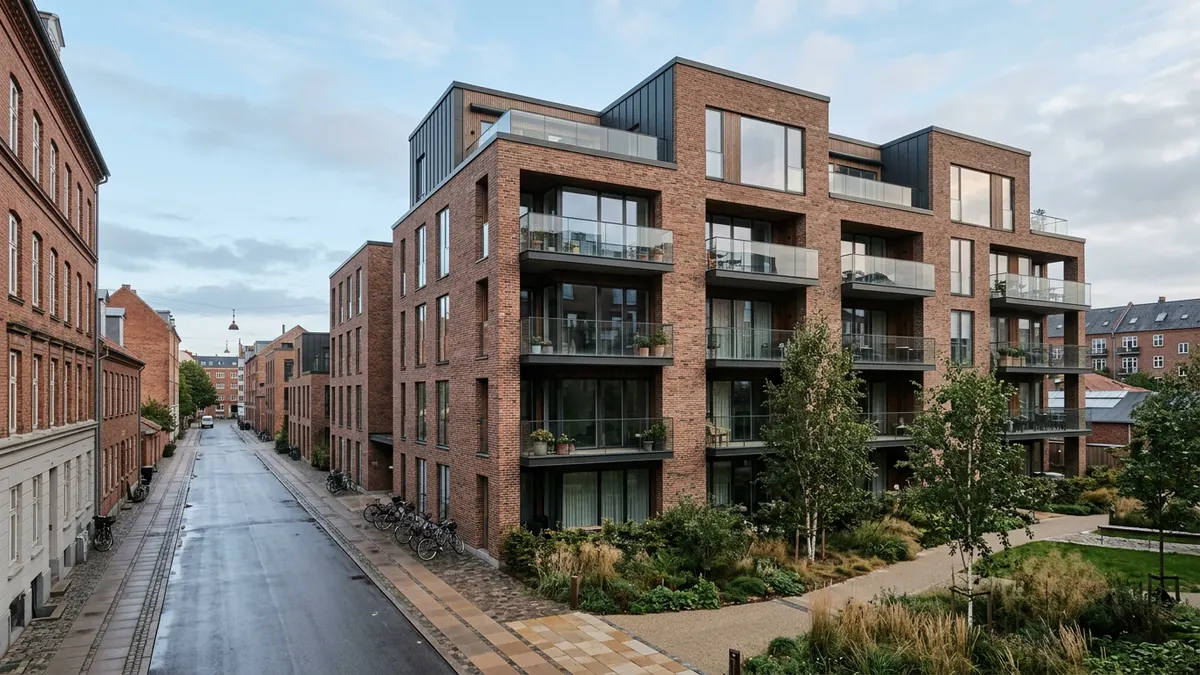
This is often the most attractive for investors. Free rent setting can be applied if the property was taken into use after 31 December 1991. Here, the parties can freely agree on the rent, though with the limitation that it must not be unreasonable. We often see this in new builds in Ørestad, Nordhavn, or the new districts in Aarhus C.
| Rent Type | Application | Regulation Method |
|---|---|---|
| Cost-based rent | Older properties (pre-1991) | Operating budget + return |
| Value of premises | Unregulated municipalities / modernisation | Comparable tenancies |
| Free rent setting | New builds after 1991 | Freedom of contract |
Maintenance Obligations and Property Condition
As a landlord, it is your duty to keep the property in good condition. The Tenancy Act distinguishes sharply between indvendig (internal) and udvendig (external) maintenance. If nothing is agreed, the full maintenance obligation rests with the landlord. However, it is customary in most leases (typically Typeformular A, 10. udgave (Standard Lease Agreement A, 10th edition)) that the tenant assumes internal maintenance during the residency period.
External maintenance includes not only the roof and facade but also technical installations, windows, and external doors. In investment properties with many units, it is strategically important to have a long-term maintenance plan. This not only secures the property's value over time but also minimises the risk of Rent Control Board cases regarding rent reduction due to defects.
It is important to note that the rules for indflytningsrapporter (move-in reports) and udflytningsrapporter (move-out reports) are very stringent. If you rent out more than one residential apartment, it is a legal requirement to hold a flyttesyn (moving inspection). Failure to comply with the deadlines for summoning and sending reports can result in you losing the right to claim for repairs at the tenant's expense upon move-out. We always recommend documenting the condition with high-resolution photos and detailed descriptions.
Modernisation and Substantial Improvements (§ 19, stk. 2)
For investors buying older properties for value-add purposes, the rules on substantial improvements are central. Previously known as § 5, stk. 2, these rules allow the rent to be raised to the value of the premises if the tenancy has been renovated for a significant amount (fixed per square metre and adjusted annually by authorities) or the tenancy's energy class has been improved.
However, these rules are subject to ongoing political debate and legislative changes (e.g., karensperioder (waiting periods) for new owners), underlining the importance of seeking current advice from specialists or a Juridisk Service (Legal Service) before starting major projects in places like Frederiksberg or Esbjerg. An incorrect calculation here can ruin the investment case if the rent is later overturned.
Termination and Rescission of Leases
The Danish Tenancy Act is known for its strong security of tenure for the tenant. As a landlord, you can generally only terminate a tenant under very specific circumstances, such as:
- The landlord wishes to occupy the unit personally (typically requires 1 year's notice and a weighing of both parties' needs).
- The property is to be demolished or rebuilt to an extent that makes moving out necessary.
- The tenant has breached their obligations (e.g., non-payment of rent, violation of house rules).
In the event of payment default, the landlord must follow a very strict procedure with påkravsskrivelser (demand letters) and specific deadlines before the lease can be rescinded. For commercial leases, however, there is a greater degree of freedom of contract regarding notice periods and terms, making commercial properties a different asset class with different risk profiles.
Tidsbegrænsede lejekontrakter (fixed-term leases) are another topic often featured in a Lejeloven guide. A "special reason" is required to make a lease fixed-term (e.g., overseas posting or temporary sale of one's own home). If the court judges that the reason is not valid, the time limit can be set aside, and the tenant gains the right to stay indefinitely.
Moving In, Deposit, and Prepaid Rent
When a new tenant moves in, it is common to collect a depositum (security deposit) and forudbetalt leje (prepaid rent). The Tenancy Act sets a cap of a maximum of three months' rent for each category. The deposit serves as security for the tenant's obligations upon moving out, while prepaid rent typically covers the final months of the tenancy period.
It is crucial that these funds are handled correctly in the accounting. For professional investors in growth areas like Roskilde or Silkeborg, it is important to have systems that track these amounts across the portfolio. Upon change of ownership of a property, the new owner automatically takes over the obligations to the tenants, including the duty to repay the deposit, regardless of whether the amount was correctly transferred during the sale. Therefore, thorough Due Diligence when purchasing rental properties is paramount.
Digitalisation and Lease Agreements
By September 2026, digital administration has become the standard. Using digital tools for signing leases and handling move-in inspections significantly minimises the risk of error. It is always recommended to use the latest version of the Ministry of Interior and Housing's standard form. Although a landlord can add special terms in § 11 of the contract, one must be extremely careful not to include terms that conflict with the mandatory rules of the Tenancy Act. Such terms will be void.
Special provisions regarding pets, smoking, or specific maintenance tasks must be formulated clearly. Alongside the green transition, we also see more contracts containing specific requirements for energy consumption or waste sorting, a trend gaining ground across the country, from Randers to Sønderborg.
The Importance of Professional Advice
This guide serves as a general introduction. As the Tenancy Act is subject to ongoing interpretations by the courts and the Rent Control Board, and as political interventions can change framework conditions (e.g., caps on rent increases during high inflation), one should never make major investment decisions without consulting legal experts, accountants, or professional property advisors. Rules on tax, VAT on commercial rent, and ejendomsvurderinger (property valuations) also play a major role in the total return.
For foreign investors looking towards the stable Danish market, specific Danish rules may seem complex compared to more liberal markets. But this very regulation also helps create the stability and predictability that characterises the Danish property market as a "safe haven" for capital.
Frequently asked questions
What is the maximum rent I can charge?
It depends on the property's age, location, and condition. For pre-1991 properties, rent is often set according to the value of the premises or cost-based principles. For newer builds after 1991, there is generally free rent setting. It is recommended to get an assessment of the market level in the specific area.
Can I prohibit pets in the tenancy?
Yes, as a landlord, you can insert a ban on pets in § 11 of the lease agreement. If the tenancy is part of an ejerforening (owners' association) or andelsboligforening (housing cooperative), you must also ensure that the association's statutes allow pets.
What do I do if the tenant does not pay rent on time?
You must send a written demand no earlier than the 3rd working day after the last timely payment date. The demand must give the tenant a deadline of 14 days to pay. If payment is not received, the lease can be rescinded. Be aware of specific fee rules for the demand letter.
Do I always have to conduct a move-in inspection?
If you rent out more than one residential tenancy, it is a legal requirement to hold both move-in and move-out inspections and prepare written reports. If this is not observed, you may lose the right to claim payment for refurbishment upon move-out.
How PropertyInvestments can help
At PropertyInvestments, we have helped Danish and international investors navigate the Danish property market since 1985. We source attractive investment opportunities throughout Denmark, including both residential and commercial properties, and ensure that all legal and commercial aspects are in place before handover.
Whether you want to buy your first rental property or expand an existing portfolio, we can assist with preparation for sale, operational optimisation, and professional advice throughout the process. Contact us for a non-binding dialogue about your investment goals at info@propertyinvestments.dk or telephone +45 31 16 31 00.