For a foreign investor, purchasing property in Denmark is regulated by residency obligations, commercial needs, and the Ministry of Justice's permit requirements. While EU citizens can often acquire real estate for business purposes or primary residences without prior permission under specific conditions, investors from outside the EU/EEA typically require formal approval unless the property is purchased through a Danish company (ApS or A/S).
Legal framework for a foreign investor in Denmark
When a foreign investor considers the Danish property market in 2026, it is essential to understand the fundamental rules in the Erhvervelsesloven (Acquisition of Real Property Act). Denmark has historically taken a restrictive approach to foreign purchases of real estate to prevent price pressure from holiday home acquisitions and to ensure that the housing stock is used by those living in the country.
The rules distinguish sharply between two categories: commercial properties and residential properties. For a foreign investor, access to commercial properties is generally more flexible than access to private homes and summer houses. If the purpose is pure investment for rental or operation, the property is often regarded as a commercial activity.
It is important to note that the rules are administered by the Ministry of Justice. Although Denmark is a member of the EU, the country has special rules (protocols) that allow for the maintenance of certain restrictions, particularly regarding secondary residences (holiday homes).
The distinction between EU/EEA and third countries
Investors from EU or EEA countries benefit from the principle of free movement of labour and the right of establishment. In practice, this means that if a citizen or a company from an EU country wishes to establish themselves in Denmark or provide services here, they can often acquire the necessary property without a permit from the Ministry of Justice.
For investors from countries outside the EU (third countries), such as the USA, China, or the UK, the rules are more stringent. As a starting point, permission is always required unless the investment is structured through a Danish legal entity. We always recommend consulting a Danish lawyer specialising in property law to assess the specific case.
Investing in commercial properties: Rules and opportunities
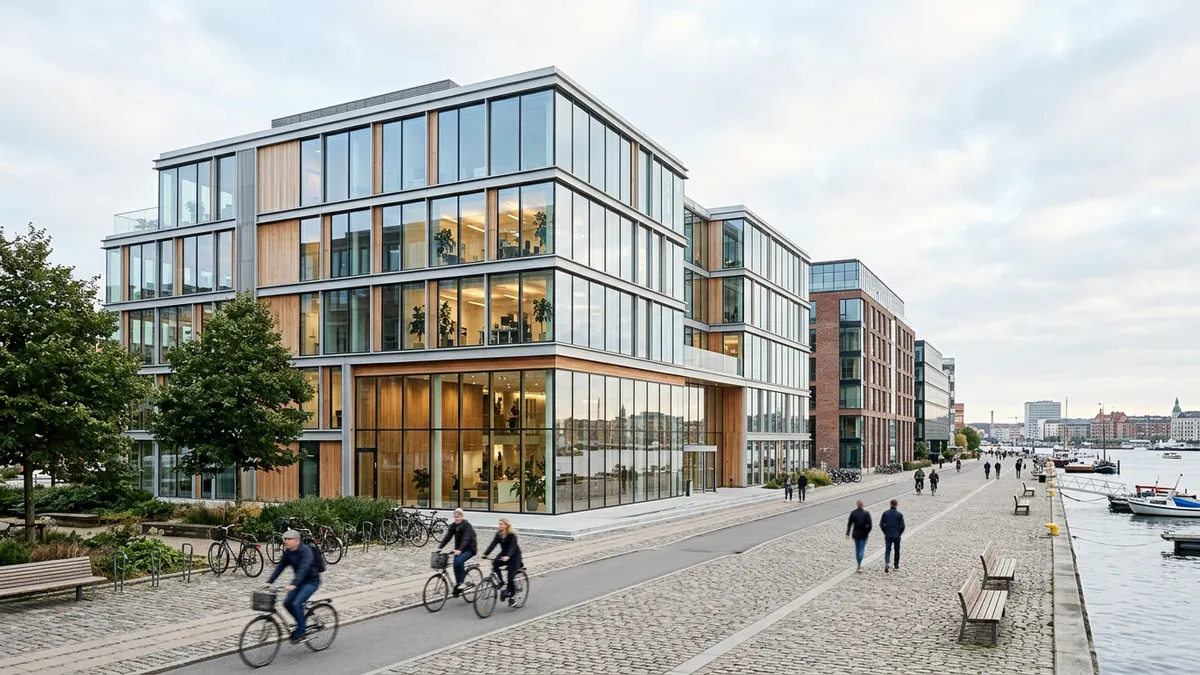
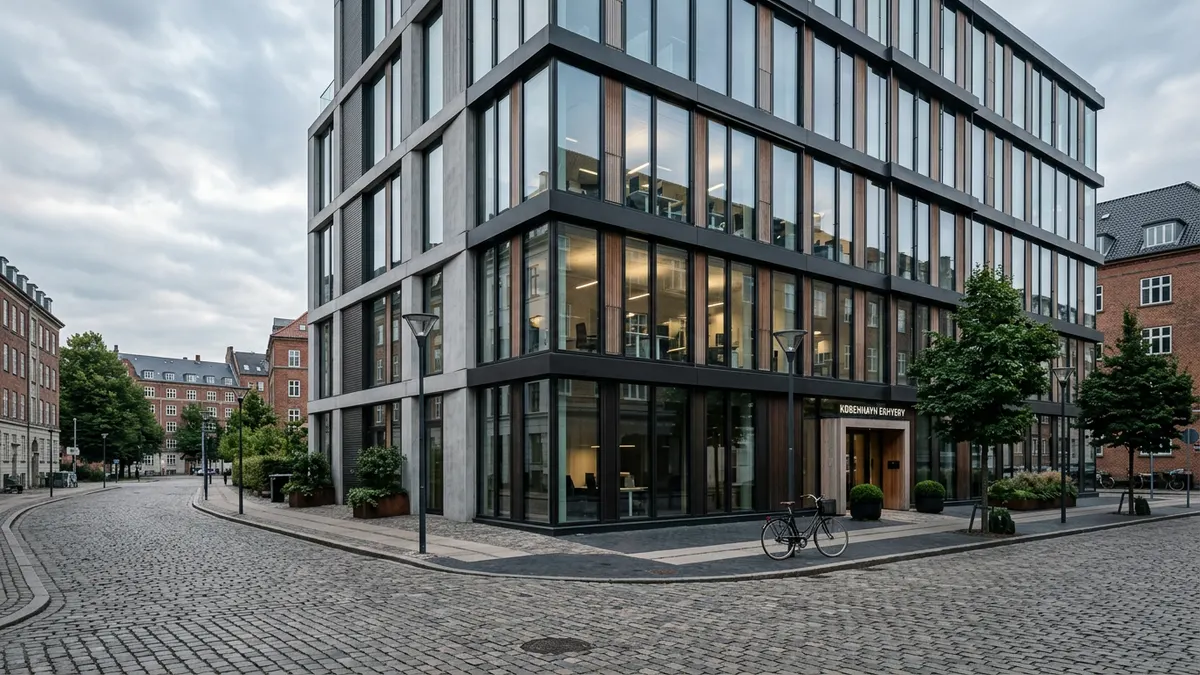
Commercial properties are the most common entry point for a foreign investor of property in Denmark. This includes office buildings in Copenhagen, logistics centres in the Triangle Region, or industrial properties in Aarhus and Odense.
| Type of investor | Commercial property requirement | Need for permission |
|---|---|---|
| EU citizen/company | Must be used for business operations | No (generally) |
| Non-EU investor (individual) | Requires residency or permission | Yes |
| Danish company (ApS/AS) | No residency requirement for the company | No |
When a foreign investor incorporates a Danish company (typically an anpartsselskab (private limited company) or ApS), the company is considered a Danish legal person. This company can then buy real estate in Denmark on equal terms with other Danish businesses. This is the most widely used model for professional property investors from abroad, as it significantly simplifies the process and creates a clear framework for financing and taxation.
Geographical focus areas for business
In 2026, we see continued interest in major urban growth areas.
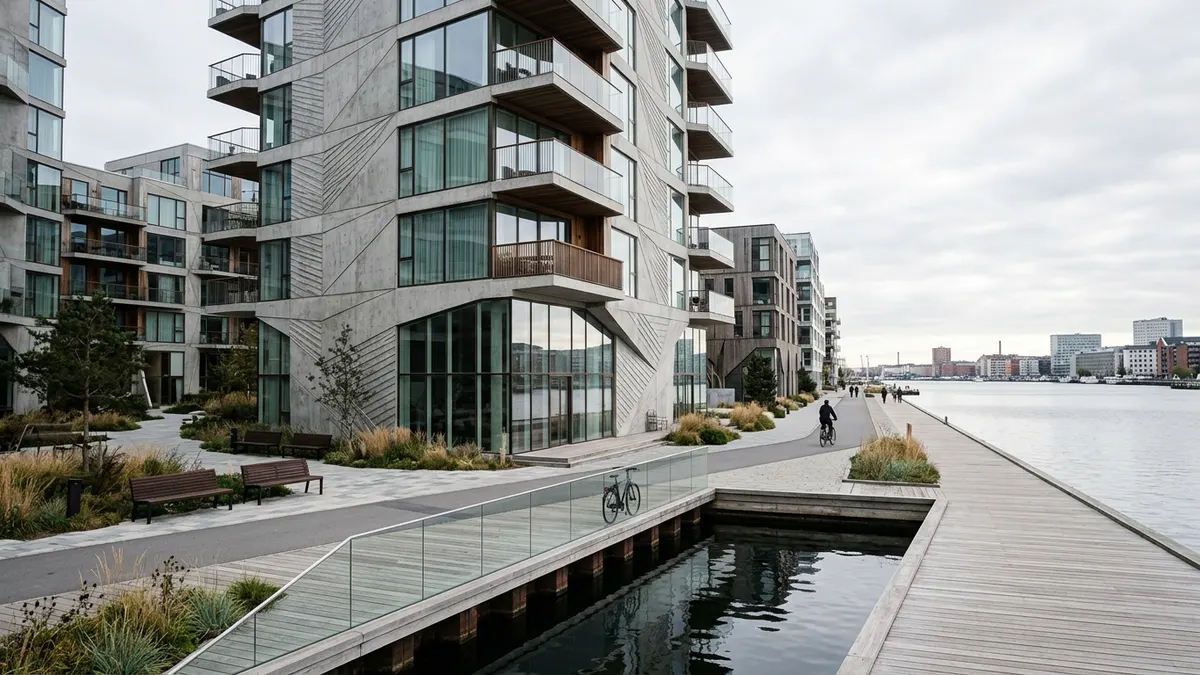
- Greater Copenhagen: Here, the demand for office and corporate headquarters remains stable. Areas like Nordhavn and Ørestad particularly attract international capital.
- Aarhus: As Denmark's second-largest city, Aarhus offers strong opportunities within residential rental properties and logistics.
- Odense: With growth in robotics and life sciences, a need for specialised commercial premises has emerged.
- The Logistics Axis: The areas around Køge, Fredericia, and Kolding are strategically important for foreign investors focusing on supply chain and warehousing.
Residency obligations and rental properties
For a foreign investor wishing to acquire residential properties for rental, it is crucial to understand the concept of bopælspligt (residency obligation). In Denmark, most municipalities have a residency obligation on year-round dwellings. This means the property must be inhabited by persons registered in the Danish Civil Registration System (CPR).
If an investor buys a residential property for rental purposes, the residency obligation is met by the tenants having their permanent residence in the property. The investor does not need to reside in Denmark themselves, as long as the property does not stand empty. Vacancy in residential properties is strictly regulated in many municipalities (including Copenhagen and Frederiksberg), and one can be ordered to let the property if it stands unused for more than six months.
Rent Act (Lejeloven)
The Danish rental market is highly regulated. A foreign investor must be aware that rent levels are often controlled, especially in older properties built before 1991. There are different sets of rules for determining rent, including omkostningsbestemt leje (cost-based rent) and det lejedes værdi (value of the leased premises). We refer to the Social Housing and Planning Authority for the latest updates on rental legislation, as this is frequently subject to political adjustments.
Financing and the Danish mortgage system
One of the greatest advantages of being a foreign investor in property in Denmark is access to the Danish mortgage system. This system is unique globally and often offers financing at fixed low interest rates over long terms (up to 30 years).
Mortgage credit institutions grant loans against a mortgage on the property. For commercial properties, the loan-to-value limit is typically up to 60-70% of the property's value, while for rental housing, it can be up to 80%. The remaining part must be financed via equity or bank loans.
However, foreign investors should expect a thorough KYC (Know Your Customer) process with Danish banks and mortgage institutions. Due to anti-money laundering legislation, full transparency regarding the source of funds and the ownership structure is required. This is a standard procedure that PropertyInvestments helps navigate.
Tax considerations for foreign investors
As a foreign investor in Danish property, you are subject to limited tax liability in Denmark for income from the real estate. This applies whether you own the property personally or through a company.
- Corporation Tax: If the investment is made through a Danish ApS, profits are taxed at the current corporation tax rate (currently 22% in 2024/2025; always check the latest rates from Skattestyrelsen (Danish Tax Agency)).
- Property Value Tax and Land Tax: All property owners in Denmark must pay property taxes. The new property tax system, which came into force a few years ago, has changed the way values are assessed.
- VAT: In many cases, one can voluntarily register for moms (VAT) for commercial letting, which provides the right to deduct VAT on operating costs and maintenance.
Note: PropertyInvestments does not provide tax advice. We always recommend contacting a certified accountant or tax lawyer for a precise review of your tax situation.
The acquisition process: From sourcing to final sale
Entering the Danish market as a foreign investor requires solid knowledge of the local process. In Denmark, property transactions typically take place via an estate agent or an advisor, and the legal implementation is often handled by lawyers.
Due Diligence
Thorough technical and legal due diligence is essential. This includes:
- Review of the property's physical condition (tilstandsrapport (condition report) or technical assessment).
- Checking local plans and zoning status (urban zone vs. rural zone).
- Environmental studies (especially relevant for older industrial properties).
- The validity of lease agreements and notice periods.
Land Registration
Once the deal is concluded, the deed must be registered digitally. This is the official proof of ownership. For foreign investors without a Danish CPR number or MitID (digital ID), special powers of attorney are required to complete the digital tinglysning (land registration).
Special rules for summer houses and holiday properties
This is where the rules are at their strictest for a foreign investor of property in Denmark. As a general rule, foreigners cannot buy summer houses in Denmark unless they have a very strong connection to the country (e.g., previous residence over a long period or close family ties).
Even for EU citizens, permission from the Ministry of Justice is required to purchase holiday homes. This rule is part of Denmark's special status in the EU and is enforced very consistently. For professional investors, this means the holiday home market is rarely a viable path, unless it involves professional holiday resort projects that fall under other categories.
Market trends in September 2026
The Danish property market in autumn 2026 is characterised by stability following some years of fluctuating interest rates. There is a strong move towards ESG-certified buildings (Environmental, Social, and Governance). Foreign investors increasingly demand that their portfolio in Denmark meets high standards for energy efficiency.
Cities like Roskilde, Køge, and Hillerød are also experiencing growth due to large infrastructure projects and the expansion of the health sector. This creates interesting niches for investors looking beyond the largest cities.
Frequently asked questions
Can I buy a property in Denmark as a foreigner without living here?
Yes, you can, especially if it is a commercial property or if the purchase is made through a Danish company (ApS). When purchasing a private year-round residence as an individual, residency in Denmark or permission from the Ministry of Justice is usually required.
Do I need a Danish CVR number to invest?
It is not an absolute legal requirement for all types of purchases, but it is highly recommended. Owning the property through a Danish company significantly simplifies financing, land registration, and tax payments for foreign investors.
Are there restrictions on sending rental income out of the country?
Denmark generally has no restrictions on capital transfers abroad. However, one must be aware of withholding tax rules and double taxation agreements between Denmark and the investor's home country.
How long does a purchase process typically take?
From the initial bid to final completion, it typically takes 2-4 months, depending on the scope of due diligence and the financing process. Registration takes place digitally and is often completed in a few days once the documents are signed.
Do the same rules apply to Britons after Brexit?
Yes, British investors are now considered third-country investors (non-EU). This means they must follow the same rules as investors from, for example, the USA, which often involves the need to invest via a Danish company structure.
How PropertyInvestments can help
Since 1985, PropertyInvestments has acted as a link between the Danish property market and serious investors. We source properties that match specific investment profiles and handle all the practicalities regarding setup and preparation for sale.
If you, as a foreign investor, are considering entering the Danish market, we can assist with local knowledge and a strong network of advisors. We ensure that the property is reviewed and ready for handover, making the investment process as smooth as possible.
Contact us for a non-binding dialogue about your opportunities in the Danish market.
PropertyInvestments
Email: info@propertyinvestments.dk
Phone: +45 31 16 31 00