EU property rules and the free movement of capital ensure that investors from across the EU can generally place capital in the Danish property market. While the main rule in EU law allows free access to investment, Denmark maintains certain special rules, including residency requirements and regulations for holiday homes, which investors must navigate professionally.
Introduction to EU rules and the Danish property market
The Danish property market has for decades been an attractive destination for both domestic and foreign capital. The foundation of this interest lies in a combination of a stable economy, transparent legislation, and the overarching EU property rules, which ensure the free movement of capital. In September 2026, we see a market that is fully integrated into the European financial ecosystem but still requires a deep understanding of local exceptions and administrative procedures.
Free movement of capital is one of the four freedoms of the European Union. This means that restrictions on capital movements between Member States are, in principle, prohibited. For property investors, this means that an investor from, for example, Germany, Sweden, or France must have the same rights to acquire commercial property in cities like Copenhagen, Aarhus, or Odense as a Danish investor. However, there are significant nuances when it comes to primary residences and secondary homes (holiday homes).
Free movement of capital and its significance
The principle of the free movement of capital is enshrined in the Treaty on the Functioning of the European Union (TFEU). The aim is to create an integrated European market where resources can flow to where they are used most efficiently. In the property market, this has led to a professionalisation of the industry, as foreign competition and capital have increased liquidity and placed greater demands on data transparency.
For an investor, the free movement of capital means:
- Equal treatment: Foreign EU citizens must not be discriminated against relative to Danish citizens when purchasing commercial properties.
- Access to financing: Investors can often seek cross-border financing, although the Danish mortgage system remains unique and is often preferred.
- Exit opportunities: The free market ensures a broader buyer pool when a property is to be divested.
It is important to note, however, that while capital flows freely, property rights and the administrative rules for tinglysning (land registration) and stempelafgifter (stamp duties) are subject to national law. One should always consult the Ministry of Justice's guidelines regarding the acquisition of real estate.
Special Danish rules and EU exceptions
Denmark has a number of special rules that were negotiated in connection with EU membership. The best known are the rules on the acquisition of secondary homes (holiday homes) and the rules on bopælspligt (residency requirement) in year-round dwellings. These rules are often the subject of debate, but they remain a firm part of Danish legislation approved within the EU framework.
The Holiday Home Rule (Protocol 2)
Denmark has a special exception in the EU Treaty that allows us to maintain legislation restricting the right of non-residents to buy holiday homes. This is one of the few direct derogations from the principle of the free movement of capital, and it usually requires five years of residence in Denmark or special permission from the Ministry of Justice to acquire a holiday home if one is not a Danish citizen or has not lived here for a longer period.
Residency requirements in primary dwellings
For investors looking at residential rental properties in growth cities like Aalborg, Esbjerg, or Roskilde, bopælspligt (residency requirement) is a central factor. The rules ensure that the housing stock is used for habitation and does not stand empty as speculative objects. This affects how investors must structure their rental business and ensures stable demand in the rental market.
Commercial property and EU rules: A freer access
When we talk about EU property rules in relation to commerce, the picture is quite different from residential housing. Investment in office buildings, logistics centres, or production properties is largely liberalised. An investor based in the EU can freely establish a Danish company (e.g., an ApS (private limited company) or A/S (public limited company)) to own and operate properties in Denmark.
Below is an overview of the typical requirements for different types of investors:
| Investor type | Commercial property | Year-round housing (Rental) | Holiday homes |
|---|---|---|---|
| Danish citizens | Free access | Free access (residency requirement applies) | Free access |
| EU citizens (resident in DK) | Free access | Free access | Typically requires 5 years residence |
| EU citizens (non-resident) | Free access via company/business | Requires permission/company | Very limited (Protocol 2) |
| Non-EU investors | Often requires permission/company | Strict requirements and permissions | Very limited |
Note: The above table is for guidance only. Rules can change, and one should always seek legal advice from specialists or consult the Ministry of Justice.
Geographical hotspots for investment in 2026
The choice of location is crucial for achieving a stable return under the current EU framework. Denmark offers various opportunities depending on the risk profile and property type.
Greater Copenhagen and surroundings
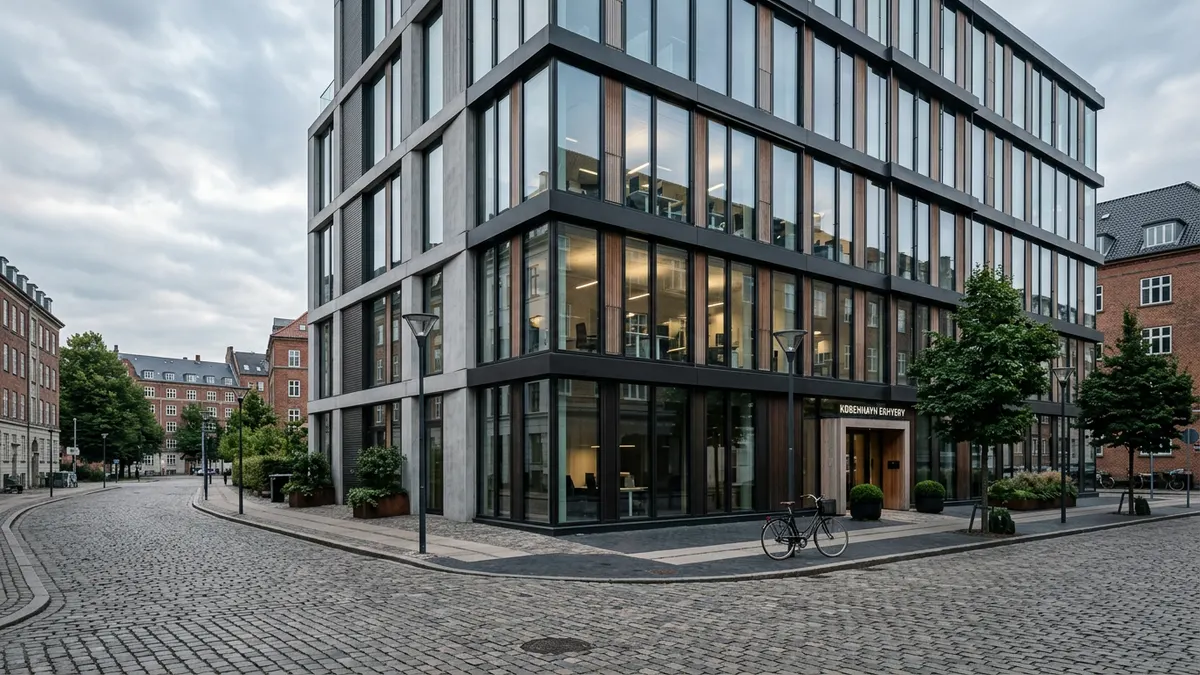
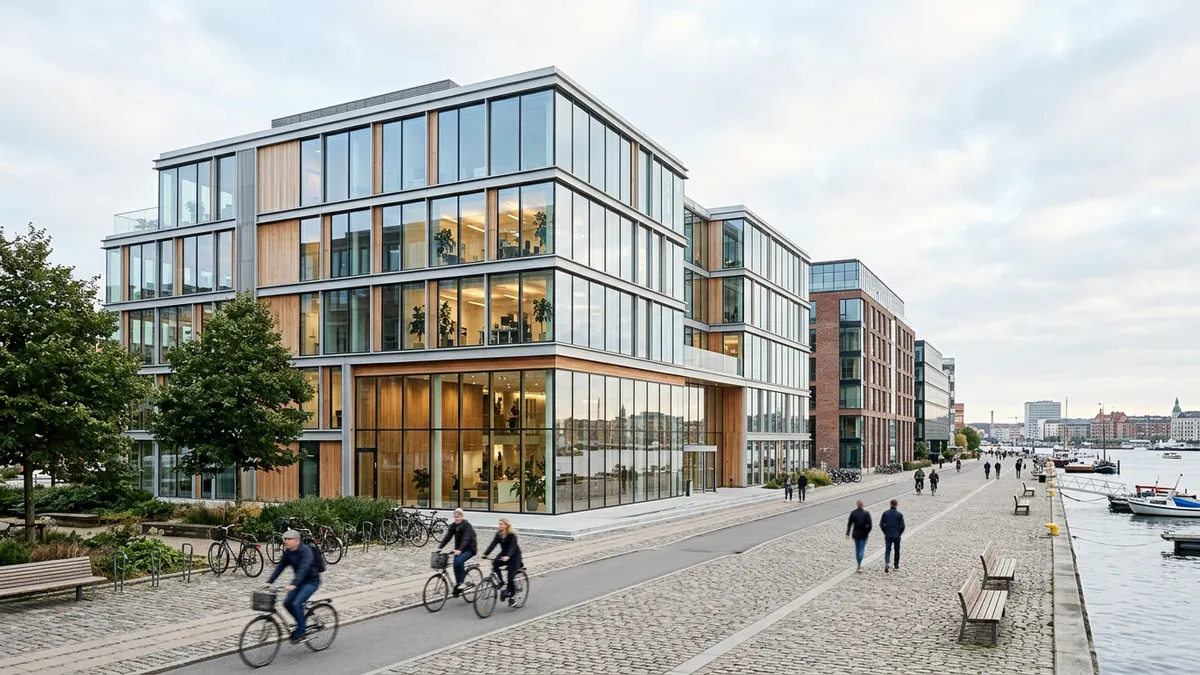
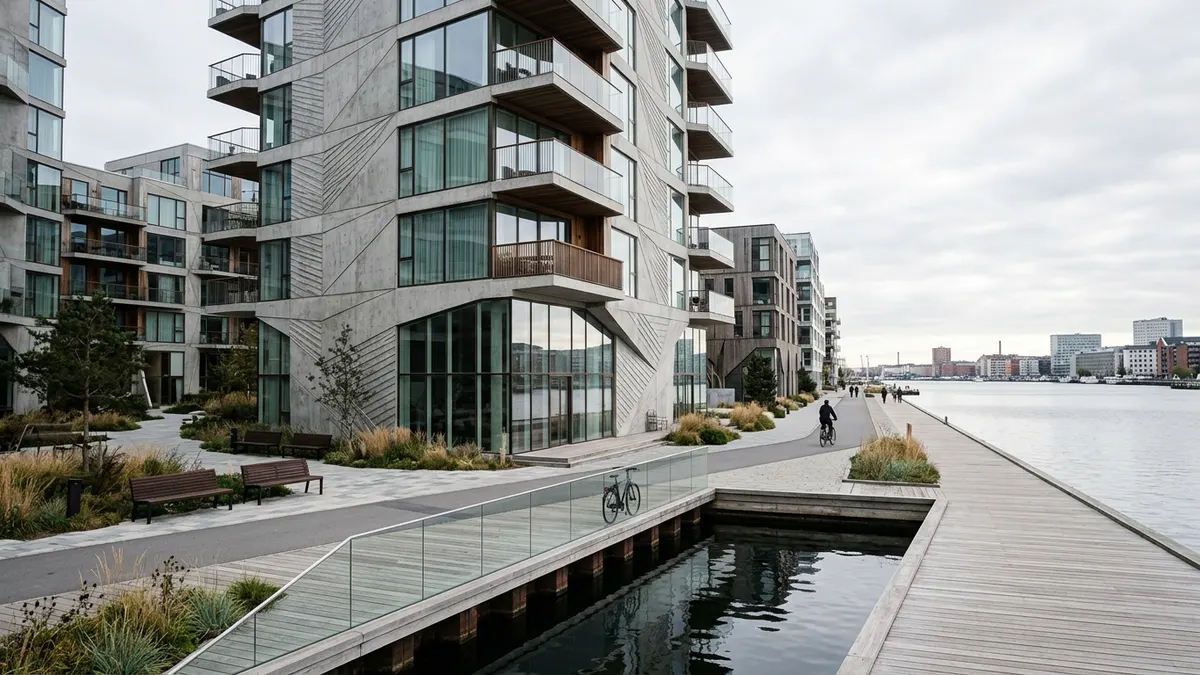
Copenhagen remains the primary target for foreign capital. Here, transaction volume is highest, and the market is most transparent. Investors often look towards developing areas like Nordhavn, Sydhavn, and surrounding towns like Høje-Taastrup for logistics investments. EU rules ensure that German pension funds and French capital funds can compete on equal terms with Danish actors here.
Aarhus and the East Jutland urban region
Aarhus has established itself as a strong growth engine. With a large university and a rapidly growing population, demand for both modern office facilities and housing is high. Investors from the EU increasingly look towards Aarhus as an alternative to Copenhagen, where prices are often lower but growth is similarly stable.
The Triangle Area (Vejle, Kolding, Fredericia)
As a logistical hub in Denmark, the Triangle Area is ideal for investors focusing on warehouse and logistics properties. The free movement of capital has resulted in a large influx of international logistics operators here, building large centres that service the whole of Northern Europe.
Tax considerations and EU law
Although the EU promotes the movement of capital, tax policy is primarily a national matter. However, Danish tax rules must not discriminate against investors from other EU countries in a way that conflicts with Treaty principles.
Investors should be aware of:
- Selskabsskat (corporate tax): Taxation of profits generated in Denmark.
- Ejendomsværdiskat (property value tax) and grundskyld (land tax): Duties paid to the state and municipality.
- Withholding tax on dividends: The rules for transferring profits back to parent companies in other EU countries are regulated by both Danish laws and the EU Parent-Subsidiary Directive.
It is strongly recommended to involve tax experts and accountants with knowledge of international affairs, as mishandling tax liability can have significant financial consequences. Information on current tax rates can be found at SKAT (the Danish Customs and Tax Administration).
Financing models in a European market
The Danish realkreditsystem (mortgage credit system) is world-renowned for its stability and low margins. For an EU investor, access to this system is a major advantage. The free movement of capital makes it possible for foreign banks to operate in Denmark, but many still choose to cooperate with established Danish mortgage institutions due to their specialised knowledge of the local market.
In 2026, green financing (ESG) has become an integrated part of the EU taxonomy. This means that properties with a high energy rating and sustainability certification have easier access to cheap capital. EU rules on sustainability reporting now directly affect the value of properties in cities like Odense and Frederiksberg, as institutional investors avoid properties that do not meet the new standards.
Legal certainty and land registration
One of the greatest strengths of the Danish market, from an EU investor's perspective, is digital tinglysning (land registration). Denmark was a pioneer in this area, and the system ensures an extremely high degree of legal certainty. When capital moves across borders, the trust that ownership is registered correctly and quickly is paramount.
The Danish system is based on publicity and transparency, which minimises the risk of fraud. This harmonises well with EU Anti-Money Laundering (AML) directives, which set strict requirements for identifying the Ultimate Beneficial Owners behind property investments. As an investor, one should expect a thorough KYC (Know Your Customer) process from both banks and brokers.
Future trends and regulatory changes
In 2026, we look towards a future where EU property rules are continuously updated to meet climate goals and digital challenges. We expect:
- Stricter energy requirements: The Energy Performance of Buildings Directive (EPBD) will likely require faster renovation of the least energy-efficient buildings.
- Harmonisation of rental law: Although rental law is national, there are ongoing discussions in the EU about protecting tenants, which could affect the framework for residential letting.
- Digital currency: The introduction of a digital euro could eventually simplify cross-border transactions further.
It is important for investors to stay updated via official channels such as the European Commission and relevant Danish ministries to stay ahead of these changes.
Summary of EU rules and property investment
Navigating EU property rules requires a balancing act between exploiting the broad rights provided by the free movement of capital and respecting specific Danish exceptions and regulations. Denmark remains one of the safest places in the world to place capital in real estate, as long as one performs thorough due diligence.
Whether you are a private investor from Sweden seeking a rental property in Helsingør, or a German fund looking at logistics in Taulov, the framework is clear. The challenge lies in the concrete execution: finding the right assets, understanding local market dynamics, and ensuring all legal and tax aspects are handled correctly.
Frequently asked questions
Can an EU citizen freely buy a flat in Copenhagen?
Yes, if the purpose is to live there (residency requirement) or if the acquisition occurs for business purposes through a company. However, there are rules regarding ties to Denmark that one must be aware of. Contact the Ministry of Justice for the most up-to-date rules on acquisition.
What is the free movement of capital in practice?
It means that investors from other EU countries should, as a general rule, have the same terms as Danish investors. It prohibits discriminatory legislation that hinders cross-border investments, unless there are specific exceptions such as the holiday home rule.
Do the same rules apply to investors outside the EU?
No, investors from countries outside the EU (third countries) are often subject to stricter requirements and must in many cases apply for permission to acquire real estate in Denmark regardless of the property type.
How do EU environmental requirements affect my property investments?
The EU taxonomy and directives on energy efficiency mean that properties must meet certain standards to be considered sustainable. This affects both financing options and the property's future market value.
How PropertyInvestments can help
Since 1985, PropertyInvestments has assisted Danish and international investors in navigating the Danish property market. We source relevant investment opportunities, manage professional setups, and handle preparation for sale. Our deep knowledge of both practical market conditions in cities like Copenhagen, Aarhus, and the Triangle Area, as well as the regulatory framework, ensures a secure investment process.
For a non-binding dialogue about your opportunities in the Danish market, feel free to contact us at info@propertyinvestments.dk or by telephone at +45 31 16 31 00.