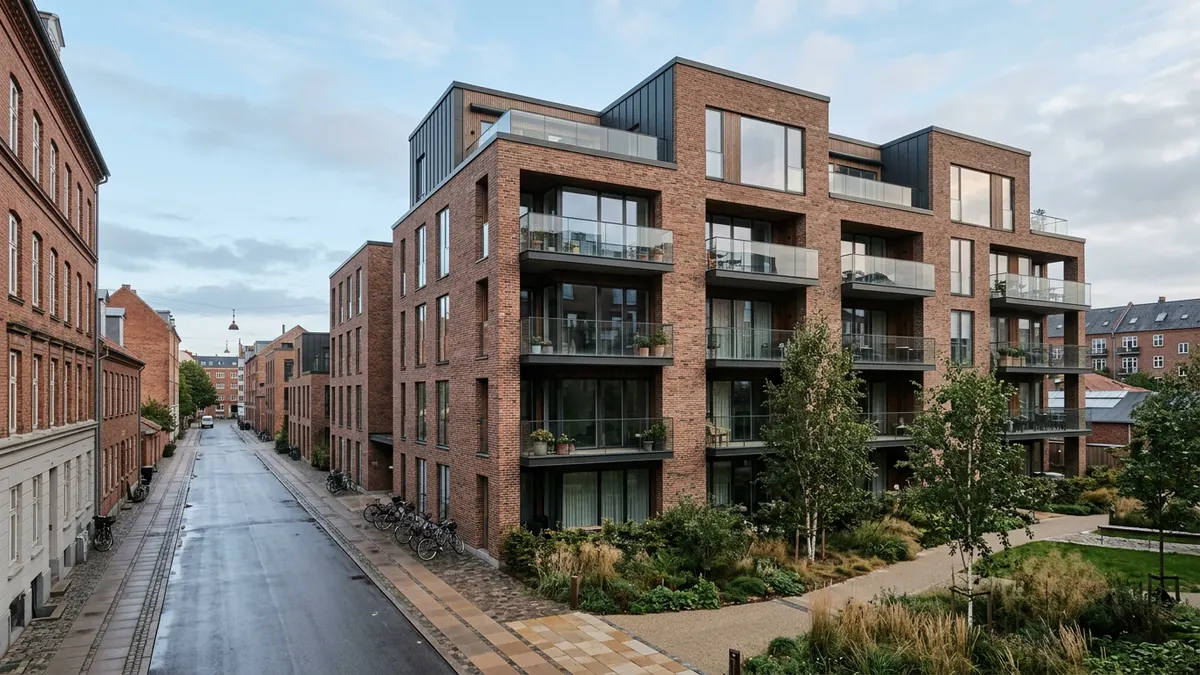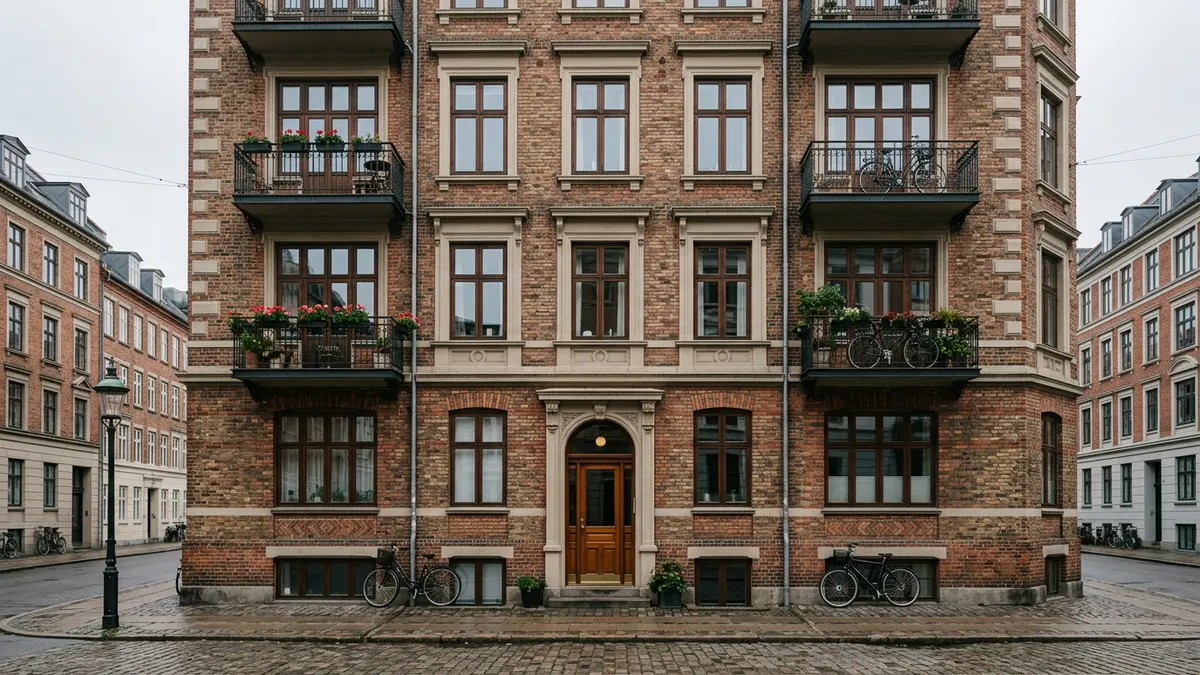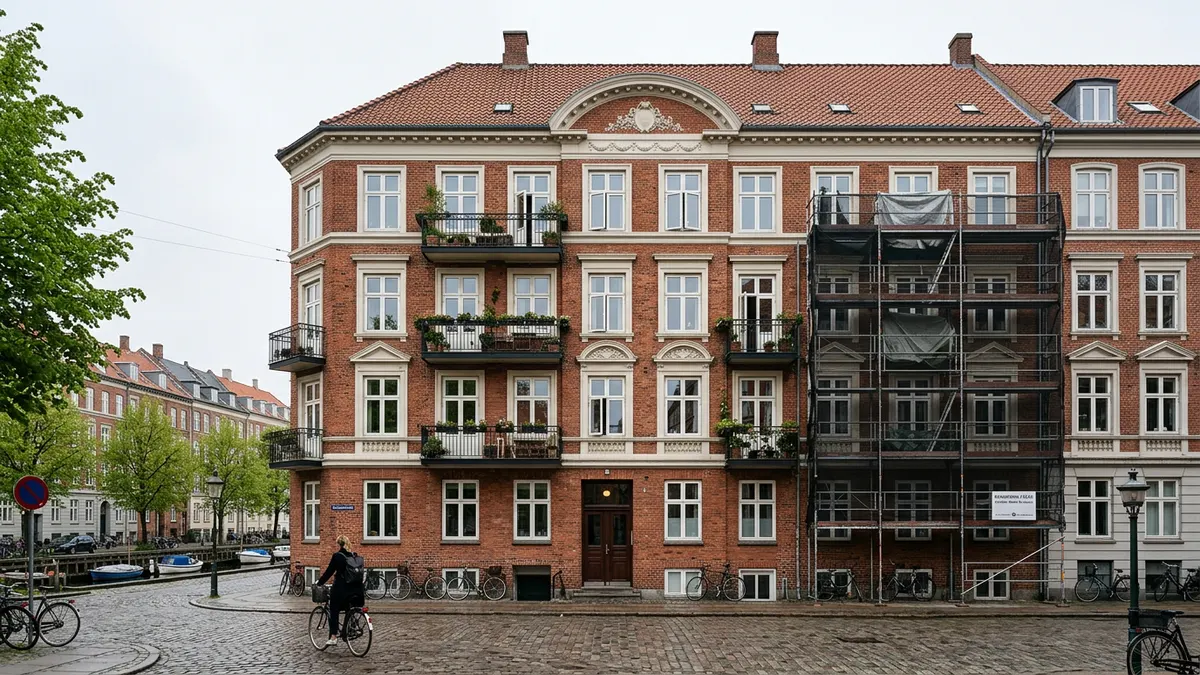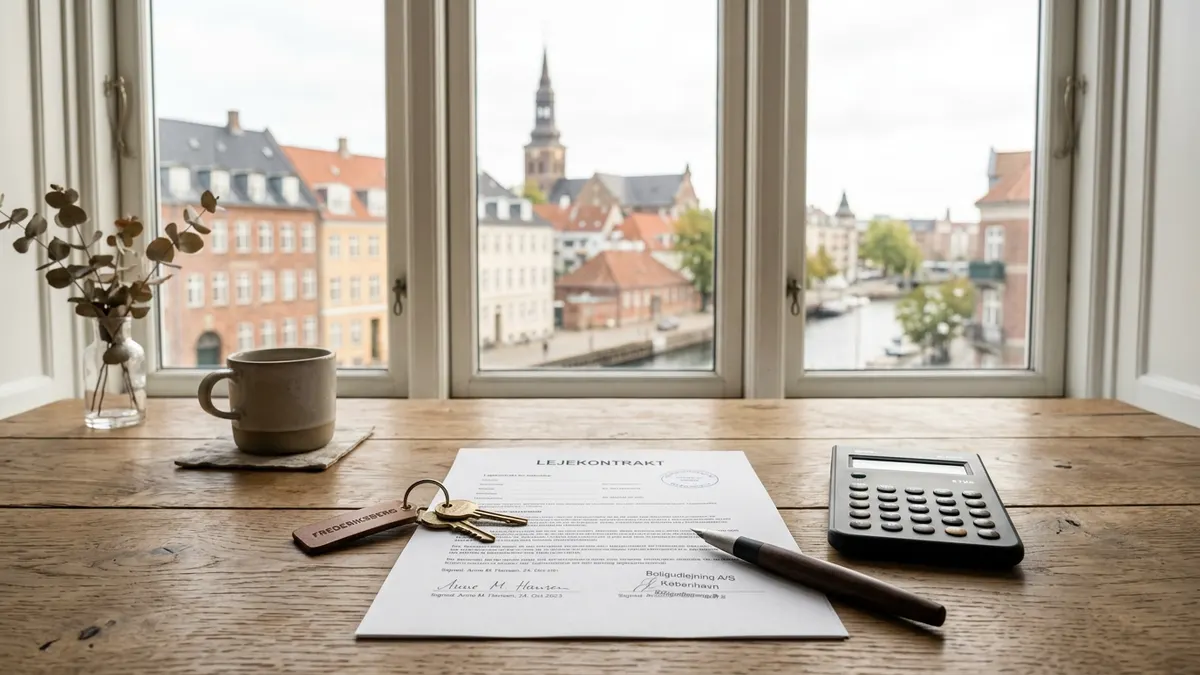
When acting as a landlord in Denmark, it is crucial to understand the applicable depositum regler for udlejer (deposit rules for landlords). The rules dictate that for residential tenancies, you may charge a maximum of three months' rent as a deposit and three months' prepaid rent, while commercial tenancies are governed by freedom of contract, though often with similar frameworks to ensure the landlord's financial security upon moving out or in case of non-payment.
Introduction to rules for deposit and prepaid rent
The management of deposit and prepaid rent constitutes one of the most fundamental administrative tasks for any property investor or landlord. Whether operating in growth cities like Aarhus and Aalborg or managing portfolios in Greater Copenhagen, the legal frameworks surrounding these amounts are designed to protect both owner and tenant. However, for the landlord, these funds primarily serve as a financial safety buffer against potential losses.
In an era where the Danish property market in 2026 continues to be characterised by professionalisation, knowledge of the details in Lejeloven (the Danish Rent Act) and Erhvervslejeloven (the Business Rent Act) is indispensable. A deposit is not income, but rather an amount paid by the tenant as security for the fulfillment of their obligations, including refurbishment upon moving out. Prepaid rent, on the other hand, typically functions as security for the rent during the notice period. This article reviews the complex nuances of the legislation so that you, as an investor, can navigate safely without risking legal repercussions or financial sanctions.
Deposit rules for landlords: Residential vs. Commercial tenancies
It is essential to distinguish sharply between residential and commercial leasing, as the legislation rests on different foundations. While residential rent law is characterised by a high degree of tenant protection, commercial rent law gives the parties considerably more freedom to enter into tailored agreements.
Residential tenancies under the Rent Act
For residential tenancies in cities like Odense, Roskilde, or Esbjerg, there are fixed frameworks for how much you can charge. According to the Rent Act, a landlord can demand a deposit equivalent to up to three months' rent. In addition, up to three months' forudbetalt leje (prepaid rent) can be required. The total amount a tenant must pay upon moving in (excluding the first month's rent) can therefore correspond to a maximum of six months' rent.
It is important to note that the amounts are calculated based on the net rent—i.e., without aconto-bidrag (on-account contributions) for heating, water, or electricity. If the rent is adjusted during the lease period, the landlord typically has the right to adjust the deposit and the prepaid rent accordingly, so that the security always reflects the current rent level. However, this requires that it is agreed upon or follows the law's general provisions on rent adjustment.
Commercial tenancies and freedom of contract
In commercial properties, for example, office space in Copenhagen K or logistics properties in the Triangle Region (Vejle, Kolding, Fredericia), the starting point is freedom of contract. Here, there is no statutory upper limit for the size of the deposit. It is common to see deposits equivalent to six months' rent or more, especially in the case of specially fitted premises where the landlord faces higher risk.
For commercial landlords, however, it is essential to consult with legal experts, as unreasonably large demands could theoretically be set aside by the courts, although this rarely happens in professional relationships. Bank guarantees are often used in commercial contexts as a supplement to or replacement for a cash deposit.
What does the deposit cover in practice?
The deposit serves as the landlord's safety net. Many new investors make the mistake of believing that the deposit can be freely used for all types of expenses, but legislation sets certain limits.
- Refurbishment upon moving out: This is the most common area of application. It includes painting, wallpapering, and floor treatment, provided the tenancy was in equivalent condition upon moving in (and that this is documented).
- Defects and damages: If the tenant has destroyed fixtures or caused damage to the property that goes beyond almindeligt slid og ælde (ordinary wear and tear), the repair costs can be offset against the deposit.
- Unpaid rent: Although prepaid rent primarily covers the final months, the deposit can also be brought into play if the tenant ceases to pay rent or other pligtige pengeydelser (mandatory money payments, e.g., heating contributions).
It is important to emphasise that the landlord cannot demand the tenancy be returned as "new," but generally only in the condition it was taken over, with deductions for general depreciation due to the passage of time. Since the law change in 2015, in residential tenancies, one can generally only demand a "normal refurbishment" and not a total renovation, unless special circumstances exist.
Prepaid rent: Function and application
Prepaid rent is often confused with a deposit, but the two amounts serve different purposes. While the deposit secures against damages and defects, the prepaid rent is the tenant's security to be able to live in the tenancy during the notice period without having to pay more money out of pocket.
Settlement of prepaid rent
When a tenant terminates their lease, they can choose to "live out the prepaid rent." If a tenant has paid three months' prepaid rent and has a three-month notice period, the tenant does not actually have to pay rent during the notice period. This is an advantage for the tenant's liquidity, but it requires the landlord to have control over their reserves.
As a landlord, you must be aware that if you find a new tenant quickly (genudlejning), and the new tenant moves in before the original tenant's notice period has expired, the original tenant must be refunded the excess prepaid rent. You must never receive double rent for the same period.
Documentation requirements and move-in reports
Compliance with deposit rules for landlords starts even before moving in. In Denmark, there are strict requirements for documentation, especially for landlords who lease more than one residential unit.
The move-in inspection
In residential tenancies, it is statutory for landlords with more than one tenancy to hold an indflytningssyn (move-in inspection) and prepare an indflytningsrapport (move-in report). The report must document the condition of the tenancy at the time of takeover. If this is not complied with, the landlord generally loses the right to demand payment for refurbishment from the deposit upon moving out.
Move-out inspection and deadlines
When the tenant moves, a fraflytningssyn (move-out inspection) must be held no later than two weeks after the landlord has become aware that the move-out has taken place. The tenant must be summoned with reasonable notice. At the inspection, a fraflytningsrapport (move-out report) is prepared, which must be handed to the tenant on the spot (or sent digitally within short deadlines if the tenant is not present).
If the landlord does not comply with these deadlines, the claim for refurbishment typically lapses. This is one of the most common pitfalls for private and semi-professional investors in cities like Silkeborg, Randers, or Herning.
Comparison of terms (Table)
Below is an overview of the typical frameworks for security in Denmark.
| Type | Max. Deposit | Max. Prepaid Rent | Legal Basis | Adjustment |
|---|---|---|---|---|
| Residential | 3 months | 3 months | Rent Act | Follows rent changes |
| Commercial | Freedom of contract (often 3-6 mo) | Freedom of contract | Business Rent Act | Agreed in contract |
| Room | 3 months | 3 months | Rent Act | Follows rent changes |
Note: Rates and rules may change by legislation. Always refer to the latest executive orders from the Ministry of Justice or seek legal advice.
Taxation of deposit and prepaid rent
As an investor, it is important to understand the tax treatment of these amounts. Generally, a deposit is not considered taxable income at the time of receipt, as it is an amount belonging to the tenant held as security.
Prepaid rent, on the other hand, is often the subject of discussion. For tax purposes, rental income must generally be taxed in the year to which it relates. However, as the rules in the tax area are complex and depend on whether you are taxed according to the virksomhedsordningen (business tax scheme), kapitalafkastordningen (capital yield scheme), or as ordinary personal income, you should always consult an accountant or tax expert. Incorrect handling of VAT on deposits in commercial relationships can also lead to complications with SKAT (the Danish Tax Agency).
Handling of amounts during the lease period
Many ask whether a landlord must place the deposit in a blocked account. In Denmark, there is no legal requirement for residential landlords to deposit the funds into a separate, spærret bankkonto (blocked bank account), unlike in certain other countries. The amount typically forms part of the landlord's general liquidity.
However, this entails an obligation. The landlord must always be able to repay the amount at the end of the lease period. In larger property companies in Copenhagen or Aarhus, it is standard practice to have systems that ensure an overview of the total deposit liability.
Common mistakes landlords should avoid
To ensure a healthy investment and a good relationship with tenants, one should avoid the following classic mistakes:
- Lack of adjustment: Forgetting to collect an additional deposit when the rent increases. Over time, the security can be diluted if the rent rises significantly (e.g., by nettoprisindeks-regulering (net price index adjustment)), but the deposit remains the same.
- Poor photo documentation: A written report is good, but pictures are better. Without clear photos of the tenancy's condition at move-in, the landlord stands weak in any case brought before the Huslejenævnet (Rent Control Board).
- Late settlement: Although the law does not set a precise day-to-day deadline for the repayment of the excess deposit (as contractor bills must be obtained first), the settlement must take place "without undue delay." Slowness can lead to cases in the Rent Control Board.
Special conditions in the major cities
In cities with high pressure on the housing market, such as Copenhagen, Frederiksberg, and Aarhus, the Rent Control Boards are very active. Here, there is a tendency for tenants to be more aware of their rights regarding deposit rules. This means that errors in move-in or move-out reports almost always result in the landlord losing the right to withhold money for refurbishment.
In the commercial sector in the same cities, we often see more complex agreements regarding trappeleje (stepped rent) or "free rent" periods, which can affect how the deposit is calculated. Here, it is crucial that the lease contract is crystal clear about which amount the deposit should be based on (e.g., the full rent before discounts).
Legal assistance and administration
The rules for deposit and prepaid rent are just a small part of the overall legal landscape for property investors. With the recent years' political focus on rent legislation, it has become riskier to be a "DIY" landlord. Lack of compliance with formal requirements can, at worst, mean that an investor loses a significant part of their return to unforeseen refurbishment expenses that cannot be passed on to the tenant.
It is therefore always recommended to use professional administration systems or administrators who have control over the processes surrounding moving in and out, and to have a lawyer review standard lease contracts, especially if moving into the market for commercial properties or larger residential rental properties.
Frequently asked questions
What is the maximum I can charge as a deposit?
For residential properties, you may charge a maximum of three months' rent as a deposit. For commercial premises, there is generally freedom of contract, but three to six months is standard in the market.
Must the deposit be held in a separate account?
No, in Denmark there is no legal requirement for the landlord to place the deposit in a closed or blocked account, but you are obliged to be able to repay it upon move-out.
What happens if I forget to hold a move-in inspection?
If you lease more than one tenancy, the move-in inspection is statutory. If you forget it, or if you do not comply with the formal requirements, you lose the right to offset expenses for refurbishment against the tenant's deposit upon moving out.
Can I use the deposit to cover unpaid heating?
Yes, the deposit serves as security for all the tenant's financial obligations to the landlord, which includes rent, heating, water, and electricity, if these are part of the lease agreement.
When is the latest I must pay back the deposit?
The law does not set a precise time limit in days, but it must happen "without undue delay." This typically means once the final prices for refurbishment and any utility accounts (forbrugsopgørelser) are available.
How PropertyInvestments can help
At PropertyInvestments, we have helped Danish and international investors navigate the Danish property market since 1985. We source and set up investment properties, ensuring that all formal requirements—including the correct handling of deposits and lease contracts—are in place from the start. We prepare properties for sale and follow the process to completion, so that you as an investor receive a professional and secure experience.
Are you considering investing in Danish bricks and mortar, or do you need help optimising your current portfolio? Contact us at info@propertyinvestments.dk or call +45 31 16 31 00 for a non-binding dialogue about your options.