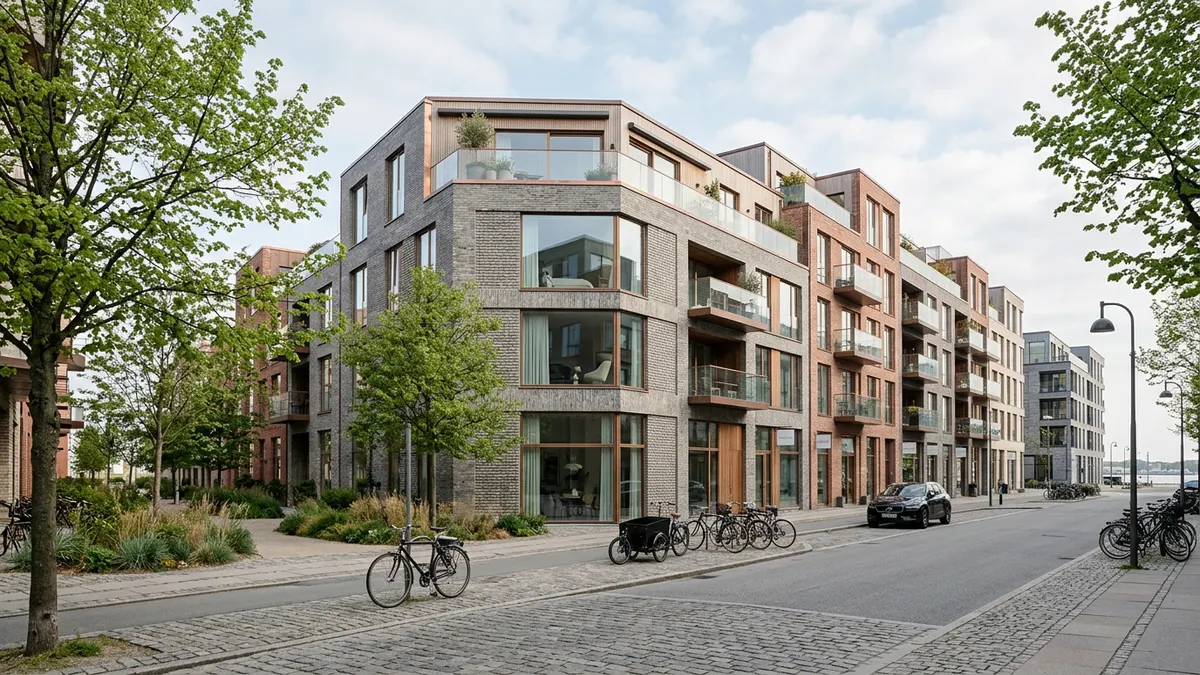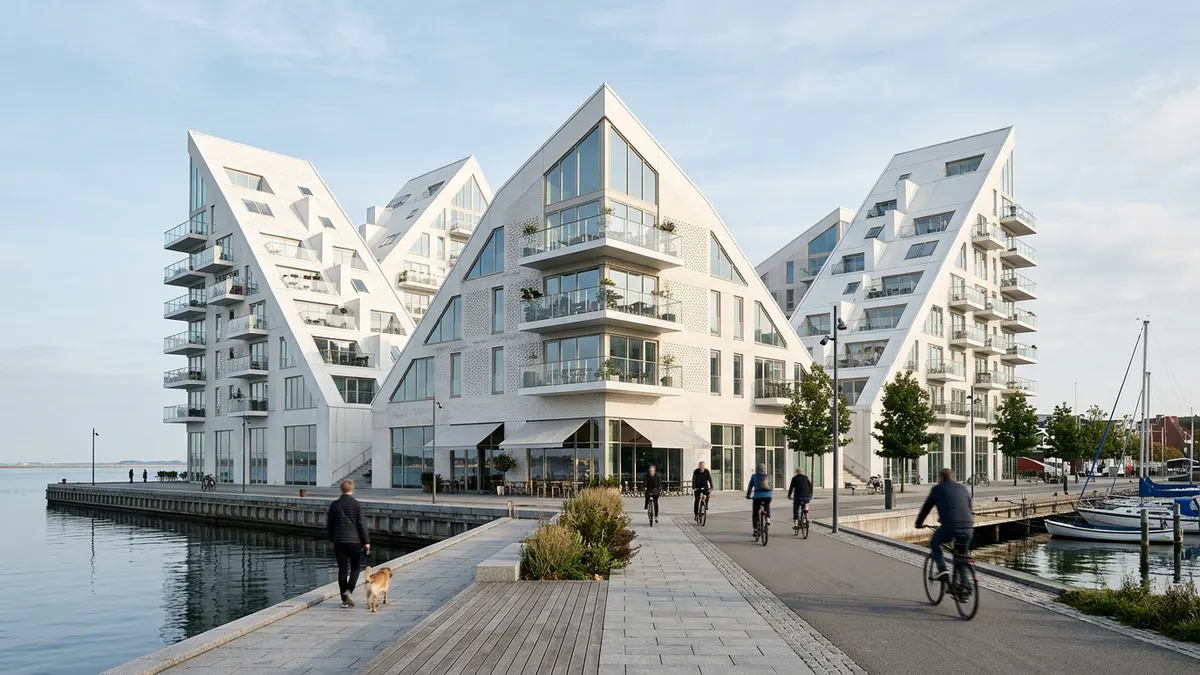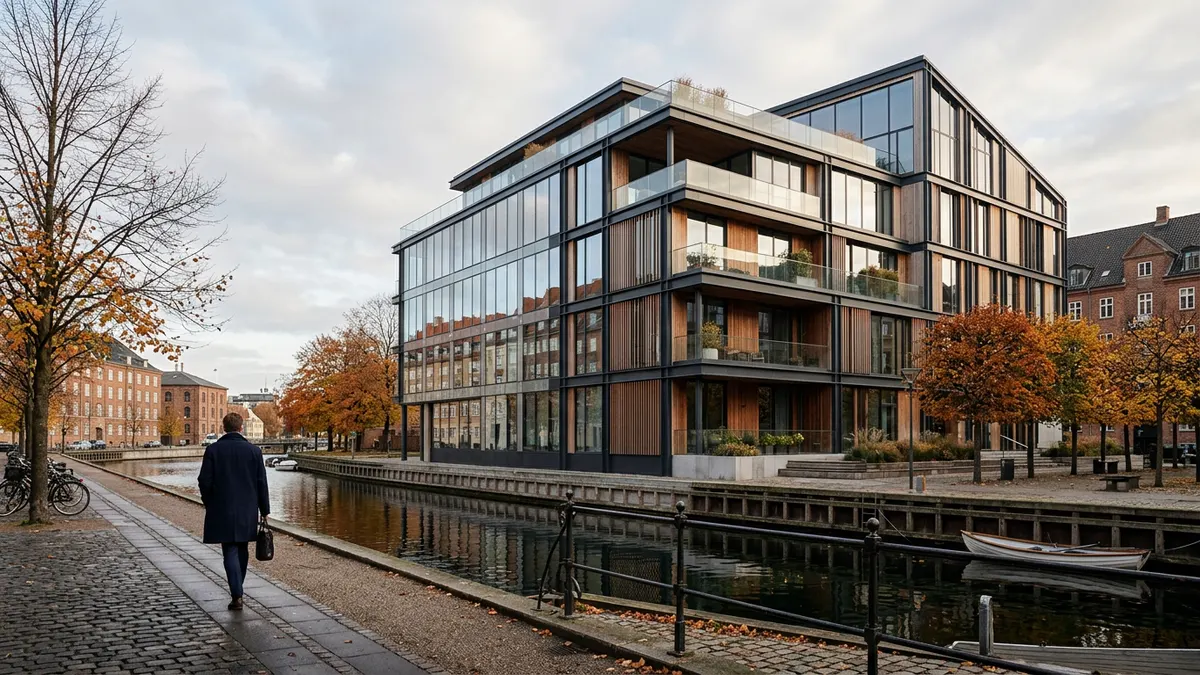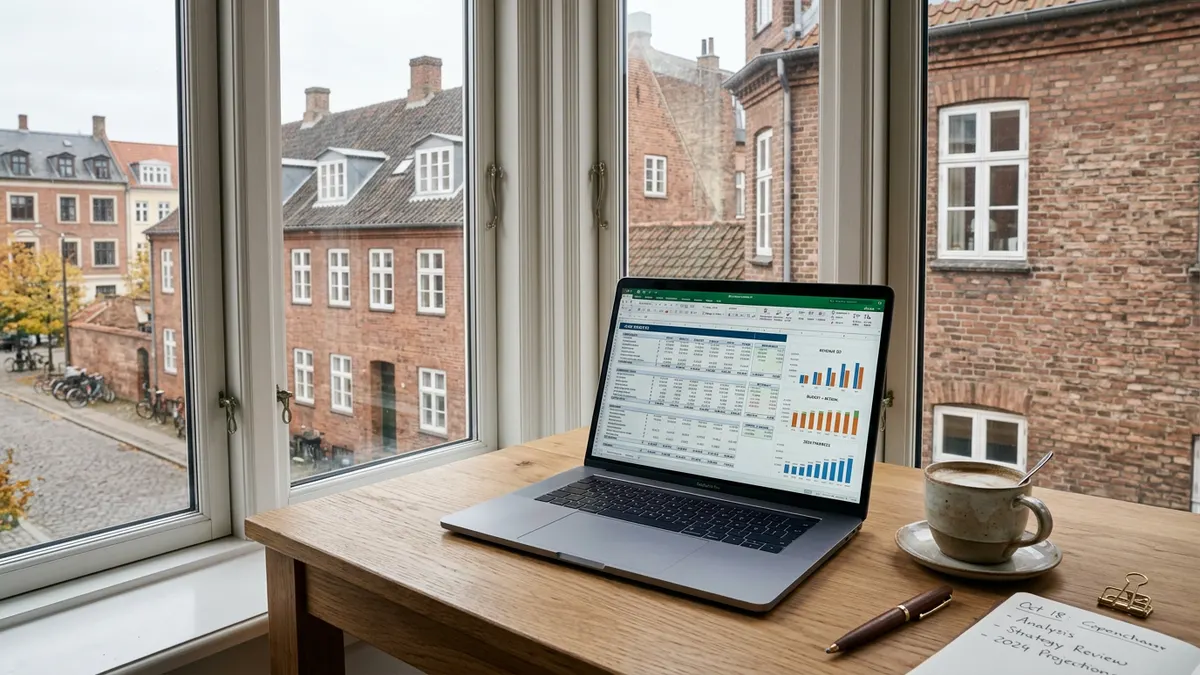
A realistic operating budget for an investment property requires precise estimates for maintenance and vacancy to ensure a sustainable return. Maintenance should typically be set at DKK 50-150 per m², depending on the property's condition, while vacancy is often estimated at 2-5% of rental income, based on the geographic location in Denmark and the property type.
The foundations of an operating budget for investment property
When investing in bricks and mortar in Denmark, the financial foundation is based on the ability to predict the future with a certain degree of statistical certainty. An operating budget for an investment property is not merely a list of known expenses such as insurance and ejendomsskatter (property taxes); it is a strategic tool that must account for invisible factors that can erode liquidity over time if not handled correctly.
In the Danish market, from the densely populated brokvarterer (bridge quarters/inner city districts) of Copenhagen to growth areas in Aarhus and Odense, we often see investors underestimating ongoing costs. The operating budget must reflect the property's life cycle. A newly constructed property in Ørestad has a completely different maintenance profile than a classic patriciavilla (stately villa) in Gentofte or a commercial property in an industrial district in the Trekantområdet (Triangle Region). By building a detailed budget, one minimises the risk of unpleasant surprises that can affect the belåningsgrad (loan-to-value ratio) and the relationship with the realkreditinstitut (mortgage credit institution).
To create a credible budget, one must distinguish sharply between fixed operating costs (taxes, insurance, renovation) and variable factors such as maintenance and vacancy. It is the latter that requires the most professional insight to estimate correctly, as they depend on both market whims and physical building conditions.
Estimating maintenance: From upkeep to restoration
Maintenance is one of the most complex items in an operating budget for investment property. It is important to understand the difference between ongoing maintenance and restoration (capital expenditure). Ongoing maintenance refers to the small repairs that keep the property in operational condition here and now, while restoration is about replacing major building components when they have reached the end of their lifespan.
In Denmark, we often operate with key figures based on square metres. A rule of thumb for a property in medium-good condition is to allocate between DKK 50 and 150 per m² annually. However, this range is broad, and the specific placement depends on several factors:
- Age of the property: A property from the 1920s in Esbjerg or Aalborg typically requires more attention to the building envelope than a property from 2010.
- Material choice: Timber windows require painting every 5-8 years, while timber-aluminium windows are almost maintenance-free.
- Tenant type: Properties with many small flats and high tenant turnover (e.g., students) often experience more wear and tear on stairwells and common areas.
It is always recommended to consult a building surveyor to have a 10-year maintenance plan drawn up. Such a plan is essential for the operating budget, as it identifies major future items such as roof replacement or facade renovation. Without a plan, the maintenance item in the budget becomes merely a qualified guess instead of a calculated provision.
Strategic savings in the budget
For the long-term investor, it is not enough to cover acute repairs. The operating budget should include a line for provisions. In many andelsboligforeninger (housing cooperatives) and professional property companies, amounts are set aside in accordance with the rules of the lejelovgivning (tenancy legislation) (e.g., § 119 and § 120, formerly § 18 and § 18 b), which dictate specific amounts per square metre for internal and external maintenance. Although these rules primarily apply to older rental properties, they serve as a good guideline for all types of property investment.
Understanding vacancy risk in the Danish market
Tomgang (vacancy) – periods where a unit stands empty without rental income – is the hidden enemy in any operating budget for investment property. Vacancy does not just cost lost rent; it also entails continued fixed expenses for heating, electricity, and insurance, which the investor must now cover personally.
The vacancy rate varies greatly depending on geography and property type. In Copenhagen K or Aarhus C, we have historically experienced very low vacancy due to immense demand. Here, one can often settle for budgeting 1-2% vacancy, which corresponds to a couple of weeks of rental loss every second or third year in connection with a change of tenant.
If, on the other hand, you move to smaller towns or more peripheral areas in Region Zealand or North Jutland, the risk can be higher. Here, it is not unusual to budget 5% or more. For commercial properties, vacancy risk is generally significantly higher than for residential rentals, as it can take months or years to find the right tenant for specialised premises.
Factors affecting your vacancy
- Rent level: If your rent is above market level, the risk of vacancy increases significantly.
- Condition of the property: A modern flat with a balcony and lift in Roskilde will be let faster than a dark basement flat in the same location.
- Demographics: Cities with population growth naturally have lower vacancy.
A thorough market analysis is therefore necessary to set the right vacancy percentage in your operating budget. You should investigate local rental portals and speak with local ejendomsmæglere (estate agents) to understand the current time-on-market for comparable units.
Example of an operating budget setup
To illustrate how these figures interact, we can look at a theoretical model for a smaller residential rental property. Note that the figures are indicative examples and not specific guarantees of return.
| Item | Description | Estimate (Indicative) |
|---|---|---|
| Gross Rental Income | Total annual rent | DKK 1,000,000 |
| Vacancy (3%) | Risk of vacant units | -DKK 30,000 |
| Net Rental Income | Actual expected income | DKK 970,000 |
| Operating Costs | Taxes, insurance, refuse | -DKK 150,000 |
| Ongoing Maintenance | Repairs and service contracts | -DKK 80,000 |
| Maintenance Provision | Savings for major renovations | -DKK 50,000 |
| Administration | Fee to administrator | -DKK 40,000 |
| Net Operating Income (NOI) | Result before financial items | DKK 650,000 |
This table shows how vacancy and maintenance together constitute a significant portion of the total deductions from the gross rent. This is where many inexperienced investors go wrong by only looking at fixed expenses.
Geographical differences in Denmark: Where to pay attention?
Denmark is a small country, but the property market is very fragmented. When preparing an operating budget for investment property, you must take into account where in the country the property is located.
In the major university cities like Copenhagen, Aarhus, Odense, and Aalborg, there is a constant influx of tenants. This reduces vacancy risk, but it often increases maintenance needs, as frequent move-ins and move-outs lead to wear and tear on floors, walls, and installations. Every time a tenant moves, there is a cost for istandsættelse (refurbishment), which is not always fully covered by the depositum (security deposit) if it concerns ordinary wear and tear.
In growth towns like Vejle, Kolding, and Silkeborg, we see stable development. Here, maintenance costs can be more predictable, as tenants often stay for longer periods (e.g., families with children), which protects the property. Conversely, here you must be sharper on budgeting for professional viceværtsservice (caretaker services) and snow removal, as these services can vary in price depending on local providers.
For properties in outlying areas, it is crucial to have a higher buffer for vacancy. If a major local employer closes, it can directly affect rental opportunities in the entire area. Here, the operating budget should be more conservative.
Tax rules and deductions for maintenance
It is essential to understand that tax rules play a major role in actual post-tax liquidity. In Denmark, there is a difference between what can be deducted as direct maintenance and what must be capitalised as an improvement and depreciated over time.
Maintenance is generally defined as work that brings the property back to its original condition. If you replace an old roof with an equivalent new roof, it is typically maintenance. If, however, you add loft insulation at the same time, part of the expense may be considered an improvement.
We always recommend seeking advice from an accountant specialising in real estate or contacting SKAT (the Danish Tax Agency) to ensure that the budget's tax assumptions hold true. Incorrect classification of maintenance versus improvement can lead to unexpected tax hits, which can topple even the best operating budget for investment property.
Operating optimisation as a tool for increased return
An operating budget is not static. One of the most effective ways to increase the value of your investment property is through operating optimisation. By reducing maintenance costs through proactive measures, you can increase the annual Net Operating Income (NOI).
Examples of operating optimisation:
- Energy renovation: By investing in better insulation or modern heating systems, you can reduce communal energy costs and make units more attractive, lowering vacancy.
- Framework agreements: Professional administration can often provide access to cheaper insurance and service contracts through economies of scale.
- Digitalisation: Using modern property systems for fault reporting can catch small issues (e.g., a leaking toilet) before they become large, expensive maintenance items.
Every krone saved in operations goes directly to the bottom line and can – depending on the property's afkastkrav (yield requirement) – significantly increase the property's market value.
Risk management and unforeseen expenses
Even with the most thorough operating budget for investment property, unforeseen events will occur. Water damage not fully covered by insurance or a sudden change in law regarding fire safety may require capital here and now.
Therefore, every budget should operate with a line for unforeseen expenses, often set at 5% of total operating costs. This is not money you expect to spend every year, but it is a liquidity buffer ensuring the property does not fall into financial distress due to a single negative event.
It is also worth noting that interest rate developments in Denmark can affect the operating budget indirectly. Although interest falls under financing and not operations, higher rates can put pressure on tenants' ability to pay or reduce the owner's overall room for maintenance. Therefore, you should always stress-test your budget for different scenarios.
Conclusion on the operating budget
Managing an investment property requires both discipline and insight. The operating budget is your compass, and the items for maintenance and vacancy are the variables that most often separate successful investors from the less successful. By being conservative in your estimates, basing your figures on data rather than hope, and by continuously revising the budget in line with market developments in the Danish regions, you create the best foundation for a healthy property portfolio.
Remember that a budget is a living document. It should be reviewed at least once a year in connection with the annual accounts, so you can adjust your estimates for maintenance and vacancy based on actual experience from the past year.
Frequently asked questions
How much should I set aside for maintenance per m²?
It depends on the property's condition and age, but somewhere between DKK 50 and DKK 150 per m² is a common guideline in Denmark. Newer properties are at the low end, while older, heritage-listed properties can be significantly higher.
How do I calculate vacancy in my budget?
Vacancy is calculated as a percentage of the potential gross rent. In major growth cities like Aarhus and Copenhagen, 2% is often budgeted, while in smaller towns, you should consider 5% or more to be on the safe side.
Can maintenance be tax-deducted?
Yes, ongoing maintenance is generally deductible from the taxable income of the property. Improvements, on the other hand, must often be capitalised and depreciated. The rules are complex, so we always recommend consulting an accountant or reading the current guidelines from SKAT.
What is the difference between maintenance and improvement?
Maintenance is keeping the property in the condition it was in at the time of acquisition (e.g., painting existing windows). Improvement is raising the property's standard or value (e.g., installing a brand new and better kitchen or adding a balcony).
How PropertyInvestments can help
Since 1985, PropertyInvestments has helped Danish and international investors navigate the Danish property market. We assist with property sourcing, where we conduct a thorough review of operating budgets to ensure that estimates for maintenance and vacancy are realistic and market-compliant.
Whether you are seeking investment opportunities in major cities or wish to optimise an existing portfolio, our experienced team is ready to advise on the practical and financial aspects of property management. Contact us for a non-binding dialogue about your investment goals.
Contact information: Email: info@propertyinvestments.dk Telephone: +45 31 16 31 00